OpenClaw vs ChatGPT: Choosing Between Self-Hosted and Cloud AI
OpenClaw supports 37 model providers and runs on your own hardware. ChatGPT runs on OpenAI's servers and gives you GPT models only. This comparison breaks down hosting, privacy, pricing, model flexibility, and extensibility so you can pick the right tool for how you actually work, whether that means full local control or zero-setup cloud convenience.

Why This Comparison Matters Now
Anthropic's Claude holds 42.5% adoption share among OpenClaw users for complex reasoning and coding tasks, while OpenAI's GPT models account for 28.3%, according to the OpenClaw model provider docs. That split tells you something important: the people choosing self-hosted AI assistants are not just picking one model. They are routing different tasks to different providers based on cost, speed, and capability. ChatGPT users, by contrast, get one vendor's models and one vendor's infrastructure.
The question is not which AI is "smarter." Both OpenClaw and ChatGPT can access frontier models. The real differences are in how you deploy, what you control, and what trade-offs you accept. OpenClaw is an MIT-licensed gateway you run on your own machine. ChatGPT is a cloud service you access through a browser or app. Same category of tool, fundamentally different architectures.
This guide compares them across the dimensions that actually matter for daily use: hosting model, model flexibility, channel access, privacy, extensibility, and total cost. If you already know you want cloud convenience, ChatGPT is the obvious pick. If you need local data control or multi-model routing, OpenClaw is worth the setup investment.
Related guides
- How to Use Cline with vLLM: High-Throughput Local and Self-Hosted AI CodingConnecting Cline to a self-hosted vLLM instance unlocks high-throughput local AI coding without per-token API charges....
- How to Choose Between Devin AI and Claude for Code AutomationDevin AI and Claude represent two distinct methodologies for automated coding, separating remote cloud-hosted...
- OpenClaw vs Aider: Choosing Between an AI Agent Platform and a Terminal Pair ProgrammerOpenClaw and Aider both run in your terminal, but they solve different problems. Aider is a pair programmer with deep...
- OpenClaw vs LangChain: Choosing the Right Agent Framework for 2026Choosing between OpenClaw and LangChain comes down to autonomy versus building blocks. LangChain provides broad tools...
- OpenClaw vs Make: How to Choose Between an AI Agent and a Visual Workflow BuilderOpenClaw is an autonomous AI agent that reasons through tasks and adapts on the fly. Make is a visual workflow builder...
- Hermes Agent vs OpenClaw: Which Open-Source AI Agent Should You ChooseNous Research Hermes Agent and OpenClaw are the two dominant open-source AI agent frameworks in 2026. They share the...
More on this subject: OpenClaw Setup and Guides (199 guides)
Head-to-Head Feature Comparison
Here is how OpenClaw and ChatGPT stack up across the categories that matter most when choosing an AI assistant.
Hosting
OpenClaw runs as a self-hosted daemon on macOS, Linux, or Windows (via WSL2). You install it on your own hardware, and it stays running 24/7. ChatGPT is a cloud service operated by OpenAI. You access it through a web browser, mobile app, or API. No installation, no server management.
Model Support
OpenClaw connects to 37 model providers, including Anthropic Claude, OpenAI GPT, Google Gemini, DeepSeek, Mistral, xAI Grok, and local models through Ollama or LM Studio. You can route different tasks to different models at runtime. ChatGPT runs OpenAI models exclusively. The current top-tier model is GPT-5.5, available on Plus and Pro plans.
Channels
OpenClaw integrates with 15+ messaging platforms: WhatsApp, Telegram, Discord, Slack, Signal, iMessage, Microsoft Teams, Google Chat, Matrix, Nostr, Twitch, and more through its plugin architecture. ChatGPT is accessible through web, mobile apps, and API. No native messaging platform integration.
Extensibility
OpenClaw has the ClawHub marketplace with thousands of community-built skills covering everything from GitHub automation to Spotify control to smart home integration. ChatGPT offers Custom GPTs with Actions, plus an expanding plugin ecosystem. Both approaches let you extend base functionality, but OpenClaw skills run locally with full system access while GPT Actions are sandboxed API calls.
Privacy
OpenClaw keeps all data on your machine by default. Conversation logs, file access, and session history stay local. You still send prompts to whichever model provider you choose, but the orchestration layer is yours. ChatGPT sends all data to OpenAI's servers. Enterprise and Business plans offer data retention controls and contractual exclusion from training. Free and Plus plans do not.
Pricing
OpenClaw is free to download and run (MIT license). Your costs are API usage with your chosen model providers, typically $5 to $30 per month depending on volume. ChatGPT offers Free ($0), Go ($8/mo), Plus ($20/mo), Pro $100 ($100/mo), and Pro $200 ($200/mo) tiers, plus Business ($25/user/mo) and Enterprise (custom pricing).
Setup Time
OpenClaw takes 4 to 8 hours for initial setup, including model provider configuration and channel connections. Ongoing maintenance is your responsibility. ChatGPT takes 30 seconds: create an account, start chatting.

When OpenClaw Is the Better Choice
OpenClaw wins when you need control over your AI stack. Here are the specific situations where self-hosting pays off.
You need data sovereignty. If your work involves sensitive documents, client data, or regulated information, keeping the orchestration layer local matters. OpenClaw's Gateway process handles session routing, channel connections, and conversation history on your hardware. The model API calls still go to external providers (unless you run local models through Ollama), but the coordination layer and logs stay on your machine.
You want to pick models per task. OpenClaw supports 37 providers, and you can route tasks based on what each model does best. Use Claude for complex reasoning. Use GPT for creative writing. Use a local Llama model for quick, private lookups that should never leave your network. ChatGPT locks you into OpenAI's model lineup.
You communicate through messaging apps. OpenClaw's native channel support is its standout feature. Message your AI through WhatsApp while commuting. Get Telegram notifications when a background task completes. Collaborate in Slack channels where the AI participates alongside team members. ChatGPT requires you to open a browser tab or the mobile app every time.
You want always-on automation. OpenClaw runs as a daemon, handling cron jobs, reminders, and background tasks without an active session. It can monitor your email, manage calendars, and execute file operations on a schedule. ChatGPT is session-based: it works when you are actively chatting and stops when you close the tab.
You want deep system access. OpenClaw has full filesystem access, shell command execution, and browser automation built in. It can read and write local files, run scripts, and interact with your desktop. ChatGPT's code interpreter runs in a sandbox with no access to your local environment.
For teams working with agents that need persistent file storage across sessions, Fastio workspaces provide generous storage with semantic search, granular permissions and full file version history for when several agents write to the same place, and ownership transfer from agent to human. The MCP server exposes a consolidated MCP toolset covering files, shares, metadata, and activity that works with any LLM provider, including those OpenClaw supports.
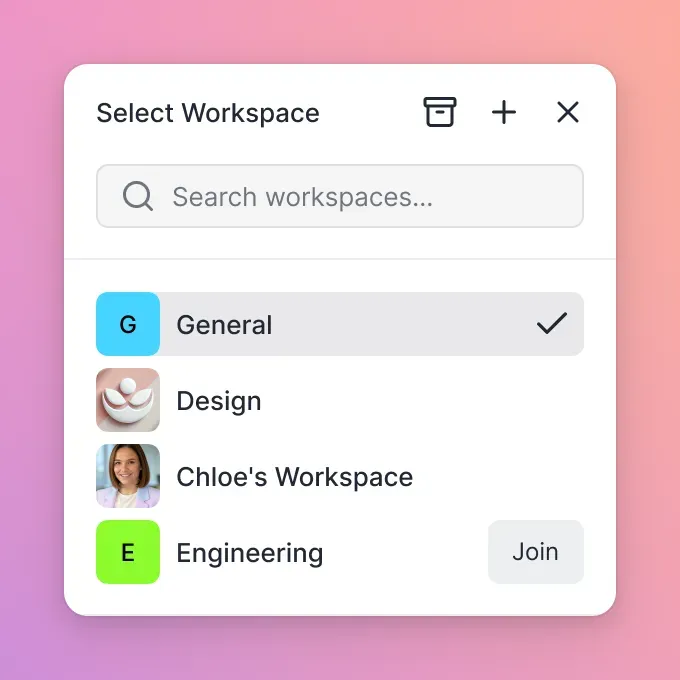


Give your AI agents persistent storage they can hand off to humans
Generous storage workspace with semantic search, granular permissions, and MCP server access. Works with OpenClaw, ChatGPT, or any LLM provider.
When ChatGPT Is the Better Choice
ChatGPT wins when you want capability without complexity. Here is when the cloud model makes more sense.
You want zero maintenance. ChatGPT works out of the box. No server to run, no API keys to configure, no model updates to manage. OpenAI handles scaling, uptime, and model improvements. You just use it. With OpenClaw, you are your own sysadmin.
You need frontier reasoning without configuration. GPT-5.5 on the Plus plan delivers state-of-the-art performance in coding, analysis, and multi-step reasoning. The Pro $200 tier includes a one-million-token context window and 250 Deep Research runs per month. Getting comparable capability through OpenClaw means configuring API keys, managing rate limits, and paying per-token costs that can exceed ChatGPT's flat subscription fee if usage is high.
You work on a team with mixed technical skills. ChatGPT's Business plan ($25/user/mo) includes SAML SSO, SOC 2 Type 2 compliance, shared workspaces, and admin controls. Non-technical team members can use it immediately. OpenClaw requires everyone to interact through messaging apps or a web interface you self-host, and there is no built-in team management layer.
You want built-in multimodal tools. ChatGPT bundles image generation (GPT Image 2.0), video creation (Sora), Advanced Voice Mode, and Deep Research into a single subscription. OpenClaw can access these capabilities through API integrations, but you configure each one separately.
You value web automation. ChatGPT's Operator feature handles web-based tasks with an 87% success rate on complex navigation, according to comparison benchmarks. OpenClaw has browser control through its built-in headless capabilities, but ChatGPT's cloud-based approach tends to be more reliable for web interactions since it does not depend on your local browser environment.
You just want to ask questions and get answers. For straightforward Q&A, research assistance, writing help, and brainstorming, ChatGPT's polish is hard to beat. The interface is clean, the response quality is consistently high, and you never troubleshoot connection issues or model provider outages.
The Practical Cost Breakdown
Pricing is where the comparison gets nuanced. Neither option is universally cheaper.
ChatGPT costs are predictable. The Plus plan at $20/month gives you GPT-5.5, image generation, Advanced Voice, and 10 Deep Research runs. You know what you are paying each month. The Pro $200 plan adds a million-token context window and 250 research runs. Business is $25/user/month with enterprise controls.
OpenClaw costs depend on usage patterns. The software is free (MIT license), but API calls to model providers add up. Light users spending under an hour daily typically pay $5 to $15/month in API costs. Heavy users running background automations, multi-model routing, and frequent large-context queries can hit $30 to $80/month. You also need hardware to run the daemon: a desktop, home server, VPS, or something like a Raspberry Pi for lightweight use.
The hidden cost is your time. OpenClaw's initial setup takes 4 to 8 hours for most users. You need to configure at least one model provider, set up your preferred messaging channels, and learn the skill system. Ongoing maintenance includes updating the daemon, managing API keys, and troubleshooting provider outages. ChatGPT has essentially zero maintenance overhead.
Per-task cost comparison: Running a complex analysis through ChatGPT Plus costs nothing beyond your $20/month subscription (within message limits). Running the same task through OpenClaw with Claude Opus 4 might cost $0.50 to $2.00 in API tokens, depending on context length. If you run 20 complex tasks per month, OpenClaw's API costs ($10 to $40) may exceed ChatGPT Plus. If you run 200 quick queries, OpenClaw with a fast, cheap model like DeepSeek or a local Llama instance could cost almost nothing.
Where storage costs enter the picture. Both approaches generate output files, reports, and artifacts. ChatGPT stores conversation history on OpenAI's servers. OpenClaw stores everything locally. For teams that need agents to persist files across sessions and hand them off to humans, external storage becomes necessary. Options include local NAS, S3 buckets, Google Drive, or purpose-built agent workspaces like Fastio (generous storage, with MCP server access for programmatic operations).
Making the Decision
Start with your actual constraints, not feature lists.
Choose OpenClaw if: You have technical skills and value data control. You want to pick different models for different tasks. You communicate primarily through messaging apps and want your AI available there natively. You plan to run always-on automations. You are comfortable being your own sysadmin.
Choose ChatGPT if: You want to start immediately with no setup. You prefer predictable monthly costs. You work on a team that needs admin controls and compliance features. You primarily interact through web or mobile interfaces. You value integrated multimodal tools (image, video, voice, research).
Consider using both. They are not mutually exclusive. A practical setup might use ChatGPT Plus for quick research and brainstorming during the workday, and OpenClaw for always-on automations that run overnight, process messaging channels, and handle tasks that require local file access or specific model providers. The $20/month ChatGPT subscription plus $10 to $20/month in OpenClaw API costs gives you both cloud convenience and local control.
Security note: The rentamac.io comparison flagged that a 2024 security audit found thousands of OpenClaw instances exposed on the open internet, and a percentage of ClawHub marketplace skills have been flagged as malicious. If you deploy OpenClaw, take the time to configure allowlists, review skill source code before installing, and keep the daemon behind a firewall. ChatGPT handles security for you, but you give up data control in exchange.
Whatever you choose, the agents you build will generate files, reports, and artifacts that need to live somewhere accessible. Fastio workspaces work with both approaches: the MCP server at mcp.fast.io connects to any LLM provider, Intelligence Mode indexes uploaded files for semantic search, and the ownership transfer feature lets agents build content that humans review and take over. Monthly plans start with a trial of up to 14 days (credit card required); annual plans have no trial.
OpenClaw and ChatGPT aren't the only two options, either. See our OpenClaw alternatives comparison for seven more agent frameworks.
Sources
References used to verify factual claims in this guide.
-
Anthropic Claude holds 42.5% adoption share among OpenClaw users, OpenAI GPT at 28.3% OpenClaw supports 37 officially listed model providers
-
ChatGPT Plus costs $20/month with GPT-5.5 access, Pro $200 includes 1M token context
-
ChatGPT Operator has 87% success rate on complex web navigation
-
2024 security audit found thousands of OpenClaw instances exposed on the open internet OpenClaw initial setup takes 4 to 8 hours for most users
Frequently Asked Questions
Is OpenClaw better than ChatGPT?
It depends on what you prioritize. OpenClaw is better for users who want data sovereignty, multi-model flexibility (37 providers), native messaging app integration, and always-on automation. ChatGPT is better for users who want zero-setup convenience, predictable pricing, integrated multimodal tools, and enterprise team management. Neither is universally superior.
What is the difference between OpenClaw and ChatGPT?
OpenClaw is an MIT-licensed, self-hosted AI gateway that connects to multiple model providers and routes conversations through messaging apps like WhatsApp, Telegram, and Slack. ChatGPT is OpenAI's cloud-hosted AI service accessed through web and mobile apps. OpenClaw gives you infrastructure control and model choice. ChatGPT gives you polished UX and zero maintenance.
Is OpenClaw free?
The OpenClaw software is free and open source under the MIT license. However, you pay for API access to model providers (typically $5 to $30/month depending on usage) and need your own hardware to run it. ChatGPT offers a free tier with limited messages, plus paid plans from $8 to $200/month.
Can OpenClaw replace ChatGPT?
For most tasks, yes. OpenClaw can access the same GPT models through the OpenAI API, plus Claude, Gemini, and dozens of other providers. It handles general Q&A, coding, analysis, and automation. What it lacks compared to ChatGPT is the polished consumer interface, built-in Sora video generation, Operator web automation, and the zero-maintenance experience. Power users who want control often run both.
Does OpenClaw support GPT models?
Yes. OpenClaw supports OpenAI's models directly through the OpenAI API provider, including GPT-5.5 and GPT-5.4-mini. It also supports access through aggregators like OpenRouter and Vercel AI Gateway. You bring your own API key and pay per-token usage costs.
Which is more private, OpenClaw or ChatGPT?
OpenClaw keeps orchestration data, conversation history, and session logs on your local hardware. Prompts still go to external model providers unless you use local models through Ollama or LM Studio. ChatGPT sends all data to OpenAI's servers. Enterprise and Business plans offer data retention controls and training exclusions, but the data still transits OpenAI infrastructure.
How much does it cost to run OpenClaw?
The software is free. API costs for model providers typically run $5 to $15/month for light use (under an hour daily) and $30 to $80/month for heavy automation workloads. You also need hardware, either a desktop, home server, or VPS. Total monthly cost for most users falls between $10 and $50, compared to ChatGPT Plus at a flat $20/month.
Related Resources

Give your AI agents persistent storage they can hand off to humans
Generous storage workspace with semantic search, granular permissions, and MCP server access. Works with OpenClaw, ChatGPT, or any LLM provider.