How to Build a Handheld OpenClaw AI Tablet with Raspberry Pi
Adafruit's OpenClaw-on-Pi learning guide renders the agent interface at 320x240 pixels on a 2.8-inch TFT, which is barely enough to read one response at a time. This guide covers three tablet build paths from a $60 official display to the $219 RasPad 3 kit, walks through hardware assembly with a Pi 5 and 7-inch touchscreen, and shows how to install OpenClaw as a portable AI agent with cloud storage for file persistence and handoff.


The Gap Between a Pi Tablet and a Portable AI Agent
Adafruit's OpenClaw-on-Raspberry Pi learning guide pairs the agent with a 2.8-inch PiTFT capacitive display, rendering the entire interface at 320x240 pixels using pygame-ce. At that resolution, a single agent response fills the screen. The guide covers driver installation and a reusable TFTDisplay class, but stops short of portability: no battery, no enclosure, no path from "display works" to "carry it around."
On the other end of the build spectrum, a maker named Kidumaro assembled a pocket-sized OpenClaw device using a Pi Zero 2W, a Whisplay HAT (1.69-inch display with speaker and microphone), and a PiSugar battery. Hackster.io covered the project in early 2026, noting that "there is no build guide as of yet." The Pi Zero 2W cannot run OpenClaw directly because it lacks the processing headroom, so the handheld acts as a relay, capturing voice input and forwarding text to a cloud-hosted OpenClaw instance for processing.
Between the tethered TFT and the undocumented pocket build sits a practical middle ground: a Raspberry Pi 5 with a proper touchscreen, battery pack, and case that runs OpenClaw locally as a handheld AI agent. The Pi 5's quad-core Cortex-A76 handles the Node.js runtime without strain, and OpenClaw's web UI responds well to capacitive touch input. What most Pi tablet guides skip entirely is the software configuration that turns a touch-enabled Linux box into something worth carrying. This guide covers hardware selection, physical assembly, OpenClaw installation, and cloud storage so the agent can persist files and share work beyond the tablet's microSD card.
Related guides
- How to Build a Hermes Agent AI Code CheckerThe proportion of copy-pasted code in repositories rose from 8% in 2020 to 12% in 2024, representing a 48% relative...
- How to Build AI Agents with the Claude Agent SDKThe Claude Agent SDK is Anthropic's toolkit for building AI agents that can read files, run commands, search the web,...
- How to Build a Raspberry Pi Handheld Gaming Console with an OpenClaw Management AgentThe Raspberry Pi 5 finally handles N64 and Dreamcast emulation at full speed, but most handheld build guides stop at...
- How to Build a Raspberry Pi Information Kiosk with OpenClaw AIA hotel lobby in Bangkok ran a Raspberry Pi kiosk for over 1,000 consecutive days before its first scheduled...
- How to Build a Portable Pen Testing Rig with OpenClaw and Kali Linux on Raspberry PiA portable Kali Linux rig with an OpenClaw agent on a Raspberry Pi turns manual pen testing into an orchestrated...
- How to Build a Wireless Sensor Decoder Agent with RTL-433 and OpenClaw on Raspberry Pirtl_433 decodes signals from over 320 wireless device protocols using a cheap USB radio dongle. Pairing it with an...
More on this subject: OpenClaw on Raspberry Pi (192 guides)
What Hardware Should You Choose for a Pi Tablet Build?
Four build paths exist for a Raspberry Pi tablet, ranging from a pocket relay to a full 10-inch tablet. The table below compares them across the criteria that matter most for an OpenClaw agent device.
RasPad 3 is the most polished option. SunFounder's enclosure packs a 10.1-inch IPS display, 6000mAh battery, stereo speakers, and GPIO access into a single shell. The 1280x800 resolution is comfortable for browsing the OpenClaw web UI and reading long agent responses without scrolling constantly. YouTuber Leepspvideo demonstrated the first Pi 5 retrofit, confirming the tablet works but noting that the internal Ethernet and USB cables are short and need to cross over each other because of the Pi 5's different port layout. At $219 before adding a Pi, the RasPad is the most expensive path.
Official 7-inch Touch Display offers the most flexibility at a lower price. Raspberry Pi's own capacitive touchscreen costs $60. A newer 5-inch variant, the Touch Display 2, sells for $40. Pair either one with a SmartiPi enclosure or 3D-printed case, add a battery module for portable power, and you get a modular build you can upgrade component by component. The 800x480 resolution on the 7-inch panel is lower than the RasPad's, but OpenClaw's chat interface remains readable in landscape orientation.
Waveshare PocketTerm35 is a ready-made handheld terminal with a 3.5-inch IPS touchscreen, built-in QWERTY keyboard, USB 3.0, Ethernet, stereo speakers, and an optional 5000mAh battery. The keyboard helps when typing longer prompts directly on the device. The 640x480 resolution limits how much of the OpenClaw UI you see at once, so you will scroll more than on the larger builds. Pricing ranges from $88 for the base kit to $180 with battery and accessories.
Pi Zero 2W pocket build is the smallest option, but comes with a critical limitation. The Pi Zero 2W cannot run OpenClaw locally. In Kidumaro's Hackster.io build, the handheld captures voice input, transcribes it on-device, and relays text to a cloud-hosted OpenClaw instance for processing. That makes it dependent on both Wi-Fi and a separate server running the actual agent.
For most builders, the Pi 5 with the official 7-inch touchscreen hits the best balance of cost, portability, and usable screen size. The rest of this guide uses that combination.
How to Assemble the Pi 5 Touchscreen Tablet
The recommended build pairs a Pi 5 with the official 7-inch touchscreen. Here is the full parts list with approximate pricing as of mid-2026:
- Raspberry Pi 5 (4GB RAM): ~$85
- Official Raspberry Pi 7" Touch Display: $60
- Enclosure (SmartiPi Touch Pro, Pimoroni frame, or 3D-printed): $15-30
- PiSugar 3 Plus or USB-C battery bank for portable power: $30-45
- MicroSD card, 32GB or larger, A2 speed rating: ~$10
- USB-C power supply for initial setup and charging: ~$10
Total cost sits between $210 and $240 with all components included.
Assembly steps:
Flash Raspberry Pi OS (64-bit, desktop edition) onto the microSD card using Raspberry Pi Imager. Pre-configure your hostname, SSH credentials, and Wi-Fi network during the imaging step so the tablet connects automatically on first boot.
Mount the Pi 5 to the back of the touchscreen using the four standoffs included with the display. Connect the flat ribbon cable from the display's DSI connector to the Pi's DSI port. This is a tool-free connection: lift the connector latch, slide the ribbon in, and press the latch down.
If using a PiSugar battery module, attach it to the Pi's GPIO header following the module's documentation. If using a USB-C power bank instead, plug the bank into the Pi's USB-C power port when you want to go portable.
Secure everything in your chosen enclosure. The SmartiPi Touch Pro holds both the display and the Pi in a single frame with adjustable viewing angles. A 3D-printed case gives you more room for battery placement and custom port access.
Insert the microSD card, connect power, and boot. Raspberry Pi OS recognizes the official touchscreen immediately and enables touch input without any driver installation.
One hardware note: the official display panel has no cover glass and scratches easily. Add a screen protector before carrying the tablet in a bag. If you plan to use the tablet outdoors, pick a case with a raised bezel that keeps the screen surface recessed below the frame.


Give your portable OpenClaw agent cloud workspace storage
Persistent cloud storage for your Pi tablet's agent output. MCP-ready endpoint for reads and writes from any OpenClaw instance.
How to Install and Configure OpenClaw on the Touchscreen Pi
The official OpenClaw documentation recommends headless operation on Raspberry Pi OS Lite, but a touchscreen tablet needs the full desktop environment. The OpenClaw web interface runs in Chromium, and having a local browser means you can use the tablet standalone without SSH or a second computer.
Prerequisites and installation:
Boot into Raspberry Pi OS (64-bit, Bookworm or later). Open a terminal and run system updates:
sudo apt update && sudo apt upgrade -y
Install Node.js 24 via the NodeSource repository. The version bundled with Raspberry Pi OS is older than what OpenClaw requires. Then run the official OpenClaw installer:
curl -fsSL https://get.openclaw.ai | bash
On a Pi 5 with a decent microSD card, installation finishes in about 10 minutes. Start the onboarding wizard and add your LLM API key from Anthropic, OpenAI, or another supported provider. OpenClaw on Pi uses cloud-hosted models for inference. The Pi 5 manages roughly 2 tokens per second with local models, which is too slow for anything interactive.
Setting up kiosk mode:
To make the tablet boot directly into the OpenClaw interface, configure Chromium to launch in kiosk mode at startup. Create an autostart entry (under ~/.config/autostart/) that opens Chromium full-screen, pointed at http://localhost:3000. This gives you a tablet-like experience where the OpenClaw chat fills the entire display with no window chrome or taskbar visible.
If the screen orientation is wrong (some enclosures mount the display in portrait by default), add display_hdmi_rotate=1 to /boot/firmware/config.txt for 90-degree rotation into landscape mode.
Touch input:
The capacitive touchscreen works with OpenClaw's web UI out of the box. Tap to focus input fields, scroll through conversation history with swipe gestures, and tap buttons to trigger actions. The 7-inch display fits the chat interface comfortably in landscape, showing several exchanges on screen at once.
Voice input (optional):
Plug in a USB microphone to add voice interaction. The Whisplay HAT from the pocket build includes a built-in microphone and speaker, but for the 7-inch build, a standalone USB mic is simpler. OpenClaw supports speech-to-text through cloud providers when configured with the appropriate API credentials.
Performance tips from the official docs:
- Use a USB SSD instead of a microSD card for faster read/write speeds. The Pi 5 boots from USB natively without any configuration changes.
- Add a 2GB swap file if using a 4GB Pi 5. This prevents out-of-memory kills during heavy agent workloads.
- Enable the Node.js compile cache for faster CLI startup times between agent sessions.
- Set GPU memory to 16MB in
raspi-configif you are not running graphical applications beyond the browser.
Cloud Storage for a Portable Agent
A portable OpenClaw tablet creates a specific problem: files the agent generates are trapped on a 32GB microSD card with no backup and no easy way to share them. If the agent writes a research summary, analyzes a document, or collects data while you are away from your desk, those files sit on the Pi until you manually transfer them over SSH or plug in a USB drive.
You could sync files with rsync over SSH, set up a Nextcloud instance on another machine, or mount Google Drive using rclone. Each adds maintenance overhead: another service to configure, another credential to manage, and another failure point when the Pi drops Wi-Fi on the move.
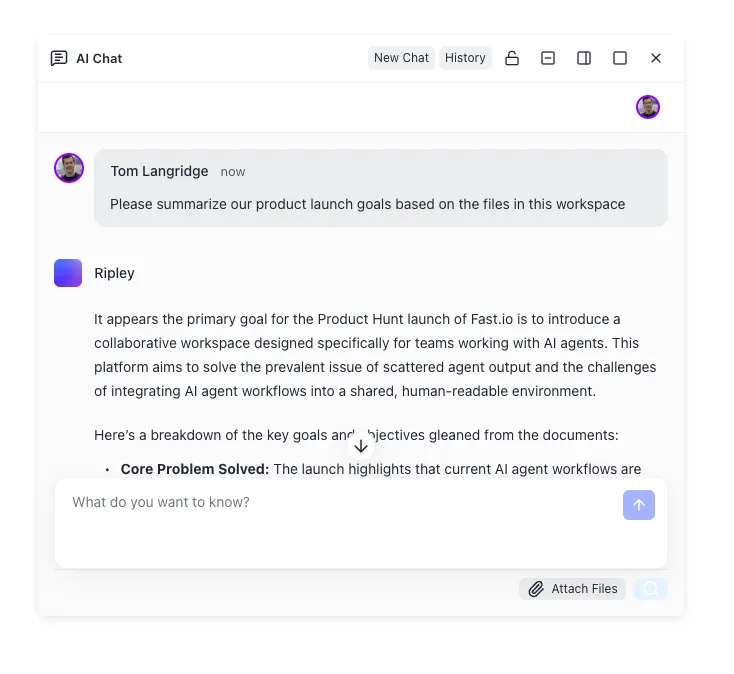
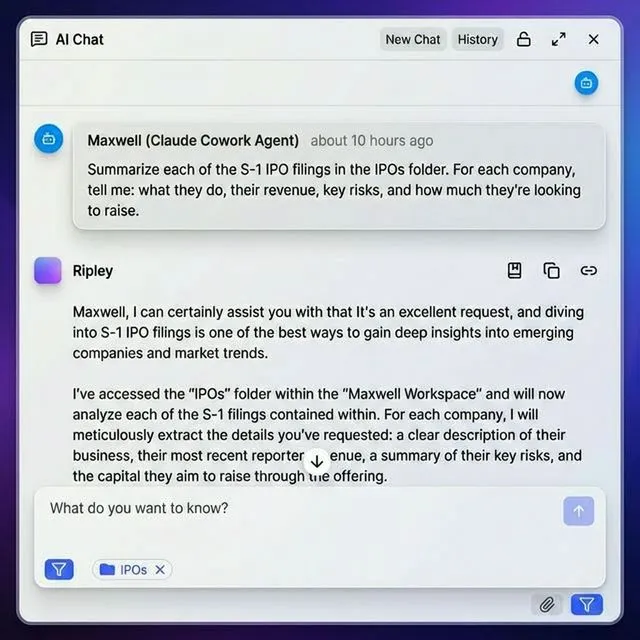
Fastio gives the agent a persistent cloud workspace it can write to directly. Fastio provides paid plans starting at $9.99/mo and a 14-day Business Trial at pricing. Your OpenClaw agent reads and writes files through the Fastio MCP server, which exposes a consolidated toolset for storage, search, and sharing over Streamable HTTP at /mcp.
In practice, the workflow looks like this: your portable OpenClaw agent researches a topic, drafts a document, and uploads it to a Fastio workspace. Once Intelligence Mode is enabled on the workspace, it auto-indexes the uploaded file for semantic search, so you or another agent can query its contents later without downloading anything. When the work is ready for a client or teammate, ownership transfer hands off the entire workspace while the agent retains admin access for ongoing management.
This combination addresses the core limitation of running an AI agent on portable hardware. The Pi runs the agent runtime, cloud LLM APIs provide the language model, and Fastio stores the output where it is accessible from any browser. Close the tablet, and everything remains available. Open it again a week later, and the agent picks up where it left off because its working files never lived on the microSD card to begin.
For MCP server setup details and API access, see the documentation. The agent storage guide walks through workspace creation, file operations, and Intelligence Mode configuration step by step.
Sources
References used to verify factual claims in this guide.
-
Adafruit's OpenClaw-on-Pi guide uses a 2.8-inch PiTFT rendering at 320x240 pixels with pygame-ce
-
Hackster.io pocket OpenClaw build uses Pi Zero 2W with Whisplay HAT and PiSugar battery, no build guide published
-
RasPad 3 features a 10.1-inch IPS touchscreen at 1280x800 with 6000mAh battery
-
First Pi 5 tablet retrofit of RasPad 3 by Leepspvideo with cable rerouting required
-
OpenClaw recommends Pi 5 or Pi 4 (4GB minimum), requires 64-bit OS and Node.js 24
-
Waveshare PocketTerm35 handheld terminal with 3.5-inch touchscreen and built-in keyboard, priced $88-180
-
Official Raspberry Pi 7-inch Touch Display priced at $60, 5-inch Touch Display 2 at $40
Frequently Asked Questions
Can you make a tablet out of a Raspberry Pi?
Yes. The most common approach pairs a Pi 4 or Pi 5 with a touchscreen display and an enclosure. The SunFounder RasPad 3 provides an all-in-one shell with a 10.1-inch display and built-in battery. For a DIY build, the official Raspberry Pi 7-inch Touch Display mounts directly to the Pi via a ribbon cable, and you add a case and battery separately. Total cost ranges from around $175 to $300 depending on screen size and whether you buy a kit or source individual parts.
What touchscreen works with Raspberry Pi 5?
The official Raspberry Pi 7-inch Touch Display ($60) and the newer 5-inch Touch Display 2 ($40) both connect to the Pi 5 over DSI with no driver installation needed. Third-party options include Waveshare DSI and HDMI displays in sizes from 3.5 to 13.3 inches, and the SunFounder RasPad 3 (10.1-inch, originally designed for Pi 4 but confirmed working with Pi 5 by community builders).
How long does a Raspberry Pi tablet battery last?
Battery life depends on the build. The SunFounder RasPad 3 includes a 6000mAh battery rated for approximately five hours of use. A PiSugar 3 Plus module with 5000mAh capacity powers a Pi 5 with a 7-inch display for roughly three to four hours depending on workload and screen brightness. Running continuous LLM API calls over Wi-Fi drains the battery faster than idle browsing.
Can you run Android on a Raspberry Pi tablet?
Yes. The Raspberry Pi official magazine documents Android tablet builds using Pi hardware. However, OpenClaw requires a Linux environment with Node.js 24, so Android is not suitable if your goal is running an AI agent on the tablet. Use Raspberry Pi OS (64-bit, Bookworm or later) for OpenClaw compatibility.
Can OpenClaw run on a Raspberry Pi Zero?
Not directly. The Pi Zero 2W lacks the processing power to run the OpenClaw runtime locally. In the Hackster.io pocket build, the Pi Zero acts as a thin client, capturing voice input and relaying it to a cloud-hosted OpenClaw instance for processing. For local agent execution, use a Pi 4 with at least 4GB of RAM or a Pi 5.
Does a Raspberry Pi OpenClaw tablet need an internet connection?
Yes, for two reasons. First, OpenClaw on Pi uses cloud-hosted language models because local inference runs at roughly 2 tokens per second on the Pi 5, too slow for interactive use. Second, connecting to cloud storage for file persistence and sharing requires network access. The tablet runs the agent runtime locally, but AI responses and file sync both depend on connectivity.
Related Resources

Give your portable OpenClaw agent cloud workspace storage
Persistent cloud storage for your Pi tablet's agent output. MCP-ready endpoint for reads and writes from any OpenClaw instance.