Best Raspberry Pi Screens and Displays for OpenClaw AI Agent Dashboards
Raspberry Pi 5 drives dual 4K monitors at 60 Hz, yet the best agent dashboards run on 7-inch DSI screens that leave all 40 GPIO pins free for sensors. DSI, HDMI, SPI, and e-paper displays each trade off resolution, touch input, and pin consumption differently. The right choice depends on whether your OpenClaw agent needs interactive touch, compact status readout, or full desktop rendering.

Why Display Size Matters More Than Resolution
Raspberry Pi 5 supports two 4K displays at 60 Hz simultaneously through dual micro-HDMI ports, according to official Raspberry Pi documentation. That raw capability matters for desktop computing, but it overshoots what most agent dashboards need. An OpenClaw agent running on a Pi renders status panels, log output, and sensor readings. None of that demands 8.3 million pixels per screen.
The most popular Raspberry Pi screen is still the official 7-inch Touch Display at 800x480, a panel the Raspberry Pi Foundation has committed to manufacturing until at least January 2030. That longevity matters for dedicated devices. When you deploy an agent dashboard that should run for years, you want to avoid redesigning around a discontinued display.
Picking a Raspberry Pi display for an OpenClaw agent dashboard comes down to five criteria that have nothing to do with 4K resolution.
Interface type
DSI displays connect through a dedicated ribbon cable and leave all 40 GPIO pins free. HDMI works with any monitor but adds cable bulk. SPI screens are small and cheap but consume GPIO pins your agent might need for sensors.
Touch support
If the agent responds to tap and swipe input for navigation, confirmation, or settings changes, you need capacitive touch. If the display is output-only, skip touch and save the cost.
Physical size
A 3.5-inch screen fits inside a sensor enclosure. A 7-inch screen works as a wall-mounted panel. A 10-inch or larger HDMI monitor becomes a desk dashboard.
Power draw
DSI panels draw power directly from the Pi's GPIO header. Large HDMI monitors need their own supply. E-paper screens consume power only during refresh, then hold their image with zero draw.
Refresh frequency
LCD and OLED screens refresh at 30 to 60 Hz, good for live dashboards. E-paper takes 2 to 15 seconds per full refresh, which works for data that changes a few times per hour but not for real-time status updates.
Related guides
- Best LLMs for Cline: Model Selection and Cost Tuning GuideSelecting the optimal model configuration for Cline requires balancing code reasoning capability and API expenses....
- How to Build a Live Sports Scoreboard Agent with OpenClaw on Raspberry PiThe robbydyer/sports project on GitHub pulls live NHL, NBA, MLB, MLS, and NCAA scores to a Raspberry Pi LED matrix, but...
- How to Build an OpenClaw Smart Mirror with Raspberry PiA smart mirror display agent is an OpenClaw-powered Raspberry Pi connected to a TFT or monitor behind a two-way mirror,...
- How to Set Up Dual Monitors on Raspberry Pi with OpenClawRaspberry Pi 4 and Pi 5 both support dual-monitor output through two micro-HDMI ports, giving you an extended desktop...
- How to Build an LED Matrix Notification Display Agent with OpenClaw on Raspberry PiRGB LED matrix panels connected to a Raspberry Pi can serve as physical notification dashboards, and OpenClaw can...
- Raspberry Pi Models Compared: Which Board for Your OpenClaw AI AgentThe Raspberry Pi lineup now spans more than a dozen boards across a 30x price range, and memory-driven price hikes in...
More on this subject: OpenClaw on Raspberry Pi (192 guides)
How DSI, HDMI, SPI, and I2C Interfaces Compare
The Raspberry Pi supports four display connection methods. Each trades off resolution, pin usage, and complexity differently.
DSI (Display Serial Interface)
DSI is a dedicated high-bandwidth video link built into every full-size Raspberry Pi board since the Model B+. The ribbon cable plugs into a flat connector near the GPIO header and carries both video data and touch signals on the same cable.
DSI displays run at 60 Hz without consuming any GPIO pins. The Pi's GPU handles rendering directly, so the CPU stays free for your agent process. Power for smaller DSI panels comes through the GPIO header pins on the ribbon cable adapter board, which means no extra power supply is needed.
The tradeoff: DSI is a Raspberry Pi-specific connector, so your display options are limited to panels designed for it. You can't plug in an arbitrary LCD panel the way you can with HDMI.
HDMI (High-Definition Multimedia Interface)
HDMI is the universal display standard. The Raspberry Pi 5 has two micro-HDMI ports, each capable of driving a 3840x2160 display at 60 Hz. Any TV, monitor, or portable HDMI screen works without driver installation.
HDMI is the right choice when you want a large display (10 inches or bigger), when you already have a monitor, or when you need 4K resolution for dense information layouts. The downside for embedded projects is cable bulk: micro-HDMI cables are rigid, and external monitors need their own power.
For portable or wall-mounted setups, 7-inch HDMI touchscreens combine HDMI compatibility with the compact form factor of a DSI panel. They typically cost $40 to $80 and include their own driver board.
SPI (Serial Peripheral Interface)
SPI-connected displays are the smallest and cheapest option. Screens from 1.3 inches to 3.5 inches connect through the Pi's SPI bus, using 5 to 7 GPIO pins (MOSI, SCLK, CE0, DC, RST, and sometimes a backlight control pin).
The Pi's CPU handles all SPI display rendering, which means lower frame rates (typically 20 to 30 FPS) and higher CPU usage compared to DSI or HDMI. For a text-based status dashboard, that's acceptable. For anything involving smooth scrolling or animation, SPI becomes a bottleneck.
The real cost of SPI displays is GPIO consumption. If your OpenClaw agent connects to temperature sensors, relays, or other peripherals, those 5 to 7 pins might be needed elsewhere.
I2C (Inter-Integrated Circuit)
I2C displays are even smaller than SPI options, typically 0.96-inch to 1.3-inch OLED panels using the SSD1306 controller. They need only two data pins (SDA and SCL) plus power and ground. Resolution is low (128x64 or 128x32 pixels), but the displays are sharp and high-contrast because each pixel emits its own light.
I2C OLEDs work well as secondary status displays: showing agent uptime, current task, CPU temperature, or network status. They consume minimal power and coexist with other I2C devices on the same bus, so adding one to an existing sensor project takes almost no extra wiring.
The limitation is screen real estate. At 128x64 pixels, you get about 8 lines of small text. This is a status ticker, not a full dashboard.

Best DSI Displays for Dedicated Agent Panels
DSI displays offer the cleanest integration for a dedicated Raspberry Pi agent dashboard. No GPIO pins consumed, no extra power supply, and full frame rate rendering with minimal CPU overhead.
Official Raspberry Pi Touch Display (7-inch)
The original 7-inch Touch Display has been the reference DSI panel since 2015. It runs at 800x480 resolution with 10-point capacitive touch and connects through a single DSI ribbon cable. Power comes from the Pi's GPIO header, so the whole setup runs on one USB-C power supply.
At 800x480, pixel density is modest (about 133 PPI), but the resolution is practical for dashboard layouts with large text, status indicators, and touch buttons. Raspberry Pi OS includes touchscreen drivers and an on-screen keyboard out of the box. The display is rated for production until at least January 2030, which makes it a safe long-term choice for a dedicated device.
The original Touch Display is available from most Pi retailers for approximately $60 to $70.
Raspberry Pi Touch Display 2 (5-inch and 7-inch)
Released in late 2024, the Touch Display 2 is the upgraded version. The 7-inch model runs at 720x1280, nearly double the pixel count of the original. It supports five-point capacitive touch and uses an updated DSI connector with a slimmer driver board.
The higher resolution means sharper text and more room for dashboard panels. At 1280 pixels tall in portrait orientation (or 720 pixels tall in landscape), you can fit detailed agent log output alongside status widgets without straining to read small text.
Touch Display 2 works with Pi B+ and later models. Raspberry Pi 5 and Compute Modules natively support connecting two Touch Display 2 units simultaneously, which opens up multi-panel agent dashboard configurations. The 5-inch model starts at approximately $40, and the 7-inch model at approximately $55.
Waveshare 7-inch DSI Options
Waveshare manufactures several 7-inch DSI panels that compete with the official displays:
7-inch DSI LCD (Standard): 800x480, capacitive touch, DSI connection. A direct competitor to the original official display at a similar price.
7-inch DSI LCD (C): 1024x600 resolution with IPS panel and capacitive touch. The higher resolution fills the gap between the original display and the Touch Display 2.
7-inch DSI TOUCH-A (Premium): 720x1280 resolution with IPS panel, optically bonded toughened glass, 10-point touch, and anti-fingerprint coating. This is the third-party alternative to the Touch Display 2, with optical bonding that reduces internal reflections and improves readability under bright lighting.
All Waveshare DSI displays work with Raspberry Pi OS, Ubuntu, and Kali Linux. Installation follows the same pattern: plug in the DSI cable, connect power, and boot. No driver installation is needed on current Raspberry Pi OS versions.


Persist your OpenClaw agent data across dashboard rebuilds
Intelligent workspace with persistent cloud storage. Your agent stores outputs in the cloud using the Fast.io MCP server, and you can swap SD cards, rebuild Pis, or hand dashboards to teammates without losing work.
How to Pick an HDMI Display for Agent Dashboards
When your agent dashboard needs more screen space, or when you want to reuse a monitor you already have, HDMI is the straightforward choice.
Portable HDMI Touchscreens (7 to 10 inches)
Portable HDMI monitors combine the convenience of a small, self-contained screen with the universal compatibility of HDMI. Most are 7-inch or 10.1-inch IPS panels with 1024x600 or 1920x1080 resolution and capacitive touch delivered over a separate USB cable.
For agent dashboards, a 10.1-inch 1080p HDMI touchscreen gives you screen real estate that DSI panels can't match. You can run a full Raspberry Pi OS desktop with a web-based dashboard (Grafana, Node-RED, or a custom HTML page served by your OpenClaw agent) at a resolution where text stays crisp from arm's length.
The drawback is cabling. A portable HDMI display needs three connections: micro-HDMI for video, USB for touch, and a power cable (either USB or barrel jack). That's three cables where a DSI panel needs zero external cables.
Portable HDMI monitors range from $40 to $120 depending on resolution, size, and build quality. Popular options include the ROADOM 7-inch (1024x600, capacitive touch) and similar panels from EVICIV and Elecrow, all available with confirmed Raspberry Pi 5 compatibility.
Standard Monitors and TVs
Any HDMI monitor or TV works with the Raspberry Pi. For a desk-based agent dashboard, a 24-inch 1080p monitor gives you the most usable layout. The Pi drives it without any performance issues, and you can use it as both an agent display and a general-purpose screen.
Pi 5's dual micro-HDMI ports allow two monitors simultaneously: one for the agent dashboard, one for a terminal or log viewer. Both ports support up to 4K at 60 Hz with no special configuration required.
When to Choose HDMI Over DSI
HDMI makes sense when you need a screen larger than 7 inches, when you want 1080p or higher resolution, when you're wall-mounting a TV as a public-facing dashboard, or when you want to disconnect the display and use it for something else. DSI wins when the display is permanently attached and you want the cleanest, lowest-cable-count build.
SPI, I2C, and E-Paper Screens for Compact Status Panels
Not every agent dashboard needs a full graphical interface. Sometimes the only requirement is a small screen that shows whether the agent is running, what task it's working on, and when something goes wrong.
SSD1306 OLED Displays (I2C or SPI)
The SSD1306 is the standard small-screen option for Raspberry Pi projects. Available in 0.96-inch and 1.3-inch sizes at 128x64 pixels, these OLED panels produce sharp, high-contrast text readable in any lighting. Each pixel emits its own light, so there's no backlight to wash out in direct sunlight or glow in a dark room.
An I2C SSD1306 needs just four wires: VCC, GND, SDA, and SCL. You can share the I2C bus with temperature sensors, barometers, and other peripherals without any pin conflicts. SPI versions are slightly faster but consume more pins.
For an OpenClaw agent, an SSD1306 works well as a secondary display. Wire it up alongside a primary DSI or HDMI screen and use it to show agent heartbeat, current task name, error count, and uptime. Or use it as the only display on a headless Pi where the main interface is a web dashboard accessed remotely, with the OLED providing at-a-glance status for anyone walking past the device.
Python libraries like luma.oled and Adafruit CircuitPython SSD1306 make rendering text and basic graphics straightforward. A typical status screen updates every 2 to 5 seconds with about 1% CPU overhead.
E-Paper and E-Ink Displays
E-paper displays hold their image indefinitely with zero power draw after the initial refresh. That makes them the most energy-efficient option for agent status displays that update infrequently: hourly summaries, daily reports, or alert-only notification boards.
Waveshare offers Raspberry Pi e-paper HATs from 2.13 inches to 7.5 inches. The larger panels (7.5-inch at 800x480) fit enough content for a meaningful dashboard showing scheduled tasks, recent agent activity, and system health metrics.
Pimoroni's Inky Impression line adds color to e-paper. The 7.3-inch model uses a Spectra 6 panel with six-color output. Units manufactured from April 2026 onward use an updated AC waveform that improves color accuracy while adding slightly longer core refresh times.
The limitation is refresh speed. A full e-paper screen refresh takes 2 to 15 seconds depending on the panel and whether you're doing a full or partial update. This rules out live-updating dashboards but works for periodic status pages that refresh every few minutes or on agent-triggered events like task completion or error alerts.
When Small Screens Win
Small displays shine in three scenarios. Sensor enclosures where space is tight benefit from a sub-2-inch OLED that fits alongside the Pi Zero. Always-on devices where power consumption matters can use e-paper that draws zero watts between updates. And multi-Pi deployments where a $5 OLED per node costs less than a $50 touchscreen per node make small screens the practical choice. If your OpenClaw agents run on a cluster of Pis handling different tasks, giving each node a cheap status display beats giving each one a full touchscreen dashboard.
OpenClaw Dashboard Integration with Persistent Storage
The display shows what your agent is doing right now. But dashboards lose their value if every reboot starts from a blank slate. Pairing your Raspberry Pi display with persistent cloud storage means your agent's state, logs, and outputs survive SD card corruption, power outages, and hardware swaps.
Connecting the Display to OpenClaw
OpenClaw runs as a process on the Pi and exposes agent state through local interfaces. Your dashboard application (whether it's a Python script driving a small OLED, a web page on a DSI touchscreen, or a full desktop app on an HDMI monitor) reads agent status and renders it to the screen.
The key architectural decision is where data lives. If agent logs and outputs stay only on the Pi's SD card, you lose everything when the card degrades. SD cards in always-on Raspberry Pi setups typically last 2 to 5 years before write wear causes data loss, and running agents with frequent file writes accelerates that timeline.
Adding Fast.io for Persistent Agent Storage
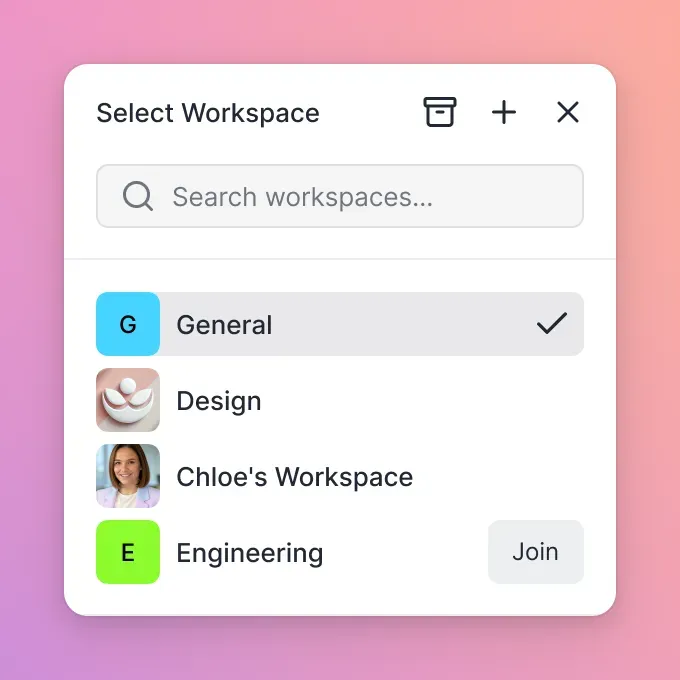
Fast.io provides workspaces where your OpenClaw agent can store outputs, logs, and generated files in cloud storage accessible to both the agent and any human who needs to review the work. Fast.io offers a 14-day Business Trial, card required (see pricing).
Your Pi-based agent writes files to a Fast.io workspace using the MCP server or REST API. The dashboard displays local agent status on the Pi's screen, while the actual work product lives in the cloud where it's versioned, searchable, and shareable. If the Pi's SD card fails, you swap in a new card, reinstall the agent, reconnect to the same workspace, and pick up where you left off.
Fast.io workspaces with Intelligence Mode enabled automatically index uploaded files for semantic search and citation-backed chat. A second agent or a human teammate can query the first agent's outputs without downloading and parsing files manually.
Local Alternatives
For local-only setups, you can mount a USB SSD for more durable storage than an SD card, or use NFS/SMB to write to a NAS on your local network. Local storage avoids cloud dependency but doesn't provide sharing, search, or handoff capabilities.
S3-compatible object storage (self-hosted MinIO or AWS S3) is another option for programmatic file storage without collaboration features. The tradeoff is configuration complexity: setting up IAM policies, bucket lifecycle rules, and access credentials for a single Pi agent adds overhead that a managed workspace handles for you.
Matching the Display to Your Storage Strategy
A full DSI or HDMI touchscreen paired with cloud storage makes sense for dashboards that humans interact with regularly, where you want to tap a file on screen and know it's backed up remotely. An e-paper or OLED status panel paired with the same cloud workspace works for fire-and-forget sensor agents that log data to Fast.io workspaces while the display just confirms the agent is alive. Either way, separating the display layer from the storage layer means you can swap screens, rebuild the Pi, or move the agent to different hardware without losing data.
Sources
References used to verify factual claims in this guide.
-
Raspberry Pi 5 supports two 4K displays at 60 Hz simultaneously through dual micro-HDMI ports
-
Official Touch Display runs at 800x480 resolution with 10-point capacitive touch, rated for production until at least January 2030
-
Touch Display 2 offers 720x1280 resolution with five-point capacitive touch in 5-inch and 7-inch models
-
Inky Impression 7.3-inch models from April 2026 use AC waveform Spectra 6 panels with improved color
Frequently Asked Questions
What screen works with Raspberry Pi?
Any display with HDMI, DSI, SPI, or I2C connectivity works with a Raspberry Pi. HDMI monitors and TVs work plug-and-play through the Pi's micro-HDMI ports. The official Raspberry Pi Touch Display (7-inch, 800x480) and Touch Display 2 (720x1280) connect via DSI ribbon cable. Smaller OLED screens (0.96-inch to 1.3-inch, 128x64 pixels) use I2C or SPI. E-paper panels from Waveshare and Pimoroni connect via SPI or the Pi's GPIO header.
How do I connect a touchscreen to Raspberry Pi?
For the official Raspberry Pi Touch Display or Touch Display 2, connect the DSI ribbon cable between the display's driver board and the Pi's DSI port, then connect power through the GPIO header cable. Boot into Raspberry Pi OS and touch input works immediately with no driver installation. For HDMI touchscreens, connect micro-HDMI for video and USB for touch data. SPI touchscreens require a driver package and configuration in /boot/firmware/config.txt.
What is the best display for Raspberry Pi 5?
The Raspberry Pi Touch Display 2 (7-inch, 720x1280) is the strongest all-around display for Pi 5. It has higher resolution than the original Touch Display, connects through a single DSI cable, and supports dual-display configurations natively on Pi 5. For larger screens, any 1080p or 4K HDMI monitor works through the Pi 5's dual micro-HDMI ports with no special setup needed.
Can Raspberry Pi run a 4K monitor?
Yes. Raspberry Pi 5 supports two 4K (3840x2160) displays at 60 Hz simultaneously through its dual micro-HDMI ports with no extra configuration. Raspberry Pi 4 supports 4K at 60 Hz on one port (with the hdmi_enable_4kp60 flag set in config.txt) and 4K at 30 Hz or 1080p at 60 Hz on the second port. Older Pi models do not support 4K output.
Do I need a touchscreen for an AI agent dashboard?
Not necessarily. If your agent dashboard is output-only, showing status, logs, and alerts, a non-touch display works fine and costs less. Touch input is useful when the agent needs physical interaction like confirming actions, navigating between views, or triggering manual commands. For headless setups where you access the dashboard over a web browser from another device, the Pi's local display can be a simple status screen without touch.
Related Resources

Persist your OpenClaw agent data across dashboard rebuilds
Intelligent workspace with persistent cloud storage. Your agent stores outputs in the cloud using the Fast.io MCP server, and you can swap SD cards, rebuild Pis, or hand dashboards to teammates without losing work.