Best Onehub Alternatives for Secure File Sharing in 2026
Onehub is a solid file sharing and virtual data room platform, but it is not the only option. This guide compares the best Onehub alternatives on pricing, security, collaboration, and AI features so you can find the right fit for your team.

Why Teams Look for Onehub Replacements
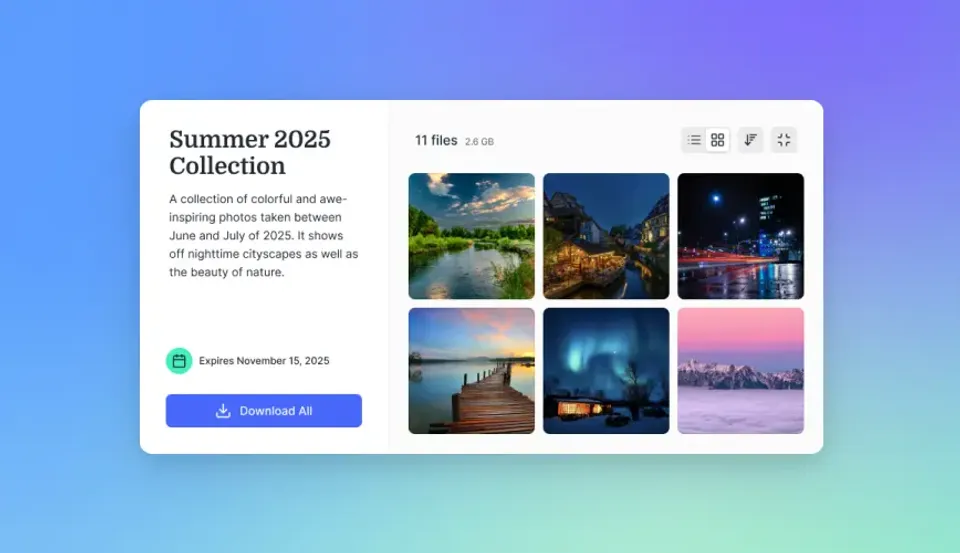
Onehub has been around since 2007 and has powered over 900,000 workspaces. It handles the basics well: branded workspaces, granular permissions, file previews for 30+ formats, and a virtual data room mode for deal-sensitive documents. For small teams that need straightforward document sharing with clients, it gets the job done.
But Onehub has clear limitations that push teams to look elsewhere.
Dated interface. Users on G2 and Capterra consistently flag the UI as outdated. The design has not kept pace with modern file sharing tools, and basic features like color-coded files, favorites, and in-app link sharing are missing.
Rigid pricing tiers. Onehub's Standard plan starts at $15/user/month with a 3-user minimum, which means you are paying at least $45/month before adding anyone. The Advanced plan jumps to $25/user/month with a 5-user minimum. The Data Room Edition is $375/month. For small teams testing a VDR workflow, that is a steep commitment with only a 14-day trial to evaluate.
Limited integrations. Onehub does not integrate with Microsoft Office for direct editing, and users report that sharing files with people outside the platform is cumbersome. There is no native API for automation, and the DocuSign integration is locked behind the Advanced tier.
No AI features. Onehub offers full-text search, but there is no semantic search, no AI-powered document summarization, and no chat-with-files capability. As competitors add intelligence layers to their platforms, Onehub's feature set has stayed static.
Collaboration gaps. Activity tracking exists, but real-time co-editing and threaded commenting on specific document sections are not part of the platform. Teams that need to discuss files in context end up switching to email or Slack.
If any of these friction points sound familiar, the alternatives below address them directly.
Related guides
- Smash File Transfer Review and Better Alternatives for 2026Smash (fromsmash.com) is a file transfer service from France that lets you send large files for free. While generous...
- Best WeTransfer Alternatives for Teams Who Need MoreWeTransfer caps free uploads at 3GB (with a 10-transfer monthly limit) and offers limited branding or analytics, even...
- How to Choose the Best Large File Sharing Platform for Your BusinessLarge file sharing platforms handle GB and TB transfers for businesses that have outgrown email or basic cloud storage....
- OneDrive Alternatives for Teams Who Don't Live in Microsoft 365A OneDrive alternative is cloud storage software that provides file sharing and collaboration features without...
- 5 Best ShareFile Alternatives for Secure Business File SharingShareFile works well for basic document sharing, but many teams find the pricing steep and the interface dated. This...
- Best Gofile Alternatives for Business File SharingGofile is a free file hosting service popular for quick uploads, but it lacks SLA guarantees, permanent storage, and...
More on this subject: File Sharing (155 guides)
Side-by-Side Comparison of Top Alternatives
Before diving into each platform, here is a quick reference comparing the five strongest Onehub alternatives across the features that matter most.
Pricing
- Box Business: $20/user/month (annual), 3-user minimum. Unlimited storage.
- Dropbox Business: $20/user/month (annual), 3-user minimum. 9 TB pooled storage.
- ShareFile: $16/user/month (annual), 5 GB/user storage. VDR add-on at higher tiers.
- Egnyte: $20/user/month (annual). Content governance and compliance focus.
- Fastio: Usage-based credits starting at $9.99/mo (Starter, 250 GB), $49.99/mo (Business, 5 TB), $199.99/mo (Enterprise, 25 TB); 14-day Business Trial requiring a credit card.
Security Features
- Box: SOC 2, HIPAA, FedRAMP. Granular permissions, watermarking, classification labels.
- Dropbox: SOC 2, HIPAA eligible. Link expiration, password-protected sharing, remote wipe.
- ShareFile: SOC 2, HIPAA. E-signatures, encrypted email plugin, DLP policies.
- Egnyte: SOC 2, HIPAA. Content lifecycle management, ransomware detection, GDPR tools.
- Fastio: 2FA, scoped API access, audit trails, granular permissions at org/workspace/folder/file level.
AI and Search
- Box: Box AI for Q&A, summarization, and metadata extraction across files.
- Dropbox: Dropbox Dash for universal search across connected apps. AI-powered search.
- ShareFile: Basic search. No AI document analysis.
- Egnyte: Content classification and lifecycle policies. Limited AI features.
- Fastio: Intelligence Mode with semantic search, RAG chat with citations, auto-summarization, and metadata extraction.
Best For
- Box: Enterprises needing compliance certifications and deep integrations.
- Dropbox: Teams already in the Dropbox ecosystem wanting familiar UX.
- ShareFile: Businesses that need e-signatures and client-facing file requests.
- Egnyte: Organizations with strict content governance and hybrid storage needs.
- Fastio: Teams wanting AI-first document intelligence, branded content portals, and flat plans with seats included.
Box: Enterprise-Grade with Deep Integrations
Box is the most direct Onehub competitor for organizations that need enterprise compliance. If your industry requires SOC 2, HIPAA, or FedRAMP certification from your file sharing provider, Box checks those boxes where Onehub cannot.
Where Box pulls ahead of Onehub. The integration library is massive. Box connects natively with Microsoft 365, Google Workspace, Salesforce, Slack, and hundreds of other tools through its marketplace. You can edit Word documents, Excel spreadsheets, and PowerPoint files directly in Box without downloading them. Onehub's lack of Office integration is one of its most common complaints, and Box solves that completely.
Box AI, launched in 2023 and expanded since, adds Q&A across your files, document summarization, and metadata extraction. You can ask questions about contracts, financial statements, or project briefs and get answers grounded in your actual documents. Onehub offers no equivalent.
Where Box falls short. Pricing scales quickly. The Business plan starts at $20/user/month, but the Enterprise plan (which unlocks advanced security and compliance features) runs higher. For small teams under 10 people, Box can feel overbuilt and expensive.
The admin console is powerful but complex. Setting up custom metadata templates, retention policies, and security classifications takes real configuration time. If you just need to share files with a client, Box's enterprise machinery can feel like overkill.
Best for: Mid-to-large organizations that need compliance certifications, Office 365 integration, and a platform their IT team can lock down.


Try AI-Powered File Sharing with Fastio
Fastio gives your team built-in document intelligence, branded content portals, and granular permissions. Start your 14-day Business Trial at /pricing/.
Dropbox Business: Familiar Interface, Strong Sync
Dropbox is the file sharing tool most people have already used. That familiarity is its biggest advantage over Onehub. There is almost no learning curve, and the desktop sync client is still one of the best in the category.
Where Dropbox pulls ahead of Onehub. The sync engine is reliable and fast. Files sync across devices without the disconnection issues that Onehub users report when using its Dropbox-backed storage tier. Smart Sync lets team members see all files in their file explorer without downloading everything, which matters when you are working with large media files or project archives.
Dropbox Dash provides universal search across connected apps, not just files stored in Dropbox. If your team uses Google Docs, Slack, Notion, and Dropbox together, Dash searches across all of them from one bar. Onehub's search only covers files inside its own workspaces.
Transfer and Capture, introduced in recent years, add structured file collection workflows. Dropbox Transfer handles large file delivery (up to 100 GB), and Capture lets teams record screen and video messages attached to specific files. Both address collaboration gaps that Onehub does not touch.
Where Dropbox falls short. Dropbox Business does not include a true virtual data room mode. There is no document watermarking, no NDA gate, and no stealth mode where viewers cannot see each other. If you are using Onehub specifically for deal rooms or investor due diligence, Dropbox is not a direct replacement for that use case.
Permission granularity is decent but not as fine as dedicated VDR platforms. You can set view-only, edit, or upload permissions at the folder level, but you cannot restrict printing or set page-level access controls.
Best for: Teams that want dead-simple file sync, universal search, and do not need VDR-specific features like watermarking or NDAs.
ShareFile and Egnyte: Specialized Alternatives
ShareFile and Egnyte serve different niches, but both address specific Onehub gaps worth considering.
ShareFile: Built for Client-Facing Workflows
ShareFile, owned by Citrix (now Cloud Software Group), targets professional services firms. Accountants, financial advisors, and law firms use it to collect and share sensitive client documents.
The standout feature is built-in e-signatures. Where Onehub requires an Advanced plan plus a separate DocuSign subscription, ShareFile includes e-signature capability natively. You can send a document for signature, track its status, and store the executed copy in the same workspace. For firms that handle contracts and engagement letters daily, this removes a tool from the stack.
ShareFile also offers an encrypted email plugin for Outlook that replaces large attachments with secure download links. Onehub has no email integration at all.
The downside is storage. The standard plan includes only 5 GB per user, which fills up fast with scanned documents and PDFs. Higher tiers unlock more storage but push the per-user cost above $25/month.
Best for: Professional services firms that need e-signatures, client file requests, and Outlook integration in one tool.
Egnyte: Hybrid Storage and Content Governance
Egnyte occupies a unique position: it bridges cloud and on-premise storage. If your organization has files on local NAS devices, network drives, and cloud storage, Egnyte unifies access across all of them without forcing a full cloud migration.
The content governance engine is where Egnyte differentiates from Onehub. It scans files for sensitive data (SSNs, credit card numbers, health records), applies retention policies, and flags compliance violations automatically. Onehub's permission model is workspace-level at best. Egnyte's operates at the content level.
Ransomware detection is another feature Onehub lacks entirely. Egnyte monitors file activity patterns and alerts administrators when it detects behavior consistent with encryption malware, then quarantines affected files.
The tradeoff is complexity. Egnyte's admin console has a steeper learning curve than Onehub, and the hybrid storage setup requires IT involvement. For teams that just need cloud file sharing, Egnyte can feel overengineered.
Best for: Organizations with hybrid infrastructure, strict compliance requirements, or a need for content-level data governance that goes beyond basic permissions.
Fastio: AI-First Workspaces with Branded Portals
Fastio takes a different approach than the platforms above. Instead of retrofitting AI onto a traditional file sharing tool, Fastio built intelligence into the workspace from the start. Every file uploaded to an intelligence-enabled workspace is automatically indexed for semantic search, summarization, and citation-backed chat.
Where Fastio addresses Onehub's gaps. Onehub's biggest missing piece is document intelligence. Fastio fills that gap completely. Enable Intelligence on a workspace and you can ask questions across all your files, get answers with page-level citations, search by meaning rather than exact keywords, and extract structured metadata from contracts, invoices, or technical documents.
Content Portals solve the branded sharing problem more flexibly than Onehub's white-label feature (which costs an extra $100/month on the Advanced plan). Fastio portals include custom branding, guest access without account creation, auto-expiring access links, and Ripley AI, which lets portal visitors ask questions about shared documents and get cited answers.
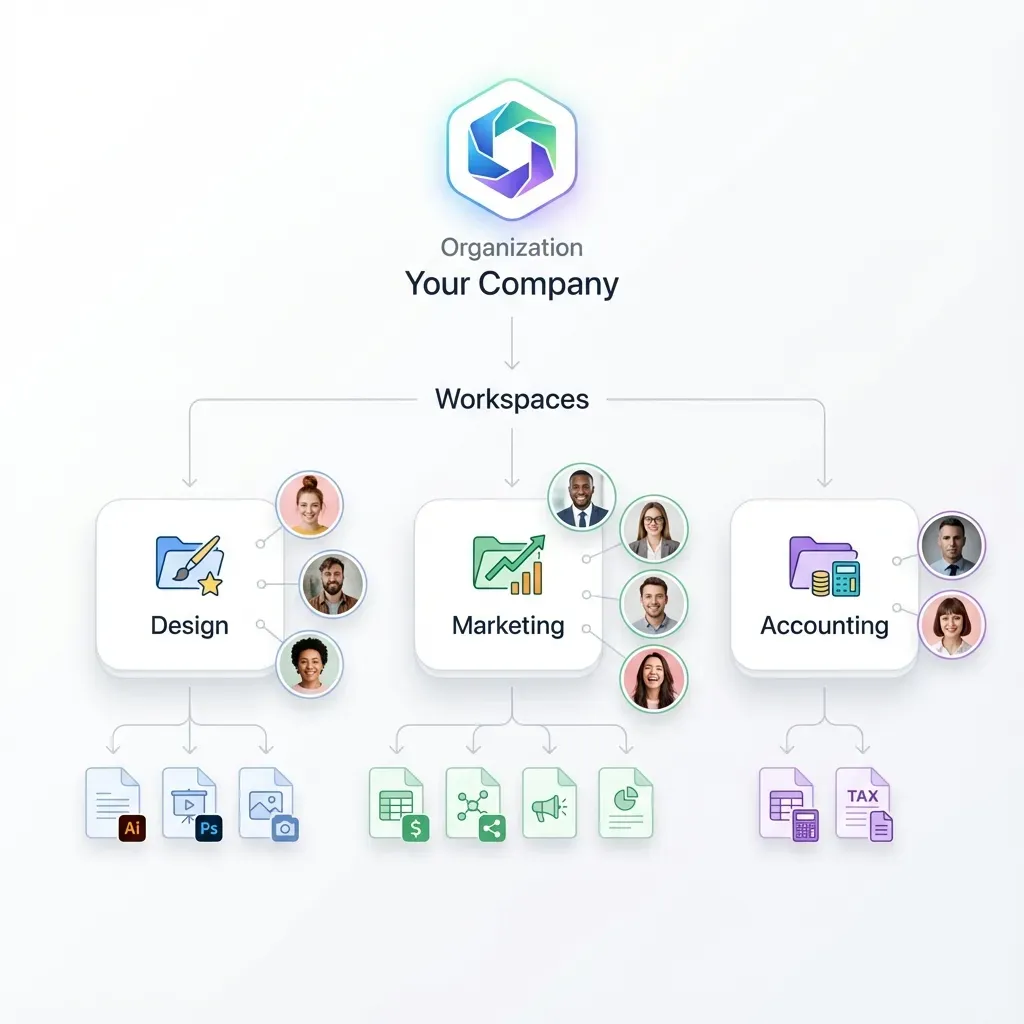
The permission model is granular at every level: org, workspace, share, folder, and file. Branded shares support Send, Receive, and Exchange workflows, which means you can collect files from clients (like Onehub's upload feature) and deliver files to clients through the same platform with different access rules.
For teams evaluating a switch from Onehub, Fastio offers a 14-day Business Trial requiring a credit card. That is enough to migrate a real project and test the platform under actual working conditions with full access to workspaces, permissions, and AI features.
Cloud Import lets you pull files directly from Google Drive, Dropbox, OneDrive, and Box via OAuth, preserving folder structure. If you are migrating from Onehub and your files also live in other cloud services, you can consolidate without manual downloads and re-uploads.
Where Fastio differs from traditional VDRs. Fastio's strength is ongoing collaboration with built-in AI, not one-time deal rooms. If your use case is a formal regulated transaction with deal-stage workflows and a defined close date, Box or a dedicated data room provider is a better fit.
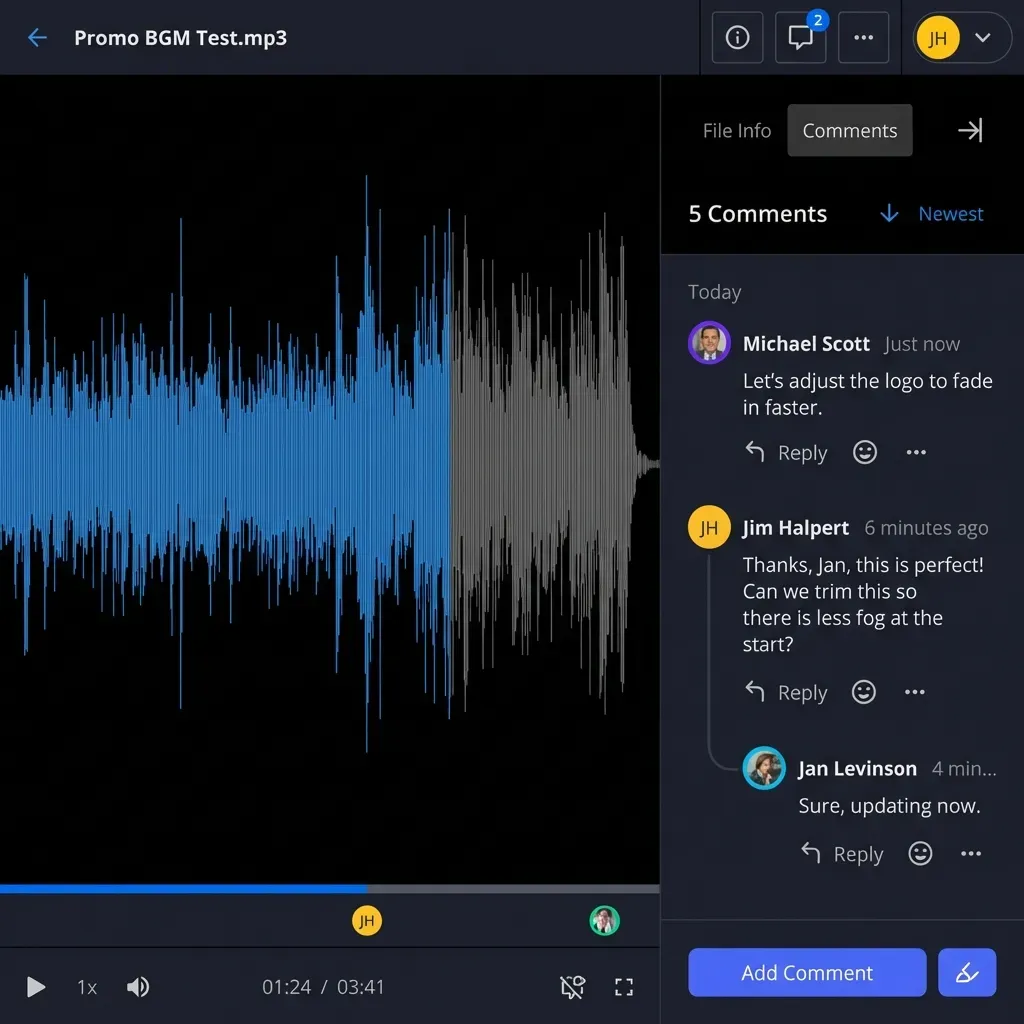
The platform also supports per-file version history, anchored comments, and a detailed activity log to track collaboration alongside files.
Best for: Teams that want document intelligence built into their file sharing platform, need branded client portals, and want usage-based plans.

How to Choose the Right Onehub Replacement
The right alternative depends on what drove you away from Onehub in the first place.
If compliance certifications are non-negotiable, Box or Egnyte should be your shortlist. Both hold SOC 2 and HIPAA certifications, and Box adds FedRAMP for government work. Onehub lacks these, and so does Fastio. If your procurement team requires certified platforms, this narrows the field quickly.
If you need Office 365 integration, Box or Dropbox are the strongest options. Both support in-browser editing of Microsoft documents without downloading. This was one of Onehub's most common complaints, and either platform resolves it.
If you want AI-powered document search and chat, Fastio and Box are the current leaders. Box AI handles Q&A and summarization. Fastio's Intelligence Mode adds semantic search, citation-backed chat, metadata extraction, and portal AI for client-facing use. ShareFile and Onehub offer neither.
If you need a virtual data room specifically, evaluate whether you need the full VDR feature set (watermarks, NDAs, stealth mode, compliance certifications) or whether secure branded sharing covers your workflow. Onehub's Data Room Edition starts at $375/month. Fastio's Content Portals provide branded, password-protected sharing with analytics and AI at no extra cost on any plan.
If budget is the primary concern, Fastio's plans start at $9.99/mo (Starter, 250 GB) with a 14-day Business Trial (card required), well below Onehub's $45/month minimum entry point.
Migration tip: Before committing, run a parallel test. Set up your top two candidates with a real project folder, invite a few team members, and use both platforms for a week. File sharing tools feel different once you are using them daily with real files and real collaborators. A 30-minute demo does not surface the friction points that a week of actual use will.
Sources
References used to verify factual claims in this guide.
-
Onehub has powered over 900,000 workspaces
-
Onehub Standard plan starts at $15/user/month with a 3-user minimum Onehub Data Room Edition starts at $375/month Onehub Advanced plan is $25/user/month with a 5-user minimum
Frequently Asked Questions
What is the best alternative to Onehub?
The best alternative depends on your priorities. Box is strongest for enterprise compliance and integrations. Dropbox Business offers the most familiar interface and reliable sync. Fastio provides built-in AI document intelligence and a 14-day Business Trial (see /pricing/). For virtual data room use cases specifically, Box or a dedicated VDR provider like Firmex may be a better fit than Onehub's Data Room Edition.
Is Onehub a virtual data room?
Onehub offers a Data Room Edition starting at $375/month that includes virtual data room features like document watermarks, stealth mode, NDA gates, and automatic indexing. The Standard and Advanced plans are file sharing tools without VDR-specific features. If you only need the VDR capabilities, you are paying for the full Data Room Edition tier regardless of how many users you have.
How much does Onehub cost per user?
Onehub's Standard plan costs $15/user/month ($12.50 annually) with a 3-user minimum and 1 TB storage. The Advanced plan is $25/user/month ($20 annually) with a 5-user minimum and unlimited storage. The Data Room Edition is $375/month flat for 5 users, plus $20/additional user on annual billing. All plans include a 14-day free trial.
Can I migrate files from Onehub to another platform?
Yes. Most alternatives support bulk upload via drag-and-drop or desktop sync clients. Fastio also offers Cloud Import, which pulls files from Google Drive, Dropbox, OneDrive, and Box via OAuth while preserving folder structure. For Onehub specifically, you would download your files and re-upload them to the new platform, since Onehub does not offer a direct migration API for third-party services.
Does Onehub have AI features?
No. Onehub provides full-text search, file previews for 30+ formats, and activity tracking, but it does not offer AI-powered features like semantic search, document summarization, or chat-with-files capability. Alternatives like Box (Box AI) and Fastio (Intelligence Mode) include these features natively.
Related Resources

Try AI-Powered File Sharing with Fastio
Fastio gives your team built-in document intelligence, branded content portals, and granular permissions. Start your 14-day Business Trial at /pricing/.