How to Connect AI Agents to Twilio Segment with MCP
Segment MCP servers give AI agents direct access to your customer data platform, from firing track calls and identifying users to auditing sources and reviewing tracking plans. This guide covers the available Segment MCP servers, what each one can do, and how to pair them with a persistent workspace so your agents can store and share the data they pull from Segment.


What a Segment MCP Server Does
A Segment MCP server is a Model Context Protocol integration that lets AI agents send events, query user profiles, manage sources, and retrieve analytics from Twilio Segment's customer data platform. Instead of writing custom API wrappers for every agent that needs Segment access, you point the agent at an MCP endpoint and it gets structured tools for the Segment API.
Segment is big infrastructure. The platform processed 12.1 trillion API calls in 2023, and over 25,000 companies use it to collect, route, and activate customer data. That scale means most engineering teams already have Segment pipelines running, and the question is how to let AI agents participate in those pipelines without building bespoke integrations.
MCP solves this by standardizing the interface. An agent running Claude, GPT-4, Gemini, or any other LLM can connect to a Segment MCP server and call tools like track, identify, list_sources, or get_tracking_plan. The agent doesn't need to know the Segment API's authentication flow or endpoint structure. It just calls the tool and gets structured data back.
The practical applications break into two categories:
- Read operations: Auditing your data pipeline. List all sources and destinations, review tracking plan schemas, check API usage metrics, inspect warehouse connections. An agent can map your entire Segment architecture in seconds.
- Write operations: Acting on data. Track user events, identify users with updated traits, group users into accounts, record page views and screen events. An agent running a customer onboarding workflow can fire Segment events at each step without any custom code.
Three hosted MCP servers currently offer Segment integration: Composio, Pipedream, and Vinkius. Each takes a different approach to scope and permissions.

Related guides
- How to Connect AI Agents to Google Analytics with MCPThe Google Analytics MCP server connects AI agents to GA4 properties through the Model Context Protocol, giving them...
- How to Connect DocuSign to AI Agents with the MCP ServerDocuSign's official MCP server lets AI agents send envelopes, check signing status, query agreements through Navigator,...
- How to Connect AI Agents to Google Docs with MCPAn MCP server for Google Docs exposes document read, write, and search capabilities to AI agents through the Model...
- How to Connect AI Agents to Make.com with an MCP ServerMake.com offers a cloud-hosted MCP server that turns your automation scenarios into tools AI agents can call directly....
- How to Connect AI Agents to Azure Blob Storage via MCPAn Azure Blob Storage MCP server exposes cloud containers and object storage to AI agents using standard Model Context...
- How to Connect Azure Container Apps to the Fastio MCP ServerConnecting agent runtimes on Azure Container Apps to the Fastio remote MCP server provides a secure, serverless...
More on this subject: MCP and Model Context Protocol (244 guides)
Comparing Segment MCP Servers
The three available Segment MCP servers differ in tool count, read/write access, and how they handle authentication. Picking the right one depends on whether your agent needs to observe your Segment setup or actively push data into it.
Composio (16 Tools, Read-Write)
Composio offers the broadest Segment MCP surface with 16 tools covering both observation and action. On the tracking side, agents can fire Track, Identify, Group, Page, and Screen calls through the Segment HTTP Tracking API. They can also batch multiple events in a single request, alias user IDs, and manage source labels.
For pipeline management, Composio provides tools to get destination details, list delivery metrics, inspect source schemas, list connected warehouses, update sources, delete sources, and remove write keys.
Authentication goes through Composio's managed layer. You provide your Segment API credentials once, and Composio handles token storage, refresh, and scoped permissions. The platform limits what each agent can do by default, which matters when you're giving write access to a production Segment workspace.
Best for: Agents that need to both read from and write to Segment. Customer onboarding flows, automated event tracking, data pipeline management.
Pipedream (Read-Write, API-Driven)
Pipedream's MCP server exposes Segment tools through a standardized endpoint at mcp.pipedream.net/v2. It connects AI assistants to Segment using the same infrastructure that powers Pipedream's workflow automation, which means you get access to Segment alongside thousands of other API integrations.
Pipedream handles OAuth and API key management through its Connect feature. Each user account gets isolated credentials, so you can build multi-tenant agent applications where different users connect their own Segment workspaces.
Best for: Teams already using Pipedream for workflow automation who want to add AI agent access to Segment alongside other integrations.
Vinkius (7 Tools, Read-Only)
Vinkius takes the opposite approach: strict read-only access with seven tools. The available tools are get_source, get_tracking_plan, get_workspace, list_destinations, list_sources, list_tracking_plans, and list_warehouses.
The read-only design is intentional. By limiting agents to list and get operations, Vinkius eliminates the risk of an agent accidentally firing events into production or deleting a source. Your Segment credentials never touch the AI model directly, and every request is auditable.
Setup takes under two minutes. You generate a Public API Token from your Segment admin panel and connect it to Claude, Cursor, VS Code, or any MCP-compatible client.
Best for: Data governance, pipeline audits, and architecture reviews where you want agents to observe but never modify your Segment setup.


Give Your Agents a Workspace for Segment Reports
Store audit results, share pipeline reports, and let teammates query Segment data through chat. Persistent storage, MCP-ready from day one.
Setting Up Segment MCP with an AI Agent
The setup process follows the same pattern regardless of which MCP server you choose: get your Segment credentials, configure the MCP endpoint, and connect your agent.
Step 1: Get Your Segment Credentials
For read-only tools (Vinkius), you need a Public API Token from your Segment workspace. Go to Settings, then Access Management, then Tokens in the Segment app. Create a token with the minimum permissions your agent needs.
For read-write tools (Composio, Pipedream), you'll typically need a write key from the source you want to track events to, plus a Public API Token for management operations. Composio manages both through its OAuth flow.
Step 2: Configure the MCP Endpoint
Each server provides a standard MCP endpoint URL. For Claude Desktop or any MCP-compatible client, add the server configuration to your MCP settings:
{
  "mcpServers": {
    "segment": {
      "url": "https://your-mcp-server-endpoint/segment",
      "env": {
        "SEGMENT_API_TOKEN": "your-token-here"
      }
    }
  }
}
The exact configuration varies by provider. Composio uses its SDK for setup, Pipedream uses its Connect flow, and Vinkius provides a direct MCP URL after token entry.
Step 3: Test the Connection
Start with a low-risk read operation. Ask your agent to list all sources in your Segment workspace:
"List all the sources in my Segment workspace and tell me which ones are active."
The agent calls list_sources and returns your source inventory. If that works, you know the authentication and MCP transport are configured correctly.
Step 4: Build Your First Workflow
A common starting point is a data pipeline audit. Ask your agent to:
- List all sources and their connected destinations
- Pull the tracking plans and identify any sources without a tracking plan
- Check daily API usage to find sources with unusually high or low traffic
- Report warehouses and their connection status
This gives you a full picture of your Segment architecture without clicking through dozens of admin screens.

What Agents Can Do with Segment Data
Once connected, agents can handle both routine data operations and more complex workflows that would normally require engineering time.
Automated Event Tracking
An agent managing a customer onboarding flow can fire Segment Track calls at each step: account created, first workspace set up, first file uploaded, first share sent. Instead of instrumenting each event in application code, the agent tracks them as part of its workflow. The Batch tool lets agents send multiple events in a single API call, which is more efficient when processing events in bulk.
User Identity Resolution
The Identify tool lets agents update user profiles with new traits as they learn them. An agent processing a support ticket can identify the user with traits like plan_type, last_support_ticket, and satisfaction_score, keeping the Segment profile current without manual data entry.
The Alias tool handles identity merging. When an anonymous user signs up, the agent can alias their anonymous ID to their new user ID, maintaining event continuity across the conversion.
Pipeline Governance
Read-only agents can run continuous governance checks. A scheduled agent can pull all tracking plans weekly, compare them against a specification document stored in a workspace, and flag any drift. It can check whether new sources have tracking plans attached, whether destination delivery metrics show failures, and whether API usage patterns match expected volumes.
Tracking plans in Segment use JSON Schema to validate event payloads. An agent with access to get_tracking_plan can read these schemas, compare them against your actual event stream, and identify events that are being sent without validation. Since the Audiences Activation API reached general availability in April 2026, agents can now also programmatically create and manage audience segments, though this requires direct API access rather than MCP tools.
Cross-Platform Data Enrichment
Segment data becomes more useful when combined with other sources. An agent can pull user traits from Segment, cross-reference them with support tickets from a helpdesk tool, and write a summary report. The agent queries Segment for user behavior data and merges it with context from other MCP-connected services.
Storing and Sharing Segment Reports
Agents that query Segment generate reports, audit results, and data exports that need to go somewhere. Dumping them into a local file system works for a single developer, but breaks down when multiple agents or team members need access.
Local storage is the simplest option. The agent writes a CSV or JSON file to disk, and you open it. This works for one-off queries but creates problems when you need to share results with a colleague or when the agent runs on a schedule and you want to compare reports over time.
Cloud storage services like S3 or Google Cloud Storage handle durability and access control, but they require the agent to manage credentials, bucket policies, and file organization. For agents that are already juggling Segment API tokens, adding another set of cloud credentials increases complexity.
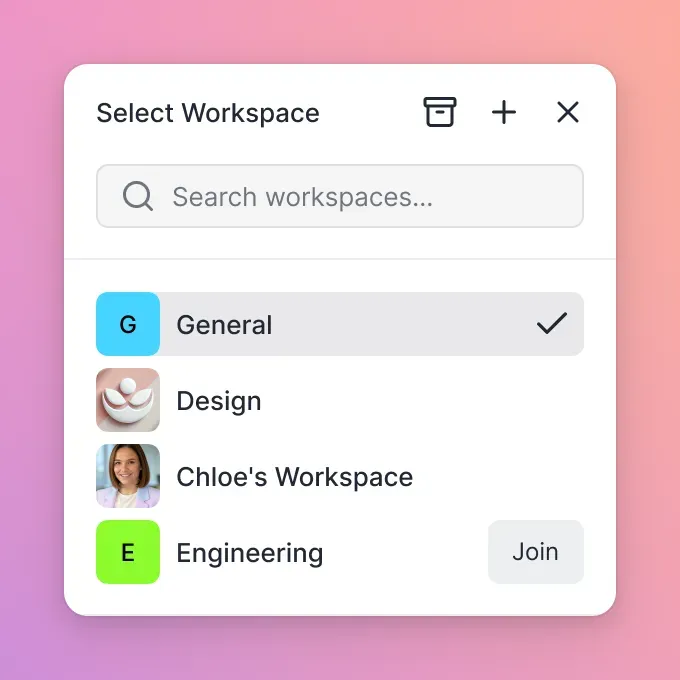
Fastio provides a middle path designed for agent workflows. An agent can write Segment audit reports to a Fastio workspace, where they're automatically indexed for search and available to both humans and other agents. The workspace handles versioning, so weekly audit reports stack up without overwriting each other.
The Fastio MCP server gives agents a consolidated toolset for workspace, storage, AI, and collaboration operations. An agent can query Segment through one MCP server, write the results to a Fastio workspace through another, and share the output with a team member, all within the same conversation. Intelligence Mode auto-indexes uploaded files, so a teammate can ask questions about the audit report without reading the raw data.
Fastio offers a 14-day Business Trial to get started with shared workspaces. For agents that need to hand off work to humans, ownership transfer lets the agent build and organize a workspace, then transfer the organization to a team member via a claim link.
Practical Considerations and Limitations
Segment MCP servers are useful, but they come with constraints worth understanding before you build workflows around them.
Permission Scoping
Segment's Public API Token grants workspace-level access. If your agent has a token, it can see every source, destination, and tracking plan in that workspace. There's no way to scope a token to a single source through MCP. For production workspaces with sensitive data, consider creating a separate Segment workspace for agent experimentation, or use a read-only MCP server like Vinkius to limit the blast radius.
Event Volume and Rate Limits
Agents that fire Track calls need to respect Segment's rate limits. The HTTP Tracking API handles high throughput, but an agent running in a tight loop can generate more events than expected. Use the Batch tool to group events instead of sending them one at a time. Monitor your daily API usage through the get_daily_per_source_api_calls_usage tool to catch unexpected spikes before they affect your Segment bill.
Data Freshness
MCP tools that query Segment data return the current state of the API, not a real-time stream. If you query a tracking plan, you get the schema as it exists at that moment. Audience membership, delivery metrics, and usage statistics may lag by minutes to hours depending on the metric. For time-sensitive workflows, verify the data freshness requirements against Segment's documentation.
No Direct Audience Querying via MCP
None of the current Segment MCP servers expose Segment's Engage audiences or computed traits directly. You can track events and identify users, which feeds into audience computation, but you can't query "show me all users in the High Value Customers audience" through MCP. That workflow still requires the Segment Profiles API or a warehouse query against your Segment-synced tables.
Multi-Agent Coordination
When multiple agents write to the same Segment source, event ordering and identity resolution can get complicated. Two agents identifying the same user with conflicting traits will create a last-write-wins situation. Establish conventions for which agents own which trait fields, and use advisory file locks before writing to coordinate when agents share configuration files or report templates, with version history preserving every update as a safety net.
Sources
References used to verify factual claims in this guide.
-
Segment processed 12.1 trillion API calls in 2023
-
Over 25,000 companies use Twilio Segment
-
Audiences Activation API reached general availability in April 2026
Frequently Asked Questions
What is a Segment MCP server?
A Segment MCP server is a Model Context Protocol integration that gives AI agents structured tools to interact with Twilio Segment. Agents can track events, identify users, list sources and destinations, review tracking plans, and monitor API usage through standard MCP tool calls instead of custom API code.
Can AI agents access Segment data?
Yes. AI agents can access Segment data through hosted MCP servers from providers like Composio, Pipedream, and Vinkius. Composio offers 16 read-write tools including event tracking and source management. Vinkius provides 7 read-only tools for auditing pipelines without modification risk.
How do I connect Segment to an AI agent?
Generate a Public API Token (and optionally a source write key) from your Segment workspace settings. Configure your MCP client with the server endpoint URL and credentials. Test with a read operation like listing sources. The process takes under five minutes for most MCP server providers.
How do AI agents use customer data platforms?
AI agents use CDPs like Segment to track user behavior, update profiles, and pull analytics. An agent handling customer onboarding can fire Track events at each step, while a governance agent can audit tracking plans and flag sources without proper schema validation. MCP makes this possible without writing custom API integration code.
Is it safe to give an AI agent write access to Segment?
It depends on your risk tolerance. For production workspaces, start with a read-only MCP server like Vinkius that limits agents to list and get operations. If you need write access, use Composio's scoped permissions to restrict which tools the agent can call. Always use a staging workspace for testing before pointing agents at production data.
What is the difference between Segment MCP servers?
Composio provides 16 tools with full read-write access including event tracking, identity management, and source administration. Vinkius offers 7 read-only tools focused on pipeline auditing and architecture review. Pipedream provides Segment tools alongside its broader API automation platform. Choose based on whether your agent needs to observe or modify your Segment setup.
Related Resources

Give Your Agents a Workspace for Segment Reports
Store audit results, share pipeline reports, and let teammates query Segment data through chat. Persistent storage, MCP-ready from day one.