How to Build a Homework Helper Workspace with Manus AI
A homework helper workspace combines collaborative cloud folders with autonomous AI agents to solve problems, analyze study guides, and retrieve answers. By connecting Manus AI to Fastio's secure, auto-indexed workspaces, students can run long-running study workflows, analyze complex files, and persist study materials across semesters. This guide covers how to set up the workspace directory structure, configure file permissions, and integrate Manus AI via the Model Context Protocol.


Why Persistent Study Workspaces Outperform Simple Chat Boxes
Using autonomous AI tools to assist with coursework is now a standard practice for many students. According to a 2025 survey by the Pew Research Center, 64% of US teenagers have used AI chatbots for schoolwork. However, most students rely on simple, reactive chat interfaces that lose context between study sessions, fail to link files, and require repetitive manual prompting. Standard AI chatbots operate in ephemeral sessions. When a student closes the browser tab, the uploaded documents, prompt history, and mathematical formulas disappear. If a study group wants to collaborate, members must share screenshots or copy-paste text back and forth, which fragments the learning process.
A homework helper workspace combines collaborative cloud folders with autonomous AI agents to solve problems, analyze study guides, and retrieve answers. Moving study workflows to a persistent, shared workspace resolves these limitations. Instead of using isolated tools, student groups can store their learning materials in shared, organization-owned folders. These collaborative workspaces act as a persistent database where files remain accessible over multiple semesters.
Fastio serves as the persistent coordination layer that supports this collaborative environment. The platform allows students and autonomous agents to share the same file context. When a student uploads a textbook, the platform automatically indexes the document, making it searchable by meaning and queryable through chat. By connecting autonomous action agents like Manus AI to these workspaces, students can run continuous research jobs, compile study guides, and solve complex problems without losing progress.
Related guides
- How to Build a Devin AI Workspace Dashboard SetupA practical guide to building a centralized Devin AI run monitoring dashboard using Fast.io. By combining Devin's...
- How to Build OpenClaw Cloud WorkspacesOpenClaw cloud workspaces give multi-agent teams shared storage with built-in RAG. Agents save files that last,...
- Manus AI vs Question AI: Choosing the Best AI for Academic ResearchIn 2025, overall adoption of artificial intelligence tools among researchers jumped from 57% in 2024 to 84% in 2025,...
- How to Ask Questions with Manus AI RAG SetupConnecting your files to a persistent workspace allows you to run Retrieval-Augmented Generation (RAG) queries...
- How to Connect Manus AI to MCP StorageConnecting Manus AI to MCP storage enables the autonomous agent to securely read, write, and persist files within a...
- Configuring Manus AI as a Playwright Test RunnerWhile 89% of quality engineering teams pilot generative AI in their workflows, only 15% have scaled these systems...
More on this subject: Manus (52 guides)
How to Build a Homework Helper Workspace with Manus AI and Fastio
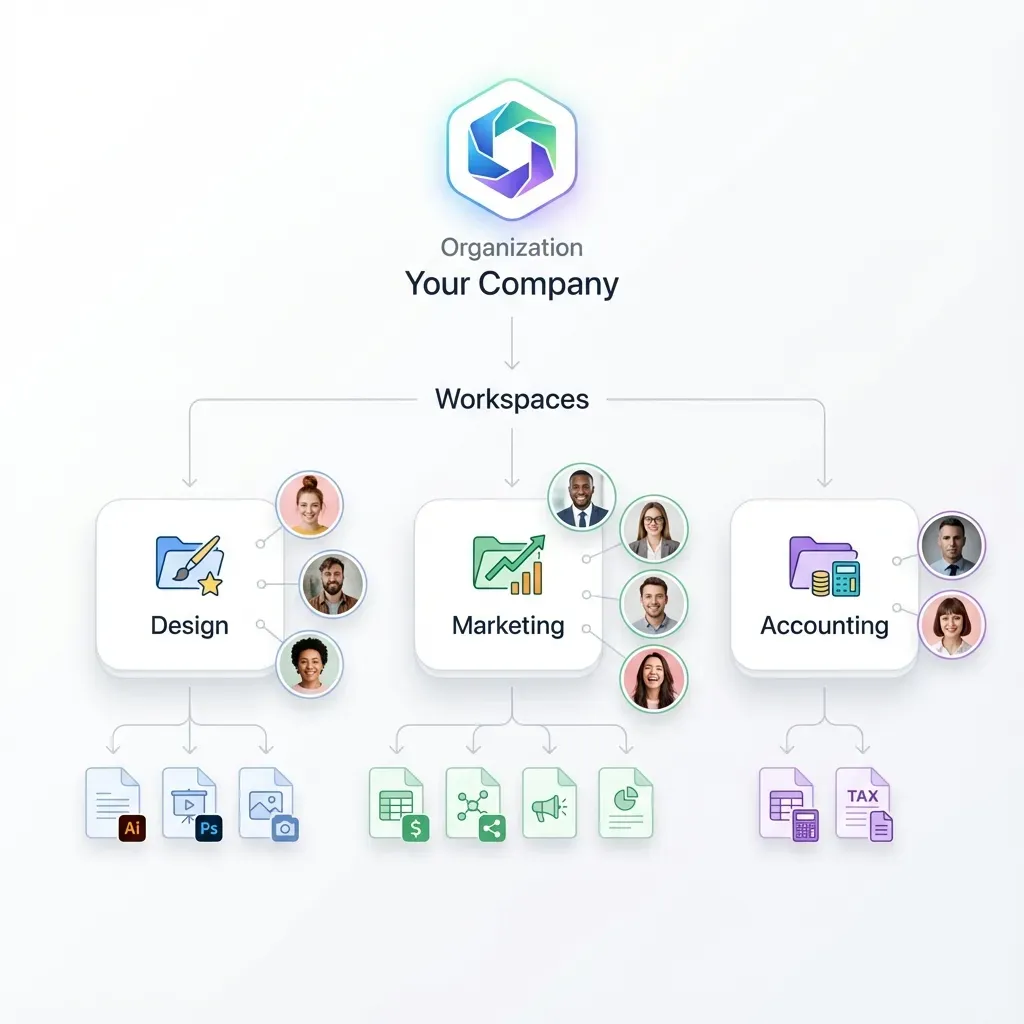
Building a workspace that supports both human collaboration and agentic automation requires organizing your documents logically. A structured folder layout allows human students to navigate class materials while enabling AI agents to locate assignments, lecture notes, and textbook references.
Set up these five essential folders in your collaborative homework workspace to keep materials organized:
Syllabi and Study Guides: Place course syllabi, exam schedules, and grading rubrics here. This folder provides the agent with context regarding course expectations, deadlines, and grade weights.
Textbooks and Reference Materials: Store textbook PDFs, external research articles, and literature references. Fastio provides secure search and chat across uploaded textbook PDFs and lecture notes, which serves as the primary reference database for your study sessions.
Lecture Notes and Transcripts: Collect slide decks, handwritten notes, and class transcripts. Students can co-edit these documents in real time, adding clarifications that the AI can reference.
Homework Assignments: Place raw homework prompts, lab manuals, and project guidelines here. This folder serves as the input directory that triggers agent workflows.
AI Drafts and Solutions: Reserve this folder for agent outputs. When the AI agent completes a task, it writes the final draft, step-by-step math breakdown, or study guide here.
This organization is supported by granular permissions at the organization, workspace, folder, and file levels. For example, a student group can keep the study guides public for all classmates but restrict access to the drafts folder. By maintaining a clean directory hierarchy, you ensure that AI tools can run targeted search queries across specific folders rather than scanning unrelated files.
How to Connect Manus AI to Fastio Workspaces using Model Context Protocol
Manus AI operates as an action agent capable of web searches and file execution using a cloud-based sandboxed browser to solve multi-step science and math problems. While traditional chatbots only generate text responses, Manus AI can navigate the web, execute Python scripts, and interact with web pages in an isolated virtual machine. However, to make these capabilities useful for ongoing coursework, the agent requires direct access to your study materials.
Connecting Manus AI to Fastio is achieved through the Model Context Protocol (MCP). Fastio exposes action-based MCP tooling through Streamable HTTP at https://mcp.fast.io/mcp/tools. This integration allows Manus AI to read textbook PDFs, execute calculations in its sandbox, and save the solutions directly back to the workspace. You can learn more about configuring agent interfaces by reading the Fastio MCP Server Documentation and the onboarding guide.
To connect Manus AI to your workspace, generate a long-lived API key in your Fastio user settings. Then, add the remote Fastio MCP endpoint and authorization header to your agent environment, referencing the details in the Fastio agent guide:
{
  "mcpServers": {
    "fastio": {
      "url": "https://mcp.fast.io/mcp/tools",
      "headers": {
        "Authorization": "Bearer your_long_lived_api_key"
      }
    }
  }
}
Once configured, Manus AI can query and write to your workspace folders. For example, when assigned a chemistry problem, the agent retrieves the relevant assignment sheet from the 04_Assignments folder, queries the reference textbooks in the 02_Textbooks_and_Resources folder to identify the required formulas, runs the calculations inside its Python sandbox, and writes a detailed, step-by-step solution to the 05_AI_Drafts_and_Solutions folder. This workflow runs entirely in the cloud, requiring no local storage resources from the student. Students looking for high-performance agent storage solutions can use the Fastio API to automate these transfers.


Persist your study resources in an intelligent workspace
Organize textbooks, extract assignment metadata, and collaborate with autonomous AI agents like Manus AI in one secure hub. Start your 14-day free trial today.
How to Extract Study Dates and Topics with Metadata Views
Managing schoolwork across multiple classes requires tracking due dates, grade weights, and topics. Fastio includes a structured document extraction tool called Metadata Views, which turns documents into a live, queryable database. Users describe the fields they want extracted in natural language, and the system designs a typed schema, matches files in the workspace, and populates a spreadsheet view. Learn more about document processing by visiting Fastio Metadata Views.
Metadata Views operate as a structured extraction layer, which differs from the search and summarization capabilities of Intelligence Mode. While Intelligence Mode indexes files for RAG chat, Metadata Views extract specific values from files and present them in a sortable database grid.
To configure a Metadata View for your assignments:
- Navigate to the folder: Open the
04_Assignmentsfolder and create a new Metadata View. - Define columns: Use natural language instructions. For example, tell the system: "Extract the due date as a Date & Time field, the assignment topic as a Text field, and the grade weight as a Decimal field."
- Populate the grid: The system automatically processes the uploaded PDFs and populates the spreadsheet columns.
Both students and agents can interact with this view. Manus AI can query the Metadata View using the MCP toolset, identifying which assignments are due next and prioritizing its problem-solving workflows accordingly. You can add new columns, such as "Estimated Study Time" or "Complexity," at any point without needing to reprocess existing files.

How to Collaborate in Real Time using Notes and Version Control
A successful study workspace requires collaboration between students, tutors, and AI agents. Fastio supports this multiplayer workflow through Collaborative Notes, which provides real-time co-editing in every workspace. Both human users and AI agents act as first-class editors. While students work on a study guide, Manus AI can contribute to the same note, adding definitions or coding examples while displaying a visible cursor.
Because agents work autonomously, they can sometimes make errors or modify files incorrectly. Fastio protects your academic work by maintaining a complete, per-file version history. Every time a file is modified, the platform saves the previous version. If Manus AI generates an incorrect proof or overwrites an existing note, you can view the file history and restore the prior version. A detailed activity log records every action, showing when files were uploaded, modified, or downloaded.
If a student designs a workspace for a study group, they can manage the setup and later transfer the organization to another student or tutor. An agent account can sign up, build the workspaces, organize the folders, and hand off the organization to a human via a claim link.
While creating a user account is free, running an organization requires a paid subscription. Fastio plans are structured to meet different storage needs: Starter ($9.99/month), Business ($49.99/month), and Enterprise ($199.99/month). Monthly plans start with a trial of up to 14 days that requires a credit card, allowing students to test the workspace and MCP integration before committing to a plan. Check out the details on the Fastio pricing page.
Sources
References used to verify factual claims in this guide.
-
According to a 2025 survey by the Pew Research Center, 64% of US teenagers have used AI chatbots for schoolwork.
-
Manus AI operates as an action agent capable of running code and performing web searches inside a cloud-based sandboxed browser.
-
Fast.io provides secure search and chat across uploaded textbook PDFs and lecture notes. Fastio plans are structured to meet different storage needs: Starter ($9.99/month), Business ($49.99/month), and Enterprise ($199.99/month). Monthly plans start with a trial of up to 14 days that requires a credit card, allowing students to test the workspace and MCP integration before committing to a plan.
Frequently Asked Questions
How can students use Manus AI?
Students can use Manus AI as an autonomous action agent that plans and executes study tasks. By connecting Manus AI to their workspace, students can instruct the agent to retrieve textbook references, analyze lecture notes, run code in its sandboxed environment, and draft step-by-step explanations for complex coursework.
Can Manus AI solve math homework?
Yes, Manus AI can solve complex, multi-step math and science problems. It operates inside a cloud-based sandboxed browser that runs code interpreters and calculator tools, allowing it to execute equations, verify results, and write down detailed problem breakdowns.
How do I keep study guides organized inside the homework helper workspace?
Keep study guides organized by setting up a dedicated folder hierarchy, such as separating reference textbooks, raw assignment sheets, and agent-generated drafts. Enabling Fastio's Intelligence Mode automatically indexes these directories, allowing you to run semantic searches and ask questions across all files.
Related Resources

Persist your study resources in an intelligent workspace
Organize textbooks, extract assignment metadata, and collaborate with autonomous AI agents like Manus AI in one secure hub. Start your 14-day free trial today.