What Is Hermes AI: Nous Research's Self-Improving Agent Platform
Hermes Agent is Nous Research's open-source autonomous agent that learns from every session, auto-generates reusable skills, and connects to 20+ messaging platforms through a single gateway process. This guide covers the full ecosystem: the learning loop, 70+ built-in tools, model flexibility, deployment backends, and how persistent file storage fits into production Hermes workflows.


What Hermes Agent Is
Hermes Agent is an open-source autonomous agent built by Nous Research that runs on your own infrastructure and gets smarter the longer you use it. Unlike coding copilots that wait for you to type in an IDE, or chatbot wrappers that reset with every conversation, Hermes operates independently on your server, executes tasks through a full terminal environment, and builds a growing library of reusable skills from its own experience.
Nous Research, the lab behind the Hermes, Nomos, and Psyche model families, released Hermes Agent under the MIT license. The project has grown to over 152,000 stars on GitHub as of May 2026, making it one of the most popular open-source agent frameworks available. The latest release, v0.13.0 ("The Tenacity Release," May 7, 2026), ships with over 70 built-in tools, support for 20+ messaging platforms, and seven deployment backends spanning local machines to serverless infrastructure.
Here is what Hermes Agent includes out of the box:
- Persistent memory that carries context across sessions using FTS5 full-text search and LLM summarization
- Automatic skill creation where the agent writes reusable procedures after completing complex tasks
- 70+ built-in tools covering web search, browser automation, vision, image generation, and text-to-speech
- 20+ messaging gateways including Telegram, Discord, Slack, WhatsApp, Signal, Matrix, and email
- Seven deployment backends from local execution and Docker to serverless platforms like Modal and Daytona
- MCP server integration for extending capabilities with external tool providers
- Natural language scheduling for automated reports, backups, and briefings
- Subagent delegation for parallel workstreams with isolated conversations and terminals
The core distinction between Hermes Agent and most AI assistants is the learning loop. Each session doesn't start from scratch. The agent remembers what worked, packages successful approaches into skills, and applies that knowledge to future tasks. Over weeks and months of use, a Hermes Agent instance becomes genuinely specialized for the workflows you run most often.
"Autonomous" here means something specific. You don't need to have Hermes open in a terminal tab to get value from it. Once configured, the agent can receive messages through Telegram or Slack, run scheduled tasks overnight, and produce output that's waiting for you in the morning. It operates more like a background service than a chat window.
Most existing coverage of Hermes Agent focuses on installation walkthroughs or single-feature tutorials. This guide covers the full ecosystem: how the learning loop works internally, what tools and integrations ship with the platform, how model flexibility affects your deployment choices, and how persistent storage connects all of it into workflows that survive restarts.
Related guides
- Best OpenClaw Skills for Web ResearchWeb research skills let OpenClaw agents find and read information on the live web. Without them, your AI is stuck with...
- How to Use Manus AI as an Academic Research AssistantMedical librarians spend an average of 26.9 hours per project on systematic search development. By deploying Manus AI...
- Hermes LLM: Nous Research's Open-Source Model Family ExplainedHermes LLM is Nous Research's family of open-source large language models, fine-tuned for instruction following,...
- Hermes Agent GitHub: Open Source Repo, Architecture, and How to ContributeThe Hermes Agent GitHub repository at NousResearch/hermes-agent is where Nous Research develops its open-source,...
- Hermes Agent Review 2026: Features, Performance, and Honest AssessmentNous Research Hermes Agent is the fastest-growing open-source AI agent framework of 2026, crossing 95,000 GitHub stars...
- Hermes 3: Complete Guide to Nous Research's Open-Source LLMHermes 3 is a family of open-source large language models from Nous Research, fine-tuned on Meta's Llama 3.1 in 8B,...
More on this subject: Hermes Agent (100 guides)
How Hermes Agent Learns from Every Session
Hermes Agent's learning system runs on a closed loop with five mechanisms. Each one handles a different type of knowledge retention, from short-term conversation context to long-term procedural memory that persists indefinitely. Together, they make the agent progressively more useful without requiring you to repeat instructions or re-explain workflows.
Consider a DevOps team that uses Hermes to generate weekly infrastructure audit reports. In the first session, the agent figures out how to pull metrics from Prometheus, format findings into markdown, and post the summary to a Slack channel. Hermes packages that entire sequence into a named skill. The second week, it runs the same skill in seconds instead of working through the problem from scratch. By the fourth week, it has encountered and handled edge cases like API timeouts, empty metric windows, and renamed alert rules, updating the skill each time. The constraint worth knowing: memory and skills are stored locally on the deployment host, so migrating between backends (say, from Docker to Modal) requires exporting the agent's data directory or mounting shared storage.

Agent-Curated Memory
The agent maintains a memory store with periodic persistence nudges from the system. Rather than saving everything automatically, Hermes evaluates what information is worth retaining and stores it with enough context to be useful in future sessions. This keeps the memory store focused on actionable knowledge rather than bloated with every line of conversation.
Memory entries can include project context, user preferences, technical details about specific systems, and outcomes of previous tasks. The agent decides when to write new entries and when to update existing ones, treating memory management as part of its ongoing work rather than a separate process.
Skills and the agentskills.io Standard
When Hermes Agent completes a complex multi-step task, it can package that procedure into a reusable skill. Skills are structured instructions the agent follows in future sessions without re-deriving the approach from scratch. If you ask Hermes to configure a monitoring pipeline and it figures out the right API calls, configuration steps, and verification checks, it saves that entire workflow as a named skill.
Skills improve during use. When the agent runs a skill and encounters an edge case or finds a shorter path, it updates the skill definition for future runs. Over time, skills accumulate real-world experience across different contexts and become more reliable than the original version.
The skill format follows the agentskills.io open standard, which means skills are portable across different agent implementations that support the same specification. Nous Research hosts a Skills Hub where the community shares and discovers contributed skills. You can also write skills manually if you want to teach Hermes a specific procedure without waiting for it to learn organically.
Cross-Session Recall and User Modeling
Hermes stores conversation history in a searchable database using SQLite FTS5 full-text indexing. When the agent needs to recall something from a previous session, it combines FTS5 search with LLM-driven summarization to pull relevant context without loading entire conversation transcripts. Recall stays fast even as the history grows to thousands of sessions.
The fifth learning mechanism is user modeling through the Honcho dialectic framework. Hermes builds a progressive understanding of each user's communication style, domain knowledge, and workflow preferences across sessions. Rather than treating every interaction as if it's the first, the agent adapts its responses based on accumulated user context.
The practical result of these five mechanisms is an agent that starts generic and becomes specialized. A Hermes Agent used primarily for DevOps tasks develops different skills, memory patterns, and user models than one used for data analysis or content creation. The longer it runs, the less prompting and correction it needs.
What Tools and Model Providers Does Hermes Agent Support?
Hermes Agent ships with over 70 built-in tools organized across several categories. The tool system is designed to be extended through MCP (Model Context Protocol) servers, so the built-in set is a starting point rather than a ceiling.
The practical benefit of this breadth is that most common agent workflows don't require custom tool development. A research agent can search the web, extract structured data from pages, take screenshots for visual analysis, and write findings to disk using only default tools. When a task needs something outside the built-in set, connecting an MCP server adds new capabilities without touching agent code. For instance, connecting a Fastio MCP server gives the agent workspace operations for persistent file storage, while a database MCP server adds query capabilities.
Default Tool Categories
The default toolkit covers the most common agent operations:
- Web operations: search, page extraction, and full browser automation for gathering information and interacting with web services
- Vision: screenshot analysis, image understanding, and visual reasoning about on-screen content
- Image generation: create images from text descriptions using integrated generation models
- Text-to-speech: convert text to spoken audio for voice-based workflows and accessibility
- Code execution: Python scripts run via RPC-based tool calls, with terminal access for system-level operations
- File operations: read, write, and manage files within the agent's working environment
Each tool can be individually enabled or disabled through the hermes tools command. This lets you restrict the agent's capabilities to match your security requirements. A production deployment handling sensitive data might disable browser automation and image generation while keeping web search and file operations active.
Tool calls follow a structured format that the agent understands natively. When planning a task, Hermes evaluates which tools are relevant, chains them in the right order, and handles errors at each step. The execute_code function collapses multi-step tool pipelines into programmatic Python calls, reducing overhead for repetitive or batch operations.
Extending Tools with MCP
Hermes Agent connects to any MCP-compatible server, extending its tool surface without modifying core agent code. MCP filtering controls which external tools the agent can access, preventing capability creep in sensitive environments.
This is useful for connecting Hermes to domain-specific APIs. Instead of writing custom tool wrappers, you point the agent at an MCP server that exposes the operations you need. Hermes discovers available tools, understands their parameters through the MCP protocol, and incorporates them into its planning and execution. A single Hermes Agent instance can connect to multiple MCP servers simultaneously, combining tools from different providers into unified workflows.
Choosing a Model Provider
Hermes Agent is model-agnostic. You configure it to use any LLM provider through the hermes model setup command:
- Nous Portal: direct access to Nous Research's own model endpoints, including fine-tuned Hermes models
- OpenRouter: gateway to 200+ models from Anthropic, OpenAI, Google, Meta, Mistral, and others
- OpenAI-compatible endpoints: any API following the OpenAI chat completion format
- Generic endpoints: custom configurations for self-hosted or private model deployments
You can switch providers between sessions or even mid-workflow if a specific task benefits from a different model's strengths. A research task might use a model with strong reasoning capabilities, while a code generation step switches to one tuned for programming. This flexibility means you're not locked to any single provider's pricing, availability, or performance profile.
Messaging Gateways, Scheduling, and Voice
One of Hermes Agent's most practical features is its unified messaging gateway. Rather than building separate integrations for each communication platform, Hermes routes all conversations through a single gateway process that handles protocol translation and message delivery.
The gateway currently supports over 20 messaging platforms, organized by category:
- Team communication: Slack, Discord, Microsoft Teams, Mattermost, Matrix
- Personal messaging: Telegram, WhatsApp, Signal, BlueBubbles (iMessage bridge)
- Business messaging: DingTalk, Feishu, WeCom, QQ Bot
- Email: inbound and outbound email
- SMS: text message integration
- Smart home: Home Assistant for IoT-triggered automations
- Other: Google Chat, Weixin, Yuanbao
You start the gateway with hermes gateway, select which platforms to enable, and configure authentication for each one. The agent then receives and responds to messages across all enabled platforms at the same time. A conversation started on Telegram can continue on Slack or Discord without losing context, because the gateway maintains conversation state independently of the transport layer.
Scheduled Automations
Hermes Agent includes a built-in cron scheduler that triggers automated tasks on a defined cadence. You describe schedules in natural language ("every weekday at 9am," "first Monday of the month"), and the agent converts them to cron expressions internally. Scheduled tasks deliver results to any connected messaging platform.
Common scheduling patterns include daily briefings sent to a Telegram group, weekly backup verification reports posted to Slack, periodic data collection jobs that run unattended, and nightly research tasks that compile findings for morning review. The scheduler operates through the same gateway infrastructure as interactive conversations, so automated outputs reach the platforms your team already uses.
Voice Mode and Subagent Delegation
Hermes supports real-time voice interaction in several contexts: the CLI terminal, Telegram voice messages, Discord voice channels, and Discord audio messages. Voice memo transcription converts spoken input to text for processing, and the text-to-speech tools generate audio responses when appropriate.
For complex workflows that benefit from parallel execution, Hermes spawns isolated subagents. Each subagent gets its own conversation context, terminal session, and Python RPC environment. The parent agent delegates tasks, and subagents work independently without sharing state or interfering with each other. This is particularly useful for tasks like researching multiple topics simultaneously, running parallel test suites, or processing file batches where each item needs independent handling.


Give Hermes Agent a permanent workspace
Generous storage with MCP endpoints for reads, writes, and file handoff to humans.
Deployment Backends and Security
Hermes Agent runs wherever you have a terminal: a personal laptop, a cloud VM, a GPU cluster, or a serverless platform. The backend system abstracts the execution environment so the agent's behavior stays consistent regardless of where it's deployed.
The current release supports seven terminal backends:
- Local: direct execution on the host machine, simplest setup with no isolation boundary
- Docker: containerized execution with namespace isolation, a good balance of convenience and security
- SSH: remote execution on any SSH-accessible machine, useful for running agents on powerful remote hardware
- Singularity: container runtime common in research and HPC environments, supports GPU workloads without privileged containers
- Modal: serverless execution with near-zero idle costs where your environment hibernates when the agent isn't active
- Daytona: serverless development environments with persistent state, another pay-per-use option
- Vercel Sandbox: sandboxed execution within the Vercel platform for web-focused workflows
Each backend handles terminal creation, command execution, and environment persistence differently, but the agent API stays the same. Skills and tools work across backends without modification, so you can develop locally and deploy to Docker or Modal without rewriting anything.
Security Controls
Hermes Agent includes several layers of access control. Command approval lets you review and approve commands before the agent executes them, which matters for environments with access to production systems or sensitive data. Container backends (Docker, Singularity) provide namespace-level separation between the agent and the host system. DM pairing restricts which messaging accounts can interact with the agent, preventing unauthorized access through public channels. Authorization controls define what the agent can do within each connected platform, letting you restrict file system access, network operations, and tool usage per deployment.
Installation and Configuration
Setting up Hermes Agent takes about a minute. On Linux, macOS, WSL2, or Termux:
curl -fsSL https://raw.githubusercontent.com/NousResearch/hermes-agent/main/scripts/install.sh | bash
After installation, running hermes launches the interactive CLI. The hermes setup wizard walks through provider selection, tool configuration, and gateway setup. Windows support is available in early beta through a PowerShell installer.
The SOUL.md file defines the agent's default personality, communication style, and operational boundaries. You write a markdown file describing how the agent should behave, what topics it should prioritize, and what constraints it should respect. Context files provide additional background knowledge that shapes conversation dynamics without requiring explicit prompting in every session.
Persistent File Storage for Hermes Workflows
Autonomous agents that run for weeks or months produce significant output: research documents, generated code, reports, processed datasets, and intermediate artifacts. Where that output lives between sessions determines whether long-running work survives infrastructure changes.
Local file systems work for quick experiments but don't survive container restarts or serverless hibernation cycles. Object stores like S3 handle persistence at scale, though they lack built-in previews, collaboration features, or semantic search. Google Drive and Dropbox offer human-friendly interfaces but weren't designed for programmatic agent access. When a Hermes Agent builds something that a human team needs to review, annotate, or distribute, the output needs a home that supports both API access and human workflows.
Cloud Workspaces as Agent Storage
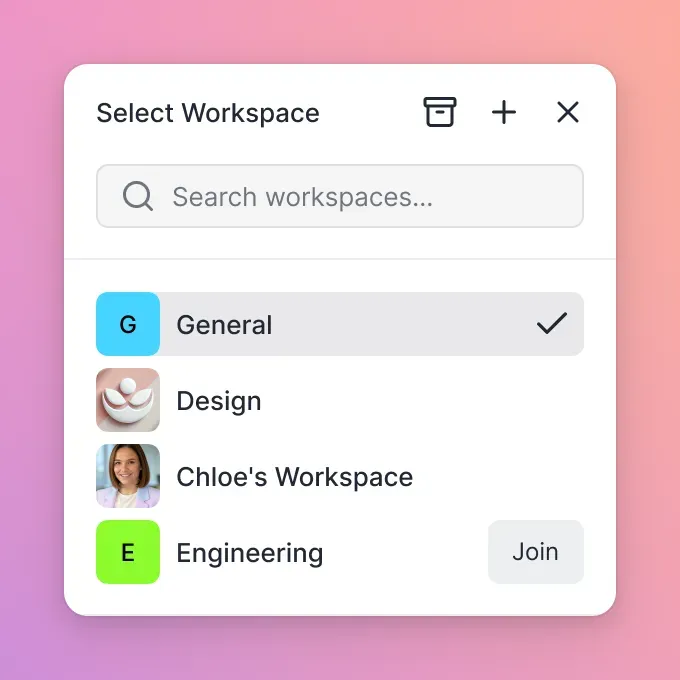
Fastio provides shared workspaces where agents and humans access the same files, previews, and version history. For Hermes Agent deployments, a Fastio workspace serves as the persistent storage layer that outlives any individual session or backend container. The agent writes files to a workspace during execution, and human team members access those same files through a web interface with inline previews, comments, and audit trails.
The Fastio MCP server exposes workspace operations through Streamable HTTP at /mcp, which means Hermes Agent connects to it as another MCP tool provider alongside any others you've configured. Once connected, the agent can create workspaces, upload files, organize folder structures, and generate shareable links, all through the same MCP interface it uses for other tool integrations. The MCP documentation covers the full tool surface and authentication flow.
Indexed Workspaces and Ownership Transfer
Once Intelligence is enabled for the workspace, every uploaded file is automatically indexed for semantic search and RAG-powered chat. This turns the agent's output into a searchable knowledge base without a separate vector database or ingestion pipeline. Team members can ask Ripley AI questions about the agent's work and get citation-backed answers pointing to specific files and pages.
For research-heavy Hermes workflows, this indexing is particularly valuable. If the agent runs nightly research tasks and uploads reports to a workspace, the team can search across all reports the next morning or ask natural language questions about trends across dozens of documents.
The ownership transfer workflow lets a Hermes Agent create an entire workspace, populate it with files and shares, then hand control to a human. The agent creates the organization, sets up the structure, and generates a claim link. The human claims the org and becomes the owner, while the agent retains admin access for ongoing maintenance. This pattern fits client-facing work where the agent prepares deliverables and a human handles final review and distribution.
Fast.io offers structured subscription tiers on its pricing page, including Starter ($9.99/mo), Business ($49.99/mo), and Enterprise ($199.99/mo), along with a 14-day Business Trial requiring a credit card. Combined with Hermes Agent's learning loop, this creates a workflow where the agent improves over time, its output stays organized and searchable, and human collaborators access everything through a standard web interface.
Sources
References used to verify factual claims in this guide.
-
over 70 built-in tools
-
20+ messaging platforms FTS5 cross-session recall with LLM summarization
-
MIT license, v0.13.0 released May 7 2026 152,000 GitHub stars Seven terminal backends including Modal and Daytona serverless
Frequently Asked Questions
What is Hermes AI used for?
Hermes Agent handles autonomous tasks that run independently on your server: research and data collection, scheduled reporting, code generation and testing, content creation, system monitoring, and multi-step workflows that span multiple tools. Because it learns from each session and retains skills across restarts, it's well suited for recurring tasks that benefit from accumulated experience.
Is Hermes Agent free?
Yes. Hermes Agent is open source under the MIT license, which means you can use, modify, and distribute it without licensing fees. You'll need your own LLM provider access (some offer free tiers), and hosting costs depend on your chosen backend. Running locally on your own machine costs nothing beyond electricity.
How does Hermes Agent learn over time?
Hermes uses a five-part learning loop: agent-curated memory for retaining useful context, autonomous skill creation from completed tasks, self-improving skills that update during use, FTS5 cross-session recall for searching past conversations, and Honcho-based user modeling that adapts to your preferences and communication style. Each mechanism operates continuously across sessions.
What messaging platforms does Hermes Agent support?
The unified gateway supports over 20 platforms: Telegram, Discord, Slack, WhatsApp, Signal, Matrix, Mattermost, Microsoft Teams, Google Chat, DingTalk, Feishu, WeCom, QQ Bot, BlueBubbles (iMessage bridge), Home Assistant, email, SMS, and more. You configure which platforms to enable through the hermes gateway command.
What LLM providers work with Hermes Agent?
Hermes Agent is model-agnostic. It supports Nous Portal (Nous Research's own endpoints), OpenRouter (200+ models from multiple providers), any OpenAI-compatible API, and generic custom endpoints for self-hosted models. You can switch providers between sessions or tasks using the hermes model command.
How do Hermes Agent skills work?
Skills are reusable procedures the agent creates after completing complex tasks. They follow the agentskills.io open standard, making them portable and shareable through the community Skills Hub. Skills improve automatically during use as the agent encounters edge cases and finds better approaches. You can also write skills manually to teach the agent specific workflows.
Can I run Hermes Agent on my own server?
Yes. Hermes Agent supports seven deployment backends: local execution, Docker containers, SSH to remote machines, Singularity containers for HPC environments, Modal and Daytona for serverless deployment, and Vercel Sandbox for web workflows. Installation takes about a minute on Linux, macOS, WSL2, or Windows (beta).
Does Hermes Agent support MCP servers?
Yes. Hermes Agent connects to any MCP-compatible server to extend its tool capabilities beyond the 70+ built-in tools. MCP filtering lets you control which external tools the agent can access. This is useful for connecting to domain-specific APIs, cloud storage providers like Fastio, or any other service that exposes an MCP interface.
Related Resources

Give Hermes Agent a permanent workspace
Generous storage with MCP endpoints for reads, writes, and file handoff to humans.