Best Copilot Alternatives in 2026: Productivity and Coding Tools Compared
GitHub Copilot moved every paid plan to usage-based billing on June 1, 2026, and Microsoft 365 Copilot still costs $30/user/month before you add the required base license. Both changes pushed teams to evaluate alternatives. This guide separates the two Copilot products, covers the strongest alternatives for each, and includes free options that hold up for real work.


Why Developers and Teams Are Switching from Copilot
GitHub Copilot hit 4.7 million paid subscribers by January 2026, a 75% year-over-year jump. Then on June 1, GitHub replaced flat-rate plans with usage-based billing, where every paid tier ships a monthly pool of AI credits and anything past the pool bills at $0.01 per credit. Heavy agent users who relied on predictable $10 or $19 monthly costs now face variable bills.
On the productivity side, Microsoft 365 Copilot Enterprise still charges $30/user/month as an add-on, but that price requires a qualifying Microsoft 365 base license. The real per-seat cost lands between $33.50 and $87/user/month depending on your base plan. For teams outside the Microsoft ecosystem, or teams that just want AI without the full Microsoft stack, that bundle makes less sense every quarter.
The result: both products are expensive enough, or unpredictable enough, that evaluating alternatives is worth the time. The key is knowing which Copilot you're replacing. Microsoft 365 Copilot handles productivity tasks like drafting emails, summarizing meetings, and building presentations. GitHub Copilot handles code completion, code review, and agentic coding workflows. Most "Copilot alternatives" articles mix these together, which makes comparison useless.
This guide splits them cleanly. The first half covers productivity alternatives. The second covers coding alternatives.
Related guides
- Top OpenClaw Tools for Coding AgentsOpenClaw tools give coding agents the libraries and access they need to write software. With AI now handling about 45%...
- Best Cline Alternatives for AI Coding AgentsCline reports 8.0M+ installs and a free open-source product for individuals, so cost alone rarely drives a switch....
- Copilot vs ChatGPT: Features, Pricing, and Key Differences in 2026Microsoft Copilot and ChatGPT both run on OpenAI's GPT model family, but they target different workflows. ChatGPT is a...
- Best Copilot Builder Frameworks for Developers in 2026Copilot builder frameworks let developers embed context-aware AI assistants directly into their products. This guide...
- Can Copilot Access OneDrive? File Permissions, Personal vs Business & SetupUsers asking can Copilot access OneDrive will find that retrieval depends on whether they use a personal account or an...
- Can Copilot Access SharePoint? Permissions, Libraries, and SetupMicrosoft Copilot can access SharePoint document libraries when users hold explicit read permissions through Microsoft...
More on this subject: GitHub Copilot (137 guides)
Best Microsoft 365 Copilot Alternatives for Productivity
Microsoft 365 Copilot works best when your entire organization runs on Microsoft's stack. If you use Google Workspace, a mix of tools, or want a standalone AI assistant, these alternatives deliver comparable or better results at lower cost.
1. ChatGPT Plus (OpenAI)
ChatGPT Plus gives you GPT-5.4, DALL-E image generation, web browsing, and voice mode for $20/month. OpenAI's Workspace Agents handle team workflows, and Operator automates browser-based tasks. The biggest advantage over Microsoft Copilot is platform independence: ChatGPT works regardless of your email, calendar, or document suite.
Best for: Teams that want a general-purpose AI assistant without locking into a specific productivity suite.
Pricing: $20/month (Plus), $200/month (Pro with unlimited advanced reasoning).
2. Claude Pro (Anthropic)
Claude Pro provides access to Claude Opus 4.6, extended thinking for complex reasoning, persistent memory across sessions, and Projects for organizing conversations by topic. Claude handles long documents well, processing up to 200K tokens of context, which makes it strong for legal review, research synthesis, and technical writing.
Best for: Knowledge workers who process long documents, write detailed reports, or need careful reasoning over nuanced material.
Pricing: $20/month (Pro), $100/month (Max 5x), $200/month (Max 20x).
3. Google AI Pro (Google)
Google AI Pro bundles Gemini 3.1 Pro with 2TB of Google One storage and AI integration across Gmail, Docs, Sheets, and Slides. Deep Research generates multi-source reports with citations. If your organization runs Google Workspace, this is the most natural Copilot replacement because the AI lives inside the tools you already use.
Best for: Google Workspace organizations that want AI embedded directly in their existing productivity tools.
Pricing: $19.99/month (AI Pro), $249.99/month (AI Ultra).
4. Dust
Dust focuses on building custom AI agents for enterprise workflows. Rather than a single chatbot, Dust lets teams create specialized agents for different departments: one for sales enablement, another for engineering knowledge bases, a third for customer support. It connects to Slack, Notion, GitHub, and other tools your team already uses.
Best for: Enterprise teams that need domain-specific AI agents, not a one-size-fits-all assistant.
Pricing: Starts at $29/user/month for the Pro plan.
Best GitHub Copilot Alternatives for Coding
GitHub Copilot's shift to usage-based billing makes the coding-assistant market more competitive. These alternatives offer different pricing models, stronger agentic capabilities, or better support for specific workflows.
1. Cursor
Cursor is a VS Code fork with first-party agent mode (Composer), Tab autocomplete, and codebase indexing that lets the AI reason across your entire project. Background agents can run cloud-based tasks while you keep coding. The Auto mode handles most work without consuming your credit pool, and manually selecting frontier models draws from a $20 monthly balance.
Best for: Developers who want an AI-native IDE with strong agentic capabilities and don't mind switching from VS Code.
Pricing: Free (2,000 completions/month), $20/month (Pro), $40/user/month (Business).
2. Claude Code (Anthropic)
Claude Code runs in your terminal, reads your entire codebase, edits files across multiple modules, runs tests, handles git workflows, and recovers from errors autonomously. It uses Claude Sonnet 4 and Opus 4 as its foundation models, and the SWE-bench scores consistently rank at the top of public benchmarks. The terminal-first approach means it works with any editor and any language.
Best for: Experienced developers who prefer terminal workflows and need deep, multi-file reasoning over large codebases.
Pricing: Included with Claude Pro ($20/month) or Claude Max ($100-200/month) for heavier usage. API billing also available.
3. Amazon Q Developer
Amazon Q Developer integrates with VS Code and JetBrains IDEs, offering code completion, security scanning, and agentic coding with a generous free tier. The free plan includes 50 agentic requests per month, code suggestions, and 1,000 lines of Java code transformation. AWS-native teams get the most value because Q understands AWS services, CDK patterns, and CloudFormation templates.
Best for: Teams building on AWS who want an AI assistant that understands their cloud infrastructure.
Pricing: Free tier available, $19/user/month (Pro) with IP indemnity.
4. Devin Desktop (formerly Windsurf)
Devin Desktop (formerly Windsurf, acquired by Cognition and rebranded in June 2026) runs the SWE-1.5 model and Cascade agent for deep contextual awareness across files. Codemaps provide AI-annotated visual code navigation. Plugins extend Tab autocomplete and chat to 40+ IDEs including JetBrains, Vim, Neovim, and Xcode, giving it the broadest IDE coverage on this list.
Best for: Developers who use non-VS Code editors and want a single AI assistant that works across their entire toolchain.
Pricing: Free tier available, $20/month (Pro), $30/user/month (Teams).
5. Gemini Code Assist (Google)
Gemini Code Assist offers 180,000 free code completions per month and 240 daily chat sessions, no credit card required. It runs on Gemini 2.5 and works inside VS Code, JetBrains, and Android Studio. The free tier is the most generous on this list by raw volume. Google Cloud teams get deeper integration with Cloud Build, Cloud Run, and Vertex AI.
Best for: Individual developers who want a strong free option, or Google Cloud teams who want AI that understands their infrastructure.
Pricing: Free for individuals, $19/user/month (Standard with Gemini Business), $45/user/month (Enterprise).


Connect Your AI Agents to Fastio
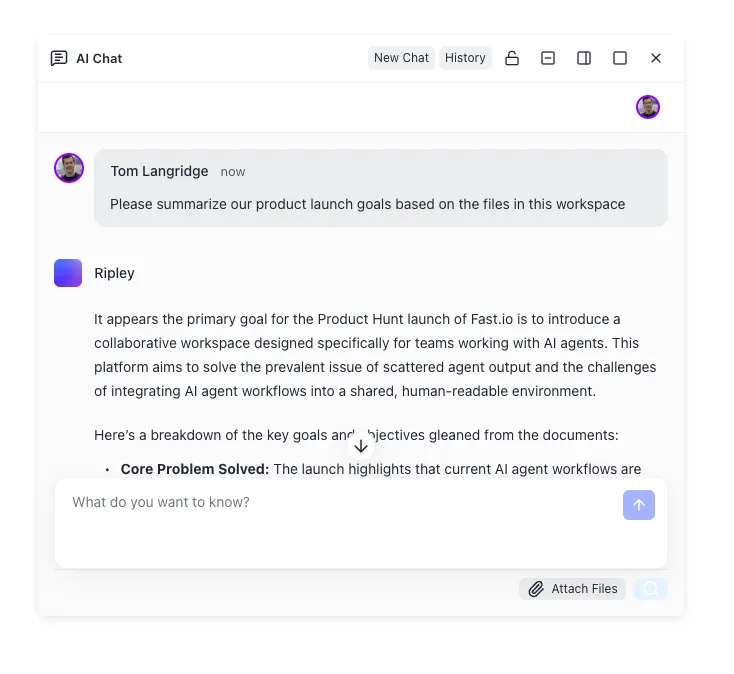
Fastio connects to coding assistants and productivity AIs through its MCP server. Agents write files into shared workspaces where teams review and distribute the output with a 14-day Business Trial.
Free Copilot Alternatives Worth Trying
You don't need a paid subscription to get useful AI assistance. Several free options work well enough for daily coding or productivity tasks.
Gemini Code Assist Free stands out with 180,000 monthly code completions and 240 daily chat sessions. That volume covers most individual developers without hitting limits.
Amazon Q Developer Free gives you 50 agentic requests per month plus unlimited code suggestions. The agentic capabilities set it apart from basic autocomplete tools.
ChatGPT Free provides access to GPT-4o with web browsing and image generation. The conversation limits are tighter than Plus, but for occasional use, it handles productivity tasks well.
Claude Free offers access to Claude Sonnet 4 with web search. The context window handles long documents better than most free alternatives, making it useful for research and analysis.
Cursor Hobby includes 2,000 completions per month and 50 slow premium requests. Enough to evaluate whether the AI-native IDE approach works for your workflow before committing to Pro.
For coding specifically, the free tier comparison comes down to volume versus capability. Gemini Code Assist gives you the most completions. Amazon Q gives you the most agentic features. Cursor gives you the most integrated editor experience. Test all three before paying for anything.
How to Choose Based on Your Stack
The right alternative depends less on which Copilot you're leaving and more on where your team already lives.
Microsoft-first teams have the hardest decision. Microsoft 365 Copilot integrates deeply with Outlook, Teams, Word, and Excel in ways standalone AI assistants can't replicate. If you need AI inside PowerPoint or Excel formulas, there's no clean alternative. ChatGPT Plus with its Office plugin is the closest substitute, but the integration is shallower.
Google Workspace teams should start with Google AI Pro. The AI lives inside Gmail, Docs, Sheets, and Slides with no configuration. Deep Research handles the multi-source analysis that Microsoft Copilot's "research in Word" feature attempts.
Mixed-tool teams benefit most from platform-independent options. ChatGPT Plus or Claude Pro work regardless of your productivity suite, and both support file uploads, web browsing, and long-form analysis.
Solo developers should test Cursor's free tier first. If you prefer staying in your existing editor, Amazon Q Developer (for AWS workflows) or Gemini Code Assist (for volume) make strong GitHub Copilot replacements without changing your IDE.
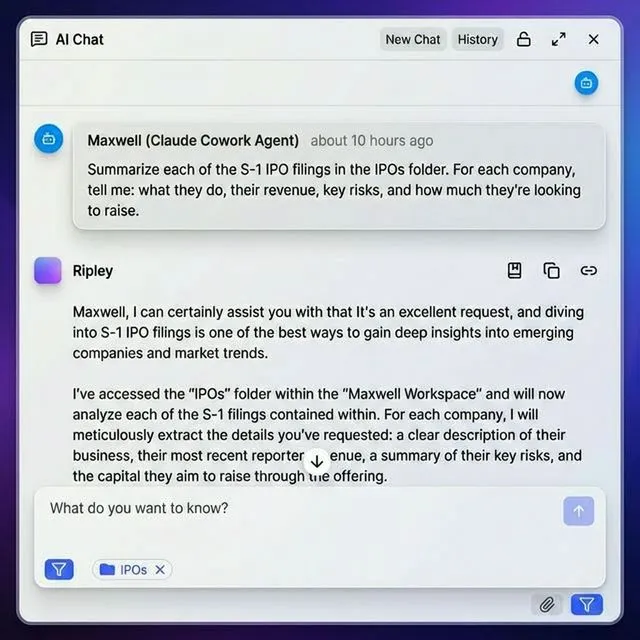
Teams managing AI agent output face a different problem. Coding assistants and productivity AIs generate files, reports, and code that need to land somewhere teams can review and act on. A workspace platform like Fastio connects to AI agents through its MCP server, letting agents write files directly into shared workspaces where humans review and distribute the output. Fastio offers a 14-day Business Trial (credit card required; see /pricing/).
Copilot Alternatives Pricing Comparison
The pricing gap tells a clear story. Microsoft 365 Copilot's $30/user/month add-on is the most expensive productivity AI on this list, and it requires a base license that can push the real cost past $60/user/month. GitHub Copilot's new usage-based model starts at $10/month but can climb unpredictably for heavy users.
Every alternative except Dust offers a meaningful free tier. For teams evaluating options, the zero-risk path is to run free tiers of 2-3 alternatives for a month before committing budget.
Sources
References used to verify factual claims in this guide.
-
GitHub Copilot had 4.7 million paid subscribers as of January 2026, a 75% year-over-year growth rate
-
GitHub Copilot moved all paid plans to usage-based billing on June 1, 2026
-
Microsoft 365 Copilot Enterprise costs $30/user/month as an add-on requiring a base license
-
Microsoft 365 Copilot true all-in cost ranges from $33.50 to $87/user/month depending on base plan
-
Gemini Code Assist free tier includes 180,000 code completions per month and 240 daily chat sessions
-
Amazon Q Developer free tier includes 50 agentic requests per month
Frequently Asked Questions
What is a free alternative to Microsoft Copilot?
ChatGPT Free, Claude Free, and Google Gemini all offer free tiers with access to capable AI models. ChatGPT Free includes GPT-4o with web browsing. Claude Free provides Claude Sonnet 4 with web search and strong document analysis. Google Gemini integrates with Google Workspace at no cost. For most productivity tasks like drafting emails, summarizing documents, and brainstorming, these free options handle the work without a subscription.
Is ChatGPT better than Copilot?
It depends on your workflow. Microsoft 365 Copilot is better if you live inside Word, Excel, PowerPoint, and Teams because it modifies documents directly within those apps. ChatGPT is better as a standalone assistant for general writing, research, analysis, and creative tasks. ChatGPT also costs less ($20/month versus $30/month as an add-on) and works across any platform rather than requiring the Microsoft ecosystem.
What is the best free AI coding assistant?
Gemini Code Assist Free offers the highest volume at 180,000 code completions per month and 240 daily chat sessions. Amazon Q Developer Free provides 50 agentic requests per month, which is more useful for complex multi-step tasks. Cursor's free tier gives 2,000 completions with integrated IDE features. The best choice depends on whether you prioritize volume (Gemini), agentic capabilities (Amazon Q), or editor integration (Cursor).
Is Copilot worth the money?
Microsoft 365 Copilot's total cost of $33 to $87 per user per month is hard to justify unless your team uses Microsoft tools heavily and the AI features save measurable hours per week. For GitHub Copilot, the new usage-based pricing at $10/month works well for light-to-moderate users, but heavy users of agentic features may find Cursor ($20/month with unlimited Auto mode) or Claude Code (included with Claude Pro at $20/month) more predictable.
Can I use Copilot alternatives with VS Code?
Yes. Cursor is a VS Code fork that supports all VS Code extensions. Amazon Q Developer, Gemini Code Assist, and Devin Desktop all have VS Code extensions. Claude Code runs in the terminal alongside any editor. The only tool on this list that requires leaving VS Code entirely is Cursor, and since it's based on VS Code, the transition is minimal.
What changed with GitHub Copilot pricing in June 2026?
On June 1, 2026, GitHub moved all Copilot plans to usage-based billing. Each plan includes a monthly pool of AI credits (for example, $10 in credits for Copilot Pro). Code completions and Next Edit Suggestions stay included without consuming credits, but agentic workflows, code review, and premium model selection draw from your credit pool. Usage beyond the pool bills at $0.01 per credit.
Related Resources

Connect Your AI Agents to Fastio
Fastio connects to coding assistants and productivity AIs through its MCP server. Agents write files into shared workspaces where teams review and distribute the output with a 14-day Business Trial.