Cline Hybrid Search: Upgrading Codebase Discovery via MCP
A survey shows 76% of developers use or plan to use AI tools. Local agents like Cline struggle with codebase discovery in large workspaces as local searches exhaust memory. By connecting Cline to Fast.io via the Model Context Protocol (MCP), developers can offload indexing. This enables cline hybrid search over codebases, combining lexical matches and semantic vector retrieval to discover files by syntax and conceptual intent.


Why Local Coding Agents Experience Codebase Retrieval Limits
Two coding agents pointed at the same repository will happily overwrite each other's work, and neither will notice. The fix is not a smarter agent, it is a shared place to put work where the second one can see what the first one did. When a local coding agent like Cline tries to navigate a large repository or a multi-root workspace, it defaults to running local search commands like ripgrep directly on the host machine. This mechanism works for small projects, but as a codebase scales to hundreds of thousands of lines of code, local pattern matching stalls. The developer's CPU spikes, memory limits are breached, and the agent's context window is flooded with irrelevant file contents. Offloading this codebase discovery to a remote index allows the agent to find code by conceptual intent without local performance degradation. By connecting Cline to Fast.io's remote storage for agents, developers can offload codebase discovery to a remote workspace.
Local pattern matching tools operate on a file-by-file basis, scanning directories for exact text strings. When a coding assistant initiates a search across a large project, it must traverse every directory, read file streams, and evaluate regular expressions. In containerized development environments or on machines with restricted resources, this process introduces significant latency. The search process can consume substantial processing cycles, slowing down the editor and delaying the agent's response. Local pattern matching tools cannot understand the semantic meaning of the code.
To overcome these local resource constraints and the limitations of literal string matching, modern development workflows are moving toward remote, off-thread indexing. By offloading the indexing and search execution to a remote platform, coding agents can query vast workspaces containing thousands of files in milliseconds. This remote architecture ensures that the agent only retrieves and reads the specific files required for the task, minimizing context window usage and preventing local performance issues. Instead of loading entire directories into memory, the agent interacts with a consolidated Model Context Protocol server that exposes specialized search tools, enabling precise retrieval based on meaning and metadata rather than brute-force file scanning.
Related guides
- How to Search OneDrive with Claude: Fast Document Querying via MCPSearching OneDrive with Claude allows Claude to query, retrieve, and synthesize files kept in Microsoft OneDrive using...
- How to Connect Copilot to Google Drive via MCPA Copilot Google Drive MCP setup connects GitHub Copilot agent runtime to Google Drive files via the Model Context...
- How to Connect Cline to Google Drive via MCP ServersConnecting Cline to Google Drive allows the autonomous coding agent to retrieve, modify, and store assets in a...
- How to Connect Cline to Jira: Automating Ticket Context and Bug Fixes via MCPThe Cline Jira MCP integration connects your coding assistant directly to Atlassian Jira, enabling the agent to ingest...
- How to Connect Cline to Supabase: Database Migrations and Schema Inspection via MCPConnecting Cline to Supabase through the Model Context Protocol gives the autonomous coding agent real-time access to...
- How to Integrate Cline with GitLab: Repositories, MRs, and CI/CD via MCPConnecting Cline to GitLab through the Model Context Protocol gives your autonomous coding agent direct access to...
More on this subject: Cline (106 guides)
How Hybrid Search Optimizes Codebase Discovery
Codebase hybrid search combines lexical pattern matching with semantic vector search, enabling coding agents to locate files by both precise syntax matches and conceptual intent. This hybrid approach addresses the fundamental limitations of using vector search or keyword matching in isolation. Configuring hybrid search in cline increases the assistant's retrieval accuracy by combining both lookup pathways. While vector embeddings excel at understanding natural language queries and finding code by meaning, they often struggle to locate exact terms, such as variable names, specific function signatures, or exact error codes. Conversely, lexical matching finds precise syntax matches but fails to identify conceptually related code if the keywords do not align. By combining both methods, hybrid search ensures that coding agents can discover files regardless of how the query is phrased.
Fast.io indexes both filenames and file contents to build a comprehensive search index. When files are uploaded to a workspace, the platform automatically indexes the files for keyword matching and semantic retrieval. This indexing occurs off-thread in the cloud, removing any local processing overhead from the developer's machine. For more information, visit the official Fast.io Search capabilities page. The hybrid search system processes the repository's files through distinct pathways: a lexical index that registers exact strings and file structures, and a semantic index that maps code blocks into a vector space. When an agent queries the workspace, the system executes both lexical and vector searches, merging the results using reranking algorithms to return the most relevant matches first.
Fast.io also supports search-by-metadata-value queries. This capability is powered by Metadata Views, which turn documents and files into a live, queryable database. Developers or agents can define natural language schemas to extract structured data from files, such as file owners, import paths, or API endpoints. The hybrid search engine can then filter search results based on these extracted metadata fields. For example, an agent can query the workspace for 'database configurations' where the file status is 'active' and the import path matches a specific pattern. This structured filtering, combined with lexical and semantic search, provides coding agents with a high level of precision when navigating complex project structures.
Steps for Executing Cline Hybrid Search Over Codebases
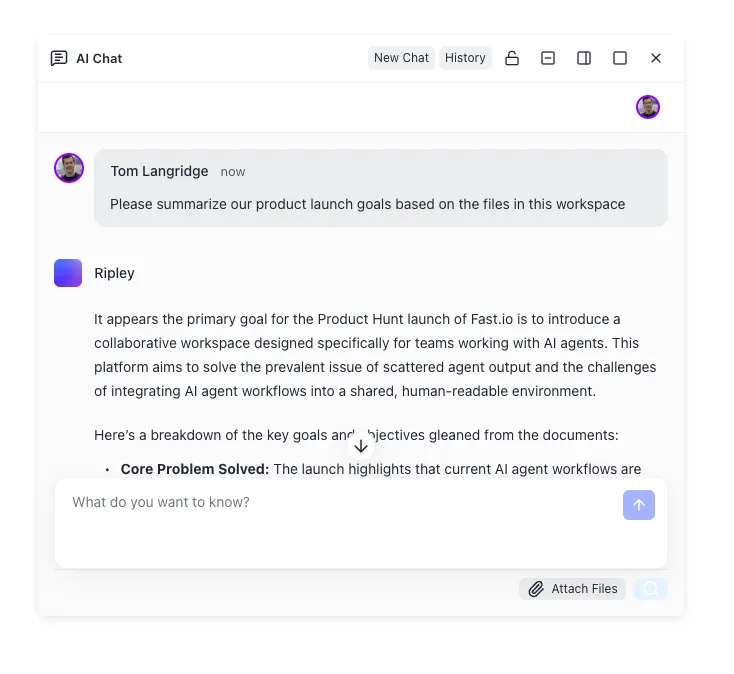
To perform a hybrid search over a codebase, Cline submits a query to the Fast.io MCP search tool. The tool runs the query against the remote index and returns semantic matches with relevance scores. The agent then reads only the most relevant files. This targeted retrieval model prevents the agent from downloading unnecessary files, saving bandwidth and keeping the token usage within reasonable limits. By letting the remote server handle the heavy lifting of indexing and searching, Cline can operate efficiently even when working with large repositories containing thousands of source files.
The query execution follows a structured multi-step sequence that begins when the developer prompts the agent. When you ask Cline to implement a change, the agent first evaluates the request to determine if it needs to search the codebase. If search is required, Cline calls the remote mcp hybrid search tool, passing the query string and any optional filters. The Fast.io MCP server receives this query and immediately executes a hybrid search across the workspace. The search engine scores the files based on both exact string matches and vector similarity, generating an aggregated list of matching files sorted by relevance.
Once the search results are returned, Cline receives a structured list containing file names, paths, matching snippets, and relevance scores. The agent inspects this list to identify the files most likely to contain the target code. Instead of reading all matching files, the agent selectively requests the content of only the top-scoring files using the file read tools. This approach minimizes context window inflation, allowing the agent to focus its reasoning capabilities on the specific code blocks that need modification. By keeping the search and retrieval process targeted, the agent maintains high accuracy and avoids generating irrelevant code suggestions.
A Guide to Configuring the Fast.io MCP Server in Cline
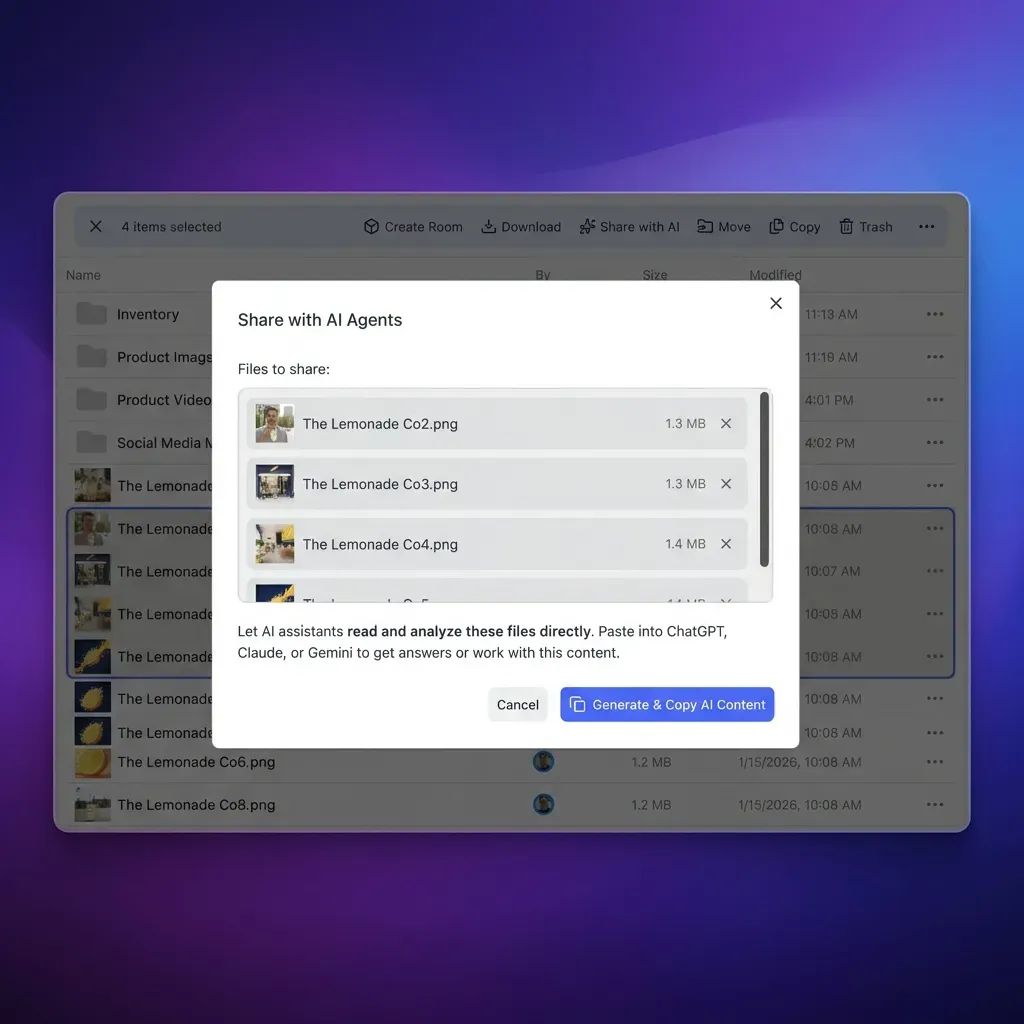
Configuring a remote Model Context Protocol server in Cline requires editing your cline_mcp_settings.json file. This file contains the configuration for all MCP servers connected to the extension. To establish a secure connection to the remote workspace, you define the server's endpoint URL and transport type. Fast.io exposes its remote toolset to coding agents such as Cline via Streamable HTTP at https://mcp.fast.io/mcp/code.
Cline signs in to Fast.io with OAuth in the browser the first time it connects, and the Review Permissions screen lets you choose Read Only or Read & Write and which workspaces the agent can reach. For headless agents operating in continuous integration pipelines or containerized environments, where no browser is available, send a Fast.io API key as a Bearer token in the Authorization header of the connection instead, so the agent can execute commands immediately upon startup.
To configure the Fast.io MCP server in your local Cline extension, open your cline_mcp_settings.json file and add the server configuration under the mcpServers object:
{
  "mcpServers": {
    "fastio-search": {
      "type": "streamableHttp",
      "url": "https://mcp.fast.io/mcp/code"
    }
  }
}
After saving the configuration file, Cline will automatically attempt to connect to the remote server. You can verify the connection status by checking the MCP Servers panel in the VS Code sidebar. If the server connects successfully, it will display a green indicator, and its available search and storage tools will appear in the agent's tool directory. If the connection fails, verify that the URL is correct and that you completed the Fast.io sign-in.
Locating the Configuration JSON
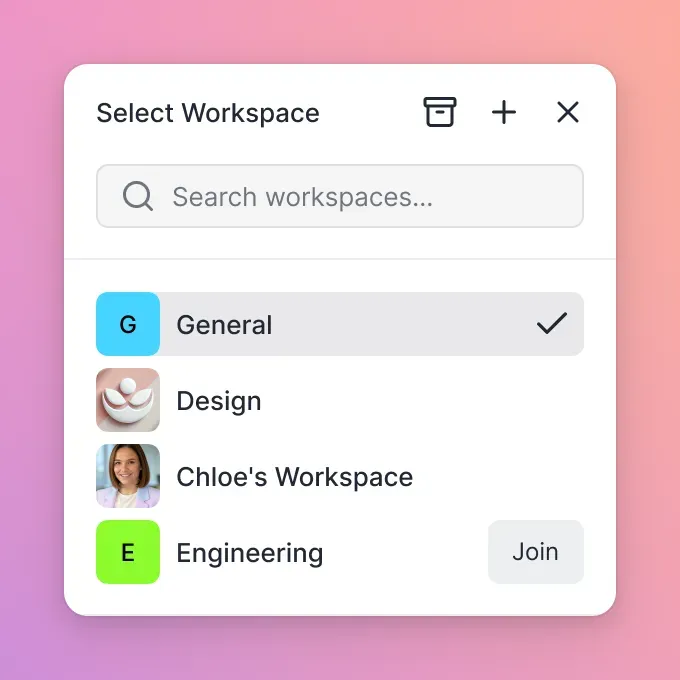
The cline_mcp_settings.json file is stored in different directories depending on your operating system. For developers using Visual Studio Code, the settings file is located in the extension's global storage directory:
- macOS:
~/Library/Application Support/Code/User/globalStorage/saoudrizwan.claude-dev/settings/cline_mcp_settings.json - Windows:
%APPDATA%\Code\User\globalStorage\saoudrizwan.claude-dev\settings\cline_mcp_settings.json - Linux:
~/.config/Code/User/globalStorage/saoudrizwan.claude-dev\settings\cline_mcp_settings.json
If you are running the Cline CLI tool instead of the VS Code extension, the configuration file is typically stored in your home directory at ~/.cline/data/settings/cline_mcp_settings.json. Knowing these paths allows you to configure your remote workspace connection using command-line tools.
Securing Your API Credentials
Because MCP configuration files are stored in plain text on your local machine, securing your API keys is critical. Never commit your cline_mcp_settings.json file to public version control, as this will expose your credentials and allow unauthorized access to your remote workspaces. On Unix-like systems such as macOS and Linux, you should restrict the file permissions of your configuration directory using the chmod 600 command to ensure that only your local user account can read or write the file.
When generating credentials in the Fast.io dashboard, best practice dictates using scoped, read-write API keys that are restricted to the specific workspaces the agent needs to access. If your agent only requires access to a single repository or project folder, scope the API key to that specific workspace. This limits the potential impact if your local credentials are compromised, maintaining a strong security posture for your organization's cloud storage.


Connect Cline to a remote hybrid search index
A shared workspace with a Model Context Protocol endpoint that offloads codebase discovery from your CPU, with versioning and semantic search built in. Starts with a 14-day free trial.
How to Manage Multi-Root Workspaces Without Local Overhead
In modern development workflows, projects are rarely isolated to a single folder. Developers often need to work across multiple related projects, such as a frontend client, a backend service, and a shared API contract. Visual Studio Code allows you to organize these projects into a single editor window using multi-root workspaces, which are defined by a .code-workspace JSON configuration file. Cline supports these multi-root setups, as explained in the Cline multi-root workspace documentation, enabling the agent to read files, write code, and run commands across all listed projects. However, searching across multiple distinct root directories locally using tools like ripgrep multiplies the processing overhead, as the search tool must index and scan each directory independently.
By connecting Cline to a remote Fast.io workspace, you can manage multi-root projects without local indexing overhead. Fast.io serves as a persistent, centralized workspace where all project folders are indexed in the cloud. Instead of indexing each local project folder on the host machine, the agent queries the single remote Fast.io MCP endpoint. The remote search engine executes the query across all workspace directories simultaneously, returning unified results sorted by relevance. This eliminates local file scanning latency, allowing Cline to find files across different repositories instantly. Performing a semantic codebase search cline can map references across distinct code roots without consuming local CPU cycles.
Connecting your local coding agent to a remote workspace also enhances team collaboration. When Cline generates build files or code updates, it writes the changes directly to the shared Fast.io workspace folder. The platform maintains a complete version history for every file, allowing team members to review updates, restore previous versions, and track concurrent modifications. Every file modification is logged in a detailed activity log, providing a transparent record of all human and agent actions. To protect sensitive project files, Fast.io provides granular permissions at the organization, workspace, folder, and file levels, ensuring that your agent only accesses the specific resources it needs to complete its tasks.

Setting Up a Code Workspace File
To configure a multi-root workspace for your team, you can create a .code-workspace file in your project's root directory. This JSON file defines the paths to all the folders that should be included in the workspace:
{
  "folders": [
    { "path": "frontend" },
    { "path": "backend" },
    { "path": "shared-contracts" }
  ],
  "settings": {}
}
When you open this file in Visual Studio Code, the editor loads all folders into a single window, and Cline automatically detects each folder as an active root. Instead of forcing Cline to run resource-intensive local searches across each folder, the agent queries the remote Fast.io search index, which treats the entire workspace as a single queryable entity. This ensures that the agent can resolve references across different repositories without local latency.
Collaborating with Teams and Agents
A major advantage of using remote workspaces is the ability to transfer ownership of resources. When an agent creates a workspace, builds a project directory, or provisions files for a client, the agent account can easily transfer the organization and its contents to a human user. This ownership transfer is completed via a secure claim link generated in the dashboard when the project is ready for handoff. The agent can retain administrative access to continue maintenance tasks, while the human client takes over billing and organization-level controls.
Every file in the workspace is protected by granular permissions at the organization, workspace, folder, and file level. This allows team leaders to invite external human collaborators or secondary AI agents to specific folders without exposing the entire codebase. Human developers can co-edit files alongside Cline in real-time, reviewing the agent's work as it happens and collaborating on project files securely.
Sources
References used to verify factual claims in this guide.
-
A Stack Overflow developer survey indicates that 76% of developers are using or planning to use AI tools in their development process.
Frequently Asked Questions
Does Cline support semantic search?
By default, Cline relies on local lexical search tools like ripgrep to locate files within your open workspace. However, Cline does not support native semantic vector search out of the box. To enable semantic capabilities, you must connect Cline to an external Model Context Protocol (MCP) server like Fast.io. Once configured, the remote server indexes your files in the cloud and exposes search tools that allow Cline to retrieve code blocks based on conceptual meaning rather than exact keyword matches.
What is hybrid search in codebase retrieval?
Codebase hybrid search is a retrieval methodology that combines exact lexical keyword matching with semantic vector search. Lexical search matches precise syntax elements, such as function signatures, variable names, or specific error codes. Semantic search uses vector embeddings to retrieve files based on the conceptual intent of the query, even if the exact words do not match. Fast.io merges these two methods, scoring and ranking files to return the most relevant results to the coding agent.
How to speed up codebase indexing for AI agents?
To speed up indexing and avoid local resource bottlenecks, you should offload the indexing process from your local machine to a remote workspace. When using local indexing, AI agents must consume CPU and memory to parse and map your codebase, which introduces latency on large repositories. By using Fast.io, files are automatically indexed off-thread in the cloud. The coding agent queries the workspace via a remote MCP endpoint, retrieving only the highly relevant files and keeping indexing time at zero for the local machine.
What is the difference between streamable HTTP and SSE transports in Cline?
Streamable HTTP and Server-Sent Events (SSE) are the two remote transport types Cline supports. Streamable HTTP is the preferred, modern transport for remote connections, as it provides a low-latency connection layer that is highly stable for web-based tools, and it is the transport the Fast.io MCP server uses. Server-Sent Events is a legacy transport method used by older MCP integrations, so streamable HTTP is recommended for new setups due to its improved session stability and error handling.
Related Resources

Connect Cline to a remote hybrid search index
A shared workspace with a Model Context Protocol endpoint that offloads codebase discovery from your CPU, with versioning and semantic search built in. Starts with a 14-day free trial.