Best OpenClaw Tools for Microsoft 365 AI Workflow Automation
Microsoft 365 now exceeds 450 million commercial paid seats, yet most automation still runs through rigid Power Automate triggers. OpenClaw skills offer a different path, connecting autonomous AI agents directly to the Microsoft Graph API for email triage, calendar scheduling, SharePoint document workflows, and Teams notifications. This guide ranks the best OpenClaw tools for M365 integration and shows where persistent file storage fits into the pipeline.

Why OpenClaw for Microsoft 365?
Microsoft 365 surpassed 450 million commercial paid seats in Q2 of fiscal year 2026, according to Microsoft's earnings report. Despite that scale, most M365 automation still relies on Power Automate's trigger-action model, where a human defines every condition and outcome in advance. OpenClaw takes a different approach. Instead of building flowcharts, you give an autonomous agent access to the Microsoft Graph API and describe what you need in plain language.
The difference is structural. Power Automate executes predefined rules. OpenClaw agents reason through multi-step tasks, call Graph API endpoints as needed, and adapt when conditions change. An agent can read your inbox, cross-reference a calendar conflict, draft a reply, and post a summary to Teams without requiring separate flows for each step.
The tradeoff is control. Power Automate gives you deterministic, auditable workflows. OpenClaw gives you flexibility at the cost of some unpredictability. For teams already comfortable with AI agents, the OpenClaw approach unlocks automation scenarios that would require dozens of interconnected Power Automate flows.

Related guides
- How to Set Up an MCP Server for n8n Workflow AutomationThe Model Context Protocol turns n8n into an AI-accessible automation platform. This guide walks through setting up n8n...
- Copilot Dropbox Integration: Microsoft 365 Copilot vs. Fast.io WorkspacesA Copilot Dropbox integration connects Microsoft Copilot to Dropbox repositories via Microsoft Graph connectors or...
- 7 Best OpenClaw Tools for Accountants and Financial Workflow AutomationCPAs recover an estimated 240 hours per year in billable capacity when AI handles routine preparation, according to the...
- 7 Best OpenClaw Tools for AI Travel Itinerary Planning and Booking AutomationOpenClaw's skill registry includes over 110 transportation skills and 29 dedicated travel tools, but most agents cobble...
- Best OpenClaw Tools for AI Spreadsheet Analysis AutomationManual reporting still eats hours every week, even when the analysis itself takes minutes. OpenClaw skills for...
- Best OpenClaw Tools for AI Video Editing AutomationOpenClaw's ecosystem includes both built-in video generation tools and community-developed editing skills that handle...
More on this subject: OpenClaw Tools (101 guides)
How We Evaluated These Tools
We tested each skill or integration against five criteria:
- Graph API coverage. Does it handle mail, calendar, files, contacts, and Teams, or just a subset?
- Authentication model. OAuth device code flow, app-only credentials, or delegated permissions? Each suits different deployment contexts.
- Multi-account support. Enterprise teams need agents that operate across tenants or user accounts without credential juggling.
- Maintenance cadence. Skills that haven't been updated since initial release often break when Microsoft ships Graph API changes.
- Security posture. Does the skill store tokens safely? Does it declare its environment variables in metadata? We flagged skills that log credentials or lack proper scoping.
We prioritized skills with real install commands, active maintainers, and transparent source code. Marketing claims without working implementations were excluded.
1. microsoft365 by robert-janssen
The broadest single-skill Graph API integration for OpenClaw.
This skill connects to Outlook email, Calendar, Contacts, and OneDrive through the Microsoft Graph API. Authentication uses Device Code Flow, which works cleanly in terminal environments without browser-based OAuth redirects. Version 1.0.2 (February 2026) addressed security scanner findings by updating metadata to declare environment variables and removing debug logging of the Client ID.
Key Capabilities:
- Read, search, and send Outlook emails
- Create and manage calendar events
- Access OneDrive files and folders
- Manage contacts across the organization
Install: Available on ClawHub under the identifier robert-janssen/microsoft365.
Multi-Account Support: Configure multiple named accounts and switch between them with a flag. Credentials use centralized management, keeping the skill directory clean and safe for sharing.
Best For: Teams that need a single skill covering the core M365 productivity surface. With over 1,100 downloads on ClawHub, it is one of the more established M365 integrations in the ecosystem.
ClawHub Page: clawskills.sh/skills/robert-janssen-microsoft365


Give Your M365 Agents Persistent Storage and Branded Handoff
Cloud workspace with Intelligence Mode, MCP-native tooling, and branded shares. Start a 14-day Business Trial to connect your agent workflows.
2. office365-connector on LobeHub
OAuth-driven M365 access with automatic token refresh.
The office365-connector skill on LobeHub provides OAuth-driven workflows for email, calendar, files, and contacts. It handles token refresh and per-account isolation automatically, which matters in environments where agents run unattended for hours or days. Users have reported successfully connecting it to Microsoft 365 tenants with multi-account setups working cleanly.
Key Capabilities:
- Automated email triage and response drafting
- Calendar event creation with conflict detection
- File operations across OneDrive and SharePoint
- Contact lookup and management
Best For: Long-running agent sessions where token expiry would otherwise break the workflow. The automatic refresh mechanism means you can start a batch email processing job and walk away.
LobeHub Page: lobehub.com/skills/openclaw-skills-office365-connector
3. openclaw-a365 by SidU
Enterprise-grade: the agent gets its own identity in your Microsoft 365 tenant.
This alpha-stage project takes a fundamentally different approach from other M365 skills. Instead of borrowing a user's credentials, the agent receives its own Entra ID (Azure AD) account in the tenant. Users share resources with it the same way they would share with a colleague, and IT can audit everything it does.
Key Capabilities:
- Native Microsoft 365 Agents (A365) channel for receiving and sending messages
- Built-in Graph API tools for calendar, email, and user operations
- Role-based access control with Owner and Requester roles
- Network policy control for the agent's outbound access
- Multi-model configuration with primary model and fallbacks (Anthropic, OpenAI, OpenRouter, Azure)
The agent can be @mentioned in Teams, Outlook, Word, Excel, or PowerPoint, showing up where users already work. IT admins can restrict which domains the agent reaches and audit every action through standard Microsoft 365 compliance tools.
Install: Available on GitHub at github.com/SidU/openclaw-a365
Best For: Enterprise teams that need auditable, IT-governed agent access to M365. The single-tenant authentication model and allowlists make it suitable for regulated environments.
Caveat: This project is in alpha. Expect breaking changes and incomplete documentation.

4. m365-pnp-cli by thomyg
Full Microsoft 365 admin surface through CLI for Microsoft 365.
This skill wraps the PnP (Patterns and Practices) CLI for Microsoft 365, giving agents command-line access to SharePoint Online, Teams, OneDrive, Outlook, Planner, Power Apps, Power Automate, and Entra ID. Where other skills focus on end-user productivity (read email, check calendar), this one covers the admin and developer surface.
Key Capabilities:
- Manage SharePoint sites, lists, and permissions
- Create and configure Teams channels and memberships
- Administer Power Apps and Power Automate flows
- Handle Planner tasks and buckets
- Manage Entra ID users and groups
- JMESPath filtering and JSON output for structured data extraction
Install: Available on ClawHub under the identifier thomyg/m365-pnp-cli.
Authentication: Supports device code, certificate, client secret, and managed identity. The certificate and managed identity options suit server-side agent deployments where no human is present to approve an OAuth flow.
Best For: IT administrators and DevOps teams automating tenant management. If your agent needs to provision SharePoint sites, update Teams settings, or manage user accounts rather than just read email, this is the skill to install.
ClawHub Page: clawskills.sh/skills/thomyg-m365-pnp-cli
5. Outlook Skill (openclaw/skills)
Focused email and calendar management with 6,600+ downloads.
The official Outlook skill from the OpenClaw skills registry handles email and calendar via Microsoft Graph API. It is narrower than the full microsoft365 skill but more battle-tested, with over 6,600 downloads and 54 active installs. If your agent's M365 needs are limited to inbox management and scheduling, this lighter option avoids the complexity of broader integrations.
Key Capabilities:
- Read, search, and manage Outlook emails
- Create, update, and query calendar events
- Filter emails by sender, subject, date, or folder
Best For: Agents focused purely on email triage and calendar automation without needing OneDrive, SharePoint, or Teams access.
6. microsoft-teams Skill (openclaw/skills)
Channel messaging and meeting automation for Teams.
The official microsoft-teams skill sends messages, manages channels, and automates meeting workflows through the Microsoft Teams API. It supports incoming webhooks for lightweight notifications, which is useful for agents that need to post status updates without full OAuth credentials.
Key Capabilities:
- Post messages to Teams channels
- Create and manage meetings
- Handle team memberships and channel configuration
- Send automated alerts via incoming webhooks
Best For: Agents that need to broadcast results or coordinate with humans asynchronously. Pair it with the Outlook skill for full communication coverage across email and chat.
One practical pattern: an agent monitors a shared mailbox with the Outlook skill, processes incoming requests, and posts a summary to a Teams channel using this skill. The automation hooks-based approach avoids full OAuth setup but limits you to posting messages. If your agent needs to read channel history or manage memberships, you will need a full app registration in Entra ID with the appropriate Graph API permissions.
Where Persistent Storage Fits In
M365 automation often produces artifacts: generated reports, processed documents, organized files. The question is where those outputs live after the agent finishes. OneDrive and SharePoint are the obvious choices within the Microsoft ecosystem, but they create a problem for cross-platform agent workflows. An agent that produces work for clients outside your M365 tenant needs a neutral handoff layer.
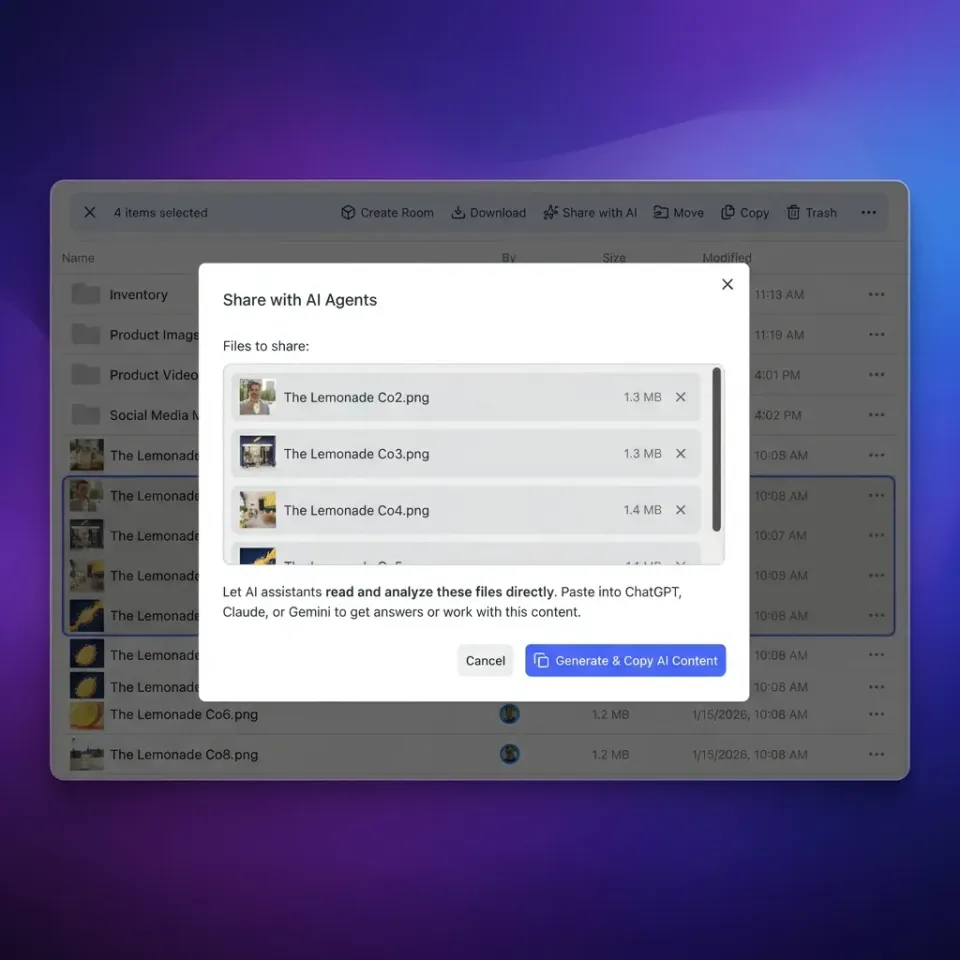
Fast.io provides that layer. The Fast.io MCP server exposes a consolidated toolset for workspace management, file operations, AI-powered search once Intelligence is enabled, and branded file sharing. An OpenClaw agent can process emails through the microsoft365 skill, generate a summary report, upload it to a Fast.io workspace, and send a branded share link to the client, all without the recipient needing a Microsoft 365 license.
What makes this practical:
- Intelligence Mode auto-indexes uploaded files for semantic search and AI chat. Other agents (or humans) can query the workspace without opening individual files.
- Ownership transfer lets an agent build a workspace and hand full control to a human client, keeping admin access for ongoing updates.
- Branded shares (Send, Receive, Exchange) give clients a professional download experience without exposing your internal file structure.
Fast.io offers a 14-day Business Trial (credit card required), with paid plans starting at $9.99/month. Connect directly via the remote MCP endpoint.
Alternatives for this layer include S3 with presigned URLs (more control, more setup), Google Drive (good if your clients are already in Google Workspace), or local storage with manual sharing (works for solo agents, breaks down with teams).
How OpenClaw Compares to Power Automate for M365
Power Automate and OpenClaw solve the same problem differently. The right choice depends on your team's technical comfort and the complexity of your workflows.
Power Automate strengths:
- Deterministic execution with guaranteed outcomes
- Visual flow builder accessible to non-developers
- Deep native integration with every M365 service
- Enterprise compliance and audit trails built in
- Microsoft support and SLA backing
OpenClaw strengths:
- Model-agnostic: use Claude, GPT-4, Gemini, LLaMA, or local models
- Handles ambiguous tasks that resist rigid if-then logic
- Runs locally on your machine with full control over data flow
- Open source with community-maintained skills
- Chains complex multi-step reasoning without building separate flows
When to choose Power Automate: You need deterministic, compliant workflows. Approval chains, document routing, and data entry automation where the same logic runs thousands of times. Non-technical users build and maintain the flows.
When to choose OpenClaw: You need an agent that reads context and makes judgment calls. Email triage that requires understanding content, meeting scheduling that weighs competing priorities, or document processing that adapts to varied formats. Developers build and maintain the agent.
Many teams use both. Power Automate handles the predictable, high-volume workflows. OpenClaw agents handle the exceptions, edge cases, and tasks that require reasoning across multiple data sources.
Sources
References used to verify factual claims in this guide.
-
Microsoft 365 exceeds 450 million commercial paid seats
-
OpenClaw microsoft365 skill v1.0.2 released February 2026 with security metadata updates
-
Outlook skill has 6,600+ downloads and 54 active installs
-
openclaw-a365 provides agent identity in Microsoft 365 tenant with Entra ID
Frequently Asked Questions
Can OpenClaw automate Microsoft 365 workflows?
Yes. OpenClaw agents connect to Microsoft 365 through the Microsoft Graph API using installable skills from ClawHub. Skills like robert-janssen/microsoft365 and the office365-connector handle authentication, token refresh, and multi-account isolation. Agents can read and send email, manage calendars, access OneDrive files, and post to Teams channels. The agent reasons through multi-step tasks rather than following predefined flowcharts.
What OpenClaw skills work with Outlook and Teams?
The Outlook skill from the official OpenClaw registry handles email and calendar with over 6,600 downloads. The microsoft-teams skill manages channel messaging and meeting automation. For broader coverage, the microsoft365 skill by robert-janssen combines Outlook, Calendar, Contacts, and OneDrive in a single package. The office365-connector on LobeHub adds automatic OAuth token refresh for long-running sessions.
How does OpenClaw compare to Power Automate for M365?
Power Automate is deterministic, visual, and enterprise-supported. It excels at high-volume, predictable workflows like approval chains. OpenClaw is open source, model-agnostic, and reasoning-based. It handles ambiguous tasks like email triage that requires understanding context or scheduling that weighs competing priorities. Many teams use Power Automate for structured flows and OpenClaw agents for the judgment-heavy exceptions.
Is OpenClaw compatible with Microsoft Graph API?
Yes. Several OpenClaw skills connect directly to the Microsoft Graph API. The microsoft365 skill uses Device Code Flow for authentication. The openclaw-a365 project by SidU takes it further by giving the agent its own Entra ID account in the Microsoft 365 tenant, providing full Graph API access with enterprise audit trails.
Do I need a developer background to use OpenClaw with Microsoft 365?
Some technical comfort is required. Installing OpenClaw skills uses CLI commands, and configuring OAuth credentials for Microsoft Graph requires creating an app registration in Entra ID (Azure AD). Once configured, day-to-day interaction with the agent uses natural language. If your team prefers visual, no-code tools, Power Automate is the better starting point.
Related Resources

Give Your M365 Agents Persistent Storage and Branded Handoff
Cloud workspace with Intelligence Mode, MCP-native tooling, and branded shares. Start a 14-day Business Trial to connect your agent workflows.