Best AI Tools for Consultants in 2026
Consultants in 2026 have more AI tools available than they could reasonably evaluate. This guide cuts through the noise by organizing the best options around the actual consulting workflow: research, analysis, deliverable creation, client sharing, and project management. Each tool is reviewed for what it genuinely does well and where it falls short.


How We Evaluated These Tools
Most "best AI tools" lists throw 20 products at you without explaining why a consultant would pick one over another. We evaluated tools against five criteria that matter for consulting work specifically:
- Workflow fit: Does it solve a real consulting problem, or is it a general productivity tool with a consulting spin?
- Output quality: Can you hand the output to a client, or does it need heavy editing?
- Source reliability: Does it cite its work? Consultants get fired for wrong numbers.
- Time to value: Can you get results in under 10 minutes, or does it require a week of setup?
- Cost at scale: What happens when you have 15 active client engagements?
We focused on tools that address the specific gap competitors miss: the full consulting workflow from initial research through client handoff. Generic productivity tools made the list only when they genuinely outperform consulting-specific alternatives.
Related guides
- Flow AI Review 2026: Features, Pricing, and Honest LimitationsFlow.ai is a Netherlands-based chatbot platform that launched in 2016 and has built a following among teams that need...
- Best Prompt Management Tools for Teams (2026)Guide to prompt management tools teams: Pasting prompts into Slack doesn't work. We compare the best tools to help your...
- Best AI Meeting Assistants in 2026: 10 Tools ComparedA Calendly survey found that 58% of professionals feel uncomfortable when an AI meeting bot joins their call uninvited,...
- Best AI Note Taking Apps in 2026: 10 Tools We Actually TestedAI note taking apps now go far beyond basic transcription. The best ones identify speakers, extract action items, and...
- Best AI Headshot Generators in 2026: 9 Tools Tested and ComparedAI headshot generators turn a few selfies into polished professional portraits for a fraction of what a studio charges....
- Best AI Tools for Product Managers in 2026Product managers in 2026 have access to AI tools that cover every stage of their workflow, from user research to...
More on this subject: AI Tool Directories and Comparisons (231 guides)
Research and Intelligence Gathering
Research is where consultants spend the most unbillable time. LexisNexis found that 80% of management consultants already use generative AI in daily tasks, and research is the first place most of them started.
1. Perplexity AI
Perplexity is the research tool most consultants reach for first, and for good reason: every answer comes with cited sources. When you're building a market sizing slide or a competitive landscape, you need verifiable references, not confident-sounding guesses.
Best for: Quick market research, competitive intelligence, fact-checking claims before they go into a deck.
Limitations: The free tier gives you unlimited standard searches but only about five Pro searches per day. Pro searches use stronger models and are noticeably better for complex multi-step research questions.
Pricing: Free tier available. Pro is $20/month.
2. AlphaSense
AlphaSense searches earnings calls, SEC filings, broker research, and expert transcripts. It's the tool that replaced the analyst who used to spend three days reading quarterly reports. If you work in strategy consulting, financial advisory, or due diligence, this is hard to replace.
Best for: M&A due diligence, competitive benchmarking against public companies, tracking industry trends with primary source data.
Limitations: Enterprise pricing puts it out of reach for solo consultants. The interface has a learning curve.
Pricing: Enterprise only. Expect $10,000+ annually.
3. Gemini Notebook (formerly NotebookLM)
Google's Gemini Notebook excels at a specific use case: you upload a pile of client documents, and it answers questions grounded only in those documents. No hallucinations from training data, just answers from the materials you provided, with citations pointing to the exact page.
Best for: Analyzing RFPs, digesting client-provided reports, synthesizing findings from multiple interview transcripts.
Limitations: Limited to the documents you upload. It won't pull in external data or search the web, so it's a synthesis tool, not a research tool.
Pricing: Free with a Google account.

Analysis and Deliverable Creation
Once you have your research, you need to turn it into something a client will pay for. This is where the right tool choice can save hours per engagement.
4. Claude
Claude has become the preferred writing tool for consultants who need to produce long-form deliverables. Its 200K-token context window means you can feed it an entire project's worth of research and get coherent output that tracks themes across all of it. Many consultants use ChatGPT for brainstorming and Claude for the actual writing.
Best for: Drafting strategy memos, executive summaries, project proposals, and any deliverable over 2,000 words.
Limitations: No real-time data access. You need to provide the source material yourself or pair it with a research tool.
Pricing: Free tier with dynamic usage limits. Pro is $20/month.
5. Microsoft 365 Copilot
If your firm runs on Microsoft's stack, Copilot is the path of least resistance. It drafts emails in Outlook, builds slides in PowerPoint, analyzes data in Excel, and summarizes meetings in Teams. The value isn't in any single capability but in the fact that it works inside tools you already have open.
Best for: Firms already invested in Microsoft 365 who want AI without changing their workflow.
Limitations: At $30 per user per month, it adds up fast for a 50-person firm. Output quality for slides and documents still requires significant editing.
Pricing: $30/user/month on top of existing Microsoft 365 subscription.
6. Think Cell
Think Cell has been a consulting standard for years, and the 2026 version adds AI-powered chart generation. Describe your data story in plain language and it builds the waterfall, Gantt, or Marimekko chart. For consultants who spend hours formatting PowerPoint slides, this pays for itself in the first week.
Best for: Data visualization in client presentations. Waterfall charts, Gantt charts, and other consulting staples.
Limitations: PowerPoint only. If your firm uses Google Slides or Keynote, look elsewhere.
Pricing: Annual subscription starting around $240/year.
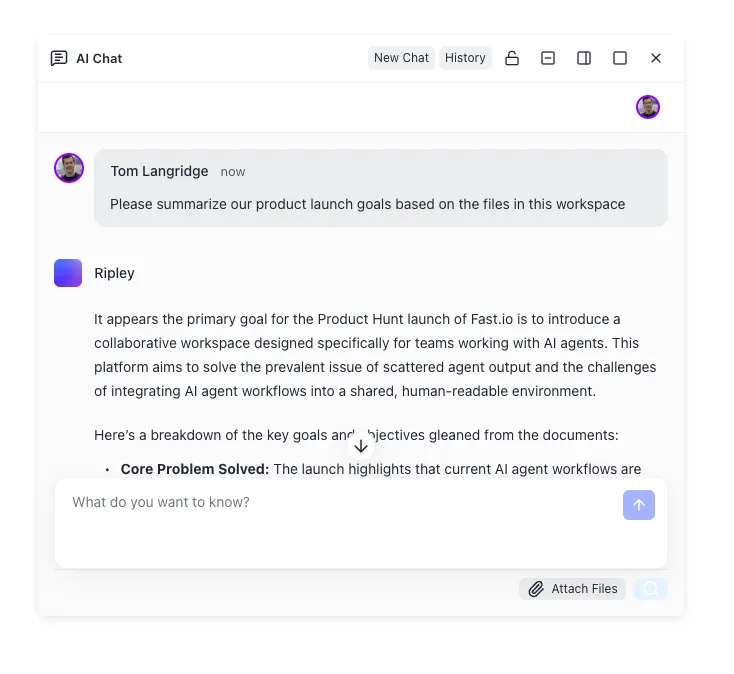


Give your consulting deliverables a professional home
Cloud workspaces with AI-powered search once Intelligence is enabled, branded client portals, and a 14-day Business Trial.
Client Sharing and Document Management
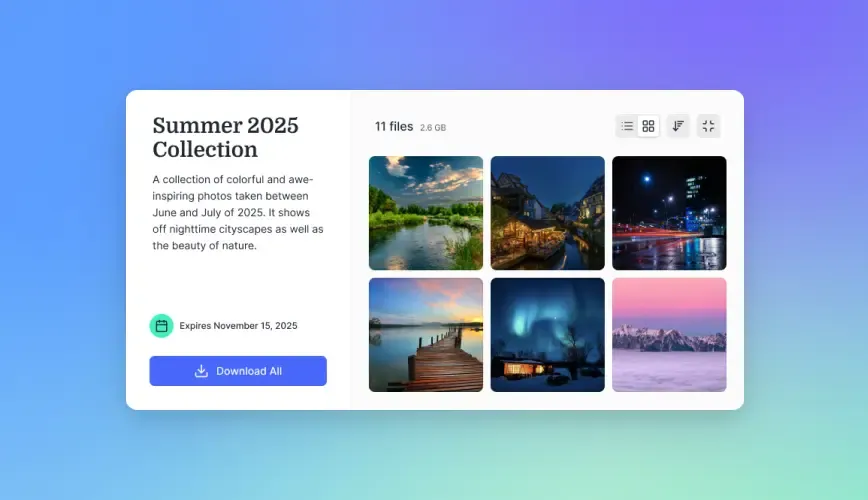
Here's where most tool lists fall short. Consultants don't just create deliverables, they need to share them securely with clients, track who's reviewed what, and maintain organized project workspaces across multiple engagements. This handoff step is where deals get professional or sloppy.
7. Fastio
Fastio is a workspace platform built for the kind of structured sharing consultants need. Create a workspace per client engagement, upload deliverables, and share them through branded portals with granular permissions. Once Intelligence Mode is enabled for the workspace, it auto-indexes everything you upload, so when a client asks "what did the Phase 1 report say about vendor selection?" you can search across all project files by meaning, not just filename.
For consultants who use AI agents in their workflow, Fastio exposes an MCP server that lets agents read, write, and organize files in the same workspaces humans use. An agent can compile research, build a deliverable, and place it in the client workspace, ready for human review and sharing.
Best for: Client deliverable sharing, document management across engagements, and bridging AI-generated work to client-facing handoff.
Limitations: Focused on file-centric workflows. It's not a CRM or project management tool.
Pricing: Starter plan at $9.99/month (3 seats, 250 GB), Business at $49.99/month, and a 14-day Business Trial requiring a credit card. See pricing.
8. Notion
Notion works well as an internal knowledge base and project wiki. Many consulting teams use it to organize engagement templates, maintain methodology libraries, and track project status. The AI features summarize pages, generate content, and answer questions about your workspace.
Best for: Internal knowledge management, engagement templates, team wikis.
Limitations: Client-facing sharing feels informal compared to dedicated portal tools. Permission controls are coarser than what regulated industries require.
Pricing: Free for personal use. Team plans start at $10/user/month.
Best Tools for Meetings and Project Operations
Consultants who switched to AI meeting tools consistently report saving 45 to 90 minutes per client per week on note-taking and follow-up alone. That time adds up across five or six active engagements.
9. Otter.ai
Otter transcribes meetings in real time with speaker identification, then generates searchable summaries. The real value is the action item extraction: after a client workshop, Otter pulls out decisions and next steps without you having to scrub through a 90-minute recording.
Best for: Client meetings where you need accurate transcripts and action items. Particularly useful for discovery sessions and stakeholder interviews.
Limitations: The free tier caps at 300 minutes per month with 30-minute session limits. That's about three client meetings before you need to upgrade.
Pricing: Free tier available. Pro is $16.99/month.
10. Forecast
Forecast uses machine learning to predict project timelines, allocate resources, and flag budget risks before they become problems. For consulting firms juggling multiple engagements, it replaces the spreadsheet-based staffing models that break every time a project scope changes.
Best for: Resource allocation, utilization forecasting, and budget tracking across multiple concurrent engagements.
Limitations: Requires consistent data input to train its predictions. The first month of use delivers less accurate forecasts.
Pricing: Custom enterprise pricing. Free trial available.
11. Zapier
Not an AI tool in the traditional sense, but Zapier connects the tools on this list to each other. Set up automations like: when a meeting ends in Otter, send the summary to a Notion page and notify the project lead in Slack. Consultants with five or more active tools get the most value from workflow automation.
Best for: Connecting disconnected tools into a coherent workflow without writing code.
Limitations: Complex automations can be fragile. Free tier is limited to 100 tasks per month.
Pricing: Free tier available. Professional starts at $29.99/month.
How to Build Your Consulting AI Stack
You don't need all 11 tools. Most consultants get 80% of the value from three or four, chosen based on where they personally spend the most time.
Solo consultant starting out: Perplexity for research, Claude for writing, Otter for meetings, and Fastio for client sharing (plans start at $9.99/month with a 14-day Business Trial).
Small firm (5-15 people): Add Microsoft 365 Copilot for team-wide productivity, Think Cell for presentations, and Forecast for resource management. Budget $50-80 per person per month.
Enterprise practice: Layer in AlphaSense for deep research, Notion for internal knowledge management, and Zapier for workflow automation. The Microsoft 365 Copilot license becomes the baseline.
A few principles that apply regardless of firm size:
- Start with one tool per workflow stage. Adding a second research tool before you've fully adopted the first just creates confusion.
- Audit your stack quarterly. AI tools ship meaningful updates every few months, and the best choice in January may not be the best choice in June.
- Separate client-facing tools from internal tools. Your research process can be messy, but what you share with clients should go through a dedicated workspace with proper version control and permissions.
The consulting firms gaining the most from AI aren't the ones with the longest tool lists. They're the ones who picked three or four tools that match their actual workflow and use them consistently across every engagement.
Sources
References used to verify factual claims in this guide.
-
80% of management consultants already use generative AI in daily tasks 56% of consultants save between 3-4 hours daily with generative AI
-
Microsoft 365 Copilot costs $30 per user per month
Frequently Asked Questions
What AI tools do consultants use most in 2026?
The most widely adopted tools are ChatGPT and Claude for general writing and analysis, Perplexity for cited research, Microsoft 365 Copilot for firms on the Microsoft stack, and Otter.ai for meeting transcription. LexisNexis research shows 80% of management consultants now use generative AI in their daily work.
How can consultants use AI without losing the personal touch?
Use AI for the parts clients don't see: initial research, first drafts, data analysis, and meeting transcription. Then apply your expertise in the last mile, shaping recommendations, adding context from experience, and presenting with judgment that AI can't replicate. Clients hire consultants for insight, not information retrieval.
What is the best AI tool for business consulting?
There's no single best tool because consulting work spans research, analysis, writing, and client management. Most consultants find the highest value in pairing a research tool (Perplexity or Gemini Notebook) with a writing tool (Claude) and a sharing platform for client deliverables. The best stack depends on whether you're a solo consultant or part of a larger firm.
Can AI replace management consultants?
AI handles the information-gathering and synthesis work that used to consume most of a junior consultant's time. But client relationships, organizational politics, and the judgment to know which recommendation will actually get implemented still require humans. The consultants at risk are those whose value was primarily in research and slide-building. Those who advise, persuade, and build trust have tools that make them faster, not obsolete.
How much time can consultants save with AI tools?
LexisNexis research found that 56% of consultants save 3 to 4 hours daily with generative AI. The biggest time savings come from meeting transcription (45 to 90 minutes per client per week), research synthesis, and first-draft creation. Solo consultants often report reclaiming enough time to take on one additional client engagement.
Related Resources

Give your consulting deliverables a professional home
Cloud workspaces with AI-powered search once Intelligence is enabled, branded client portals, and a 14-day Business Trial.