Best AI Platforms in 2026: 9 Options Compared for Developers and Teams
OpenAI's API now processes over 15 billion tokens per minute, yet most platform comparison guides still only cover LLM providers. This guide evaluates 9 AI platforms across four categories: LLM APIs, enterprise cloud suites, agent orchestration frameworks, and workspace infrastructure, so you can pick the right tool for each layer of your stack.


Why Platform Choice Matters More Than Model Choice
OpenAI's API hit 15 billion tokens per minute in March 2026, up from 8.6 trillion tokens per day just five months earlier. That growth rate tells you something important: the bottleneck for most teams is no longer "which model is smartest" but "which platform actually supports what we're building."
A startup prototyping a chatbot has different platform needs than an enterprise team running 50 agents against a compliance document corpus. The model matters, but the platform determines whether you can ship, monitor, and scale what you build.
We evaluated 9 platforms across four categories:
- LLM API providers for direct model access
- Enterprise cloud suites for managed infrastructure and MLOps
- Agent orchestration frameworks for multi-step autonomous workflows
- Workspace platforms for file storage, collaboration, and agent-human handoff
Each entry below covers strengths, limitations, pricing, and the specific use case where that platform wins.

Related guides
- Best Free AI Agent Tools 2026: Top 12 Platforms ComparedBuilding autonomous agents doesn't have to be expensive. The free AI agent ecosystem now offers professional frameworks...
- Best AI Automation Tools for 2026: 9 Platforms ComparedAI automation tools now span three distinct tiers: simple trigger-action platforms, multi-step AI workflow builders,...
- Best DeepSeek Alternatives in 2026: 7 Options ComparedWiz Research found over one million sensitive records exposed in an unsecured DeepSeek database, including plaintext...
- Best AI Agent Development Platforms for Building Production AgentsAI agent development platforms give you the frameworks, infrastructure, and tooling to build, test, and deploy...
- 7 Best Streaming Data Platforms for AI Pipelines in 2026Streaming platforms let AI systems handle data feeds in real time, from sensor telemetry to user events. Market...
- AI Agent Tools Comparison: Frameworks, Platforms & Storage SolutionsAI agent tools are platforms and frameworks that help developers build, deploy, and manage autonomous AI systems...
More on this subject: AI Tool Directories and Comparisons (231 guides)
How We Evaluated These Platforms
Every platform on this list was assessed on six criteria. We weighted them toward production use, not demo quality.
- Model access and flexibility. Can you switch providers without rewriting your application? How many models are available?
- Developer experience. Documentation quality, SDK maturity, time from signup to first API call.
- Production infrastructure. Monitoring, rate limiting, error handling, and uptime guarantees.
- Pricing transparency. Can you predict costs before you scale? Are there hidden egress or per-seat charges?
- Agent support. Does the platform provide tools for building autonomous multi-step workflows, or is it strictly request-response?
- Collaboration features. Can developers, domain experts, and AI agents work in the same environment?
Platforms are grouped by category, then ordered by production maturity within each group.
LLM API Providers
These platforms give you direct access to foundation models through APIs. They are the raw compute layer of the AI stack.
1. OpenAI Platform
OpenAI remains the default starting point for most AI projects. GPT-4o, GPT-4o-mini, and the o-series reasoning models cover the widest range of use cases, from fast chat completions to complex multi-step reasoning.
Key strengths:
- Largest developer ecosystem. Most tutorials, libraries, and community tools assume OpenAI's API format.
- Assistants API provides built-in file search, code interpretation, and function calling without external tooling.
- Rate limits and throughput are the highest in the industry at 15 billion tokens per minute.
- Batch API offers 50% cost reduction for non-urgent workloads.
Key limitations:
- Vendor lock-in. The Assistants API and custom GPTs don't port to other providers.
- Pricing for o-series reasoning models can spike unpredictably due to internal chain-of-thought token usage.
Pricing: GPT-4o starts at $2.50 per million input tokens, $10 per million output tokens. GPT-4o-mini starts at $0.15/$0.60.
Best for: Teams that want the broadest model selection and largest ecosystem, and don't mind single-vendor commitment.
2. Anthropic API
Anthropic's Claude models have become the preferred choice for code generation, document analysis, and safety-critical applications. Claude Opus 4 scored 74%+ on SWE-bench, and Claude powers the majority of AI-native coding tools including Cursor, Devin Desktop (formerly Windsurf), and Claude Code.
Key strengths:
- Extended thinking gives Claude a reasoning scratchpad that significantly improves multi-step planning.
- 200K token context window handles full codebases and long documents without chunking.
- Constitutional AI constraints reduce harmful outputs at the model layer, not through bolted-on filters.
- Prompt caching cuts costs by up to 90% for repeated prefixes in high-volume applications.
Key limitations:
- Smaller model lineup than OpenAI. Three tiers (Haiku, Sonnet, Opus) versus OpenAI's broader range.
- No built-in equivalent to OpenAI's Assistants API for managed retrieval and code execution.
Pricing: Claude Sonnet 4 starts at $3 per million input tokens, $15 per million output tokens. Haiku starts at $0.80/$4.
Best for: Code generation, document analysis, and applications where safety and reasoning depth matter more than ecosystem breadth.
3. Google Gemini API
Google's Gemini models, accessed through AI Studio or Vertex AI, compete aggressively on long-context performance and pricing. Gemini 2.5 Pro handles up to 1 million tokens of context, which is five times Claude's limit.
Key strengths:
- 1 million token context window is the largest among major providers.
- Aggressive output pricing undercuts competitors for high-volume text generation tasks.
- Native multimodal support for text, images, video, and audio in a single model.
- Free tier in AI Studio provides generous access for prototyping.
Key limitations:
- Gemini models trail Claude and GPT-4o on code generation benchmarks.
- AI Studio (free tier) and Vertex AI (enterprise tier) have different APIs and capabilities, which creates migration friction.
Pricing: Gemini 2.5 Pro starts at $1.25 per million input tokens, $10 per million output tokens for prompts under 200K tokens.
Best for: Applications that need massive context windows, multimodal input processing, or cost-efficient high-volume generation.
Enterprise Cloud AI Suites
These platforms bundle model access with managed infrastructure, MLOps tooling, and enterprise governance. They make sense when your team already runs on a specific cloud provider.
4. AWS Bedrock
Amazon Bedrock is the multi-model gateway for teams running on AWS. It provides access to Anthropic's Claude, Meta's Llama, Mistral, Cohere, and Amazon's own Titan models through a unified API, with all the IAM, VPC, and compliance tooling that AWS teams already use.
Key strengths:
- Broadest third-party model catalog among the three major cloud providers.
- Knowledge Bases for RAG with managed vector storage, chunking, and retrieval.
- Guardrails for Bedrock lets you define content policies that apply across any model.
- Native integration with the entire AWS ecosystem: S3, Lambda, SageMaker, CloudWatch.
Key limitations:
- Bedrock-specific features like Knowledge Bases and Guardrails lock you into AWS tooling.
- Model availability varies by region. Newer models often launch in us-east-1 weeks before other regions.
Pricing: Pay-per-token for on-demand, or Provisioned Throughput for reserved capacity. Claude Sonnet on Bedrock is priced at parity with Anthropic's direct API.
Best for: AWS-native organizations that want multi-model flexibility without managing inference infrastructure.
5. Google Vertex AI
Vertex AI is Google Cloud's end-to-end ML platform. It combines exclusive access to Gemini models with Model Garden (third-party models), BigQuery integration, and the most complete MLOps pipeline among cloud providers.
Key strengths:
- Deep BigQuery integration means you can run inference directly on data warehouse tables without data movement.
- Model Garden provides access to 200+ open and proprietary models with one-click deployment.
- Vertex AI Agent Builder packages RAG, grounding, and agent orchestration into a managed service.
- Vertex AI Pipelines and Experiments provide end-to-end ML lifecycle management.
Key limitations:
- The strongest features assume you're running on Google Cloud. Cross-cloud deployment is limited.
- Documentation can be fragmented across Vertex AI, AI Studio, and Google Cloud AI docs.
Pricing: Gemini models on Vertex AI are priced at the same rates as the direct API. Custom model training and serving use per-hour compute pricing.
Best for: Data-heavy organizations on Google Cloud that need unified ML pipelines from training through inference.
6. Azure AI Foundry
Azure AI Foundry (formerly Azure AI Studio) is Microsoft's unified platform for building AI applications. Its primary advantage is deep integration with the Microsoft ecosystem: Copilot, M365, Azure Active Directory, and Azure Cognitive Search.
Key strengths:
- Exclusive access to OpenAI models with enterprise SLAs and data residency guarantees.
- Provisioned Throughput Units (PTUs) offer up to 40% cost savings over pay-as-you-go pricing for predictable workloads.
- Azure Content Safety provides built-in content moderation and jailbreak detection.
- Deep integration with Microsoft 365 and Teams for enterprise AI deployment.
Key limitations:
- Model access is narrower than Bedrock. Primarily OpenAI models, with limited third-party options.
- Pricing complexity. PTUs, consumption-based billing, and seat-based Copilot licenses create unpredictable total costs.
Pricing: GPT-4o on Azure is priced competitively with OpenAI's direct API. Regional PTU pricing varies by geography and commitment term.
Best for: Microsoft-first enterprises that need OpenAI models with enterprise compliance, data residency, and M365 integration.
Agent Orchestration Frameworks
These platforms help you build autonomous agents that can reason, use tools, and complete multi-step tasks. They sit above the LLM API layer and below your application.
7. LangChain / LangGraph
LangChain is the most established AI development framework, with 97,000+ GitHub stars and the largest integration ecosystem. LangGraph, its agent orchestration layer, models workflows as directed graphs with typed state and built-in checkpointing.
Key strengths:
- 750+ tool integrations and provider adapters make LangChain the most flexible foundation.
- LangGraph checkpointing with PostgreSQL or Redis backends means agents survive crashes and restarts.
- LangSmith provides end-to-end tracing, evaluation, and monitoring for production agents.
- Time-travel debugging lets you replay any past execution and fork from arbitrary checkpoints.
Key limitations:
- The abstraction layers add significant boilerplate for simple use cases. A basic tool-calling loop requires understanding nodes, edges, state schemas, and checkpointers.
- LangChain's rapid evolution means tutorials and Stack Overflow answers go stale quickly.
Pricing: Open-source core is free. LangSmith starts free (5,000 traces/month), with paid tiers from $39/seat/month.
Best for: Complex stateful agent workflows that need explicit control over branching, retries, human approval, and production monitoring.
8. CrewAI
CrewAI is the fastest-growing agent framework in 2026. It uses a role-based abstraction where you define agents as team members (Researcher, Writer, Reviewer) with backstories, goals, and tools, then let them collaborate on tasks.
Key strengths:
- The role-based metaphor is intuitive. Most teams get a working multi-agent pipeline in under a day.
- Model-agnostic. Works with OpenAI, Anthropic, Google, and open-source models.
- Can use LangChain tools and LLM wrappers, so you get access to LangChain's integration ecosystem without the boilerplate.
- CrewAI Enterprise adds managed deployment, monitoring, and team management.
Key limitations:
- Less granular control than LangGraph for complex branching logic and error recovery.
- The role-based pattern becomes unwieldy beyond 10-15 agents. Large agent hierarchies need a framework with more explicit coordination primitives.
Pricing: Open-source core is free. Enterprise tiers start at $40/month based on execution counts.
Best for: Teams that want multi-agent orchestration with minimal setup and don't need LangGraph-level control over execution graphs.
Workspace and Collaboration Platforms
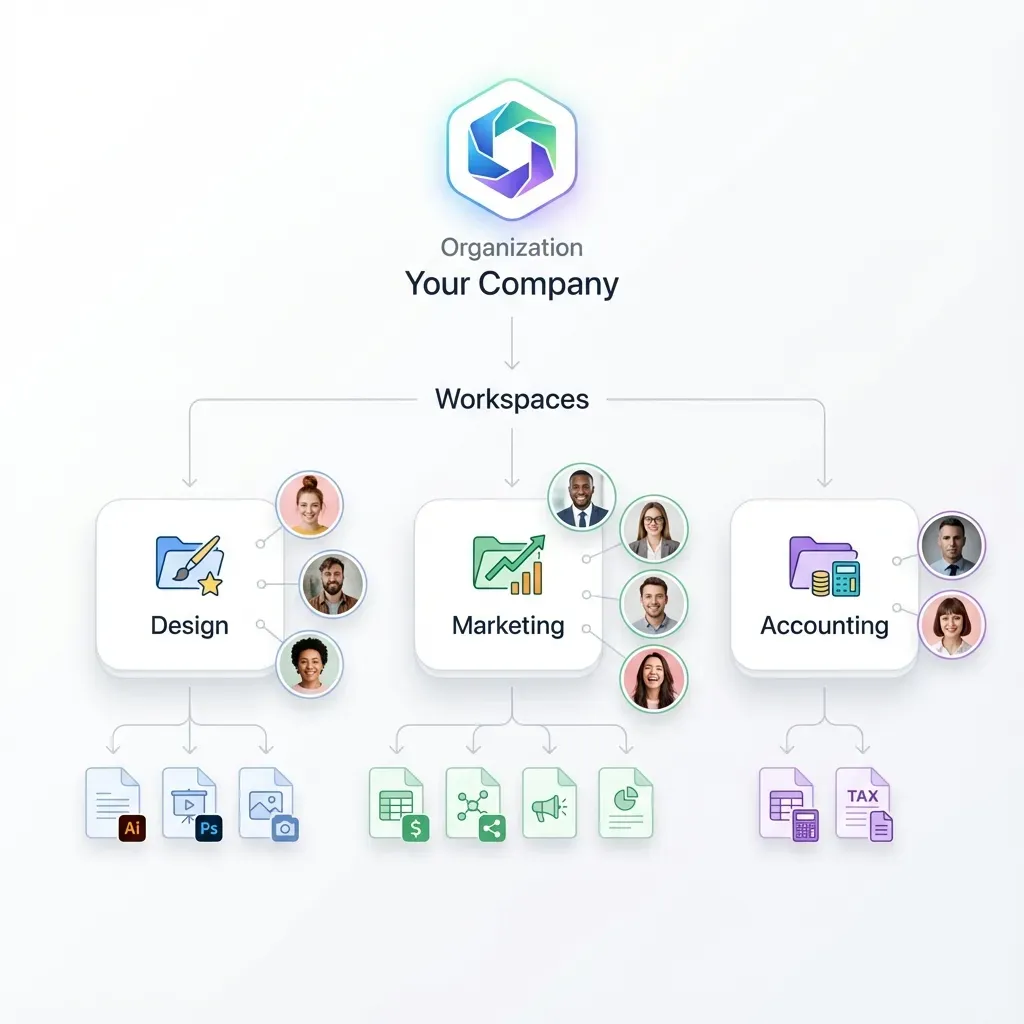
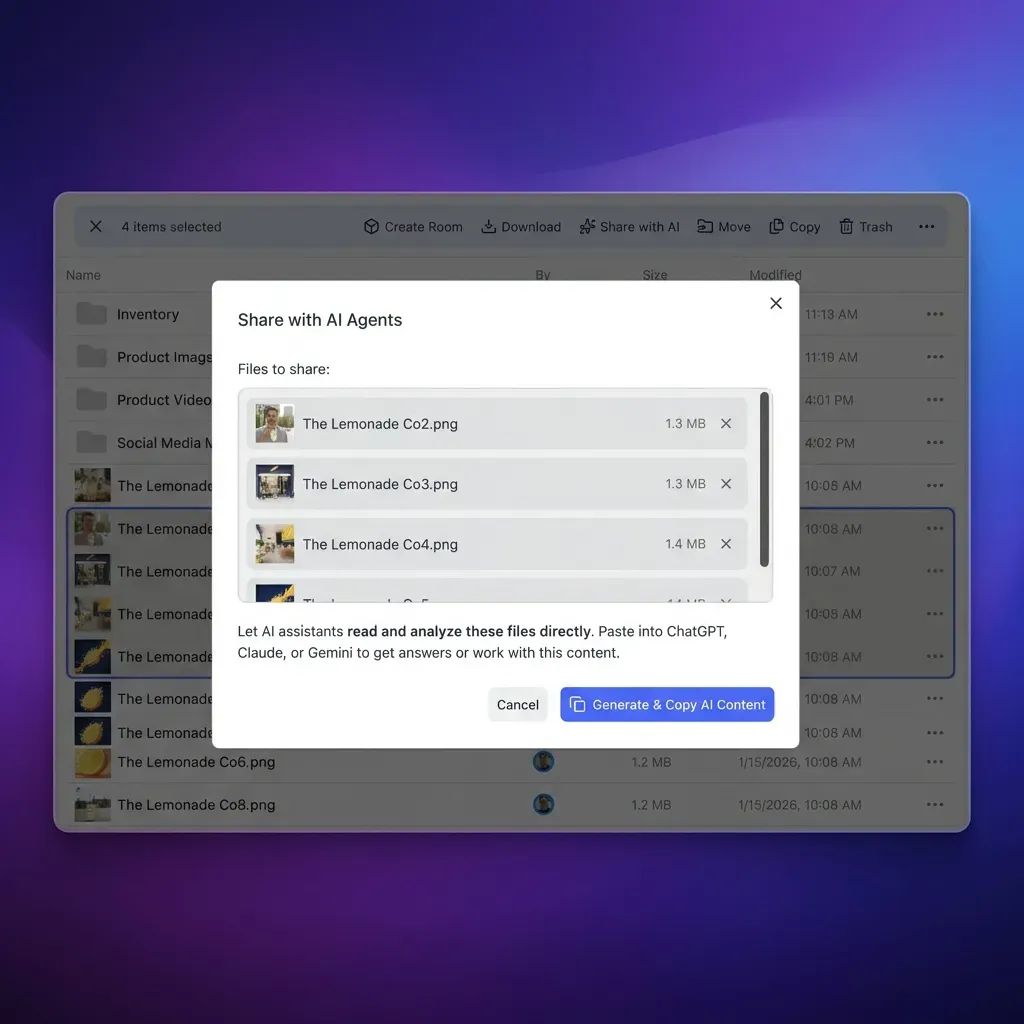
LLM APIs and orchestration frameworks handle reasoning and execution, but agents also need somewhere to store files, share results, and hand off work to humans. These platforms fill that gap.
9. Hugging Face Hub
Hugging Face Hub is the largest open-source model repository, hosting over 900,000 models and 200,000 datasets. It also provides Inference Endpoints for deploying models and Spaces for building and sharing ML demos.
Key strengths:
- Largest collection of open-source models, datasets, and ML demos in one place.
- Inference Endpoints let you deploy any model from the Hub to dedicated infrastructure with a few clicks.
- Spaces provides free GPU-backed hosting for Gradio and Streamlit demos.
- Transformers library is the de facto standard for working with open-source models in Python.
Key limitations:
- Enterprise features (private Hub, SSO, audit logs) are expensive compared to cloud provider alternatives.
- Inference Endpoints pricing can exceed cloud provider managed inference for high-throughput production workloads.
Pricing: Free tier for public models and spaces. Pro accounts from $9/month. Inference Endpoints billed per-hour based on GPU instance type.
Best for: Teams building on open-source models that want a unified platform for model hosting, experimentation, and community collaboration.
Which Platform Should You Choose?
The right answer is almost always "more than one." A recent survey found that over 70% of enterprises use at least two AI platforms simultaneously, and that number makes sense when you look at how the categories stack.
Here is a practical decision framework:
If you're a solo developer or small team prototyping: Start with OpenAI's API or Anthropic's API for model access. Use CrewAI if you need multi-agent workflows.
If you're an enterprise team on a major cloud provider: Use your cloud's native AI suite. AWS Bedrock for multi-model flexibility, Vertex AI for data-heavy ML pipelines, Azure AI Foundry for Microsoft-ecosystem integration. Layer LangGraph on top for complex agent workflows that need durable execution and observability.
If you're building agent-powered products: Combine an LLM API (pick based on model quality for your use case) with an orchestration framework (LangGraph for complex workflows, CrewAI for simpler multi-agent setups).
If you're working with open-source models: Hugging Face Hub for model access and experimentation, plus your cloud provider's inference infrastructure for production deployment.
The key insight is that these categories are complementary, not competing.
Sources
References used to verify factual claims in this guide.
-
OpenAI's API reached 15 billion tokens per minute as of March 2026
-
OpenAI's API was processing 8.6 trillion tokens per day as of October 2025
-
AI platform market expected to reach $94.31 billion by 2030 at 38.9% CAGR
-
77% of global enterprises are actively using AI or evaluating it for deployment Over 70% of enterprises use at least two AI platforms simultaneously
-
40% of enterprise applications will feature task-specific AI agents by 2026
-
LangChain has 97,000+ GitHub stars
Frequently Asked Questions
What is the best AI platform for businesses in 2026?
It depends on your cloud provider and use case. Azure AI Foundry is strongest for Microsoft-ecosystem enterprises. AWS Bedrock offers the most model flexibility for AWS-native teams. Google Vertex AI is best for data-heavy organizations on Google Cloud.
Which AI platform is best for developers?
For direct model access, OpenAI and Anthropic have the best developer experience: fast onboarding, clear documentation, and mature SDKs. For building agents, LangGraph provides the most control while CrewAI offers the fastest path to a working multi-agent system. For open-source model work, Hugging Face Hub is the standard.
Is Google Vertex AI better than AWS Bedrock?
They solve different problems. Vertex AI is better for teams that need integrated ML pipelines, BigQuery connectivity, and Google's Gemini models. AWS Bedrock is better for teams that want the broadest third-party model selection and deep AWS service integration. Choose based on your existing cloud infrastructure, not on which platform is abstractly better.
What is the cheapest enterprise AI platform?
For pay-as-you-go usage, Google's Gemini models offer the most aggressive pricing, especially for output tokens. Azure AI Foundry's Provisioned Throughput Units can save up to 40% over on-demand pricing for predictable workloads.
Do I need more than one AI platform?
Most teams do. Over 70% of enterprises use at least two AI platforms. A typical production stack combines an LLM API provider for model access, a cloud suite or orchestration framework for infrastructure, and a workspace or storage platform for file management and collaboration. The categories are complementary, not competing.
What is the difference between an LLM API and an AI platform?
An LLM API gives you access to a specific model for inference, like calling GPT-4o or Claude. An AI platform provides the broader infrastructure around that model: managed deployment, monitoring, data pipelines, RAG, agent orchestration, storage, and collaboration. Most production AI systems use both.