Best AI Interview Prep Tools in 2026
Forty-four percent of U.S. job seekers in an April 2026 Enhancv survey use AI to prepare for interviews. Dedicated tools add spoken mock interviews, delivery feedback, and role-specific question sets that a general chatbot does not provide on its own. This guide compares nine tools by their documented features and published pricing across behavioral, technical, AI-assisted coding, and case interview formats, with a note on the live-interview features several of them also sell.


Why Use a Dedicated Interview Prep Tool
Forty-four percent of U.S. job seekers use AI to prepare for interviews, according to an April 2026 Enhancv survey of 1,066 U.S. job seekers. That preparation covers practice answers, mock questions, and scripted talking points.
General chatbots can brainstorm questions and draft sample answers. Dedicated interview prep tools add features a chat window does not provide on its own: spoken mock interviews with follow-up questions, delivery metrics such as pacing and filler words, graded reports, and practice with human partners. Those features matter more as you move from behavioral interviews, where content and delivery carry most of the weight, to technical and case interviews, where you have to solve problems out loud.
This guide compares nine tools across four interview formats: behavioral, technical, AI-assisted coding, and case study. Each entry covers what the vendor documents, the limits of its plans, and its published price. The list is ordered by use case rather than ranking, because the right tool depends on which interviews you are facing.
Related guides
- Best AI Character Generators in 2026: 8 Tools Tested for ConsistencyThe AI image generator market hit $15.18 billion in 2026, but generating the same character consistently across poses...
- Best AI Tools for Agriculture in 2026AI agriculture tools have moved from research demos to working fields, but most comparison guides skip the options that...
- Best Generative AI Tools in 2026, Ranked by Output TypeThe generative AI market hit $69.85 billion in 2026, nearly doubling year over year, yet most users still default to...
- Best AI Mastering Tools in 2026Professional mastering sessions still cost $50 to $200 per track. AI services now deliver streaming-ready masters for...
- Best Free AI Tools in 2026: What's Actually Free and Worth UsingMost free AI tool lists include 14-day trials that quietly start charging you. This guide covers 11 tools that are free...
- 8 Best AI Agent Cost Optimization Tools in 2026AI agent costs add up fast once you move past prototyping. Tool calls, retries, multi-step reasoning, and storage...
More on this subject: AI Tool Directories and Comparisons (231 guides)
How This Comparison Works
Every tool is compared on five points, using each vendor's own website as the source:
Practice format: Voice, video, text, or a live human partner, and whether the AI asks follow-up questions.
Feedback: What the vendor says its feedback covers, such as answer content, structure, delivery, and grades by category.
Interview type coverage: Whether the tool handles behavioral, technical, AI-assisted coding, and case interviews, or one format.
Pricing and plan limits: The published price, billing terms, free plan allowance, and refund terms.
Live-interview features: Whether the product is also sold for real-time help during actual interviews.
The list sticks to tools with a dedicated mock interview or practice mode. Plans and prices were checked on each vendor's site in October 2026 and change often, so confirm the current terms before you subscribe.
Five of the nine tools (Interview Sidekick, OphyAI, LockedIn AI, Final Round AI, and CoPilot Interview) also market real-time assistance during live interviews, often in a window the vendor says stays out of screen shares. In the same Enhancv survey, about one in 18 respondents said they had used AI live during an interview. Many employers and assessment platforms do not allow outside help during an interview, so check the rules for each interview before using any live feature. This guide covers the practice side of each product.

9 AI Interview Prep Tools Compared
Here is each tool with pricing, strengths, limitations, and the interview type it handles best. The first four focus on practice; the last five pair practice with live-interview features.
1. Yoodli
Yoodli is an AI roleplay and communication coaching platform. Its interview preparation mode runs a simulated interview for the role you choose, with dynamic follow-up questions, then gives personalized feedback on your answers and delivery. Yoodli's speech analytics cover pacing and filler words, plus eye contact, which a June 2025 update began rating out of 5 alongside new visual presence feedback.
Strengths:
- Delivery analytics, including pacing, filler words, and eye contact
- Live AI roleplays with follow-up questions, plus feedback on uploaded recordings
- Covers interview prep, public speaking, and general communication practice in one account
Limitations:
- Yoodli describes interview prep as one application of a roleplay platform aimed mainly at enterprise sales and training teams
- The free Starter plan includes 5 roleplays in total, and Pro allows up to 10 roleplays per week
- Yoodli's pricing FAQ states that it does not offer refunds on cancellation
Best for: Candidates who know their material but want feedback on how they deliver it, such as speaking too fast, leaning on filler words, or losing eye contact.
Pricing: Starter is free (5 roleplays in total). Pro is $8/month billed annually, and Advanced is $20/month billed annually with unlimited roleplays and session data excluded from AI training.
2. Presentr Practice
Presentr Practice is the AI mock interview product from Presentr, a communication coaching company. You enter the job title and company, and optionally your resume, and it builds a practice scenario with questions and focus areas for that interview. An AI interviewer persona asks the questions aloud and follows up when an answer is vague. You can answer by voice, video, or text. Each session ends with a review that shows an overall score, a score for each rubric dimension, a performance summary, and coaching notes.
Strengths:
- Scenarios tailored to a specific role and company, including tell me about yourself, resume walkthrough, behavioral, recruiter screen, and hiring manager rounds
- Feedback covers communication, structure, empathy, and role-specific skills, with readiness tracking across sessions
- Free tools that need no signup, including an interview question generator, a STAR answer reviewer, and a three-question mock interview
Limitations:
- The free plan includes one AI interview scenario and one practice recording, with detailed feedback unlocked per interview
- Practice is conversational, and the scenario list does not include coding or system design rounds
Best for: Candidates preparing for recruiter screens, behavioral rounds, and hiring manager interviews who want to rehearse answers out loud for a specific role.
Pricing: Free plan with no credit card required. Individual is $19/month, with 20% off on annual billing, and includes up to 10 scenarios, 20 session recordings, and performance reports. Organization plans for employers and teams are priced on request.
3. Aced Practice (formerly Pramp)
Aced Practice is the peer mock interview service formerly known as Pramp. New Pramp sessions moved to Aced Practice in July 2024, and Exponent, the company behind both, now operates under the name Aced. The service matches you with another candidate preparing for the same kind of interview. You take turns as interviewer and interviewee for about 30 minutes each over video, with a shared code editor for coding rounds, then trade feedback using rubrics. Aced also offers an AI interviewer for solo practice.
Strengths:
- Free peer-to-peer practice with real people, with questions supplied for each session and hints and solutions for technical questions
- Interview types include product management, data structures and algorithms, system design, behavioral, and finance, with SQL, data science and ML, and frontend in beta
- Practicing as the interviewer shows you how answers are evaluated from the other side
Limitations:
- Sessions start at fixed times each day for each interview type, so practice follows the schedule rather than running on demand
- AI feedback and transcripts for peer sessions require a paid membership, and mock interviews are not supported on mobile devices
Best for: Engineers and product managers preparing for technical interviews who want the pressure and feedback of a live human partner. The free plan's monthly peer sessions make it practical for prep spread over several weeks.
Pricing: Basic is free with 5 peer mocks per month. Pro is $79/month billed monthly or $12/month billed annually, with unlimited peer mocks and all courses. Expert, which adds AI mock interviews and AI feedback, is $99/month billed monthly or $20/month billed annually. Aced offers full refunds within 5 days of purchase.
4. Nyrion
Nyrion is a practice platform for AI-assisted coding interviews, the rounds where an employer gives you an AI assistant and an existing codebase instead of a blank editor. Each problem is a small repository, most of them split into stages, with an AI assistant in the editor. Tests gate each stage, and the requirements grow as you move through them. The vendor describes the assistant as execution-only: it writes the code you direct but does not propose the design, and if you ask it to just solve the problem, it asks once which approach you want. After each stage passes, an AI interviewer asks you a question or two about the code you submitted. Finishing a problem produces a report, which Nyrion says scores how you drove the solution, how you found problems, how independently you worked, how well you explained your code, and the quality of the final code, with quotes from your own session.
Strengths:
- Practice in small repositories with an assistant in the editor and tests that gate each stage, rather than single-function puzzles
- Hints come from the platform in three levels and are counted in the report, along with files you accepted exactly as the AI proposed them
- The catalog can be filtered by difficulty and by company, with problems tagged to Meta, Amazon, Stripe, Shopify, LinkedIn, and other employers, plus free guides to how each company runs its round
Limitations:
- Covers AI-assisted coding rounds only; for every other round, including no-AI coding rounds, the vendor's FAQ points you to other resources
- The free plan opens one complete problem and the first stage of five more, and the interviewer's debrief and verdict require Nyrion Pro
- Company tags are based on candidate reports, and Nyrion states it is not affiliated with or endorsed by the companies it names
Best for: Software engineers whose interview loop includes a coding round with an AI assistant, who want to practice reading unfamiliar code, directing the assistant, and checking what it writes.
Pricing: The free plan includes one complete problem, the first stage of five more, the AI interviewer and assistant on those stages, and a report with time per stage, submits, and hints taken. Nyrion Pro is $19/month or $149/year. It opens every stage of every problem with no usage caps on the AI interviewer and assistant, and adds the interviewer's debrief and verdict to the report. You can cancel any time and keep Pro until the end of the paid period.
5. OphyAI
OphyAI runs AI mock interviews across four tracks: behavioral, technical and coding, system design, and case. You pick a role and round and upload your resume, and the AI interviewer asks questions and follow-ups grounded in your experience, by voice or text. After the session you get a graded report on communication, technical skill, problem solving, and confidence, with the full transcript and a PDF export. OphyAI's lead product is Interview Copilot, which suggests answers in real time during live interviews on Zoom, Microsoft Teams, and Google Meet; OphyAI says its desktop app hides that window from screen sharing and recording.
Strengths:
- Four interview formats in one tool (behavioral, coding, system design, case)
- Questions and follow-ups grounded in your resume, with practice in 35 languages
- Graded report with transcript and PDF export after each session
Limitations:
- The free plan covers one practice session capped at 15 minutes
- Credits are shared across practice, the live copilot, the resume builder, and job search, so heavy use of one feature leaves fewer credits for the others
- The screenshot-based Coding Interview product requires the Premium plan
Best for: Software engineers, product managers, and consulting candidates who face multiple interview formats and want one tool that covers all of them.
Pricing: Free plan with a one-time grant of 5 credits. Pro is $29/month with 300 credits, and Premium is $59/month with 500 credits; annual billing is 20% off. On a paid plan the first practice session is free of credits, and later sessions use 10 credits for text or 15 for voice. OphyAI retired its $9 Basic plan in July 2026. A $9.99 Interview Pass covers one live copilot session only.
6. Interview Sidekick
Interview Sidekick covers prep, real-time help, and post-interview review in one product. Its prep mode runs AI mock interviews that adapt to your role, experience level, and target company, with feedback on your answers, communication, and approach, plus a transcript of each session. The question bank holds more than 16,000 questions from over 1,200 companies, each with a suggested answer. The vendor also sells a real-time assistant for live interviews, with a Stealth Mode it says keeps the assistant off screen shares.
Strengths:
- Mock interviews for behavioral, technical, coding, system design, and case study formats
- Question bank of 16,000+ questions with suggested answers, sorted by topic and difficulty
- Session transcripts and performance analytics across question categories
Limitations:
- The live assistant and Stealth Mode are the focus of the vendor's marketing, and many employers do not allow outside help during an interview
- The free Basic plan limits prep sessions and question bank access
- The paid plan costs more than most practice-only tools on this list
Best for: Job seekers who want a large question bank and unlimited mock interviews in one subscription.
Pricing: Basic Sidekick is free with limited prep sessions. The pricing page shows Ultimate Sidekick at $80/month, or $53/month billed quarterly, with a $160 figure struck through beside a 50% checkout code. A one-week option costs $50.
7. LockedIn AI
LockedIn AI is built mainly as an AI interview assistant that listens to live interviews and supplies real-time answers, code solutions, and coaching; the vendor advertises a 116 millisecond average response speed. It also has a separate AI mock interview mode for behavioral, technical, and system design rounds. You choose a role and level, answer timed questions with AI follow-ups, and get a report that grades clarity, structure, technical content, delivery, and filler word use, with a coaching note, the transcript, and a model answer. A mobile app runs the same mock interviews with six AI interviewer styles, from friendly to hard.
Strengths:
- Mock interview reports that grade five elements, including delivery and filler words
- Role-specific question banks across technical, behavioral, and leadership rounds
- Mock interviews on desktop, tablet, and phone, including iOS and Android apps
Limitations:
- The product centers on real-time help during live interviews, including LockedIn Duo, which lets a second person follow your interview and send guidance; many employers do not allow either
- Unlimited plans cost more than most practice-only tools on this list
Best for: Candidates who want graded mock interviews with delivery feedback across behavioral and technical rounds.
Pricing: A basic free version is available with no credit card required. The Unlimited plan is $54.99/month billed monthly (against a listed standard price of $109.98) or $39.99/month billed every three months. Credit-based and lifetime plans are also offered.
8. Final Round AI
Final Round AI is built around Interview CoPilot, a desktop app for macOS and Windows that listens to a live interview and shows suggested answers in a private window, with a Stealth Mode the vendor says keeps it out of screen shares and recordings. For practice, it runs mock interviews tied to a Goal (your target role, company, resume, and materials) in eight scenarios: general, coding, system design, behavioral, product case, data and ML, salary negotiation, and recruiter screen. Each session ends with an automatic written debrief, and a re-drill option replays the weak spots the last debrief flagged.
Strengths:
- Eight practice scenarios, including salary negotiation and recruiter screens
- Practice sessions, debriefs, and job materials are organized per job you are pursuing
- Paid plans include a bank of 10,000+ interview questions
Limitations:
- The homepage lists practice interviews among the paid Pro features, and the vendor states there is no free trial
- The 3-day money-back guarantee applies once per customer and does not cover a billing period with two or more sessions longer than 30 minutes
- The live copilot and Stealth Mode are the focus of the vendor's marketing
Best for: Candidates who want practice, debriefs, and job materials organized per application, and who are ready to pay before they practice.
Pricing: A free plan covers goal setup, job description parsing, and a basic AI interview report. Published figures differ between pages: the homepage lists Pro from $25/month, while the plan page lists $125/month billed every two months, $83.33/month billed half-yearly, or $62.50/month billed annually, with further discounts shown after sign-in. Check the live page before you subscribe.
9. CoPilot Interview
CoPilot Interview is a desktop app for Windows and macOS with four modes. Its Mock Interview mode reads your resume and the job description, then asks behavioral, technical, system design, and coding questions aloud at the level you pick, from junior to staff, in rounds of 3, 5, or 8 questions. You answer out loud. Each answer gets a score out of 10, notes on what worked and what to improve, the rubric points you missed, a model answer (working code for coding questions), and the follow-up a real interviewer would likely ask, and the round ends with a report card. Candidate Mode is sold for real-time help during actual interviews on Zoom, Microsoft Teams, and Google Meet: it transcribes the interviewer's question and drafts a structured answer in a separate private window. The vendor tells users to follow the rules of the employer or assessment they are in. The app also includes an Interviewer Mode for hiring managers and a resume builder.
Strengths:
- Mock interviews built from your resume and the job description, with per-answer scores, model answers, and a report card
- A browser demo with 113 questions across 9 tracks, including behavioral, system design, coding, SQL, and product, with no install needed
- The free plan includes all four modes, and one-time hour packs never expire
Limitations:
- Free use is limited to 15 minutes a day on the vendor's free AI models; paid tiers add ChatGPT, Gemini, and Claude models
- Mock Interview mode requires the desktop app (Windows 10 or later, macOS 12 or later)
- Candidate Mode is the core of the vendor's marketing, and many employers do not allow AI help during an interview
Best for: Software engineers and other technical candidates who want resume-specific mock rounds with graded answers, including coding questions, on a free or low-cost plan.
Pricing: Free plan with 15 minutes of sessions a day. Standard is $14.99/month with 60-minute sessions and up to 100 minutes a day, Pro is $29.99/month or $16.66/month billed annually, and Pro+ is $49.99/month. One-time hour packs cost $5.99 for 1 hour, $19.99 for 5 hours, and $34.99 for 15 hours. A 14-day money-back guarantee covers the first payment on a new subscription if you have used under 30 minutes of live session time.
Picking the Right Tool by Interview Type
The tools above overlap in coverage but differ in depth. Here is how to match your interview format to a starting point.
Behavioral interviews test how you communicate past experiences. Delivery matters as much as content here. Yoodli's analytics cover pacing, filler words, and eye contact, and LockedIn AI's mock interview reports grade delivery and filler word use. Presentr Practice builds behavioral, recruiter screen, and hiring manager scenarios for a specific role, with an AI interviewer that follows up on vague answers. Interview Sidekick, OphyAI, and CoPilot Interview generate role-specific behavioral questions for content and structure practice.
Technical interviews for coding and system design require structured problem-solving practice with targeted feedback. Aced Practice (formerly Pramp) gives you free peer practice with other candidates in a shared code editor. OphyAI covers coding and system design in one tool with resume-based questions. CoPilot Interview's Mock Interview mode generates coding and system design questions from your resume and the job description and grades each answer. For volume, Interview Sidekick and Final Round AI offer large question banks of 16,000+ and 10,000+ questions.
AI-assisted coding rounds give you an AI assistant and an existing codebase, then grade how you read code you did not write, direct the assistant, and check what it produces. Nyrion is the tool in this guide built for this format: you work in a small repository with an assistant in the editor, tests gate each stage, and an AI interviewer asks about your code after each one. Keep a separate tool from the technical list above for any no-AI coding rounds in the same loop.
Case study interviews are the hardest to simulate with AI because they depend on fluid back-and-forth dialogue. OphyAI has a dedicated case track, Final Round AI has a product case scenario, and Interview Sidekick lists case studies among its formats. Pair any of them with Aced Practice sessions, or with a friend playing the interviewer using real case prompts from your target companies.
A workable plan is three to five structured practice sessions: one to calibrate, one targeted drill on your weakest format, and one full simulation under time pressure. Extra sessions help most when you change your approach between rounds.
What Moves the Needle Beyond AI Tools
AI interview prep tools are useful for volume practice. You can run several mock interviews in the time it takes to schedule one session with a friend or mentor. But the tools work best when combined with at least one live practice round with a real person.
The reason is straightforward: AI tools work on your answers and delivery in isolation. A human practice partner can catch things the tools miss, like awkward transitions between stories, unclear narrative arcs, and moments where your confidence visibly drops. Both forms of practice are useful, but relying on only one leaves a gap.
If you are starting from scratch, here is a practical sequence that covers the full prep cycle:
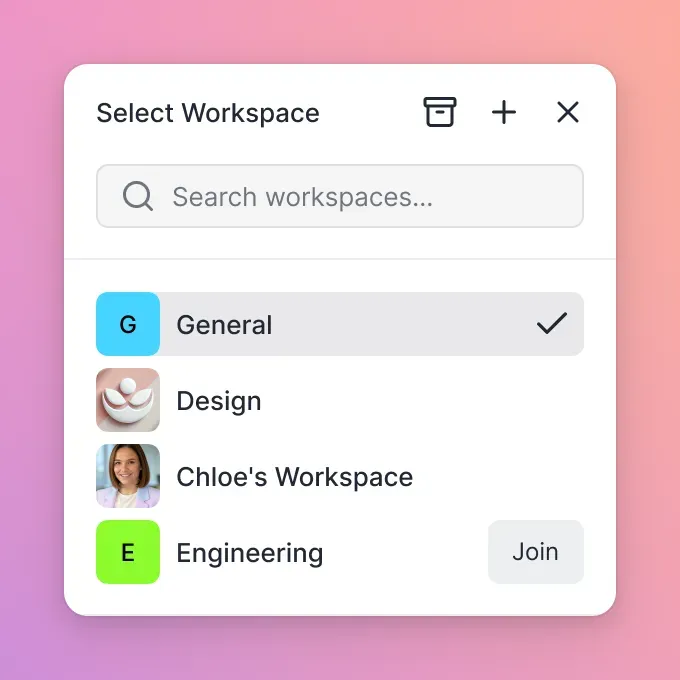
- Upload your target job descriptions and company research to a searchable workspace and use AI chat to surface likely questions and key themes
- Run 3 to 5 mock sessions on your chosen prep tool, focusing on one interview type per session
- Record yourself on video at least once (Yoodli gives feedback on uploaded recordings, and Presentr Practice supports video sessions) and watch the playback with fresh eyes
- Do one live practice round with a real person before the actual interview
- Review your notes and STAR stories one final time using your prep knowledge base
The goal is not to memorize scripted answers. It is to internalize your key stories and talking points well enough that you can adapt them in real time when the interviewer takes the conversation somewhere unexpected.
Sources
References used to verify factual claims in this guide.
-
44% of U.S. job seekers surveyed use AI to prepare for interviews About one in 18 surveyed job seekers said they had used AI live during an interview
-
Yoodli Starter is free with 5 roleplays, Pro is $8/month and Advanced is $20/month (annual billing)
Frequently Asked Questions
What is the best AI tool for interview prep?
It depends on the interview format. Yoodli focuses on delivery feedback such as pacing, filler words, and eye contact. OphyAI covers four formats (behavioral, coding, system design, case) in one tool. Presentr Practice builds spoken practice rounds for a specific role and company. For coding rounds where the employer provides an AI assistant, Nyrion runs practice problems in small repositories with an assistant in the editor. For practice with real people, Aced Practice (formerly Pramp) offers 5 free peer mock interviews a month.
Can AI help me practice for job interviews?
Yes. AI interview tools simulate mock interviews with adaptive follow-up questions, analyze your speaking patterns (filler words, pacing, eye contact), and provide structured feedback on answer quality. They are most useful for volume practice, letting you run many more sessions than you could schedule with human partners.
Are AI mock interviews effective?
The tools in this guide document graded feedback, transcripts, and model answers, which make repeated practice measurable from one session to the next. Outcome figures on vendor sites are self-reported, so treat them as marketing. Combining AI practice with at least one session with a real person covers what the tools can miss, such as how your stories connect across a full interview.
What AI tool helps with behavioral interview questions?
For content and structure, Interview Sidekick, OphyAI, and Presentr Practice generate role-specific behavioral questions, and OphyAI includes STAR-method scaffolding. For delivery (pacing, filler words), Yoodli's speech analytics and LockedIn AI's mock interview reports focus on how you sound, which helps you come across as natural rather than rehearsed.
How many practice interviews should I do before a real one?
Three to five focused sessions is a reasonable plan for most candidates. One session to calibrate, one or two targeted drills on your weakest interview format, and one full simulation under realistic time pressure. Additional sessions help most when you are changing your approach between rounds.
Are free AI interview prep tools good enough?
Several tools have usable free plans. Aced Practice includes 5 peer mock interviews a month for coding, system design, behavioral, and product formats. CoPilot Interview's free plan includes its Mock Interview mode with 15 minutes of sessions a day. Yoodli's Starter plan includes 5 roleplays in total, Presentr Practice's free plan includes one personalized scenario, and Nyrion's free plan opens one complete problem and the first stage of five more. Paid plans add more sessions, deeper feedback, and wider format coverage.
Can I use an AI interview copilot during a real interview?
That depends on the employer. Interview Sidekick, OphyAI, LockedIn AI, Final Round AI, and CoPilot Interview all sell real-time assistance for live interviews, but many employers and assessment platforms do not allow outside help. Check the instructions for each interview, and ask the recruiter if they are unclear. The practice features covered in this guide are meant for preparation before the interview.