Best Agentic Coding Tools in 2026: A Developer's Honest Ranking
Agentic coding tools have moved past autocomplete into full task execution. We ranked the 10 most-used options of 2026 across autonomy, workspace model, benchmark scores, and pricing, with honest strengths and limitations for each so you can pick the right tool for your workflow.


What Makes a Coding Tool 'Agentic'?
An agentic coding tool can autonomously plan, write, test, and iterate on code with minimal human intervention. It goes beyond autocomplete to full task execution.
The distinction matters. Traditional code completion tools like early Copilot suggest the next line. Agentic tools take a task description, break it into steps, write code across multiple files, run tests, fix errors, and submit the result for review. They operate in a loop: plan, execute, observe, adjust.
Three capabilities separate agentic tools from smart autocomplete:
- Autonomous planning: The tool decomposes a high-level request into concrete implementation steps without you specifying each file to touch.
- Self-correction: When tests fail or linters flag errors, the agent diagnoses and fixes the issue rather than stopping.
- Multi-file orchestration: Real features span multiple files. Agentic tools understand project structure and make coordinated changes across your codebase.
The benchmarks reflect this shift. Top tools now clear 80% on SWE-bench Verified, a far cry from the single digits seen at the beginning of 2024. The field has moved fast.

Related guides
- Top 5 Tools Every LangGraph Developer NeedsLangGraph lets you build stateful, cyclic AI agents, but the framework alone isn't enough. You need tools for...
- Best Headless Browsers for AI Agents: Top Tools (2026)Finding the best headless browsers for AI agents matters for reliable automation. Old scrapers break on dynamic sites....
- Best Web Browsing Tools for AI Agents (2026)Web browsing tools let AI agents navigate the live web, fill forms, and extract real-time data. Traditional scrapers...
- Best Free AI Agent Tools 2026: Top 12 Platforms ComparedBuilding autonomous agents doesn't have to be expensive. The free AI agent ecosystem now offers professional frameworks...
- Best Pydantic AI Tools for Building Reliable Agents (2026)Building reliable AI agents requires more than just prompts; it demands structured, type-safe data. Pydantic AI tools...
- Best Free AI for Coding in 2026Eighty-four percent of developers now use or plan to use AI coding tools, yet the best options cost nothing. This guide...
More on this subject: AI Tool Directories and Comparisons (231 guides)
How We Evaluated These Tools
We assessed each tool across five dimensions that matter for production use:
Autonomy level: How much can the tool accomplish without human intervention? Can it handle multi-step tasks, or does it need approval at each stage?
Workspace and sandbox model: Where does the agent's work happen? This is the gap most comparison articles skip. Some tools work in your local filesystem, others spin up cloud VMs, and some create isolated branches. The workspace model determines how you review changes, recover from mistakes, and works alongside CI/CD.
Benchmark performance: SWE-bench Verified scores provide a standardized comparison, though real-world performance varies by codebase size and complexity.
Language and ecosystem support: Does the tool work across your stack, or is it optimized for specific languages?
Pricing model: Subscription, usage-based, or open-source with bring-your-own-API-key. The cost structure affects whether you can let an agent run autonomously without watching the meter.
Top 10 Agentic Coding Tools, Ranked
1. Claude Code
Anthropic's terminal-native agent currently leads SWE-bench Verified at 80.8%. It reads your entire codebase, makes multi-file edits, runs commands, manages git workflows, and connects to external tools via MCP.
Key strengths:
- Highest benchmark scores among commercially available tools
- CLAUDE.md project files persist instructions across sessions
- Agent Teams spawn parallel sub-agents for complex tasks
- 1M token context window handles large codebases
- Roughly 5x fewer tokens than Cursor for identical tasks
Limitations:
- Terminal-only interface requires comfort with CLI workflows
- No built-in cloud sandbox for isolated execution
Best for: Developers who want maximum autonomy and work primarily in the terminal.
Pricing: Included with Claude Pro and Team plans. API usage billed per token.
2. Cursor
The IDE that built agentic coding into the editor from day one. Over 1 million developers use it daily, and the company reached $2 billion ARR in February 2026.
Key strengths:
- Visual multi-file editing with Composer mode
- Cloud agents run tasks in isolated VMs while you keep working
- Supermaven-powered autocomplete is the fastest in-editor experience
- Self-hosted agent option for enterprise security requirements
Limitations:
- Higher token consumption compared to CLI tools
- Pricing has faced community pushback as features move to higher tiers
Best for: Developers who want agentic capabilities without leaving their editor.
Pricing: Pro and Business tiers, with cloud agent usage metered separately.
3. OpenAI Codex
OpenAI's coding agent runs tasks in sandboxed cloud environments and works alongside ChatGPT's interface. It reads, writes, and executes code with browser capabilities for visual debugging. The open-source Codex CLI (built in Rust) provides terminal access with subagent workflows.
Key strengths:
- Cloud sandbox provides safe execution environment
- Image input lets you attach screenshots and design specs
- Subagent workflows parallelize complex tasks
- MCP support for external tool integration
- No extra cost on paid ChatGPT plans
Limitations:
- SWE-bench scores trail Claude Code
- Cloud execution adds latency compared to local tools
Best for: Teams already invested in the OpenAI ecosystem who want safe cloud execution.
Pricing: Included with ChatGPT Plus and Pro. API access billed per token.
4. Sourcegraph Amp
Built on Sourcegraph's code search infrastructure, Amp combines semantic code understanding with agentic execution. It picks the best model per task, spins up parallel subagents, and works as both a VS Code extension and CLI.
Key strengths:
- Unconstrained token usage removes context window anxiety
- Semantic code graph understands cross-repo dependencies
- AGENT.md files encode project rules and constraints
- Persistent threads act as living memory across sessions
- Subagent parallelization for complex multi-step tasks
Limitations:
- Enterprise-focused pricing with no published self-serve plan
- Smaller community compared to established tools
Best for: Teams with large, multi-repo codebases who need deep code understanding.
Pricing: Contact sales. Pay-as-you-go with no markup on model costs for individuals.
5. GitHub Copilot (Agent Mode)
GitHub Copilot's agent mode transforms it from a line-level completer into a multi-step task executor. It determines which files need changes, makes coordinated edits, runs terminal commands, and iterates until the task is complete. Available in VS Code and JetBrains IDEs.
Key strengths:
- Deepest git and GitHub integration (PRs, issues, actions)
- Inline agent mode invokes agentic capabilities without switching to chat
- Prompt files let teams share reusable instruction blueprints
- Cloud coding agent can work asynchronously on GitHub issues
- Broad Fortune 100 adoption provides enterprise confidence
Limitations:
- Benchmark scores trail dedicated agentic tools
- Agent mode autonomy is more conservative than competitors
Best for: Teams already on GitHub who want incremental agentic capabilities in their existing workflow.
Pricing: Individual, Business, and Enterprise tiers; see GitHub for current rates.
6. Augment Code
The agent plans tasks with visible task lists, saves checkpoints as it works, and learns your coding style through a Memories feature.
Key strengths:
- Handles massive codebases where other tools hit context limits
- Checkpoint system lets you review and revert individual steps
- Intent (macOS app) provides multi-agent orchestration around a shared spec
- Claimed 70% win rate over GitHub Copilot in head-to-head testing
Limitations:
- Newer entrant with smaller community
- Enterprise pricing not publicly available
Best for: Enterprise teams with large, complex codebases who need agents that understand architectural patterns.
Pricing: Contact sales for enterprise. Free tier available for individual developers.


Give your coding agents a persistent workspace
Fastio provides shared workspaces where agents write output via MCP, humans review through the same interface, and files persist with full versioning.
Open-Source and Independent Options
7. OpenCode
An open-source alternative built around provider flexibility. Connect any LLM and run from terminal, CI, or as a headless server.
Key strengths:
- Provider-agnostic: works with any LLM (cloud or local via Ollama)
- Language Server Protocol integration provides type-aware editing
- Multiple modes: interactive TUI, single-shot for CI, headless server API
- Multi-session support for parallel feature work
- Completely free, no subscription
Limitations:
- Quality depends entirely on which model you connect
- No built-in cloud sandbox
Best for: Developers who want full control over their model choice and refuse vendor lock-in.
Pricing: Free. You pay only your LLM provider's API costs.
8. Aider
A git-native pair programmer with over a million installs and three years of active development.
Key strengths:
- Git-native: every change is a commit you can review, revert, or cherry-pick
- Supports 100+ languages and works with any LLM provider
- Automatically runs linters and tests, then fixes detected issues
- IDE integration via in-file comments
- Battle-tested over three years of active development
Limitations:
- No built-in planning or multi-agent orchestration
- Terminal interface with steeper learning curve for non-CLI developers
Best for: Developers who want transparent, git-tracked AI edits with maximum model flexibility.
Pricing: Free. You pay only your LLM provider's API costs.
9. Devin
Cognition's fully autonomous agent runs in a sandboxed cloud environment with its own IDE, browser, terminal, and shell. You assign a task and Devin plans, writes, tests, and submits a PR without intervention. It is the closest thing to "fire and forget" in the current market.
Key strengths:
- Most autonomous option: handles end-to-end task execution
- Full cloud sandbox eliminates risk to your local environment
- Built-in browser for testing web applications
- Significant price reduction over the past year as the base plan came down
Limitations:
- SWE-bench scores still trail interactive pair-programming tools
- ACU billing (roughly 15 minutes per unit) can add up on complex tasks
- Less developer control over intermediate steps
Best for: Teams that want to delegate well-defined tasks (bug fixes, migrations, boilerplate) and review the end result.
Pricing: Subscription tiers plus per-ACU compute billing.
10. Replit Agent
A hosted, in-browser agent that builds, runs, and deploys applications inside Replit's workspace. It spawns subagents for specialized tasks and includes three effort modes (Economy, Power, Turbo) with web search for current documentation.
Key strengths:
- Full hosted environment: no local setup required
- Built-in deployment, so apps go live without leaving Replit
- Effort-based billing scales cost to task complexity
- Real-time collaboration with live cursors
Limitations:
- Workspace tied to Replit's hosting platform
- Lowest SWE-bench score among the tools listed here
- Less suited for existing codebases you want to keep local
Best for: Building new applications from scratch, especially for non-CLI developers who want a visual, hosted experience.
Pricing: Core and Pro tiers, with Pro adding enhanced agent capabilities.

Comparison Table
Here is how these tools compare across the dimensions that matter most:
By autonomy level:
- Full autonomy (fire and forget): Devin, Replit Agent
- High autonomy (multi-step with checkpoints): Claude Code, Codex, Augment, Amp
- Supervised autonomy (agent in editor): Cursor, Copilot Agent Mode
- Flexible (depends on model): OpenCode, Aider
By workspace model:
- Cloud sandbox (isolated VM): Devin, Codex, Cursor Cloud Agents, Replit
- Local filesystem (your machine): Claude Code, Aider, OpenCode, Copilot
- Hybrid (local + cloud option): Cursor, Amp, Augment
By pricing approach:
- Free / open-source (bring your own API key): OpenCode, Aider
- Subscription with included usage: Copilot, Cursor, ChatGPT/Codex
- Usage-based (pay per compute): Devin (ACUs), Replit (effort modes)
- Enterprise / contact sales: Amp, Augment
By SWE-bench Verified score (May 2026):
- Claude Code: 80.8%
- Codex: 71.0%
- Cursor: 67.2%
- Devin: 60.8%
- Replit: 54.1%
Where Agent Output Lives: The Persistence Problem
Most comparison articles skip the question that matters after the code is written: where does it go? Agentic tools produce output in three patterns: Local filesystem agents (Claude Code, Aider, OpenCode) write directly to your working directory. You review changes with git diff, commit what works, and discard what does not. This is simple and familiar, but means the agent needs access to your machine.
Cloud sandbox agents (Devin, Codex, Replit) run in isolated environments and deliver results as pull requests or deployed applications. You get safety, but lose the ability to iterate interactively. Review happens after the fact.
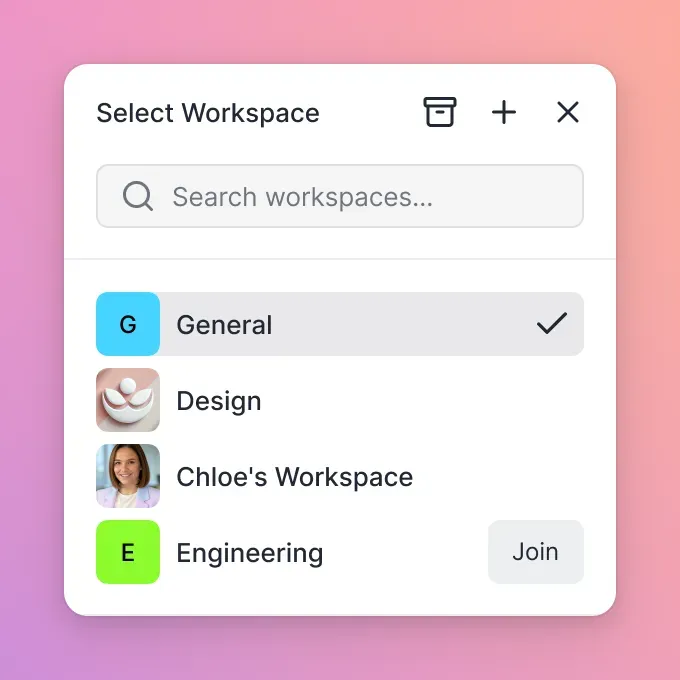
Hybrid agents (Cursor with /worktree, Amp with persistent threads) give you isolation without full cloud separation. The agent works on a branch while you stay on main. For teams running multiple agents in parallel, or handing off agent-produced artifacts to humans for review, a persistent workspace layer solves the coordination problem. Fastio provides shared workspaces where agents write output via MCP or API, humans review through the same interface, and files persist with versioning and audit trails. Fastio offers a Business Trial with storage and agent tooling for testing this workflow. This is particularly relevant for CI/CD integration. When your agent produces code in a cloud sandbox, getting that code into your repository, through review, and into your deployment pipeline requires coordination. A shared workspace with a real-time activity feed and granular permissions gives both agents and humans a common handoff point. Tools like Fastio's MCP server let agents upload artifacts, trigger notifications, and transfer ownership to human reviewers, all without custom integration code.
Which Tool Should You Choose?
Your choice depends on where you want the AI to fit into your workflow:
Choose Claude Code if you want the highest-performing agent and prefer terminal workflows. Its benchmark scores and token efficiency are unmatched, and CLAUDE.md files mean it learns your project conventions.
Choose Cursor if you want agentic capabilities inside a polished IDE. The visual editing experience and cloud agents make it the most approachable option for teams transitioning from traditional editors.
Choose Codex if your team already uses ChatGPT and wants safe cloud execution without managing infrastructure.
Choose Devin if you have a backlog of well-defined tasks (migrations, bug fixes, test coverage) that you want to delegate entirely and review only the end result.
Choose OpenCode or Aider if you want full control over model selection, refuse vendor lock-in, and are comfortable with terminal workflows.
Choose Augment or Amp if you work on large enterprise codebases where context limits are your primary constraint.
Choose Copilot if your team is deeply integrated with GitHub and wants incremental agentic capabilities without changing tools.
Choose Replit Agent if you are building new applications from scratch and want a zero-config hosted environment.
The tools are not mutually exclusive. Many developers use Claude Code for complex refactoring, Copilot for in-editor completions, and a shared workspace like Fastio to persist and hand off agent-produced artifacts across the team.
Sources
References used to verify factual claims in this guide.
-
GitHub Copilot writes 46% of code in enabled repositories
-
Devin completed 13.86% of SWE-bench issues autonomously at launch
-
Cursor reached $2 billion ARR in February 2026
-
OpenCode reached 150,000+ GitHub stars
-
Claude Code uses 5.5x fewer tokens than Cursor for identical tasks
Frequently Asked Questions
What is the best AI coding agent in 2026?
Claude Code currently leads SWE-bench Verified at 80.8% and is the strongest pick for terminal-first workflows. The 'best' tool depends on your workflow. Cursor is better for developers who prefer IDE-based editing. Devin is better for fully autonomous task delegation. OpenCode and Aider are best if you want open-source, provider-agnostic options.
Is Devin better than Claude Code?
They serve different purposes. Devin is more autonomous and runs in a cloud sandbox, making it ideal for fire-and-forget tasks like migrations and bug fixes. Claude Code scores higher on SWE-bench Verified (80.8% vs 60.8% for Devin) and gives developers tighter step-by-step control. Pick Devin when you want to delegate a defined task and review the result; pick Claude Code when you want a high-autonomy collaborator you can steer.
What is the difference between AI code completion and agentic coding?
Code completion suggests the next line or block based on context. Agentic coding takes a task description, breaks it into steps, writes code across multiple files, runs tests, fixes errors, and delivers a complete result. The agent operates in an autonomous loop rather than waiting for you to accept each suggestion.
Are open-source coding agents as good as commercial ones?
Open-source agents like OpenCode and Aider are provider-agnostic, so their quality depends on which LLM you connect. The tradeoff is less polish in the UI and no built-in cloud execution environment.
How much do agentic coding tools cost in 2026?
Costs range from free (OpenCode and Aider with your own API key) to consumer subscriptions (Claude Code via Claude Pro, Cursor Pro, ChatGPT Plus/Pro for Codex) to usage-based compute pricing (Devin ACUs, Replit effort modes) and enterprise contracts (Augment, Amp). Check each vendor for current rates.
Can agentic coding tools replace developers?
No. Current tools are powerful collaborators, not replacements. Even the most autonomous agents (Devin) need clear task specifications, produce code that requires review, and struggle with ambiguous requirements or novel architectural decisions. The productivity gains are real, but human judgment remains essential for design decisions, code review, and system architecture.
Related Resources

Give your coding agents a persistent workspace
Fastio provides shared workspaces where agents write output via MCP, humans review through the same interface, and files persist with full versioning.