How to Add File Watermarking to Your AI Agent Pipeline
AI agent file watermarking is the automated process of embedding visible or invisible identifiers into documents, images, or videos before an agent shares them with recipients. This guide walks through watermarking types, how to build watermarking into an agentic delivery pipeline, and how to trace leaks back to specific recipients when something goes wrong.

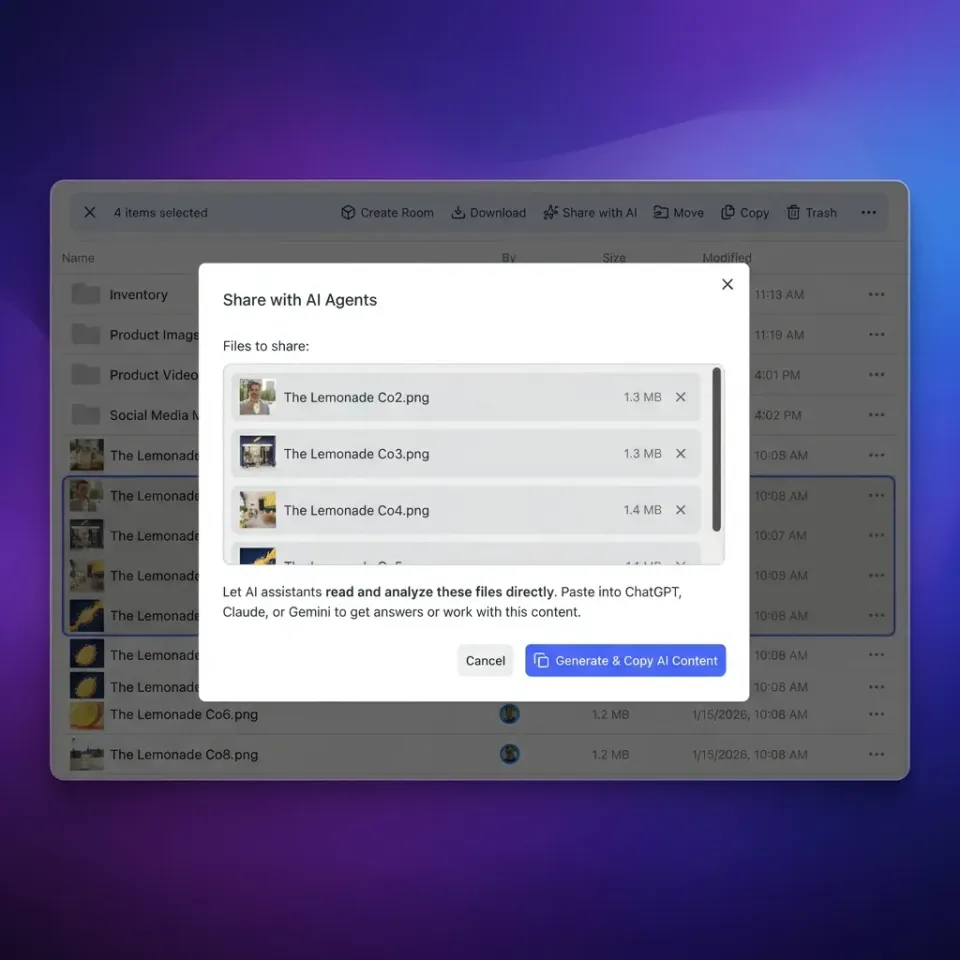
What File Watermarking Actually Means for AI Agents
File watermarking embeds an identifier into a document, image, or video so the file can be traced back to a specific source or recipient. When a human applies watermarks manually, the process is straightforward: open a PDF editor, stamp a logo, save. When an AI agent handles hundreds of file deliveries per day, that manual step becomes a bottleneck.
AI agent file watermarking automates this entirely. The agent applies a watermark as part of its delivery workflow, right after generating or retrieving a file and right before sharing it. No human touches the file between creation and delivery.
There are two broad categories:
- Visible watermarks overlay text or logos on the file surface. Recipients can see them. Common examples include "CONFIDENTIAL" stamps on PDFs, company logos on image previews, or recipient-specific text like an email address rendered across each page.
- Invisible watermarks embed signals that are imperceptible to humans but extractable by software. These can be encoded at the pixel level, in frequency-domain transforms, or through subtle text rephrasing. Tools like EchoMark use invisible visual perturbations and AI-driven text rephrasing to create unique per-recipient copies that look identical to the naked eye.
For agentic pipelines, invisible watermarks are especially useful because they don't alter the recipient experience. The file looks clean and professional, but every copy carries a forensic fingerprint.
Related guides
- Best Secure File Sharing for AI Teams in 2026AI teams face unique security challenges when sharing sensitive training data, proprietary model weights, and research...
- How to Secure File Sharing for AI AgentsAI agents need secure file access just like human teammates do, but their autonomous nature creates unique risks. This...
- How to Secure Files Accessed by AI AgentsAI agent file security includes the access controls, encryption, and audit mechanisms that protect sensitive documents...
- How to Set Up AI Agent File Indexing (The Easy Way)Most AI agent file indexing requires complex Python pipelines and vector databases. This guide shows you how to skip...
- Top 5 File Sharing Tools for AI WorkflowsOver 60% of AI workflows involve document or file processing. Multi-agent systems can generate hundreds of artifacts...
- Multi-Agent File Sharing: Patterns, Storage & CodeHow multiple AI agents share, read, write, and collaborate on files in production systems. Covers storage...
More on this subject: Agent File and Document Workflows (325 guides)
Visible, Invisible, and Dynamic Watermarking Compared
Before building watermarking into your agent pipeline, you need to pick the right approach. Each type solves a different problem.
Visible watermarks are deterrents. A "DRAFT" or "CONFIDENTIAL" stamp across a document discourages casual sharing. They are easy to apply (most PDF libraries support text overlays) and immediately obvious to recipients. The downside: anyone with basic editing skills can crop or remove them.
Invisible watermarks are forensic tools. They survive cropping, compression, format conversion, and screenshots. IMATAG's forensic watermarking API, for example, embeds imperceptible signals into images that persist through social media reposting, resizing, and even photographs of a screen. When a leaked file surfaces, the extraction algorithm reads the embedded identifier and points to the specific copy that was shared.
Dynamic watermarks generate a unique version for each recipient at access time. Instead of embedding one static mark, the server renders a per-recipient overlay on every page view. A typical dynamic watermark encodes the recipient's email, the access timestamp, and a document ID. Platforms like Digify and Peony render these server-side so the raw file never reaches the browser unprotected.
For AI agent pipelines, dynamic watermarking offers the strongest traceability. Each file the agent delivers carries a unique forensic identifier tied to that specific recipient and delivery event.
Quick comparison:
- Visible: Easy to implement, easy to remove. Best for deterrence.
- Invisible: Hard to remove, survives transformations. Best for forensic tracing.
- Dynamic: Per-recipient, real-time generation. Best for controlled distribution at scale.
Most production pipelines combine visible and invisible approaches: a visible stamp signals confidentiality, while an invisible watermark provides the forensic trail.
How to Build Watermarking into an Agent Delivery Pipeline
The key insight is that watermarking is a pipeline step, not a standalone action. Your agent already follows a sequence: retrieve file, process it, deliver it. Watermarking slots in between processing and delivery.
Here is a step-by-step approach for adding watermarking to an AI agent's file delivery workflow:
Step 1: Define watermark rules per file type
Not every file needs the same treatment. Set rules based on sensitivity and format:
- PDFs and documents: visible text overlay (recipient name, date) plus invisible forensic mark
- Images: invisible frequency-domain watermark (survives compression and cropping)
- Videos: frame-level forensic watermark embedded during transcoding
- Previews and thumbnails: visible "PREVIEW" stamp to deter redistribution
Step 2: Generate the watermark payload
For dynamic watermarking, the payload typically includes: recipient identifier (email or user ID), delivery timestamp (UTC), document ID or version hash, and the agent's session ID. This metadata gets encoded into the watermark so any leaked copy can be traced to a specific delivery event.
Step 3: Apply the watermark before upload
The agent calls a watermarking service or library before uploading the file to its delivery platform. For PDFs, libraries like pdf-lib (JavaScript) or PyPDF2 (Python) handle visible overlays. For invisible watermarks, services like EchoMark or IMATAG expose REST APIs that accept a file and return a uniquely marked copy.
Example flow in pseudocode:
file = retrieve_document(doc_id)
payload = {
  recipient: recipient_email.
  timestamp: now_utc(),
  doc_id: doc_id.
  agent_session: session_id
}
watermarked_file = watermark_service.apply(file, payload)
upload_to_workspace(watermarked_file)
share_with_recipient(recipient_email)
Step 4: Log the watermark event
Every watermark application must be logged. Record the file hash before and after watermarking, the payload embedded, and the delivery target. This audit trail is what connects a leaked file back to a specific recipient. Without the log, you have a watermark with no way to decode who received it.
Step 5: Deliver through a controlled channel
Upload the watermarked file to a workspace with access controls and audit logging. The recipient gets a share link, not a raw file. This adds a second layer of traceability: even if the watermark is somehow stripped, the access logs show who downloaded what and when.


Secure Your Agent's File Delivery Pipeline
Fastio gives your AI agents a workspace with audit trails, granular permissions, and branded sharing. Pair it with your watermarking service for two layers of traceability.
Tracing Leaks with Forensic Watermarks
The real value of watermarking shows up when a file appears somewhere it shouldn't. Without per-recipient watermarks, you know a leak happened but have no way to identify the source. With forensic watermarking, attribution takes minutes instead of months.
IBM's 2024 Cost of a Data Breach Report found that organizations take an average of 277 days to identify and contain a breach. Dynamic watermarking compresses the attribution phase dramatically: extract the watermark from the leaked copy, decode the payload, and you have the recipient, timestamp, and delivery context immediately.
How extraction works:
- Obtain the leaked file (screenshot, forwarded document, reposted image)
- Run it through the watermark extraction service
- The service compares the file against the watermark database and returns the matching recipient
- Cross-reference with delivery logs to confirm the chain of custody
For invisible watermarks, the extraction process is resilient to common transformations. IMATAG's system, for example, can identify watermarked images even after they have been cropped, resized, compressed, or photographed off a screen. The watermark signal is distributed across the entire file rather than concentrated in one region, making partial destruction ineffective.
Practical limits to keep in mind:
- Visible watermarks can be cropped or painted over. They deter casual sharing but won't stop a determined actor.
- Invisible watermarks in text documents can be defeated by retyping the content. They work best for images, PDFs rendered as images, and videos.
- Heavily compressed or low-resolution screenshots may degrade watermark extraction accuracy. Most forensic services publish minimum resolution requirements.
- Watermarking adds processing time. For a single PDF, invisible watermarking through an API typically takes 1 to 3 seconds. At scale, batch processing and parallelism keep this manageable, but you should account for it in your pipeline's latency budget.
Where Fastio Fits in a Watermarked Delivery Workflow
Watermarking protects the file. But the file still needs somewhere to live, access controls to govern who can open it, and an audit trail to record every interaction. That is where a workspace platform comes in.
Fastio provides the delivery and access control layer that complements your watermarking step. After your agent applies a watermark, it uploads the file to a Fastio workspace and creates a branded share link for the recipient. From that point, Fastio handles:
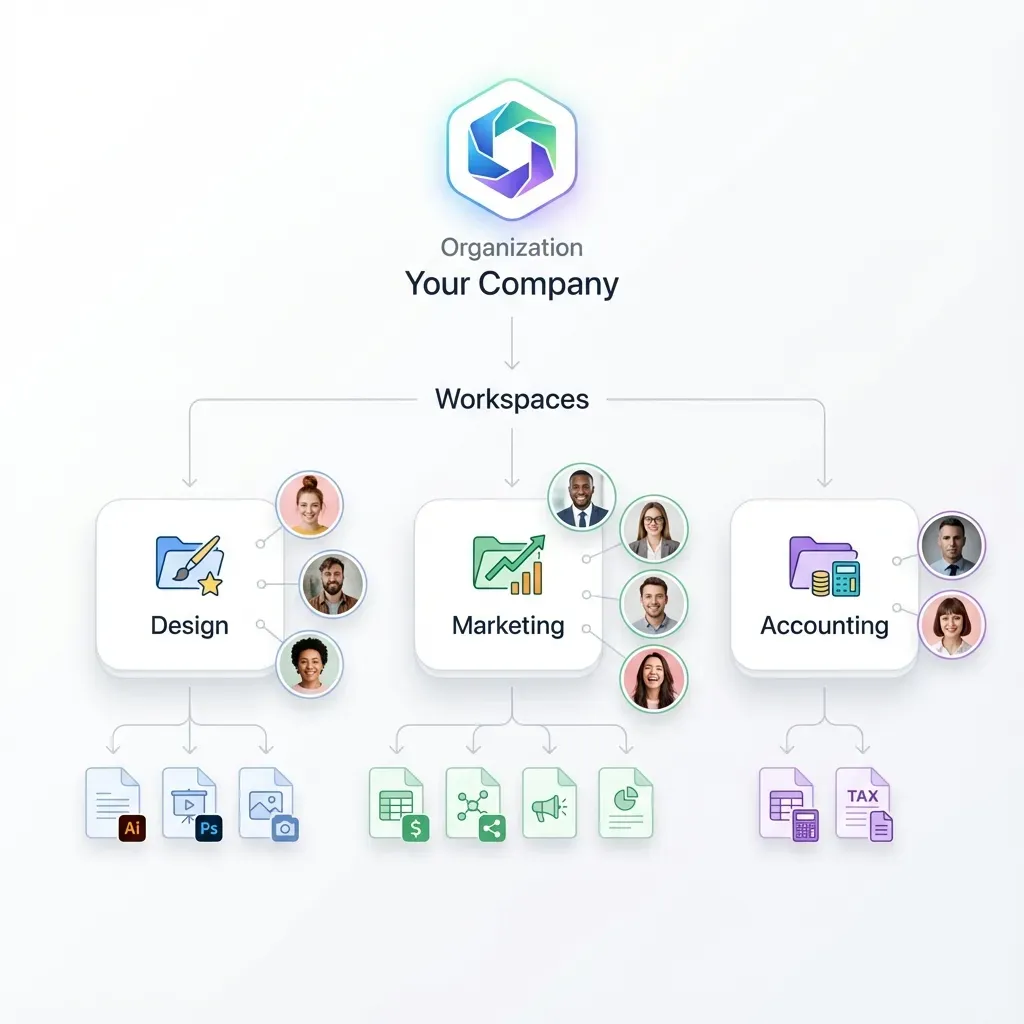
- Granular permissions at the org, workspace, folder, and file level. The recipient sees only what they should see.
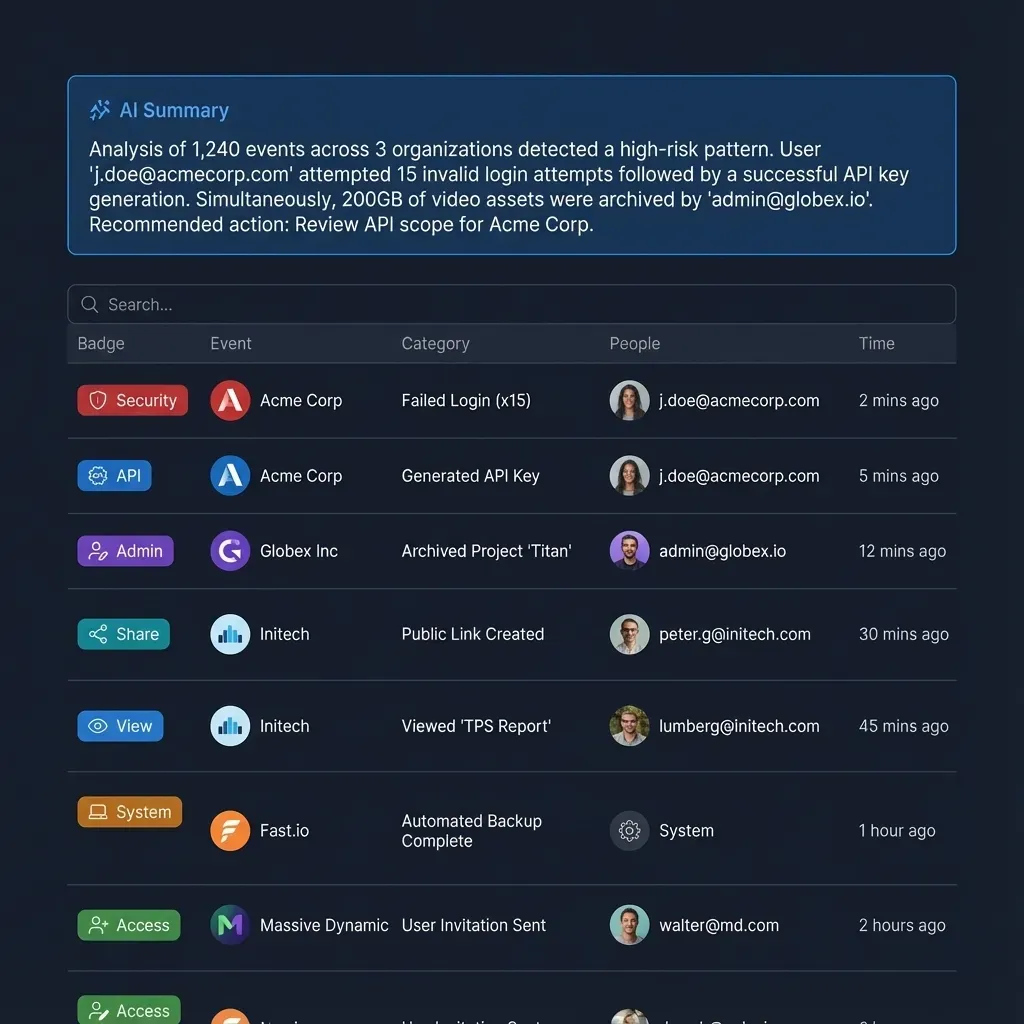
- Audit trails that log every view, download, and share event. Combined with your watermark log, you get two independent traceability layers.
- File versioning so you can track which version of a watermarked file was delivered and when.
- Branded shares (Send, Receive, Exchange) that present a professional interface while maintaining access controls behind the scenes.
For agents specifically, Fastio's MCP server exposes a consolidated MCP toolset for workspace, storage, and sharing operations. An agent can upload a watermarked file, set permissions, create a share link, and log the event through a single tool interface. Fastio offers a 14-day Business Trial, card required; see /pricing/.
The ownership transfer pattern works well here too. An agent builds a workspace, populates it with watermarked files for a client, then transfers ownership to a human team member. The agent retains admin access for future updates while the human manages the client relationship. See storage for agents for the full setup guide.
Other storage options work for the upload step. Amazon S3 gives you raw object storage with server-side encryption. Google Drive and Dropbox provide familiar sharing UIs. The advantage of an intelligent workspace like Fastio is that uploaded files are automatically indexed for semantic search once Intelligence is enabled for the workspace, so your team can find and query watermarked deliverables by meaning rather than filename.
Regulatory Context and the EU AI Act
Watermarking is not just a security best practice. Regulatory pressure is making it a requirement for certain use cases.
The EU AI Act, which takes effect on August 1, 2026, mandates that providers of AI systems that generate synthetic content (text, images, audio, video) must ensure their outputs are marked in a machine-readable format. The ITU has been coordinating international standards for AI watermarking to support this requirement, emphasizing that watermarks must be robust enough to survive common file transformations while remaining imperceptible to end users.
For AI agents that generate or modify files before delivery, this regulation means watermarking may not be optional. If your agent creates a report, generates an image, or produces a video summary, the output may need a machine-readable provenance marker under EU rules. Non-compliance carries fines of up to 15 million euros or 3% of global turnover.
Even outside the EU, the trend is clear. The US Executive Order on AI (October 2023) directed NIST to develop watermarking standards for AI-generated content. China's Interim Measures for Generative AI require providers to add watermarks to generated content. Organizations building agentic pipelines today should treat watermarking as a forward-looking investment, not just a leak prevention tool.
What this means for your pipeline:
- If your agent generates content (not just retrieves existing files), you likely need provenance watermarking in addition to any recipient-specific forensic marks.
- Keep your watermarking implementation modular. Standards are still evolving, and you may need to swap watermarking methods as regulations mature.
- Log everything. Regulators want to see not just that you watermarked a file, but that you can demonstrate the full chain from generation to delivery.
Sources
References used to verify factual claims in this guide.
-
Organizations take an average of 277 days to identify and contain a data breach The average cost of a data breach reached $4.88 million in 2024
-
The EU AI Act mandates machine-readable markings on AI-generated content, with fines up to 15 million euros or 3% of global turnover
Frequently Asked Questions
Can AI agents watermark files automatically?
Yes. An AI agent can call a watermarking API or library as a step in its delivery pipeline. The agent retrieves or generates a file, sends it to a watermarking service with recipient metadata, receives the marked copy, and then uploads it for delivery. No human intervention is needed. Services like EchoMark and IMATAG provide REST APIs designed for this kind of automated integration.
How do you track document leaks with watermarks?
Forensic watermarks embed a unique, invisible identifier in each copy of a file. When a leaked copy surfaces, you run it through the watermark extraction service, which decodes the embedded payload and identifies the specific recipient who received that version. Cross-reference with your delivery logs to confirm the chain of custody. The entire attribution process takes minutes rather than the industry average of 277 days to identify a breach source.
What is dynamic watermarking for AI file sharing?
Dynamic watermarking generates a unique version of a file for each recipient at the moment of access or delivery. Instead of stamping every copy with the same mark, the system encodes recipient-specific information like their email address, access timestamp, and document ID. This means every copy is forensically distinct, making it possible to trace any leak back to the exact person and moment of delivery.
Does watermarking affect file quality?
Visible watermarks add an overlay that recipients can see, which intentionally changes the appearance. Invisible watermarks are designed to be imperceptible. Modern forensic watermarking services embed signals that survive compression, cropping, and format conversion without any visible degradation. For most use cases, recipients cannot distinguish a watermarked file from an unmarked original.
What file types can be watermarked in an agent pipeline?
PDFs, images (JPEG, PNG, TIFF), and videos are the most common targets. PDF watermarking is straightforward with libraries like pdf-lib or PyPDF2. Image watermarking can use frequency-domain techniques through APIs like IMATAG. Video watermarking typically requires frame-level embedding during transcoding. Text documents can be watermarked through invisible formatting changes or AI-driven rephrasing, though these are easier to defeat by retyping.
Related Resources

Secure Your Agent's File Delivery Pipeline
Fastio gives your AI agents a workspace with audit trails, granular permissions, and branded sharing. Pair it with your watermarking service for two layers of traceability.