Top AI Companies to Watch in 2026
Anthropic dethroned OpenAI as the most valuable AI startup in May 2026, reaching a $965 billion valuation. This ranking breaks down the 15 companies shaping the AI industry across foundation models, infrastructure, and enterprise platforms, with current revenue and valuation data for each.


The 15 AI Companies Shaping 2026
Anthropic closed a $65 billion Series H in May 2026, pushing its valuation to $965 billion and overtaking OpenAI for the first time. That single data point captures how fast the AI industry is reshuffling. A year ago, OpenAI's lead looked insurmountable. Today, three private AI labs carry a combined valuation above $2 trillion, and the broader AI market has hit $514.5 billion in revenue.
The companies on this list span foundation model developers, chip makers, cloud infrastructure providers, data platforms, and application builders. We selected them based on a mix of financial scale, technical influence, and competitive momentum heading into the second half of 2026.
Here is the quick reference:
- Anthropic - $965B valuation, maker of Claude and Claude Code, $47B revenue run rate
- OpenAI - $852B valuation, creator of ChatGPT, targeting $30B in full-year revenue
- Google DeepMind - Gemini reaches 900M monthly active users, AI revenue up 800% YoY
- xAI - $230B pre-merger valuation, Grok captures 17.8% US chatbot market share
- Meta AI - Llama 4 dominates open-source AI, billions of model downloads
- Mistral AI - Europe's most valuable AI startup at $20B, raising $3.5B in June 2026
- NVIDIA - Controls 81% of the AI datacenter chip market
- CoreWeave - GPU cloud provider with $21B in contracted compute from Meta alone
- Cerebras - 2026's biggest IPO, $95B market cap on debut, wafer-scale chip architecture
- Databricks - $134B valuation, $5.4B annual revenue run rate
- Scale AI - $29B valuation, data labeling and evaluation, projected $2B in 2026 revenue
- Cursor - AI coding editor with $2B ARR and 64% Fortune 500 penetration
- Perplexity - AI-powered search engine, $20B valuation, targeting $656M in 2026 revenue
- Sierra AI - Conversational AI agents for customer experience, led by former Salesforce co-CEO
- Cohere - Enterprise-focused AI with on-premise deployment and government contracts
Related guides
- Top AI Startups to Watch in 2026AI startups captured $242 billion in Q1 2026 alone, claiming 80% of all global venture capital for the quarter. Below...
- DeepSearch AI: Features, Use Cases, and Best Alternatives in 2026ChatGPT holds roughly 60% of AI search traffic, yet its Deep Research mode caps free users at five queries per month....
- The 10 Best AI Books to Read in 2026Fifty-nine percent of enterprise leaders report an AI skills gap even though most organizations invest in training....
- 12 Best AI Apps for iPhone in 2026The iPhone runs more capable AI apps than any other phone right now. We tested dozens of them and picked the 12 that...
- 8 Best AI Thumbnail Makers for 2026Optimized thumbnails lift YouTube click-through rates by 25 to 40 percent, yet most creators still spend 20 minutes or...
- 7 Best Streaming Data Platforms for AI Pipelines in 2026Streaming platforms let AI systems handle data feeds in real time, from sensor telemetry to user events. Market...
More on this subject: AI Tool Directories and Comparisons (231 guides)
How We Evaluated These Companies
We assessed each company across four dimensions:
Financial scale
Valuation or market capitalization, revenue growth rate, and the size of recent funding rounds. Companies burning cash fast without clear revenue paths ranked lower than those converting AI spending into actual business.
Technical influence
Whether the company's technology is widely adopted, cited in benchmarks, or foundational to other products. NVIDIA's CUDA ecosystem and Meta's Llama models score high here because their reach extends far beyond their own products.
Competitive momentum
How the company's position changed over the past 12 months. Anthropic overtaking OpenAI and Cerebras completing a blockbuster IPO are examples of momentum that justified higher placement.
Market breadth
Whether the company serves a single vertical or many industries. Foundation model developers and infrastructure providers score higher because their technology underpins thousands of downstream applications.
We deliberately excluded companies where we could not verify current 2026 financial data from reliable sources. No company paid for inclusion on this list.
Foundation Model Developers
The six companies building the large language models and multimodal systems that power nearly every AI application in production today.
1. Anthropic
The safety-focused AI lab founded by former OpenAI researchers now leads the private AI market. Anthropic's Series H closed in late May 2026 at $965 billion, backed by Altimeter Capital, Greenoaks, Dragoneer, and Sequoia Capital.
The financial trajectory is striking. Revenue hit a $47 billion annualized run rate in mid-2026, up from $10 billion in annual revenue the prior year. Claude Code, Anthropic's AI coding assistant, drove much of that acceleration. The company also produces Claude, its general-purpose model family that competes directly with OpenAI's GPT series and Google's Gemini.
Why they lead:
- Revenue growing faster than any private AI company in history
- Claude Code has become the default coding assistant for a growing share of professional developers
- Strong enterprise adoption across business, coding, and research use cases
Key risks:
- Concentration in a few large customers could create revenue volatility
- An IPO (expected in 2026 or 2027) will test whether public markets validate the private valuation
2026 outlook: If Anthropic's revenue trajectory holds, it will likely be the first standalone AI lab to cross $50 billion in annualized revenue.
2. OpenAI
OpenAI pioneered the current generative AI wave with ChatGPT and remains the most widely recognized AI brand globally. The company closed a $122 billion funding round in early 2026 at an $852 billion valuation, with investors including NVIDIA, Amazon, and SoftBank.
OpenAI is targeting $30 billion in full-year 2026 revenue, driven by ChatGPT subscriptions, API access, and enterprise contracts. The company's transition from a nonprofit to a for-profit structure is expected to complete this year, clearing the path for a potential IPO in September 2026 at a valuation above $1 trillion.
Why they lead:
- ChatGPT remains the most-used AI chatbot globally with 45.3% market share
- Broad product portfolio spanning consumer, developer, and enterprise markets
- Codex agent and GPT Store create an ecosystem effect that attracts developers and users
Key risks:
- Market share has eroded from 69.1% to 45.3% over the past year as Gemini and Grok gained ground
- The nonprofit-to-profit conversion faces ongoing legal and regulatory scrutiny
2026 outlook: The IPO will be the defining event. If it prices above $1 trillion, OpenAI reclaims the valuation lead from Anthropic.
3. Google DeepMind
Google merged its DeepMind and Brain AI teams in 2023, creating the research powerhouse behind Gemini. The results are showing up in Alphabet's financials: revenue from products built on generative AI models grew 800% year-over-year in Q1 2026, and Google Cloud revenue rose 63% to $20.03 billion in the same quarter.
Gemini's consumer reach dwarfs every standalone AI product. The Gemini app hit 900 million monthly active users by May 2026, up from 350 million eight months earlier. Market share in the chatbot space climbed from 5.7% to over 25% in roughly 14 months.
Why they lead:
- Unmatched distribution through Search, Android, and Workspace
- Google Cloud's infrastructure market share gives them a built-in enterprise channel
- Gemini's multimodal capabilities span text, image, video, and code in a single model family
Key risks:
- Antitrust scrutiny could force structural changes to how Google bundles AI into its products
- Internal organizational complexity slows shipping speed compared to smaller, more focused labs
2026 outlook: Google is the only company that can match OpenAI's reach and Anthropic's research depth simultaneously. Gemini's user growth suggests it is closing the perception gap.
4. xAI
Elon Musk's AI lab raised $20 billion in a Series E round at a $230 billion standalone valuation before merging with SpaceX into a combined entity targeting a $1.25 trillion IPO. The merged company filed under the ticker SPCX on Nasdaq, with pricing expected in mid-2026.
Grok, xAI's chatbot integrated into X (formerly Twitter), reached an estimated 64 million monthly users and captured 17.8% of the US chatbot market, up from 1.9% a year earlier. Annualized revenue stands at roughly $500 million, with a target of $2 billion for full-year 2026.
Why they lead:
- Distribution through X gives Grok immediate access to hundreds of millions of users
- Colossus, xAI's Memphis supercomputer, is one of the largest AI training clusters in operation
- The SpaceX merger creates an unusual AI-plus-infrastructure conglomerate with a clear path to public markets
Key risks:
- Burning close to $1 billion per month against $500 million in annualized revenue
- Combining two very different businesses creates operational complexity, and regulatory approval is not guaranteed
2026 outlook: The IPO will determine whether investors buy the combined vision or discount the AI business relative to SpaceX's established revenue streams.
5. Meta AI
Meta has taken a different path from other foundation model companies by open-sourcing its AI models. Llama 4, released in 2025, remains the most downloaded open-source model family. Meta confirmed it will continue releasing open-source versions of future models, betting that commoditizing the model layer strengthens its position in applications.
The strategic logic is straightforward: open-source models build an ecosystem, which drives adoption and improves the AI capabilities embedded in Facebook, Instagram, and WhatsApp. Meta's AI-powered ad targeting has boosted advertising revenue, though the company does not break out AI-specific revenue separately.
Why they lead:
- Llama models are the default choice for developers who want to self-host or fine-tune
- Massive internal compute infrastructure, with $14.3 billion invested in Scale AI alone for data labeling
- AI improvements in ad targeting directly drive Meta's core $150B+ advertising revenue engine
Key risks:
- Open-source strategy generates ecosystem influence but less direct AI revenue than competitors
- Regulatory pressure on data usage across its social platforms could limit training data advantages
2026 outlook: Meta's bet is that AI commoditizes the model layer, making distribution and application the real competitive moats. Their installed base of 3+ billion users across apps is the strongest distribution advantage in AI.
6. Mistral AI
The Paris-based lab is Europe's most valuable AI startup, raising $3.5 billion in June 2026 at a $20 billion valuation, nearly double its previous round. Mistral has positioned itself as the European alternative to American AI labs, with a focus on multilingual models and regulatory alignment with EU AI standards.
Mistral's commercial products include both open-weight models (Mistral, Mixtral) and proprietary API-served models for enterprise use. The company has built distribution partnerships with Microsoft Azure and Amazon Web Services.
Why they lead:
- Strongest position in the European AI market, where data sovereignty and regulatory compliance matter
- Competitive model performance at lower compute costs than US counterparts
- European governments and enterprises prefer a domestic AI provider for sensitive workloads
Key risks:
- Revenue has lagged behind US competitors, and the company faces pressure to justify its valuation with commercial traction
- Competing against labs with 10-50x more compute budget creates a persistent resource disadvantage
2026 outlook: Mistral's future depends on whether the EU AI Act creates genuine demand for Europe-first AI vendors, or whether US labs capture that market through local data centers and compliance programs.

AI Infrastructure and Compute
The companies building the hardware and cloud platforms that every AI model depends on. Infrastructure is the safest category in AI because these companies profit regardless of which models or applications win.
7. NVIDIA
NVIDIA's dominance in AI hardware is difficult to overstate. The company controls roughly 81% of the AI datacenter chip market, with AMD as its closest competitor at about 10%. Every major AI lab, cloud provider, and enterprise AI deployment runs primarily on NVIDIA GPUs.
The Blackwell GPU architecture shipped to major cloud providers in 2025, and the next-generation Rubin platform is already in customer hands for testing. NVIDIA's competitive moat is not just silicon: CUDA, its parallel computing framework, has created a software ecosystem that makes switching to competing hardware costly and time-consuming for the thousands of teams that have built on it.
Why they lead:
- Revenue growth directly tied to global AI infrastructure spending, which Gartner projects at $2.59 trillion in 2026
- CUDA lock-in gives them pricing power that pure hardware specs cannot explain
- Strategic investments in companies like CoreWeave ($2 billion) position them across both hardware and cloud infrastructure
Key risks:
- Custom AI chips from Google (TPUs), Amazon (Trainium), and Microsoft threaten the high end of the market
- Antitrust regulators may scrutinize NVIDIA's dominant position, particularly around CUDA's ecosystem effects
2026 outlook: NVIDIA remains the closest thing to a guaranteed beneficiary of AI spending. The question is not whether they will grow, but whether margins compress as custom silicon gains share.
8. CoreWeave
CoreWeave has emerged as the specialist GPU cloud provider that big AI labs turn to when hyperscalers cannot deliver compute fast enough. The company's contracted compute from Meta alone is worth $21 billion through 2032, and Jane Street committed approximately $6 billion for access to NVIDIA's next-generation Vera Rubin technology through CoreWeave's platform.
The financial engineering is as notable as the infrastructure. CoreWeave closed an $8.5 billion financing facility in March 2026 that achieved investment-grade status, and followed up with a $3.1 billion publicly syndicated loan facility. Both were firsts for AI infrastructure debt. Active power surpassed 1 GW, with total contracted power exceeding 3.5 GW.
Why they lead:
- Purpose-built for AI workloads, with faster GPU provisioning than general-purpose cloud providers
- Anchor contracts with Meta, Microsoft, and other large buyers provide multi-year revenue visibility
- Aggressive financing strategy funds expansion without heavy equity dilution
Key risks:
- Heavy debt load creates refinancing risk if AI spending growth slows
- Customer concentration in a small number of large contracts could become a vulnerability
2026 outlook: CoreWeave is expected to IPO in 2026 or 2027. The company's ability to convert contracted revenue into stable margins will determine its public market reception.
9. Cerebras
Cerebras delivered the biggest IPO of 2026 so far. The AI chipmaker's shares opened at $350, up from the $185 offering price, and the company's market cap hit $95 billion on its first day of Nasdaq trading. The IPO raised about $5.55 billion.
Cerebras takes a fundamentally different approach to AI hardware. Instead of connecting thousands of small GPUs, the company builds wafer-scale chips, each one the size of an entire silicon wafer. This architecture eliminates the inter-chip communication bottleneck that slows down traditional GPU clusters. Revenue jumped 76% to $510 million last year, with customers including OpenAI, Amazon, and Meta.
Why they lead:
- Wafer-scale architecture offers genuine technical differentiation from NVIDIA's GPU approach
- Proven customer list including major AI labs validates the technology for production workloads
- Already profitable with $88 million in net income, rare for an AI hardware company at this stage
Key risks:
- Stock pulled back after the initial IPO surge, suggesting some investors question the valuation
- NVIDIA's ecosystem advantages (CUDA, developer tools, software libraries) are difficult to replicate on a new architecture
2026 outlook: Cerebras needs to prove that wafer-scale chips can capture meaningful market share from NVIDIA in production deployments, not just serve niche training workloads.

Enterprise Platforms and Developer Tools
These companies build the data infrastructure, development environments, and search products that sit between foundation models and end users. Their revenue often grows faster than the model providers because they solve specific, high-value problems with clear buyer intent.
10. Databricks
Databricks has built the platform where enterprises prepare data for AI. The company completed a $5 billion funding round in February 2026 at a $134 billion valuation (including $3 billion in equity and $2 billion in debt, led by JPMorgan) and surpassed a $5.4 billion annual revenue run rate, up 65% year-over-year. AI-specific products alone generate $1.4 billion in annualized revenue.
The company is in active discussions for a new round at $165-175 billion. CEO Ali Ghodsi has signaled an IPO path for 2027, deliberately avoiding the crowded 2026 IPO calendar that includes SpaceX-xAI and likely OpenAI.
Why they lead:
- Data lakehouse architecture has become the default for enterprise AI data preparation
- Revenue scale and growth rate justify the valuation more convincingly than most AI startups
- Broad enterprise customer base across industries reduces concentration risk
Key risks:
- Snowflake and cloud-native alternatives compete aggressively for the same enterprise budgets
- AI products are growing fast but still represent less than a third of total revenue
2026 outlook: Databricks is the strongest IPO candidate in enterprise AI. Its ability to accelerate AI product revenue will determine whether public markets validate a $175 billion valuation.
11. Scale AI
Scale AI started as a data labeling company and has evolved into the evaluation and data infrastructure layer for AI development. Meta invested $14.3 billion for a 49% stake at a $29 billion valuation, and revenue is projected to hit $2 billion in 2026, representing 130% growth over 2024.
The company serves over 400 enterprise clients, including autonomous vehicle companies, government agencies, and every major AI lab. Its RLHF (reinforcement learning from human feedback) data services are critical for training the models that Anthropic, OpenAI, and others ship to production.
Why they lead:
- Positioned at a chokepoint in AI development where every model needs high-quality training and evaluation data
- Government and defense contracts provide a stable revenue base alongside commercial AI work
- Founder Alexandr Wang's proximity to the national security AI community gives Scale unique positioning
Key risks:
- Synthetic data and automated labeling could reduce demand for human-in-the-loop services over time
- Meta's 49% stake creates governance questions about Scale's independence from a single large customer
2026 outlook: Scale's evolution from labeling vendor to AI evaluation platform mirrors how the industry itself is shifting from training to deployment. If evaluation becomes the bottleneck, Scale benefits directly.
12. Cursor (Anysphere)
Cursor is the fastest-growing AI startup by revenue velocity. The AI-powered code editor surpassed $2 billion in annualized revenue in March 2026, and the company forecasts ending the year at a $6 billion run rate. Cursor is raising $2 billion at a $50 billion valuation, nearly doubling its November 2025 round.
The product has achieved something rare in developer tools: rapid enterprise adoption. 64% of Fortune 500 companies use Cursor, over 50,000 enterprises build with it, and developers write more than 100 million lines of enterprise code per day through the platform.
Why they lead:
- Revenue growth is among the fastest ever recorded for a software company
- Deep integration with the daily coding workflow creates high switching costs
- Enterprise adoption at Fortune 500 scale validates the product beyond individual developer enthusiasm
Key risks:
- Competition from Claude Code, GitHub Copilot, and other AI coding tools is intensifying across every form factor
- The $50 billion valuation requires sustained hypergrowth that historically few companies maintain beyond a few years
2026 outlook: Cursor's trajectory puts it on a path toward either an IPO or a major acquisition. Its first-mover advantage in the IDE form factor is the strongest asset as the coding assistant market consolidates.
13. Perplexity
Perplexity has carved out a distinct position as the AI-native search engine, growing revenue from $100 million to $500 million while increasing team size by just 34%. The company is valued at $20 billion after its Series E round and is targeting $656 million in 2026 revenue, representing 230% year-over-year growth.
The product replaces traditional search with AI-generated answers that cite their sources, directly competing with Google's search business. Perplexity's Pro subscription and API access for developers drive the revenue model.
Why they lead:
- Clearest product differentiation in AI search, a category that barely existed two years ago
- Capital-efficient growth, with revenue scaling 5x on minimal team expansion
- Growing developer ecosystem through API access and integration partnerships
Key risks:
- Google's AI Overviews and Gemini directly compete for the same search intent
- At 100x revenue multiples, the valuation requires Perplexity to eventually dominate a large market
2026 outlook: Perplexity's survival depends on whether AI search becomes a standalone category or gets absorbed into existing search engines. The company is betting users will pay for better answers, not just faster ones.
14. Sierra AI
Sierra AI was founded in 2023 by Bret Taylor (former Salesforce co-CEO) and Clay Bavor (former Google VP who led Project Starline). The company builds conversational AI agents for customer experience, targeting the $400+ billion global contact center industry.
Sierra's agents handle customer interactions across voice, chat, and messaging channels for enterprise clients. The approach focuses on brand-specific AI agents that maintain a company's voice and integrate with existing CRM and support systems.
Why they lead:
- Founder credibility attracts enterprise customers who want to bet on proven operators
- Customer service is the most proven use case for autonomous AI agents in production today
- Deep integrations with enterprise software stacks create natural distribution channels
Key risks:
- Competing against Salesforce Agentforce, Zendesk AI, and other incumbents that already own the customer relationship
- Enterprise sales cycles are slow, limiting growth velocity compared to product-led companies like Cursor or Perplexity
2026 outlook: Sierra is a bet that standalone agent companies can beat incumbents in customer experience. The next 12 months will show whether enterprises prefer best-of-breed agents or platform-bundled alternatives.
15. Cohere
Cohere has positioned itself as the AI model provider that deploys on your infrastructure, not theirs. The company offers large language models that can run in private clouds, on-premise data centers, and air-gapped environments, which is a critical requirement for regulated industries and government agencies.
Cohere has raised over $1 billion in total funding and holds partnerships with Oracle, Salesforce, and defense contractors. The company's models are designed for enterprise search, document analysis, and customer-facing applications rather than general-purpose chat.
Why they lead:
- Only major AI model provider built specifically for on-premise and private cloud deployment
- Strong positioning in government, defense, and regulated industries where data residency matters
- Enterprise-focused pricing model avoids the consumer subsidy economics that pressure other AI labs
Key risks:
- Smaller model training budgets than Anthropic, OpenAI, or Google limit frontier model competitiveness
- The enterprise AI market is getting crowded as every cloud provider builds similar on-premise capabilities
2026 outlook: Cohere's path to scale depends on whether data sovereignty and on-premise deployment remain genuine enterprise requirements or become checkbox features that larger providers bundle into their existing platforms.
What These Rankings Mean for Your AI Strategy
Three patterns stand out from this list and will shape the second half of 2026.
The valuation gap is widening. Anthropic and OpenAI are each worth more than most publicly traded companies. The next tier (Databricks, xAI, Cerebras) sits in the $100-200 billion range. Below that, even "small" AI companies like Perplexity and Mistral carry $20 billion valuations. The AI industry is splitting into a handful of platform companies and a long tail of application builders.
Infrastructure is the safest bet. NVIDIA, CoreWeave, and Cerebras do not need to predict which AI application wins. They sell the tools to all sides. This explains why investors have poured billions into GPU clouds and custom silicon: the infrastructure layer captures value regardless of which models or applications dominate.
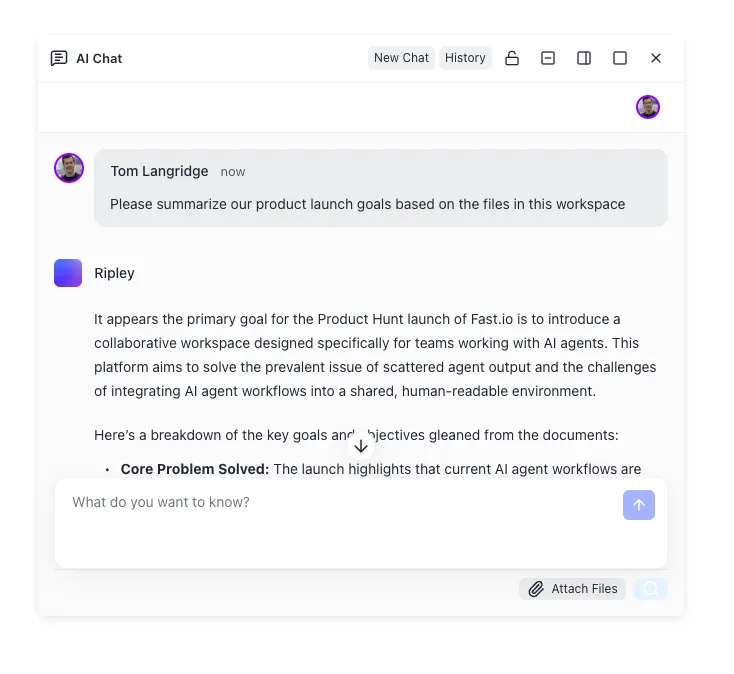
Agents are the next battleground. Nearly every company on this list is building some form of autonomous AI agent. Anthropic has Claude Code, OpenAI has Codex, Google has Gemini agents in Workspace, and Sierra is building standalone customer service agents. The companies that figure out how agents store files, share context, and hand off work to humans will capture the next wave of value.
The AI industry in 2026 is not waiting for a killer app. The killer apps are already here: coding assistants, search engines, customer service agents, data platforms. The question for the second half of the year is which companies convert their current momentum into durable businesses, and which get repriced when the IPO window opens.
Sources
References used to verify factual claims in this guide.
-
Anthropic valued at $965 billion after $65 billion Series H
-
OpenAI valued at $852 billion in funding round
-
Forbes AI 50 companies collectively raised more than $305 billion
-
NVIDIA controls approximately 81% of AI datacenter chip market
-
Cerebras IPO reached $95 billion market cap on Nasdaq debut
-
Databricks completed $5 billion funding round at $134 billion valuation
-
Cursor surpassed $2 billion in annualized revenue
-
Global AI market reached $514.5 billion in 2026 revenue
-
Worldwide AI spending projected at $2.59 trillion in 2026
-
Mistral AI raising $3.5 billion at $20 billion valuation
-
Perplexity targeting $656 million in 2026 revenue
-
CoreWeave contracted $21 billion in compute from Meta through 2032
Frequently Asked Questions
What are the top AI companies in 2026?
The most valuable AI companies in 2026 are Anthropic ($965B valuation), OpenAI ($852B), and xAI ($230B standalone) among private companies. Among public companies, NVIDIA, Alphabet (Google DeepMind), and Meta lead in AI market capitalization. The landscape shifted in May 2026 when Anthropic overtook OpenAI as the most valuable private AI company for the first time.
Which AI company is the most valuable?
Anthropic is currently the most valuable private AI company at $965 billion following its $65 billion Series H round in May 2026. Among public companies, NVIDIA holds the highest AI-driven market capitalization thanks to its dominance in datacenter chips. OpenAI, at $852 billion, is expected to test the $1 trillion mark when it IPOs, potentially in September 2026.
What are the biggest AI startups?
The biggest AI startups by valuation are Anthropic ($965B), OpenAI ($852B), xAI ($230B), Databricks ($134B), Cursor ($29-50B), Scale AI ($29B), Perplexity ($20B), and Mistral AI ($20B). Cursor and Perplexity stand out for revenue growth velocity, while Anthropic and OpenAI dominate in absolute financial scale.
Which AI companies are publicly traded?
Major publicly traded AI companies include NVIDIA (AI chips), Alphabet/Google (DeepMind and Gemini), Meta Platforms (Llama models), Microsoft (Azure AI and Copilot), Amazon (AWS AI and Trainium chips), and AMD (AI accelerators). Cerebras went public in May 2026 in the year's biggest tech IPO. OpenAI and Anthropic are both expected to go public within the next 12 months.
How big is the AI market in 2026?
The global AI market reached approximately $514.5 billion in revenue in 2026, growing 19% from $390.9 billion in 2025. Total worldwide AI spending, which includes infrastructure and services beyond the core market, is projected at $2.59 trillion according to Gartner. The generative AI segment alone hit $91.57 billion, up 45% from the prior year.
What is the difference between foundation model companies and vertical AI companies?
Foundation model companies like Anthropic, OpenAI, and Google DeepMind build general-purpose AI systems that work across industries. Vertical AI companies build products for specific sectors like healthcare, legal, or customer service. Foundation model companies tend to carry higher valuations because their technology is platform-level. Vertical AI companies often grow revenue faster because they solve specific, high-value problems with clearer buyer intent.