How to Connect Hermes Agent to Originality.ai Detector API
Originality.ai's API V3 is rate-limited to 500 requests per minute and requires an Enterprise plan before you can issue a key. Browser paste-box scans cannot batch drafts, apply AI Allowance thresholds, or leave an audit trail for editors. This guide connects Nous Research Hermes Agent to the Originality.ai detector API, shows a reusable skill pattern for single and batch scans, and stores report JSON where humans can reopen scores next week.


Why the Originality detector API belongs in a Hermes pipeline
Originality.ai's official API documentation sets a hard rate limit of 500 requests per minute and returns HTTP 429 when that ceiling is hit. API access also requires an Enterprise subscription before you can create a key on the token dashboard. Those two constraints explain the real job for content ops: you need programmatic originality detector scans that batch, retry, and log, not another person pasting prose into a browser tab between deadlines.
An Originality detector integration lets Hermes Agent submit content to Originality.ai via API and return AI-likelihood scores into a reusable content workflow. Official docs answer endpoints and headers. They do not show Hermes skill prompts, batch loops, or where scan reports should live so a human can audit them next week. This guide covers them.
Originality.ai publishes API V3 at https://api.originality.ai/api/v3 with REST endpoints for single scan, batch scan, URL scan, credit balance, and scan results. Auth is a single header: X-OAI-API-KEY. A scan can toggle AI detection, plagiarism, fact checking, readability, grammar, and AI Allowance in one request. Responses return AI confidence (AI vs Original), optional block-level scores, plagiarism matches, and credit usage. Vendor model notes claim Lite stays under a 1% false positive rate when light AI editing is acceptable, and Turbo under 5% when you want harder-to-bypass detection. Treat those figures as vendor-published guidance and validate them on your own corpus before you wire hard publish gates.
Nous Research Hermes Agent is an open-source (MIT) autonomous agent you run yourself, not a hosted SaaS copilot. Official docs describe skills under ~/.hermes/skills/ that follow the agentskills.io standard, progressive disclosure so full procedures load only when needed, and MCP servers declared in ~/.hermes/config.yaml under mcp_servers for tools that live outside Hermes. Skills can declare required_environment_variables that Hermes prompts for on local CLI load and passes into terminal and code sandboxes. Messaging gateways will not collect secrets in chat. That skill-plus-env surface is the clean place to hang the Originality.ai API.
Connect-and-scan checklist
- Subscribe to Originality.ai Enterprise and create an API key on the token dashboard.
- Store
ORIGINALITY_API_KEYin~/.hermes/.env(never in git or skill markdown). - Author a skill (or thin MCP wrapper) that POSTs plain text to
/api/v3/scan. - Run a single-document smoke test and parse
results.ai.confidence. - Add batch scanning with concurrency well under 500 requests per minute.
- Write timestamped JSON reports beside the source draft and share them for human review.
- Confirm auto credit top-up settings so a runaway loop cannot surprise-bill the card on file.

Related guides
- How to Connect Devin AI to VS CodeConnecting Devin AI to VSCode (Visual Studio Code) bridges local development environments with autonomous cloud...
- How to Use the Manus AI API for Agent TasksFiles uploaded through the Manus API are automatically deleted 48 hours after upload, so production integrations need...
- How to Build a Hermes Agent AI Writing Checker SkillSearch results for "ai writing checker" are almost all SaaS product pages. This guide packages detection and quality...
- How to Build an Online AI Detector API with Hermes AgentCommercial AI detectors frequently produce false accusations, with studies showing they flag up to 61% of essays...
- How to Connect Hermes Agent to the Copyleaks APICopyleaks access tokens stay valid for 48 hours after login, long enough for agent batches but short enough that...
- How to Connect Hermes Agent to the GPTZero APIWhen GPTZero confidence is high, error rates drop below 1% on official API guidance, yet most GPTZero API tutorials...
More on this subject: Hermes Agent (100 guides)
Five steps to connect Hermes Agent to Originality.ai
Follow these steps in order. You can stop after a successful single scan if you only need local CLI validation. Production content pipelines should complete report storage so scores outlive the agent session.
1. Get Enterprise access and an API key
Official setup is explicit: create or log into Originality.ai, subscribe at the Enterprise plan tier, then create an API key from the API token dashboard. Without Enterprise, you will not have a production API path even if you can use the browser product. Issue one key per environment (dev, staging, prod) so a leaked local key does not open the production credit balance.
All requests must send:
X-OAI-API-KEY: your-api-key
Base URL for Version 3:
https://api.originality.ai/api/v3
2. Put the key in Hermes environment config
Hermes skills can declare required environment variables and prompt for them securely when the skill loads in the local CLI. Messaging surfaces tell you to set secrets with local setup or ~/.hermes/.env instead of collecting keys in chat. For Originality.ai:
# ~/.hermes/.env (keep out of git)
ORIGINALITY_API_KEY=your_key_here
Declared skill env vars pass through to execute_code and terminal sandboxes when the skill loads. Prefer that path over embedding the key in a one-liner the model can echo later. Keep Fast.io MCP tokens and Originality keys under separate names so blast radius stays small.
3. Author a Hermes skill for the Originality.ai scan API
Most teams start with a skill because Originality.ai is a REST API, not a packaged MCP product. Skills live under ~/.hermes/skills/ with a required SKILL.md. Example skeleton (adjust paths and thresholds for your team):
---
name: originality-detect
description: Scan plain text with the Originality.ai detector API and return AI scores.
version: 1.0.0
platforms: [macos, linux]
metadata:
  hermes:
    tags: [originality, ai-detector, plagiarism]
    category: quality
---

# Originality.ai detector skill

## When to Use
Score drafts, client deliverables, or agent-written prose before publish or human review.

## Procedure
1. Read the target plain text or file path from the user.
2. POST to https://api.originality.ai/api/v3/scan with X-OAI-API-KEY.
3. Prefer check_ai true; only enable plagiarism/facts when policy requires them.
4. Return title, aiModelVersion, AI confidence, Original confidence, credits used.
5. Write a timestamped JSON report next to the source draft.

## Pitfalls
- Submit plain text. Formatted HTML and PDF blobs hurt scoring accuracy.
- storeScan false means you cannot reopen vendor-side results later.
- Plagiarism checks can take up to 60 seconds and may time out on long copy.
- Never print the API key in chat transcripts or report files.

## Verification
A short known-human sample should not force extreme AI confidence on ordinary prose.
You can also walk Hermes through one successful call, then run /learn so the agent authors a skill that follows house authoring standards. Keep write-approval gates on if you do not want unsupervised skill edits.
4. Make a single-scan smoke test
A minimal Python helper keeps HTTP handling deterministic. Hermes can run it via terminal or execute_code once ORIGINALITY_API_KEY is present:
import json
import os
import sys
import urllib.request

BASE = "https://api.originality.ai/api/v3"

def scan(title: str, content: str, model: str = "lite") -> dict:
    key = os.environ.get("ORIGINALITY_API_KEY")
    if not key:
        raise RuntimeError("ORIGINALITY_API_KEY is not set")
    body = json.dumps({
        "title": title,
        "check_ai": True,
        "check_plagiarism": False,
        "check_facts": False,
        "check_readability": False,
        "check_grammar": False,
        "storeScan": True,
        "aiModelVersion": model,
        "content": content,
    }).encode("utf-8")
    req = urllib.request.Request(
        f"{BASE}/scan",
        data=body,
        headers={
            "Content-Type": "application/json",
            "X-OAI-API-KEY": key,
        },
        method="POST",
    )
    with urllib.request.urlopen(req, timeout=90) as resp:
        return json.loads(resp.read().decode("utf-8"))

if __name__ == "__main__":
    path = sys.argv[1]
    with open(path, "r", encoding="utf-8") as f:
        print(json.dumps(scan(path, f.read()), indent=2))
Curl shape from the official docs (swap host path to the V3 base in production):
curl --location 'https://api.originality.ai/api/v3/scan' \
  --header 'X-OAI-API-KEY: your-api-key' \
  --header 'Content-Type: application/json' \
  --data '{
    "title": "Smoke test draft",
    "check_ai": true,
    "check_plagiarism": false,
    "check_facts": false,
    "check_readability": false,
    "check_grammar": false,
    "storeScan": true,
    "aiModelVersion": "lite",
    "content": "Plain text sample for an originality detector smoke test."
  }'
5. Optional MCP wrapper for multi-tool agents
If other agents or tools already speak MCP, wrap the same REST client as a small stdio MCP server and register it in Hermes:
# ~/.hermes/config.yaml
mcp_servers:
  originality:
    command: "node"
    args: ["/path/to/originality-mcp-server.js"]
    env:
      ORIGINALITY_API_KEY: "${ORIGINALITY_API_KEY}"
Official Hermes MCP docs support local command/args/env servers and remote url/headers HTTP servers, plus per-server tool filters so you expose only scan_text and credit_balance rather than every helper method. Prefer a skill first; graduate to MCP when more than one agent process needs the same tool surface.
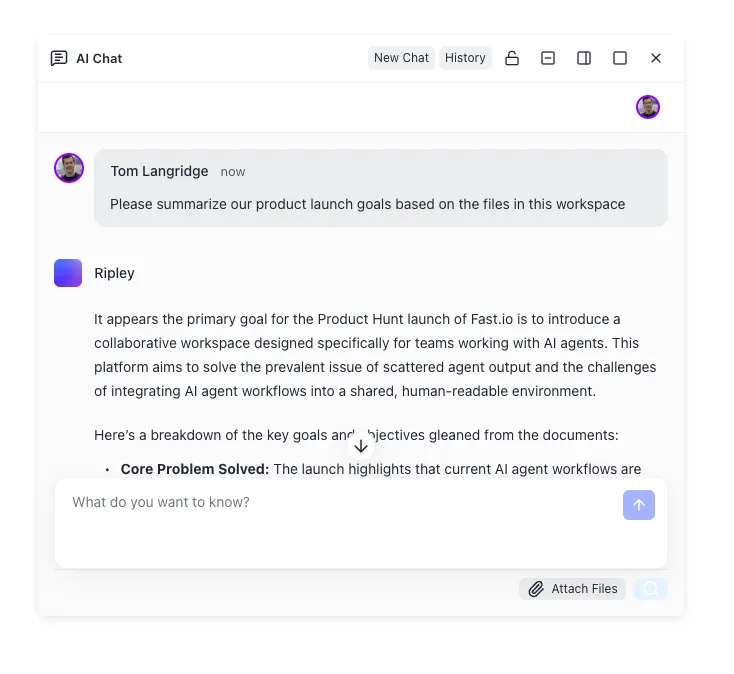


Keep Originality.ai scan reports next to every draft
Give Hermes Agent a shared workspace with MCP access so detector JSON, drafts, and editor decisions stay versioned and searchable. Start with a 14-day free trial on Starter ($9.99/mo), Business ($49.99/mo), or Enterprise ($199.99/mo).
Reading Originality.ai scan responses and model choices
A useful originality detector API call returns more than a single percentage. Originality.ai V3 responses nest results under a results object. For AI detection you care about three surfaces first.
Fields Hermes should always capture
Title and identifiers: The request title plus any private/public identifiers returned in results.properties. Use them to join the report back to the draft filename.
- Credits used:
results.credits.usedso budget scripts can stop before auto top-up buys more credits than planned. - AI classification and confidence:
results.ai.classificationandresults.ai.confidencewithAIandOriginalscores. Example smoke responses show high AI confidence (near 0.95) on sample prose that the model treats as synthetic. Map those floats into team policy (allow, review, block) instead of inventing ad hoc cutoffs per chat. - Block-level scores:
results.ai.blocks[]with per-paragraphfake/realvalues. Editors need spans, not only document averages. - AI Allowance: When
check_ai_allowanceis true, responses include allowance buckets (0%, 5%, 15%, 25%, 40%). Treat allowance as a policy dial, not a second accuracy metric. A 15% threshold means hybrid editing is acceptable; a 0% threshold is zero-tolerance.
Keep plagiarism, facts, readability, and grammar off by default for pure authenticity gates. Each extra check costs credits and latency. Official docs note plagiarism can take up to 60 seconds depending on document size. If you hit timeouts, split long copy into chunks and scan separately, then merge report sections yourself.
Choosing aiModelVersion
Official model strings include:
lite: Vendor guidance claims under 1% false positives and suits cases where lightly AI-edited text is acceptable (often academia-oriented workflows).turbo: Vendor guidance claims under 5% false positives and positions Turbo as harder to bypass on recent LLMs (GPT-4o class, Gemini Pro, Claude 3, Llama 3, and similar).multilang: Non-English coverage for languages listed in the docs (including Spanish, French, German, Portuguese, Chinese, Japanese, and others).lite-102: Newer Lite beta line when you are testing model upgrades.academic: Framed for teachers and students when institutional policy is the buyer.
Pin the model string in the skill so two agents in the same week do not silently disagree because one used Turbo and one used Lite. Log the model name inside every report file.
Plain text in, structured policy out
Docs recommend plain text for the most accurate AI scoring. Hermes should strip CMS chrome, HTML, and markdown decoration before the POST body when your goal is authenticity, not formatting QA. After the response lands, normalize into an internal schema such as:
{
  "source_path": "drafts/client-a/post.md",
  "vendor": "originality.ai",
  "endpoint": "/api/v3/scan",
  "aiModelVersion": "turbo",
  "ai_confidence": 0.12,
  "original_confidence": 0.88,
  "decision": "review",
  "credits_used": 9,
  "scanned_at": "2026-07-17T12:00:00Z"
}
Store the raw vendor JSON next to the normalized summary. Future model upgrades will break assumptions if you only keep a single float.
What the API can scan for
Beyond AI detection, the same scan endpoint can enable plagiarism matching, automated fact checks with source links, readability grade signals, grammar and spelling findings, and AI Allowance thresholds. URL scan and batch scan endpoints cover published pages and multi-document jobs. Credit balance and scan results endpoints support ops scripts that pause queues when credits run low or rehydrate earlier scans when storeScan was true.
Batch patterns, rate limits, and production error handling
Official docs document a Batch Scan endpoint alongside single scan. Content teams usually need Hermes to walk a folder of drafts, not hit one endpoint once. Design the batch layer yourself even when you use the vendor batch route, because agent workflows still own concurrency, retries, and report paths.
Safe batch loop pattern
- List candidate files from the workspace or local directory.
- Convert each file to plain text.
- Cap concurrent POSTs well below 500 requests per minute (start with 5 to 10 in-flight jobs for editorial traffic).
- On HTTP 429, back off using remaining-limit headers when present, then retry with jitter.
- On timeouts during plagiarism-enabled scans, fall back to AI-only or split the document.
- Write one report JSON per source file plus a batch summary CSV or JSONL for the editor queue.
A skill prompt that works well for Hermes:
Scan every Markdown file under drafts/pending with originality-detect.
Use aiModelVersion turbo, check_ai true, other checks false, storeScan true.
Max concurrency 5. On 429, wait and retry up to 3 times.
Write reports under reports/originality/{basename}-{timestamp}.json.
After the batch, print a table of path, AI confidence, decision, credits used.
Credits and auto top-up
Originality.ai accounts can auto top up credits when balances fall low, charging the default payment method so workflows keep running. That is convenient for always-on queues and dangerous for an agent loop with a bug. Before unattended batches, open top-up settings, lower or disable auto top-up for staging keys, and poll the credit balance endpoint so Hermes can stop when remaining credits cross a hard floor. Manually purchasing credits is the safer path for controlled campaigns.
Error classes worth encoding in the skill
- 401 / 403: Bad or missing
X-OAI-API-KEY. Fail closed; do not invent "human" scores. - 429: Rate limit. Back off. Do not fan out more workers.
- Timeouts: Common when plagiarism or long documents are enabled. Reduce checks or chunk content.
- Empty or non-plain content: Refuse to scan and ask for plain text rather than POSTing binary noise.
- Partial batch failure: Keep successful reports, list failures with status codes, and never delete source drafts.
Browser tool vs API workflow
The browser product is better for ad hoc spot checks by a single editor. The Originality.ai API is better when Hermes Agent (or any automation) must scan dozens of drafts, apply consistent model and allowance settings, and leave machine-readable reports. If your volume is occasional and human-driven, stay in the UI. If authenticity is a gate in a content pipeline, wire the API through a Hermes skill and treat the browser as the exception path for edge cases the agent escalates.
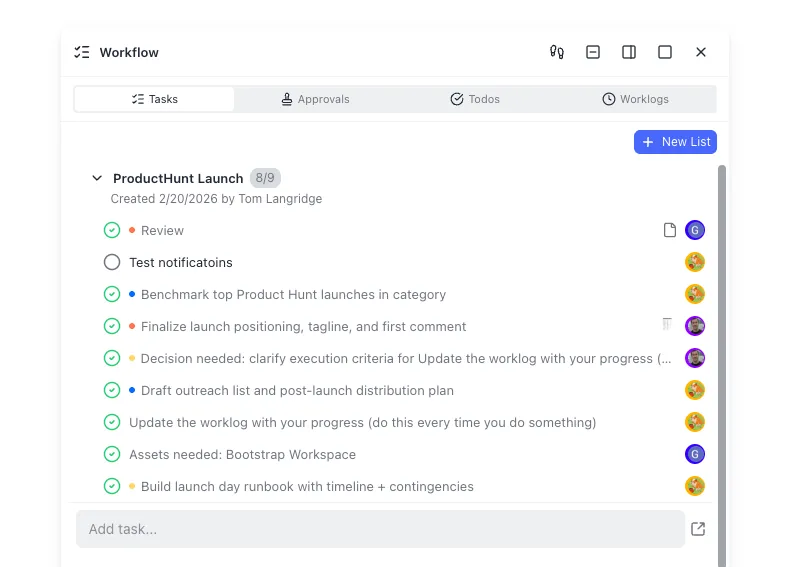
Where to store Originality.ai reports for human review
A detector score that dies in chat history is not an editorial control. After Hermes receives the JSON, persist it with the draft so reviewers can reopen both sides of the decision.
Local disk works for single-developer experiments. Write reports under a reports/originality/ folder next to the repo and commit only redacted samples. Local disk fails when the agent runs on Docker, Modal, or a remote SSH host that disappears after the job, or when two editors need the same file without SSH access.
Object storage (S3, GCS, Azure Blob) works for durable blobs and lifecycle policies. You still build listing, permissions, and review UI yourself. Raw buckets do not give semantic search over "show me last week's Turbo scans above 0.7 AI confidence" without extra indexing work.
Shared intelligent workspaces sit between those options for agent-plus-human teams. Fast.io is one such workspace: org-owned storage with per-file version history, granular permissions, a detailed activity log, Intelligence Mode for hybrid search after indexing, and a consolidated MCP toolset over Streamable HTTP at /mcp (legacy SSE at /sse). Hermes can write the draft and the Originality report into the same workspace folder. Editors open the files in the UI while agents use MCP. For broader agent storage patterns, see storage for agents and the MCP skill documentation.
Practical layout:
content-ops/
  drafts/
    2026-07-17-client-post.md
  reports/
    originality/
      2026-07-17-client-post-turbo.json
  decisions/
    2026-07-17-client-post-review.md
When reports need structured fields (AI confidence, model version, decision, editor, scanned_at), Metadata Views can turn a folder of JSON or PDF summaries into a sortable grid without hand-built OCR rules. Intelligence Mode remains the search and summarization layer; Metadata Views is the extraction layer when you want typed columns agents can query later.
Human review should still own the final call. Detectors misclassify non-native English writing, heavily edited hybrid drafts, and some newer model outputs. Hermes can write a collaborative note that links to the report when AI confidence crosses a threshold, and wait for a human editor's go-ahead before any branded client share goes out. Ownership transfer on Fast.io lets an agent stage the workspace, then hand the org-owned project to a human editor while keeping admin access for support.
Pricing context if you evaluate Fast.io as that handoff layer: Starter is $9.99/mo, Business $49.99/mo, Enterprise $199.99/mo. Monthly plans start with a trial of up to 14 days (credit card required); annual plans have no trial. Creating a user account does not unlock workspace work until an organization is on a paid subscription (or its trial).

Sources
References used to verify factual claims in this guide.
-
Originality.ai API rate limit is 500 requests per minute; exceeding it returns HTTP 429. Originality.ai API access requires an Enterprise plan subscription and X-OAI-API-KEY authentication. Originality.ai API V3 base URL is https://api.originality.ai/api/v3 with scan, batch scan, URL scan, credit balance, and scan results endpoints. Vendor-documented AI models include lite (under 1% claimed false positive rate) and turbo (under 5% claimed false positive rate). Plagiarism-enabled scans can take up to 60 seconds depending on content size.
-
Originality.ai help center confirms a REST API for AI detection and plagiarism integrated into external workflows.
-
Hermes Agent skills live under ~/.hermes/skills/, follow agentskills.io, support required environment variables, and can be authored with /learn.
-
Hermes Agent MCP servers are configured in ~/.hermes/config.yaml under mcp_servers with stdio and HTTP transports.
Frequently Asked Questions
Does Originality.ai have an API?
Yes. Originality.ai documents a Version 3 REST API at https://api.originality.ai/api/v3. You authenticate with the X-OAI-API-KEY header, and endpoints cover single scan, batch scan, URL scan, credit balance, and scan results. Official docs state that API access requires an Enterprise plan subscription before you create a key.
How do I connect Hermes Agent to Originality.ai?
Store ORIGINALITY_API_KEY in ~/.hermes/.env, then author a skill under ~/.hermes/skills/ that POSTs plain text to /api/v3/scan with the X-OAI-API-KEY header. Run a single-document smoke test, parse results.ai.confidence, and write a timestamped JSON report. Optionally wrap the same client as an MCP server in ~/.hermes/config.yaml if multiple agents need the tool.
What can the Originality.ai API scan for?
A scan request can enable AI detection, plagiarism, fact checking, readability, grammar, and AI Allowance thresholds. You choose aiModelVersion values such as lite, turbo, multilang, lite-102, or academic. Related endpoints scan published URLs and batch multiple documents. Provide plain text for the most accurate AI scoring.
Is Originality.ai better as a browser tool or API workflow?
Use the browser product for occasional human spot checks. Use the API when Hermes Agent or another automation must scan many drafts with consistent model settings, rate-limit handling, and durable report storage. High-volume editorial pipelines almost always need the API path plus a shared place for humans to reopen scores.
What rate limits and credit risks should Hermes respect?
Official docs cap the API at 500 requests per minute and return HTTP 429 when exceeded. Accounts may auto top up credits when balances run low, charging the default payment method. For unattended Hermes batches, lower concurrency, monitor the credit balance endpoint, and tighten or disable auto top-up on staging keys.
Should I set storeScan to true or false?
Set storeScan to true when you may need to reopen results through Originality.ai later or via the scan results endpoint. Official docs warn that storeScan false prevents viewing those results again. Even with vendor storage on, keep your own JSON report next to the draft so agent sessions and human reviewers share one audit trail.
Which Originality.ai model should a Hermes skill default to?
Default depends on policy. Lite is documented for lower false positive tolerance when light AI editing is acceptable. Turbo is documented for harder-to-bypass detection on recent LLMs. Multilang is for non-English text. Pin the model string in the skill and log it in every report so agents do not silently switch models between runs.
Related Resources

Keep Originality.ai scan reports next to every draft
Give Hermes Agent a shared workspace with MCP access so detector JSON, drafts, and editor decisions stay versioned and searchable. Start with a 14-day free trial on Starter ($9.99/mo), Business ($49.99/mo), or Enterprise ($199.99/mo).