Hermes Agent Pricing: What It Costs to Run in 2026
Hermes Agent from Nous Research is MIT-licensed and free to download, but "free" software still costs money to run. The real expenses come from two places, infrastructure to host the agent and LLM API calls to power its reasoning. Depending on your choices, the monthly bill ranges from $0 (local hardware with Ollama) to $80+ (cloud VPS with a frontier model). This guide breaks down every cost component so you can budget before you deploy.


The Software Is Free, the Infrastructure Is Not
Hermes Agent is open source under the MIT license. There are no subscription fees, no per-seat charges, no premium tiers, and no features locked behind a paywall. You can clone the repo, install it, and start using it today without paying Nous Research anything.
That said, running any autonomous agent requires two resources that do cost money: compute (a server to run the agent process) and inference (an LLM to power the agent's reasoning). The total cost depends entirely on which options you choose for each.
The five deployment backends supported by Hermes Agent each carry a different cost profile:
- Local runs directly on your machine. Cost: $0 beyond electricity. No isolation.
- Docker runs inside a hardened container on your machine or a VPS. Cost: $0 locally, $4-25/month on a cloud VPS.
- SSH executes commands on a remote server you already have. Cost: whatever you pay for that server.
- Singularity targets HPC clusters and research environments. Cost: typically covered by institutional compute budgets.
- Modal provides serverless compute that hibernates when idle. Cost: per-second billing starting at $0.001/sec for GPU, with $30/month in free credits.
- Daytona offers serverless workspace persistence. Cost: near-zero when idle.
For most individual developers, the decision comes down to local (free, no isolation) versus Docker on a cheap VPS ($4-7/month, proper sandboxing).
Related guides
- OpenClaw Pricing: What It Actually Costs to Run in 2026OpenClaw is MIT-licensed and costs nothing to download. The real bill comes from two things: where you host it and...
- Claude Code vs Cline: API Costs and Pricing Model ComparisonAn analysis of the operational costs and billing models behind Claude Code and Cline. We break down the math of token...
- How to Run a ChatGPT Code Detector Workflow with Hermes AgentEighty-four percent of developers use or plan to use AI tools in their work, yet 46% say they do not trust the accuracy...
- How to Build a Hermes Agent Telegram Bot With Persistent File StorageHermes Agent's messaging gateway connects to Telegram as a persistent background process, handling file attachments,...
- Hermes Agent Skills Hub: Browse and Install 672 Community SkillsThe Hermes Agent Skills Hub gives you access to 672 reusable skills across 4 registries, all following the...
- How to Connect Hermes Agent to n8n With Webhooksn8n has 400+ integrations but every workflow follows a predetermined path. Hermes Agent adds reasoning to those...
More on this subject: Hermes Agent (100 guides)
What LLM API Calls Actually Cost by Provider
The LLM is the larger variable expense. Hermes Agent supports any provider that exposes an OpenAI-compatible API, which means you have dozens of options ranging from free to expensive.
Here is what typical monthly costs look like for a developer running 10-20 agent sessions per day, based on per-million-token pricing:
Budget tier ($0-5/month)
- Ollama (local): $0. No API fees, no rate limits, no data leaves your machine. Requires a GPU with 6+ GB VRAM for 8B models.
- DeepSeek V4 via API: roughly $2-5/month at $0.30/M input and $0.50/M output tokens. Cache hits drop input costs to $0.03/M, which cuts repeated-task costs dramatically.
- Llama 4 Maverick via OpenRouter: roughly $1-4/month.
- Free tiers from Groq, Google AI Studio, and OpenRouter exist but come with rate limits that constrain heavy agent use.
Mid tier ($5-30/month)
- Claude Haiku 4.5: roughly $5-15/month at $1.00/M input and $5.00/M output.
- Gemini 2.5 Pro: roughly $8-30/month at $1.25/M input and $10.00/M output.
- GPT-4.1: roughly $10-30/month at $2.00/M input and $8.00/M output.
Premium tier ($15-80+/month)
- Claude Sonnet 4.6: roughly $15-50/month at $3.00/M input and $15.00/M output.
- Claude Opus 4.6: roughly $25-80/month at $5.00/M input and $25.00/M output.
The per-request overhead matters too. Hermes Agent's CLI adds roughly 6,000-8,000 input tokens per request for system prompts and context. Messaging gateways (Telegram, Discord, Slack) add 15,000-20,000 tokens per request because they include conversation history. On Claude Sonnet 4.6, that overhead costs about $0.045-0.06 per request before the agent even starts reasoning. On DeepSeek V4 with cache hits, the same overhead costs roughly $0.0005 per request.

Total Cost of Ownership by Deployment Tier
Combining infrastructure and inference costs, here are three realistic monthly budgets:
Budget setup: $6-9/month
Hetzner CX22 VPS (2 vCPU, 4 GB RAM, 40 GB NVMe) at roughly $4/month, plus DeepSeek V4 API at $2-5/month. This gets you a Docker-sandboxed agent with decent reasoning at a cost that barely registers. DeepSeek's cache hit discounting makes repeated tasks nearly free.
Mid-tier setup: $12-22/month
Hostinger KVM 2 (2 vCPU, 8 GB RAM, 100 GB NVMe) at roughly $7/month, plus Claude Haiku 4.5 at $5-15/month. More headroom for concurrent sessions and faster reasoning from a capable model. Good for personal productivity use.
Premium setup: $39-74/month
DigitalOcean 4 GB droplet at roughly $24/month, plus Claude Sonnet 4.6 at $15-50/month. Best reasoning quality, managed infrastructure, and enough power for serious automation workflows.
Zero-cost setup: $0/month
Run locally on your own hardware with Ollama serving an 8B model. No VPS, no API, no ongoing fees. You need a GPU with at least 8 GB VRAM (an RTX 3060 12GB or RTX 4060 works well). This is real: you can run a fully autonomous AI agent with memory, skills, scheduling, and messaging gateway support without spending anything after the hardware.
For teams running heavy automation (hundreds of sessions per day, frontier models, always-on infrastructure), monthly costs can reach $800-1,500+. But most individual developers will land in the $6-22/month range.


Persist Hermes Agent files across sessions
Connect your agent to Fastio workspaces with indexed storage, workspace-level permissions, and remote MCP access. Start a 14-day Business Trial.
How Managed Hosting Compares to Self-Hosting
If you prefer not to manage servers, several managed hosting providers have launched Hermes Agent offerings in 2026:
- OpenClaw Launch offers managed Hermes deployments starting at $6/month (sometimes $3 for the first month). Includes auto-SSL, monitoring, backups, and high availability. This is the cheapest managed option for developers who want to skip the VPS setup entirely.
- xCloud provides a one-click managed service at $24/month with the Hermes binary pre-configured, Telegram gateway, free SSL, daily backups, and security updates.
- FlyHermes charges $29.50 for the first month and $59/month after, positioning itself as the premium managed option.
Managed hosting simplifies operations but adds a markup over self-hosting. The $6/month OpenClaw Launch tier costs roughly the same as a self-hosted budget setup on Hetzner, but you skip the Docker configuration, security hardening, and backup scripts. The tradeoff: less control over the environment and you still pay separately for LLM API calls on top of the hosting fee.
For developers comfortable with basic Linux administration, self-hosting on a $4-7 VPS is the better value. For everyone else, managed hosting at $6-24/month removes the ops burden.
Where File Storage Fits Into Agent Costs
One cost component that pricing guides often overlook is file storage. Hermes Agent generates files during its work: skill definitions, conversation logs, research artifacts, downloaded content, and anything its tools produce. On a VPS with 40-80 GB of storage, you will eventually hit disk limits, especially if the agent handles media files or large datasets.
Local storage on a VPS is included in the hosting cost, but it is not persistent across provider migrations, not easily shareable, and not accessible to collaborators. When an agent builds something that needs to be reviewed, handed off, or archived, you need a storage layer that sits outside the agent's runtime.
Options for persistent agent file storage include:
- S3 or equivalent object storage at $0.023/GB/month. Cheap and durable, but requires custom integration and has no built-in file preview, search, or AI features.
- Google Drive or Dropbox at $0-10/month for personal tiers. Familiar but not designed for agent workflows, limited API access, and sharing requires manual setup.
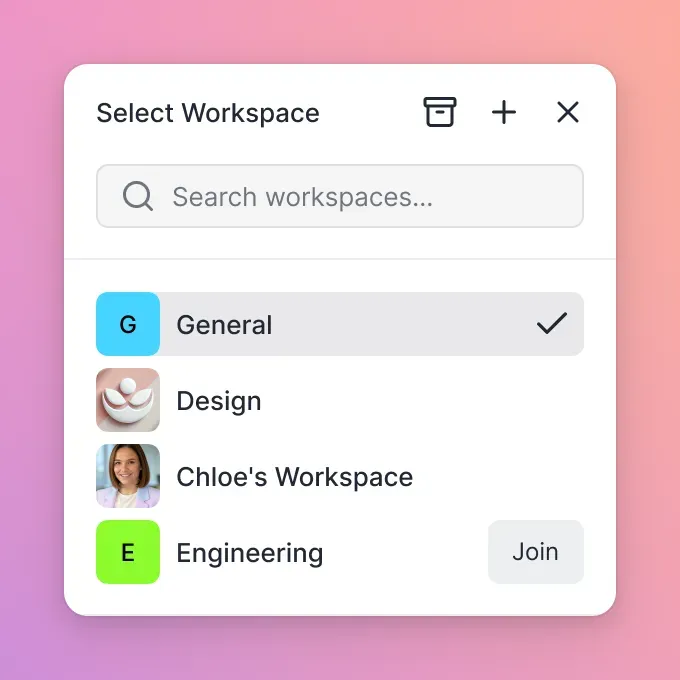
- Fastio with a 14-day Business Trial (card required; see /pricing/). Files uploaded to Fastio are indexed for semantic search once Intelligence is enabled for the workspace, so the agent's output becomes immediately queryable. The MCP server gives agents direct workspace access for reading, writing, and sharing files.
The advantage of a workspace-based approach is that it connects the agent's file output to humans who need to review it. An agent running on a VPS can write files to a Fastio workspace, and a team member can browse, search, or ask questions about those files from the web UI without SSH access to the server.
For Hermes Agent specifically, files persist in the agent's local storage between sessions by default. But when you need to share agent outputs, move files between environments, or let humans review what the agent produced, an external workspace like Fastio handles the handoff. The ownership transfer feature lets an agent build out a full workspace and then hand control to a human when the work is done.
How to Minimize Your Monthly Bill
If you want to run Hermes Agent as cheaply as possible, here are the specific choices that matter:
Pick the right model for the task. Not every agent task needs a frontier model. DeepSeek V4 handles file operations, web searches, and structured data work well at 1/10th the cost of Claude Sonnet. Reserve expensive models for complex multi-step reasoning where quality directly affects outcomes.
Use cache-friendly providers. DeepSeek V4 offers a 90% discount on cached input tokens ($0.03/M versus $0.30/M for fresh inputs). If your agent runs recurring tasks with similar prompts, cached inputs dominate and costs drop to near-zero per request.
Run Ollama locally for development. When you are building and testing skills, use a local 8B model. Switch to a cloud API only for production workloads where quality matters. This keeps your iteration costs at zero during the development cycle.
Choose serverless for intermittent use. If your agent runs a few times per day rather than continuously, Modal or Daytona's serverless backends save money by hibernating between sessions. You pay per compute-second instead of a flat monthly VPS rate. Modal includes $30/month in free credits, which covers light usage entirely.
Size your VPS to actual needs. A $4/month Hetzner CX22 with 2 vCPU and 4 GB RAM runs Hermes Agent comfortably for single-user workloads. Paying $24/month for a DigitalOcean droplet only makes sense if you need higher availability or are running concurrent agent sessions.
Store output files externally. Rather than paying for a larger VPS disk or bolting on block storage, push agent outputs to a dedicated cloud workspace. Fastio offers shared workspaces with remote MCP access and a 14-day Business Trial (card required; see /pricing/).
The cheapest realistic always-on setup is a $4 Hetzner VPS plus DeepSeek V4 with caching, totaling roughly $6/month. The cheapest possible setup is your own hardware with Ollama, totaling $0/month.
Sources
References used to verify factual claims in this guide.
-
Hermes Agent is MIT-licensed open source software
-
Hermes Agent reached 95,600 GitHub stars within seven weeks of its February 2026 launch
-
Budget Hermes Agent deployment costs $6-9/month with Hetzner VPS and DeepSeek V4 DeepSeek V4 offers 90% discount on cached input tokens at $0.03 per million
-
Modal provides $30/month in free credits for serverless compute
Frequently Asked Questions
Is Hermes Agent free?
Hermes Agent is free and open source under the MIT license. Nous Research does not charge subscription fees, per-seat fees, or feature-gated pricing. Your costs come from infrastructure (a server or your own hardware) and LLM API calls (which can be zero if you use Ollama for local inference).
How much does it cost to run Hermes Agent per month?
Monthly costs range from $0 to $80+ depending on your deployment choices. A budget cloud setup (Hetzner VPS plus DeepSeek V4) runs $6-9/month. A mid-tier setup with Claude Haiku costs $12-22/month. Running locally with Ollama costs nothing after the hardware investment. The two cost variables are infrastructure and LLM API pricing.
Does Hermes Agent require a paid API key?
No. Hermes Agent works with any OpenAI-compatible API endpoint, including free options. Ollama provides completely free local inference. Groq, Google AI Studio, and OpenRouter offer free tiers with rate limits. Paid API keys from providers like Anthropic, OpenAI, or DeepSeek give you higher rate limits and faster responses, but they are not required to use the agent.
What is the cheapest way to run Hermes Agent?
The cheapest way is to run it locally on your own hardware with Ollama serving a quantized 8B model like Hermes 3 8B. This requires a GPU with at least 6-8 GB VRAM (an RTX 3060 12GB or RTX 4060 works). Total ongoing cost is $0. The cheapest cloud option is a Hetzner CX22 VPS ($4/month) with DeepSeek V4 ($2-5/month in API costs), totaling about $6-9/month.
How do managed Hermes Agent hosting plans compare to self-hosting?
Managed hosting from providers like OpenClaw Launch ($6/month), xCloud ($24/month), or FlyHermes ($59/month) includes server management, SSL, backups, and monitoring. Self-hosting on a $4-7/month VPS with Docker gives you more control at lower cost but requires basic Linux skills. LLM API costs are separate in both cases.
How much storage does Hermes Agent need?
The Hermes Agent process itself is lightweight, but storage needs grow over time as the agent accumulates skills, conversation logs, and generated files. A 40 GB VPS disk handles most individual workloads. For agents that process media or large datasets, external storage like Fastio (generous storage for agents) prevents disk pressure without upgrading your VPS.
Related Resources

Persist Hermes Agent files across sessions
Connect your agent to Fastio workspaces with indexed storage, workspace-level permissions, and remote MCP access. Start a 14-day Business Trial.