How to Integrate Fastio MCP with Phidata for Agent Memory
Using Fastio MCP with Phidata equips agents with a persistent workspace for document storage, retrieval, and long-term memory. This integration solves the challenge of giving AI agents reliable access to enterprise files and historical context across sessions. By replacing generic database storage with a dedicated file system, developers can build agents that collaborate with human teams and improve performance on complex workflows.

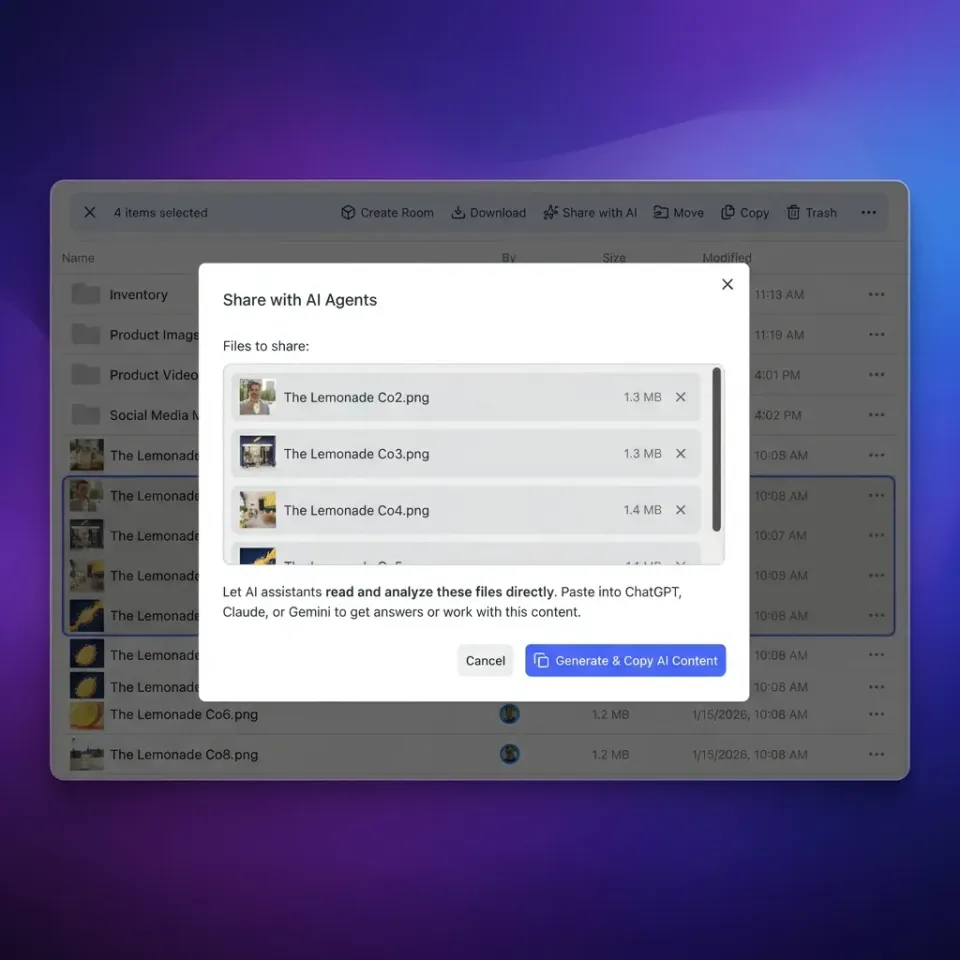
The Challenge of AI Agent Memory
As artificial intelligence systems evolve from conversational chatbots into autonomous problem-solving agents, the need for persistent memory becomes clear. An agent without memory is like an employee who forgets everything they learned the moment they leave. They must be continuously retrained, re-prompted, and re-oriented to the task.
Phidata makes it easier to add memory and knowledge to LLMs, so developers can build advanced agents faster. However, developers still face an architectural challenge: where exactly should that memory live? While basic chat history and user preferences fit in a basic SQL database, enterprise workflows demand more. Professional agents need to interact with real-world files, reference large foundational documents, and keep a historical context across multiple isolated sessions.
Consider a financial analysis agent built with Phidata. If a human analyst uploads a series of quarterly earnings reports, the agent must ingest those reports and store them securely for future reference. When the Q4 report arrives months later, the agent needs immediate access to the Q1, Q2, and Q3 data to perform year-over-year comparisons. If the agent's memory is restricted to an ephemeral chat window or a slow text database, this task becomes hard and computationally expensive. The agent would have to re-read and re-process every document from scratch.
This is where integrating Fastio with Phidata changes your agent architecture. By providing a dedicated file system via the Model Context Protocol (MCP), you give your agents the ability to remember past interactions natively. They can retrieve previous work, update existing documents, and collaborate directly with human team members in a shared, secure environment.
Related guides
- How to Integrate Fastio MCP with OpenAI SwarmFastio MCP integration provides OpenAI Swarm agents with a unified, persistent workspace to share context, lock files...
- How to Integrate Fastio MCP With MetaGPTIntegrating Fastio MCP with MetaGPT gives your multi-agent teams persistent, shared file workspaces. They can store and...
- Fastio MCP Server Integration Guide for DevelopersThe Fastio MCP server is a remote server. Your client connects to it over a URL, which means there is no package to...
- How to Connect Fastio MCP to FlowiseThe Fastio Model Context Protocol (MCP) server lets Flowise agents read and write files directly in your workspace. You...
- How to Integrate Linear with AI Agents via MCPA Linear MCP integration allows agents to read, create, and update issues directly within the Linear project management...
- How to Connect Fastio MCP Server to AutoGen AgentsAutoGen agents lose their work when sessions end. By connecting Fastio's MCP server to AutoGen via the autogen-ext MCP...
More on this subject: MCP and Model Context Protocol (244 guides)
What is Fastio MCP for Phidata?
Fastio MCP is a Model Context Protocol server that bridges your Phidata agents with an enterprise-grade workspace. Using Fastio MCP with Phidata equips agents with a persistent workspace for document storage, retrieval, and long-term memory.
Instead of relying on transient database rows or generic cloud storage APIs, the Fastio MCP integration provides a consolidated MCP toolset covering files, shares, metadata and activity via Streamable HTTP. Your Phidata agents can work with persistent files through the same workspace your human team members use.
The Model Context Protocol establishes a standard way for AI models to interact with external data sources. Through Fastio's consolidated MCP toolset, an agent can work with files, shares, metadata and activity in a secure workspace. This shifts the role of the AI from a passive assistant into an active team member that manages persistent project context.
With this integration, a Phidata agent can create a new workspace, generate a financial report, save it directly to the Fastio file system, and retrieve it weeks later during a follow-up query. This bridges the gap between AI execution and human collaboration, making agentic workflows more valuable. For a closer look at our agent capabilities, see our storage for agents overview.
Understanding Phidata's Native Memory Architecture
To see the value of Fastio integration, it is helpful to understand how Phidata natively handles memory. Phidata categorizes memory into distinct layers, with each serving a specific purpose in the agent's cognitive process.
The first layer is Chat History. This represents the immediate context of the current conversation. By default, Phidata retains the most recent messages to ensure the agent understands immediate follow-up questions. However, as the conversation grows, retaining the entire history becomes token-prohibitive and can lead to degraded LLM performance.
The second layer consists of User Memories and Summaries. When the chat history exceeds a certain threshold, Phidata can generate a condensed summary of the interaction and store specific insights about the user. This helps the agent maintain a personalized tone without exhausting the context window.
The third, and most important layer, is Persistent Storage. While Phidata allows developers to configure an SqlAgentStorage backend using databases like SQLite or PostgreSQL, this approach is optimized for structured text data. When an agent needs to reference a long PDF, a collection of high-resolution images, or a directory of source code, a relational database becomes a bottleneck.
A common anti-pattern in early agent development is attempting to force-fit document storage into these standard SQL databases. Developers often resort to chunking large PDFs, encoding images into base64 strings, and storing large text blobs in relational rows. This approach creates fragile systems that struggle to scale. When human users need to verify the agent's source material, they are forced to query the database and reconstruct the files, creating a lot of friction in the workflow. This is the limitation that Fastio's enterprise-grade file storage eliminates.
Why Use Fastio Over Standard Database Storage?
When building with Phidata, the default memory storage often defaults to SQLite or PostgreSQL databases. While excellent for conversation logs, databases are poorly suited for storing large PDFs, generated images, or full codebases.
Fastio offers distinct advantages for agent memory:
- Built-in Retrieval-Augmented Generation (RAG): Toggle Intelligence Mode on a Fastio workspace, and files are indexed once Intelligence is enabled for the workspace. You do not need to build a separate vector database or chunking pipeline. The agent asks questions, and the workspace returns answers with citations.
- Human-Agent Collaboration: When an agent saves a file to a database, human users cannot easily review it. Fastio provides a standard web interface where humans can view, edit, and comment on the agent's work smoothly.
- URL Import: Agents can pull files from Google Drive, OneDrive, Box, and Dropbox via OAuth without requiring local I/O, simplifying data ingestion.
- Ownership Transfer: Agents can build a workspace of assets and then transfer ownership to a human client while retaining admin access to continue their work.
Another major advantage is the elimination of local input and output bottlenecks. Traditional agent setups often require downloading files to the local disk before processing. Fastio's URL Import capability allows the agent to instruct the workspace to fetch a file directly from a remote Google Drive or OneDrive server. The file is ingested, indexed, and made available for querying within the cloud, bypassing the agent's local environment and speeding up processing times.
For teams building serious agentic workflows, moving from database-backed memory to a structured file system is the key to scaling operations efficiently. You can review all the benefits on our pricing page.
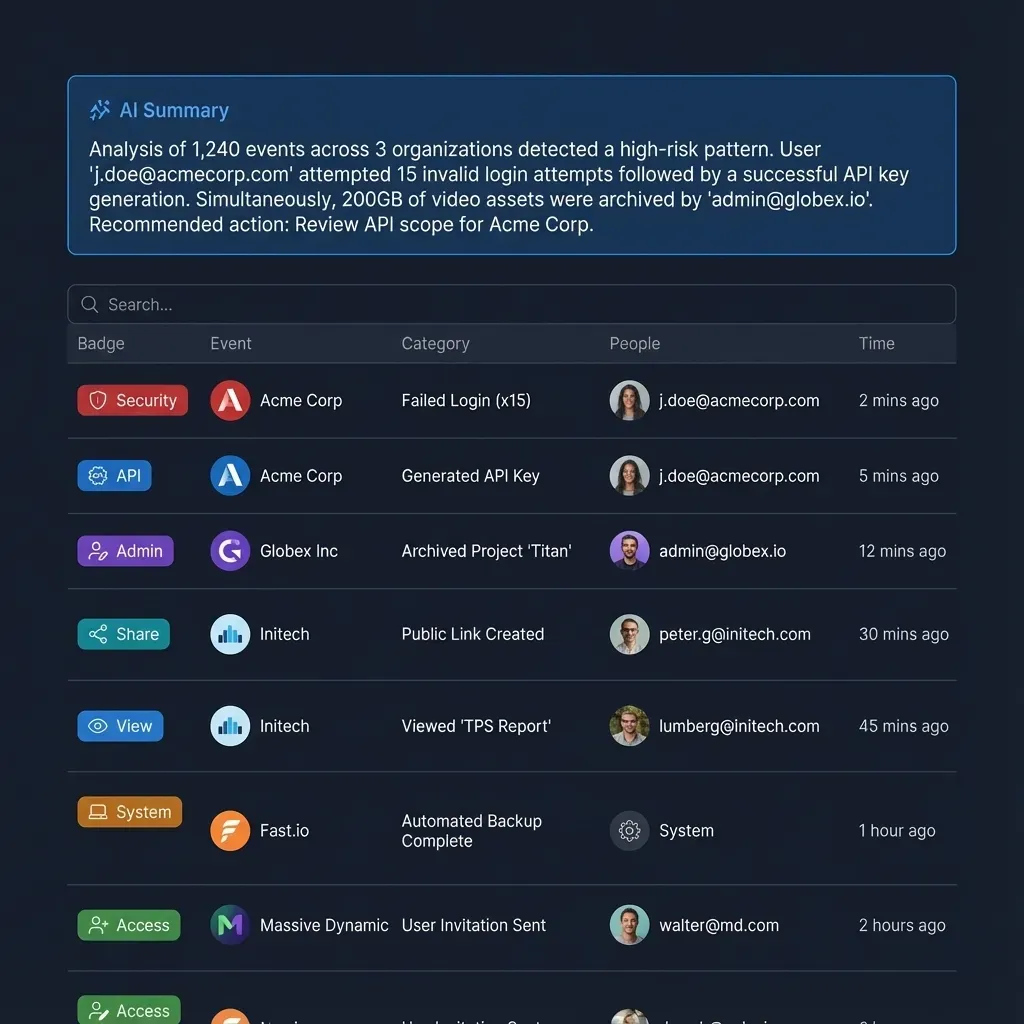


Give Your AI Agents Persistent Storage
Connect your AI agents to an enterprise-grade file system with generous storage and a consolidated MCP toolset during the trial. Built for fast mcp integration with phidata workflows.
Step 1: Setting up Your Fastio Agent Workspace
The first step in integrating Fastio with your Phidata application is to establish the workspace where your agent will operate. Fastio provides a Business Trial that includes workspace storage, large file uploads, and AI credits.
Start by navigating to the Fastio dashboard and creating an account. Once your account is active, you will need to generate an API key. This key serves as the authentication token that allows the MCP server to interact with your Fastio resources on behalf of the agent.
After securing your API key, create a new workspace dedicated specifically to your Phidata agent. It is a best practice to isolate agent workspaces from human workspaces initially. This allows you to monitor the agent's file creation patterns and prevent accidental modifications to human-authored documents during the testing phase.
When creating the workspace, consider your directory structure. Just as human teams benefit from well-organized folders, AI agents operate more efficiently when their environment is predictable. You might create dedicated folders for raw inputs, processed data, and final outputs. This structure allows you to give the agent highly specific instructions, such as always saving generated reports to the final outputs folder before notifying the team. You can also apply distinct permission sets to these folders, ensuring the agent cannot overwrite source materials.
Step 2: Configuring the Fastio MCP Server
With your workspace established, the next phase is configuring the Model Context Protocol server. The Fastio MCP server acts as the translation layer between Phidata's tool-calling capabilities and the Fastio API.
There is nothing to run. Fastio hosts the MCP server, so your Phidata application connects out to https://mcp.fast.io/mcp/tools over Streamable HTTP rather than starting a local process alongside itself.
For a production deployment, the work is credentials and reconnection rather than process supervision. Have a human create a scoped API key limited to the workspace the agent needs, point the client at https://mcp.fast.io/mcp/tools, and send the key as an Authorization: Bearer header read from the environment. Because storage, indexing, and search all run on Fastio's infrastructure, your application servers carry almost no overhead from the integration. Make sure your client reconnects cleanly after an idle period, and log every tool call your agent makes during the initial testing phase so you can see how it interprets the available file management tools.
Ensure your environment variables are correctly set, primarily the scoped API key variable. When the remote session initializes, it exposes a consolidated MCP toolset covering files, shares, metadata and activity. For the canonical connection and authentication reference, independent of any single agent framework, see Fastio's MCP server integration guide for developers.
The storage for agents page provides a product overview, while the hosted MCP connection uses https://mcp.fast.io/mcp/tools, with the scoped key sent as a bearer token.
Step 3: Connecting Phidata to the MCP Server
Integrating the hosted MCP server with your Phidata agent requires adding the discovered MCP tools to the agent's toolkit. Phidata's architecture is extensible, making this connection straightforward.
In your Phidata agent definition, initialize an MCP client with a URL configuration such as {"url":"https://mcp.fast.io/mcp/tools"} and send the scoped key as a bearer token. Once connected, the agent receives the descriptions for Fastio's consolidated MCP toolset.
The true power of this connection emerges when you write detailed system prompts. You can direct the Phidata agent to perform multi-step operations autonomously. For instance, instruct the agent to search the workspace for all invoice documents from last year, extract the total amounts, generate a summary report, and save the new report into the financial summaries directory. Because the agent understands the semantic meaning of the Fastio MCP tools, it can chain these actions together without requiring explicit, line-by-line programming from the developer.
When writing your agent's system prompt, instruct the agent on how to use its new workspace. For example: "You have access to a Fastio workspace. When asked to save your work, use the file creation tools. When asked to reference past documents, use the workspace search and read tools." This explicit instruction helps the underlying LLM understand the persistent nature of its new environment.
If your workflow involves checking the current LLM configuration for agent compatibility, you can reference the fast.io/llms.txt configuration file.
Evidence and Benchmarks
The transition from stateless chatbots to memory-equipped agents represents a major leap in performance and efficiency. According to SourceForge, Agno (formerly Phidata) agents instantiate in approximately 2 microseconds on average and use 50 times less memory than alternatives like LangGraph.
These benchmarks highlight an important reality in agent architecture: efficiency matters. An agent that requires large memory overhead and slow instantiation times will rapidly become cost-prohibitive in a production environment. By offloading the burden of file storage, semantic search, and document retrieval to Fastio's optimized infrastructure, your Phidata agents remain lightweight. They can focus their computational resources and context windows on reasoning and problem-solving, rather than wrestling with file management logistics.
When these highly efficient agents are paired with Fastio's persistent workspaces, the operational gains compound. Agents equipped with persistent memory perform better on complex workflows because they do not need to re-process historical context or re-download reference materials for every interaction.
By using Fastio's built-in RAG capabilities, Phidata agents can bypass the token-heavy process of loading entire documents into their context window. Instead, they query the workspace directly, reducing API costs and latency while improving the accuracy of their outputs.

Advanced Phidata Workflows with Fastio
Once the basic integration is complete, you can unlock advanced capabilities that differentiate professional agent systems from experimental prototypes.
Consider a scenario where an agent generates recurring summary reports. The Phidata application can check a designated input folder, retrieve new files through the hosted MCP connection, process the data, and save the report back to the workspace. Fastio keeps the source material and generated output available to both the agent and human reviewers.
Version History and Audit Trails In multi-agent systems, it is common for several Phidata agents to operate at the same time on a shared problem. Fastio supports this natively with granular permissions, full file version history, and a detailed activity log. If two agents edit the exact same resource, nothing is silently lost: every version stays recoverable and the audit log shows exactly what each agent did.
OpenClaw Integration
If your Phidata architecture intersects with OpenClaw, you can use the same connection by pointing the client at the remote server, https://mcp.fast.io/mcp/tools. This provides a natural language file management interface that works smoothly alongside your custom Phidata logic. Learn more about this integration at our storage for OpenClaw overview.
Sources
References used to verify factual claims in this guide.
-
Agno (formerly Phidata) agents instantiate in approximately 2 microseconds on average and use 50 times less memory than alternatives like LangGraph.
Frequently Asked Questions
How does Phidata store documents?
By default, Phidata relies on database backends like SQLite or PostgreSQL for storing chat history and memory. For actual documents, it requires integration with a persistent file storage system like Fastio to handle large files, PDFs, and multimedia assets efficiently.
Can I use external file servers with Phidata?
Yes, you can use external file servers with Phidata. The most reliable way to achieve this is by connecting an MCP server, such as Fastio MCP, which exposes full file management tools directly to your Phidata agent.
What is the storage limit for the Fastio Business Trial?
Fastio does not document a separate storage or credit allowance for the 14-day trial, and a credit card is required. Paid plans are Starter at $9.99 per month with 3 seats, 250 GB, and 100,000 credits per month; Business at $49.99 with 10 seats and 5 TB; and Enterprise at $199.99 with 30 seats and 25 TB.
How do I handle authentication between Phidata and Fastio?
Generate a scoped Fastio key, store it in an environment variable or secret manager, and configure the Phidata MCP client to use `https://mcp.fast.io/mcp/tools` with the key sent as a bearer token. Fastio hosts the server, so there is no local Fastio MCP process to run.
Can multiple Phidata agents share the same Fastio workspace?
Yes. Fastio is designed for multi-agent collaboration. Multiple Phidata agents can connect to the same workspace, and features like full file version history and an audit log ensure that concurrent edits never result in permanent data loss.
Related Resources

Give Your AI Agents Persistent Storage
Connect your AI agents to an enterprise-grade file system with generous storage and a consolidated MCP toolset during the trial. Built for fast mcp integration with phidata workflows.