How Clay Pricing Works: Data Credits vs Actions Explained
Clay's March 2026 pricing overhaul separated costs into platform Actions and vendor Data Credits. While the change dropped third-party data costs by 50% to 90%, it introduced complex monthly meters for GTM teams. This guide explains the self-serve subscription plans, details how to connect private API keys to save credits, and shows how outbound teams can combine scrapers with persistent, intelligent workspaces to manage budgets.


The Evolution of GTM Enrichment to Dual-Currency Systems
While Clay's March 2026 pricing restructure reduced data marketplace costs by 50% to 90% [Cleanlist AI Analysis 2026], it introduced a dual-currency system separating Actions from Data Credits that left outbound teams facing unexpected platform bills. Under the previous model, users spent a single pool of credits for all activities. This simple billing meant that enriching a profile or running an internal spreadsheet step cost the same credit currency. The March 2026 update changed this dynamic. By decoupling data acquisition from GTM workflows, the company aimed to align costs with direct usage. However, it also introduced complexity, as marketing managers must now balance two separate meters to predict monthly outbound campaign costs.
This change addresses a structural issue in sales development workflows. In traditional systems, teams paid bulk subscription fees regardless of match rates. When search queries failed, the spend was lost. By separating orchestration from lookup costs, teams can build multi-step verification campaigns. The dual-currency architecture charges only for successful database lookups. However, this architecture introduces a platform fee for active accounts. Every formula calculation, API request, and database write now consumes the second currency. Consequently, outbound groups must audit their pipeline architectures to optimize credit efficiency. A structured strategy is required to manage lead records without draining marketing resources.
Related guides
- Claude Code vs Cline: API Costs and Pricing Model ComparisonAn analysis of the operational costs and billing models behind Claude Code and Cline. We break down the math of token...
- Is Claude Code Free? Free Tier, Credits, and Budget Options ExplainedClaude Code requires a paid Anthropic account or API credits, but "paid" does not have to mean $20 per month. Free API...
- How to Build an Image to Text OCR Pipeline in ClayGoogle Cloud Vision achieves 80% to 95% handwriting accuracy, while open-source Tesseract drops to 20% to 40% [Eklavvya...
- How to Build an AI Image Upscaler Pipeline in Clay WorkflowsImages account for the largest mobile page payload, representing roughly 900 kilobytes of the median 2,360 kilobyte...
- How to Automate Image Vectorization in Clay Asset PipelinesImages dominate web payloads, accounting for roughly 42% of a median mobile page's total weight of 2300 kilobytes [HTTP...
- How to Export Files and Data from Clay: A Step-by-Step GuideExporting data from Clay is critical for maintaining accurate outbound marketing. This step-by-step guide explains how...
More on this subject: Clay and GTM Agents (82 guides)
How the Clay Dual-Currency Model Works
Clay pricing uses a dual-currency system separating Actions (internal workflow orchestration and AI execution) from Data Credits (third-party data enrichment purchases) [Clay Pricing]. Understanding the distinction between these two currencies is critical for managing campaign budgets.
An Action represents the platform labor required to run workflows. Every time the software processes a spreadsheet row, routes data, formatting tables, or triggers an outbound message, it consumes an Action. Standard Actions include running AI prompts, executing HTTP webhooks, routing records between tables, and exporting leads to external customer relationship management databases. Clay reports that approximately 90% of customers do not exceed their Action limits [Cleanlist AI Analysis 2026]. This suggests that platform capacity is ample for standard users. However, complex multi-step sequences that run recursive research prompts can exhaust these limits rapidly. Unused Actions expire at the end of each billing cycle and do not roll over.
Data Credits represent the currency used to buy B2B contact records. When you execute an enrichment search (such as finding an email address, a mobile phone number, or firmographic details), you pay in Data Credits. The cost depends on the provider and the lookup type. For instance, finding an email might cost one credit, while mobile number verification might cost multiple credits. A major benefit of the post-2026 billing model is that lookups that fail to return results do not consume Data Credits. Unused Data Credits roll over at the end of the month on standard Launch and Growth accounts, capped at a maximum of two times your monthly allocation.
What Are the Clay Pricing Plans and Credit Limits?
The platform structures its self-serve subscription plans around specific monthly allotments of Actions and Data Credits. Pricing scales based on the volume of outbound contacts required and the necessity of advanced integrations.
The Free plan starts at $0/month and includes 100 data credits and 500 actions per month [Clay Pricing]. This tier serves as a basic sandbox environment for testing features and building initial tables. Active campaigns require moving to a paid subscription.
The Launch plan starts at $185/month (or $167/month if billed annually) and includes 2,500 Data Credits and 15,000 Actions [Clay Pricing]. This tier is designed for small teams and early-stage outreach. It supports phone enrichment and job tracking, but it lacks native integrations for Salesforce or HubSpot. It also excludes custom HTTP API access.
The Growth plan starts at $495/month (or $446/month if billed annually) and includes 6,000 Data Credits and 40,000 Actions [Clay Pricing]. This tier is the standard entry point for operational marketing, unlocking direct CRM synchronization and developer APIs. If your account exceeds these limits mid-month, top-ups are billed at a standard surcharge of 150% of the standard rate.


Optimize your Clay pricing costs with Fastio workspaces
Stop overpaying for outbound orchestration. Combine your custom scraping pipelines with persistent Fastio storage to bypass high Clay pricing tiers. Get started with a 14-day free trial on our Starter plan at $9.99/mo, Business plan at $49.99/mo, or Enterprise plan at $199.99/mo.
A Practical Guide to Reducing Clay Credit Cost
To build efficient enrichment workflows, teams must implement technical controls. One effective approach is utilizing Bring Your Own Key features. Can you use your own API keys in Clay to save credits? Yes, you can input your private API keys for external data providers (such as Hunter, Apollo, or ZoomInfo) directly. When you connect your key, the platform bypasses the Data Credit marketplace fee for that query. Instead of paying in Data Credits, the cost is billed directly to your external database account. However, the platform still charges one Action for executing the step. For high-volume teams with existing direct contracts, this strategy reduces software bills.
Another critical control is managing table updates. GTM operations teams should keep auto-update settings turned off while building workflows. When auto-update is active, every change in a table triggers enrichment lookups. This can drain credits on draft rows that lack validated parameters. Users should design tables in draft mode, run manual tests on a single row, and activate automation only when the pipeline is verified.
Finally, teams should evaluate where they persist enriched contacts. Instead of storing outbound lists in S3 buckets, unstructured local directories, or static Google Drive folders, organizations can use Fastio workspaces to collaborate. Fastio provides shared workspaces where humans and automation scripts collaborate on the same files. Every lead list uploaded maintains a detailed version history. This ensures that concurrent data edits from scraper agents are fully auditable.
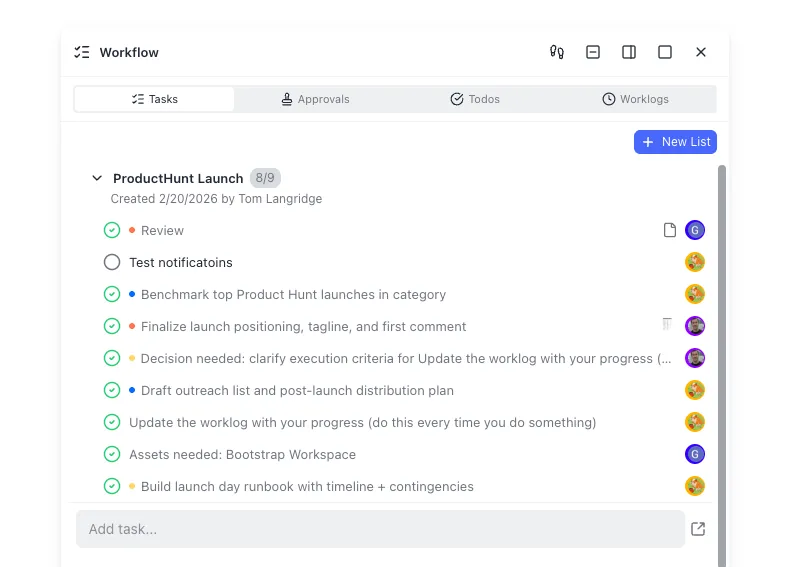
Connecting Outbound Workflows to Intelligent Workspace Storage
For teams executing high-volume outreach, storing campaign outputs in static storage causes version conflicts and data loss. A structured pipeline uses scraping scripts to collect raw target data and writes the findings directly to Fastio workspaces. Fastio's Metadata Views turn raw documents into a live, queryable database. Users describe the fields they want extracted in plain English, such as lead names, phone numbers, or corporate domains. The built-in AI designs a typed schema, scans the workspace, and populates a structured spreadsheet grid. This structured data grid is detailed at the Metadata Views product page. Developers can add new columns dynamically without reprocessing previous files, making it easy to append new signals.
This persistent workspace supports advanced automation. Developers can build workflows that watch for new file uploads using Fastio's activity feed over WebSocket or long-poll. When a lead document is imported using Cloud Import (Drive, Dropbox, Box, OneDrive) without any local I/O, it is indexed automatically. When Intelligence is enabled on the workspace, Fastio's built-in RAG indexes all contacts for semantic search. Human sales representatives can query lead summaries or ask questions with citations using the built-in AI. If an outbound agency constructs this infrastructure, they can use ownership transfer to hand off the organization to a human client. The agency transfers admin billing rights while maintaining scoped API keys to manage the system. Fastio pricing starts at Starter $9.99/month, Business $49.99/month, and Enterprise $199.99/month, and monthly plans start with a trial of up to 14 days (credit card required) [Fastio Features].
This setup allows sales teams to manage contact lists efficiently. The scraping agent processes files programmatically using the Model Context Protocol, exposing tools over streamable HTTP at /mcp or legacy SSE at /sse [Model Context Protocol]. Meanwhile, human GTM leads review the outputs inside the shared workspaces, maintaining a clean system of record.

Sources
References used to verify factual claims in this guide.
-
While Clay's March 2026 pricing restructure reduced data marketplace costs by 50% to 90% [Cleanlist AI Analysis 2026], it introduced a dual-currency system separating Actions from Data Credits that left outbound teams facing unexpected platform bills. Clay reports that approximately 90% of customers do not exceed their Action limits [Cleanlist AI Analysis 2026].
-
Clay pricing uses a dual-currency system separating Actions (internal workflow orchestration and AI execution) from Data Credits (third-party data enrichment purchases) [Clay Pricing]. The Free plan starts at $0/month and includes 100 data credits and 500 actions per month [Clay Pricing]. The Launch plan starts at $185/month (or $167/month if billed annually) and includes 2,500 Data Credits and 15,000 Actions [Clay Pricing]. The Growth plan starts at $495/month (or $446/month if billed annually) and includes 6,000 Data Credits and 40,000 Actions [Clay Pricing].
-
Fastio pricing starts at Starter $9.99/month, Business $49.99/month, and Enterprise $199.99/month, and monthly plans start with a trial of up to 14 days (credit card required) [Fastio Features]. The scraping agent processes files programmatically using the Model Context Protocol, exposing tools over streamable HTTP at `/mcp` or legacy SSE at `/sse` [Model Context Protocol].
Frequently Asked Questions
How does Clay pricing work?
Clay pricing operates on a dual-currency system separating platform Actions from vendor Data Credits. Users pay a monthly subscription fee for the Launch tier ($185/month) or the Growth tier ($495/month). Each plan includes a specific allotment of Actions, which track workflow execution and AI tasks, and Data Credits, which are consumed when purchasing third-party data lookups from the marketplace.
What is the difference between actions and credits in Clay?
Actions measure platform labor, including running AI prompts, executing webhooks, formatting tables, and syncing files to a CRM. Data Credits are used exclusively to purchase contact details like email addresses, phone numbers, and firmographic data from third-party vendors. Actions do not roll over at the end of the month, whereas unused Data Credits do roll over on Launch and Growth plans up to two times the monthly limit.
Can I use my own API keys in Clay to save credits?
Yes, you can use your own API keys for data providers within the platform. Connecting your private API keys bypasses the Data Credit marketplace fee for those lookups, billing the usage directly to your external provider accounts. However, you will still consume one Action for executing the step in your table.
Related Resources

Optimize your Clay pricing costs with Fastio workspaces
Stop overpaying for outbound orchestration. Combine your custom scraping pipelines with persistent Fastio storage to bypass high Clay pricing tiers. Get started with a 14-day free trial on our Starter plan at $9.99/mo, Business plan at $49.99/mo, or Enterprise plan at $199.99/mo.