How to Connect Clay to Outreach for Automated Sequence Enrichment
Cold email open rates increase by up to 40% when utilizing highly personalized AI snippets rather than standard templates. This guide details how to build an automated pipeline between Clay's list enrichment tables and Outreach.com sequences. By setting up native account connections, mapping dynamic variables, and checking prospect existence before enrolling leads, sales teams can scale campaigns without sending redundant messages.


Why outbound personalization requires native pipeline integration
A 2026 outbound performance analysis shows that highly personalized AI email snippets increase cold open rates by up to 40% compared to standard sales templates [SalesHive 2026 Outbound Benchmark]. This 40% baseline shift is why go-to-market teams are replacing static lists with dynamic workflows. Modern outbound campaigns cannot rely on generic templates, yet manually writing custom lines for thousands of prospects creates an operational bottleneck. Bridging the gap between lead enrichment databases and cold execution platforms is the key to scaling outbound personalization.
When sales operations teams use disconnected systems, their efficiency drops. For instance, exporting data from list-building platforms, copying it into spreadsheets, and manually uploading CSV files to sequence platforms introduces errors. Data columns get misaligned, contact information becomes stale, and the time delay between lead identification and email delivery stretches from minutes to days.
Establishing a native connection between your data enrichment table and your sequence engine resolves these operational delays. Clay serves as the data hub, aggregating signals like job changes, recent company announcements, and technological hires. By connecting it directly to Outreach, GTM teams can automate the entire transition from a raw lead to an enrolled prospect in a personalized sequence.
The Problem with Disconnected Lead Databases
Relying on manual exports to move enriched data creates significant risks. CSV files are static snapshots, meaning they become outdated the moment they are generated. If a prospect changes jobs or is removed from a target list after the export, manual uploads will still send messages to the old address.
Additionally, manual formatting errors frequently corrupt personalization fields. A missing column header or an unescaped character can cause emails to display empty variables, sending messages containing placeholder tags to potential buyers. Automating the sync ensures that data flows directly without human intervention, maintaining high delivery standards.
How Automated Data Enrichment Accelerates Outreach
An automated data flow enables immediate outbound execution. Instead of waiting for weekly batch uploads, new leads are identified, enriched, and pushed into sequences within minutes. This immediacy is critical when responding to time-sensitive buying signals.
For example, when a target account hires a new executive, the enrichment engine detects the change, generates a personalized intro paragraph referencing the new hire, and immediately enrolls them in a corresponding Outreach sequence. The time from the event to the email send is minimized, maximizing relevance.
Related guides
- How to Connect Hermes Agent to n8n With Webhooksn8n has 400+ integrations but every workflow follows a predetermined path. Hermes Agent adds reasoning to those...
- How to Connect Devin AI to GitHubDevin AI's GitHub integration is a full GitHub App install with nine read scopes and eight read-write scopes, not a...
- How to Connect Clay to Apollo.io for Real-Time Lead EnrichmentAccording to database decay research by MarketingSherpa, B2B contact records decay at an annual rate of 22.5%, making...
- How to Configure Clay CRM Integrations for GTM EnrichmentConnecting HubSpot and Salesforce natively to Clay allows go-to-market teams to enrich leads and companies directly...
- How to Build a B2B Data Enrichment Waterfall in ClayConfiguring sequential waterfall logic for clay data enrichment allows go-to-market teams to query multiple third-party...
- The Best Storage Solutions for High-Volume Clay WorkflowsClay workflows require a persistent storage layer to manage high-volume lead enrichment data. This guide compares...
More on this subject: Clay and GTM Agents (82 guides)
How to authenticate Outreach OAuth connections inside Clay tables
Connecting your Outreach.com instance to your Clay table requires establishing a secure authentication path. Clay uses OAuth-based authentication to connect accounts, eliminating the need for manual API key generation. This secure method ensures that your credentials remain encrypted and managed at the workspace level.
To configure the connection, GTM teams can follow this checklist to link their Outreach account and map their primary prospect fields:
- Open your active Clay table containing your enriched lead data.
- Add a new column to your table and select the enrichment option.
- Search for "Outreach" in the integration search bar.
- Select the "Lookup Prospect" or "Create Prospect" action.
- Click on the "+ Add Account" option in the configuration panel.
- A secure OAuth authentication window will open, prompting you to log in to your Outreach.com account.
- Grant the necessary permissions for Clay to read and write prospect records.
- Save the connected account within your workspace for reuse across other tables.
Selecting the Right Integration Actions
Clay offers several distinct Outreach actions, allowing you to build highly targeted GTM workflows. Selecting the appropriate action is critical for mapping the flow of data. The lookup action checks for existing records, while the create action adds new prospects to your CRM database.
Mapping the primary identifiers is the first step in configuring any action. Email address serves as the unique identifier. You must map the email column from your Clay table to the Outreach email field. Additional core fields include first name, last name, company name, and job title, which must be aligned in the configuration panel.
Securing Account Credentials at the Workspace Level
Enterprise GTM teams must protect database credentials, especially when sharing tables with external agencies or multiple internal reps. Clay handles this security by decoupling credentials from individual tables. Connected Outreach accounts are stored at the workspace level.
When sharing a table, other team members can execute the enrichment using the pre-authenticated connection without viewing the underlying keys or credentials. This centralized credential management prevents token exposure, keeping your sales operations secure.
Steps to verify prospect existence using lookup filters
Duplicate messaging is one of the quickest ways to damage sender reputation and burn prospect relationships. In high-volume outbound environments, multiple sales representatives might target the same contact, or the same lead might appear in different enrichment lists. Clay's native Outreach integration checks for prospect existence to prevent redundant messaging.
Before adding a lead to an Outreach sequence, you must verify if they already exist in your outreach account. Using the native Lookup Prospect with Outreach action, Clay queries your sales execution database. The lookup results determine the next step in the workflow.
If the prospect exists, the system retrieves their current status. This allows you to check if they are actively enrolled in a sequence, have opted out, or have bounced. Applying this step saves credits and prevents sending conflicting emails to the same decision-maker.
Building Pre-Enrollment Validation Rules
To build this safety check, configure a lookup column directly before your sequence triggers. The lookup queries Outreach using the prospect's email. You then create a formula column in Clay that checks the lookup outcome.
For example, if the lookup returns an Outreach ID, the formula marks the prospect as existing. If no ID is returned, it marks them as new. Your downstream actions, such as creating a prospect and adding them to a sequence, should run only when this validation column equals new.
Preventing Customer CRM Record Fragmentation
CRM duplication occurs when the same lead is created multiple times under different spelling variants or mismatched fields. This creates database clutter and skews performance metrics. Checking existence first ensures that existing records are updated rather than duplicated.
If the lookup finds an existing prospect, you can configure Clay to run an "Update Prospect" action instead of "Create." This updates job titles, company sizes, or phone numbers on the existing record, keeping your CRM data clean and accurate. This lookup method is detailed further in the Clay integrations directory.
How to map AI personalized snippets to Outreach custom variables
Once the pre-enrollment validation check confirms a prospect is new, the pipeline personalizes the outreach. Clay's data enrichment waterfall allows you to generate custom text blocks using large language models. These custom text blocks are mapped to Outreach custom variables, ensuring that each email in the sequence contains personalized context.
Personalization variables go beyond simple name insertion. You can design an AI column to read a prospect's LinkedIn profile, identify their core technologies, and write a custom sentence explaining how your product fits their stack. This text is passed to Outreach custom fields, such as customField1 or customField2.
When the Outreach sequence executes, the email template references these custom variables. The recipient receives an email that reads like a hand-written note, which increases cold open and reply rates.
Clay AI Column -> Map to customField1 -> Outreach Template -> Hyper-Personalized Send
Designing the Personalization Payload
Creating a personalized sentence requires writing clear instructions for the AI column. You pass the lead's enriched data as variables into the prompt. The AI reads the inputs, formats the text to fit your email tone, and outputs a single sentence.
It is important to restrict the output length. A prompt instructing the AI to "Write a maximum of 15 words referencing the prospect's recent product launch" ensures the snippet fits cleanly into your email template. This prevents formatting issues that disrupt email flow. For best practices, teams can consult the Clay University lessons on messaging structure.
Pushing Prospects and Enrolling into Sequences
With variables mapped, the final step is pushing the prospect. The Create Prospect action maps the standard fields along with the custom personalization columns. Once created, the prospect is enrolled in your target sequence.
You can automate this enrollment by adding the Add to Sequence action. Clay passes the Outreach prospect ID and the target sequence ID to Outreach. GTM teams automate these sequences to execute the personalized cold outreach instantly.
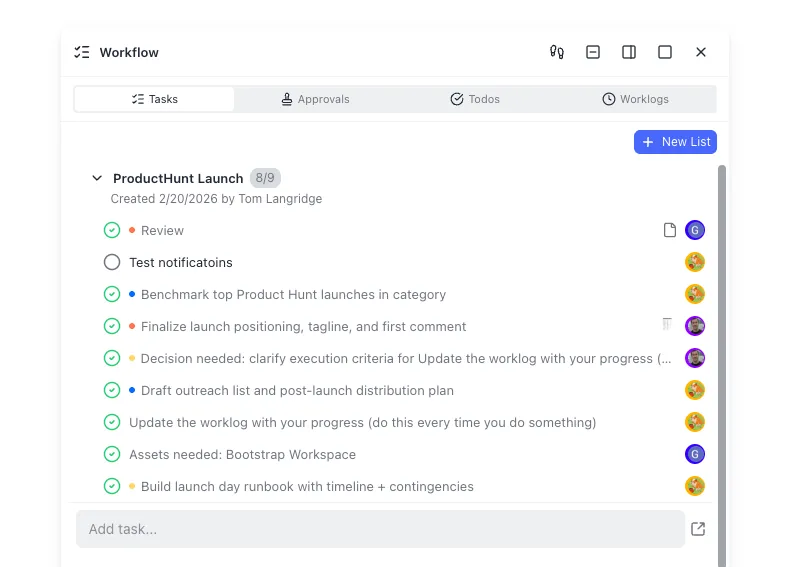


Store Clay lists and Outreach metrics in one workspace
Maintain a permanent database of your outbound prospects, AI-generated email personalizations, and templates with Fastio's metadata views, audit logs, and shared workspaces. Starts with a 14-day Business Trial.
Guide to securing lead databases with Fastio shared workspaces
Managing outbound lists on local hard drives or shared spreadsheets creates security and version control issues. Local storage isolates files, preventing team collaboration. Standard object storage like AWS S3 hosts files but lacks collaboration tools. Shared folders like Google Drive often suffer from formatting shifts and require manual configuration for agent access.
Fastio workspaces resolve these challenges. Fastio provides Fastio shared workspaces where humans and software agents collaborate on the same files, shares, and workflows. Instead of purchasing seat-first licenses for every agent, teams use usage-based credits, making it cost-effective to scale automated campaigns. Plans are structured to fit GTM operations: Starter at $9.99/mo, Business at $49.99/mo, and Enterprise at $199.99/mo. Monthly plans start with a Business Trial of up to 14 days (credit card required); annual plans have no trial. Check details on the Fastio pricing page.
Outbound teams can upload their Clay CSV and JSON exports directly to a Fastio workspace. Fastio's Metadata Views turn these static documents into a live, queryable database. Users describe the fields they want extracted in natural language, and the AI designs a typed schema, matches files in the workspace, and populates a filterable spreadsheet.
This extraction layer supports 7 field types: Text, Integer, Decimal, Boolean, URL, JSON, and Date & Time. Software agents can create schemas and query results programmatically using the Model Context Protocol, which is documented in Fastio Storage for Agents.
Centralizing Outbound Lists with Workspace Intelligence
Storing your outbound datasets in an intelligent workspace ensures that all lists are indexed automatically. When workspace Intelligence Mode is enabled, files are searchable by meaning using Hybrid Search. This combines exact full-text matching with semantic retrieval.
If a rep needs to find an old lead list, they do not need to scroll through hundreds of folders. They search by entering natural questions, and Ripley AI retrieves the files, summarizes the target segments, and provides citations to the source documents.
Sharing Personalization Templates with Branded Shares
Outbound teams frequently share personalization templates, sequences, and list results with external clients or internal leaders. Fastio supports purpose-built shares for Send, Receive, and Exchange workflows.
These shares can be durable or expiring, with per-recipient access controls that you can revoke at any time. Recipients see the current version of the data, and all download activity is tracked. For agencies, this provides a professional, branded interface to deliver lead outputs to clients.
How to track data changes and manage team handoffs
High-performing sales teams must track list modifications, account ownership, and sequence updates to ensure operational compliance. When multiple reps and automated agents modify lists concurrently, maintaining a clear record of changes is critical. Fastio helps GTM teams manage these updates with version history and audit trails.
Fastio keeps a complete version history for every file. If an automated script overwrites a prospect list in error, team members can restore previous versions with a single click. Recipients of shared folders always see the current version, ensuring that outbound teams never use outdated lead lists.
Additionally, Fastio's detailed activity log provides a record of all workspace activity. The log records file operations, membership changes, and AI activity, identifying whether an action was performed by a human or a software agent. This provides a clear chain of custody for all outbound databases.
Handoff Workflows and Organization Ownership
Sales agencies often build outbound infrastructure for clients, setting up data enrichment pipelines and sequences. Once the setup is complete, the agency must hand over the workspace to the client. Fastio facilitates this handoff with ownership transfer.
An agent can create the organization, build the workspaces, configure metadata views, and connect templates. When the handoff is ready, the agent initiates an ownership transfer to the human client. The client takes over billing, and the agent can retain admin or member access to maintain the pipeline.
Coordinating Post-Outreach Assets and Notes
The pipeline does not end once the email is sent. When prospects reply, sales teams need quick access to enriched prospect profiles and personalized collateral. Outreach teams can store these assets in dedicated Fastio folders with collaborative notes and live cursors.
Team members and automated agents can update shared notes with meeting summaries and objection logs. The activity log and realtime activity feed keep account executives aligned on recent changes without digging through disconnected email threads.
Sources
References used to verify factual claims in this guide.
-
Highly personalized AI email snippets increase cold open rates by up to 40%.
-
Clay offers a native Outreach integration that allows users to create prospects and check their sequence existence directly inside tables.
Frequently Asked Questions
How do I sync Clay with Outreach?
You sync Clay with Outreach using the native Outreach integration. Open your Clay table, select 'Add Enrichment', search for Outreach, authenticate via OAuth, and map your table columns to Outreach prospect fields.
Can Clay create prospects in Outreach?
Yes. Clay's native Outreach integration includes actions to check prospect existence, create new prospects, update records, and enroll prospects into sequences directly from your table.
How do I prevent sending duplicate emails to Outreach prospects?
Use the 'Lookup Prospect with Outreach' action in Clay before enrolling leads. Build conditional filter rules so that new sequence enrollments execute only when the lookup finds no existing prospect record.
Related Resources

Store Clay lists and Outreach metrics in one workspace
Maintain a permanent database of your outbound prospects, AI-generated email personalizations, and templates with Fastio's metadata views, audit logs, and shared workspaces. Starts with a 14-day Business Trial.