7 Best OpenClaw Skills for AI Wireframing and UI Prototyping
OpenClaw wireframing skills let AI agents generate UI layouts, interactive prototypes, and design mockups from natural language descriptions. This guide ranks seven ClawHub skills for wireframing and UI prototyping, covering production-grade generators, accessibility auditors, and design asset management tools. Each entry includes verified capabilities, limitations, and the workflow it fits best.


How We Evaluated These Skills
We tested ClawHub skills against five criteria specific to wireframing and UI prototyping workflows:
- Design output quality: Does the skill produce distinctive, production-ready layouts or generic templates?
- Design system support: Can it work with established systems like Material You, Fluent Design, or Apple HIG?
- Output formats: What does it generate? HTML, CSS variables, Tailwind config, React components, or design guidance?
- Accessibility: Does it validate WCAG compliance, contrast ratios, and semantic HTML?
- Workflow position: Where does it sit in the design pipeline, from blank-slate ideation to production handoff?
Frontend Design topped the list for its direct impact on UI output quality. The UI Designer Skill scored highest for design system coverage. Fastio earned its spot for keeping generated assets organized and shareable across teams.
Helpful references: Fastio Workspaces, Fastio AI, and Fastio for OpenClaw.
Related guides
- How to Use Claude Code Skills in ClineAccording to GitHub's Octoverse 2024 report, the number of developers building with generative AI on the platform...
- How to Install and Manage Cline Agent SkillsAI coding agents boost code volume by 180%, but shipped code rises by only 30%, showing a critical gap in development...
- Best OpenClaw Skills for Web ResearchWeb research skills let OpenClaw agents find and read information on the live web. Without them, your AI is stuck with...
- Top 7 OpenClaw Skills for Growth HackersThese top OpenClaw skills help growth hackers automate experimentation and analytics. They scale campaigns faster. Real...
- How to Automate Infrastructure: Top OpenClaw Skills for Network EngineersNetwork automation used to require writing complex Python scripts or wrestling with Ansible playbooks. Today, OpenClaw...
- Top OpenClaw Skills for Video ProductionOpenClaw skills automate video production tasks like editing, asset management, and reviews with MCP tools. Video teams...
More on this subject: OpenClaw Skills (109 guides)
1. Frontend Design: Distinctive UI Generation
The Frontend Design skill from the anthropics/skills repository addresses OpenClaw's biggest design weakness: generic output. Without it, OpenClaw defaults to safe choices like Inter font, purple gradients, and predictable layouts. With Frontend Design installed, the agent applies what Composio describes as a "master-level design mindset" that produces distinctive, intentional interfaces.
This skill ranked as a top-10 OpenClaw skill in Composio's 2026 evaluation, and it is the most direct answer to the question of whether OpenClaw can produce wireframes that look like a designer touched them.
Key Strengths:
- Generates custom typography pairings instead of defaulting to system fonts
- Supports specific aesthetic directions like brutalist, editorial, or dark high-contrast styles
- Produces production-grade landing pages with non-standard layout choices
- Translates abstract brand concepts into functional frontend code
Limitations:
- Requires clear aesthetic direction in your prompts to avoid falling back to generic output
- Design-focused rather than a full wireframing toolkit, so it works best for high-fidelity UI
Best For: Developers building landing pages, marketing sites, or branded interfaces who want visual identity beyond AI defaults.
Pricing: Free, available from the anthropics/skills repository.

2. UI Designer Skill: Design System Guidance
The UI Designer Skill takes a different approach from Frontend Design. Instead of generating code directly, it provides expert design system guidance that shapes how your agent thinks about interfaces. You select a design language, color palette vibe, and target platform at the start, and the skill generates cohesive design tokens and component architecture recommendations.
It supports 16 design languages including Material You, Fluent Design, Apple HIG, Ant Design, Carbon Design, Shopify Polaris, and several stylistic approaches like glassmorphism, neo-brutalism, and Swiss Design. This breadth makes it useful for teams that need their agent to respect an existing system rather than invent one from scratch.
Key Strengths:
- Generates color palettes in HEX, CSS variables, and Tailwind config formats
- Establishes consistent design tokens for background, text, accent, and border states
- Provides WCAG AA/AAA contrast ratio validation alongside semantic HTML guidance
- Supports light and dark mode systems with unified theming
Limitations:
- Guidance-oriented, not a direct code generator. Best used alongside a coding skill.
- Requires choosing a design system upfront, which can feel rigid for exploratory wireframing.
Best For: Teams standardizing on a specific design system who want their OpenClaw agent to respect established visual rules.
Pricing: Available on ClawHub.
The practical output includes ARIA attribute recommendations, focus ring management, and screen-reader guidance, making it valuable for teams where accessibility is a requirement.
3. Canvas Design: Interactive Prototyping
Canvas Design enables visual exploration and interactive UI prototyping with a unique multi-terminal capability. The skill pushes rendered HTML to Mac, iOS, and Android terminals simultaneously, so you can preview a prototype on multiple devices as your agent builds it.
This makes Canvas Design well-suited for rapid iteration. Describe a dashboard layout or mobile screen, and the agent renders it in real time. Need to compare how a prototype looks on a phone versus a desktop? Canvas Design handles that through synchronized multi-terminal displays using internal network tools like Tailscale.
Key Strengths:
- Pushes HTML prototypes to multiple terminals for instant multi-device preview
- Supports dynamic data dashboards and real-time generated UI prototypes
- Enables iterative visual exploration without context-switching to a browser
Limitations:
- Multi-terminal sync requires network configuration (Tailscale or similar)
- Prototype output is for exploration, not production deployment
Best For: Designers and developers who want to iterate on layout ideas visually across devices before committing to implementation.
Pricing: Free, from the Anthropic skills collection.
Canvas Design pairs well with Frontend Design. Use Canvas to explore layout concepts quickly, then apply Frontend Design for the polished, production-grade version.
4. Figma-Implement-Design: Design-to-Code Bridge
For teams already working in Figma, the Figma-Implement-Design skill automates the handoff from design files to production code. It reads Figma design tokens and translates them into working React or HTML with pixel-perfect accuracy, reducing the back-and-forth that typically slows down design-to-code workflows.
This skill is not a wireframing tool in the traditional sense. Its value lies in connecting the design phase (whether handled in Figma or by other OpenClaw skills) to the implementation phase. If your team uses Figma for mockups and OpenClaw for development, this skill eliminates the manual translation step.
Key Strengths:
- Translates Figma design tokens with high fidelity to the original design
- Reduces development time on design implementation tasks
- Maintains visual accuracy across the design-to-code pipeline
Limitations:
- Requires Figma files as input, so it is not useful for blank-slate wireframing
- Works best with well-structured Figma components and clear design token naming
Best For: Teams with established Figma workflows who want to automate the handoff from design to code without losing visual fidelity.
Pricing: Free.
Once your agent generates production code from Figma files, you need somewhere to store, version, and share those outputs. A persistent workspace like Fastio fits naturally at this point in the pipeline.


Keep your generated wireframes in one searchable workspace
Fastio gives your OpenClaw agent generous storage with built-in semantic search. Upload prototypes, share with clients, and hand off finished designs to your team.
5. Web Design Guidelines: Accessibility Audits
Web Design Guidelines from Vercel focuses on what happens after the wireframe is built. It runs accessibility audits, validates component quality, and checks visual hierarchy against established standards.
This skill does not generate UI. Instead, it reviews existing interfaces and flags issues with contrast ratios, semantic markup, motion design, and interactive element accessibility. Think of it as a design linter that catches problems before they reach production.
Key Strengths:
- Validates component accessibility against WCAG standards
- Audits motion design patterns for usability and performance
- Checks visual hierarchy and layout consistency across components
Limitations:
- Audit-only, not generative. You need a separate skill to create the wireframe first.
- Best results require a fairly complete UI to analyze rather than early-stage sketches.
Best For: Accessibility-focused teams who need automated quality checks on generated interfaces before shipping.
Pricing: Free, maintained by Vercel.
Pair this with Frontend Design or Canvas Design for a complete workflow: generate the UI first, then audit it for accessibility compliance.
6. Frontend Skill: Rapid Page Construction
The Frontend Skill from OpenAI focuses on rapid construction of official websites and brand pages. Where Frontend Design (Anthropic) emphasizes distinctive aesthetics, this skill optimizes for content hierarchy and conversion-oriented layout structures.
It generates production-ready web interfaces with particular attention to how content flows and where calls-to-action sit on the page. This makes it a better fit for marketing pages and product sites where visitor engagement matters more than unique visual identity.
Key Strengths:
- Optimizes content hierarchy and visual flow for landing page conversions
- Generates complete page structures ready for deployment
- Focuses on layout patterns that support user engagement and clear navigation
Limitations:
- Less emphasis on distinctive visual design compared to Frontend Design
- Better for standard page layouts than experimental wireframing
Best For: Teams building marketing pages, product sites, or brand pages where conversion matters more than visual experimentation.
Pricing: Free.
For projects that need both conversion optimization and distinctive design, consider running Frontend Skill first for structure, then applying Frontend Design for visual polish.
7. Fastio: Design Asset Storage and Sharing
Wireframing and prototyping with OpenClaw generates a steady stream of files: HTML mockups, exported images, CSS variables, Figma conversions, and audit reports. Without a central storage layer, these assets scatter across local directories and chat histories where they become hard to find and impossible to share.
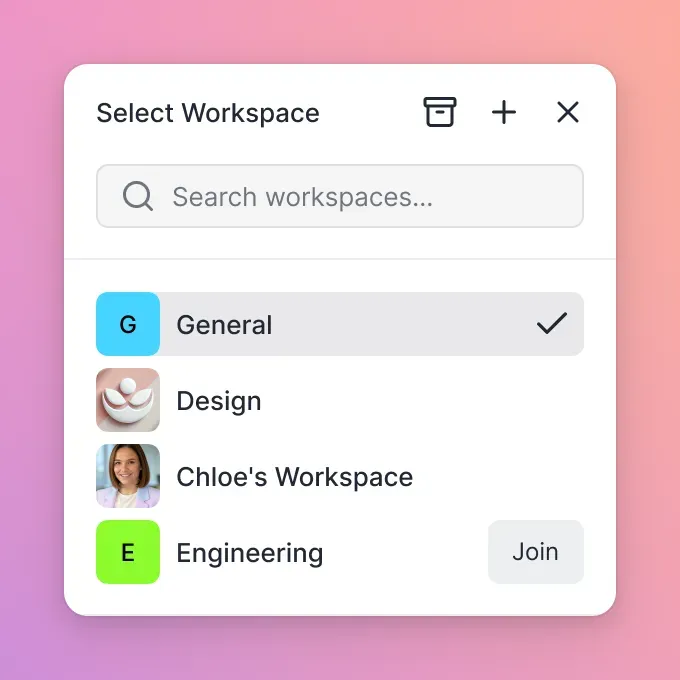
Fastio provides persistent workspaces where OpenClaw agents store, organize, and share design outputs. Connecting your agent gives direct access to file uploads, workspace management, and AI-powered search through Fastio's remote MCP server at mcp.fast.io.
Key Strengths:
- 14-day Business Trial with paid plans starting at $9.99/month
- Intelligence Mode auto-indexes uploaded files for semantic search once enabled for the workspace, so you can find "that dark mode prototype from last week" without remembering file names
- Branded shares let you send wireframes to clients with your own logo and custom access controls
- Ownership transfer lets an agent build and populate a workspace, then hand it to a human teammate
Limitations:
- Storage and collaboration tool, not a wireframing generator. Requires other skills for actual UI creation.
- Requires a Fastio account before configuration
Best For: Teams who generate wireframes and prototypes with OpenClaw and need a searchable, shareable home for those assets.
Pricing: 14-day Business Trial, card required; paid plans start at $9.99/month. See pricing for details.
How to Combine These Skills for Your Workflow
No single OpenClaw skill covers the entire wireframing-to-production pipeline. The skills in this list handle different stages, and the best setup combines two or three based on your workflow.
For blank-slate wireframing: Start with Canvas Design for rapid visual exploration, then apply Frontend Design for production-quality output. Canvas lets you iterate quickly across devices while Frontend Design ensures the final result looks intentional.
For Figma-based teams: Use Figma-Implement-Design to automate design-to-code translation, and add Web Design Guidelines to catch accessibility issues before deployment. This combination keeps your existing Figma workflow intact while speeding up implementation.
For brand-heavy projects: Combine Frontend Skill (OpenAI) for conversion-optimized structure with Frontend Design (Anthropic) for distinctive visual identity. The first builds the content hierarchy, the second makes it look like yours.
For team collaboration: Add Fastio to any combination above. It gives your agent persistent storage, makes prototypes searchable once Intelligence is enabled, and provides branded shares for client review. Files stay organized in workspaces instead of getting lost in local directories.
The OpenClaw ecosystem continues to grow on ClawHub. Skills that output clean HTML, CSS variables, and React components integrate well with each other because they share the same file formats. If you only install one skill from this list, start with Frontend Design. It addresses the most common complaint about AI-generated UI: everything looks the same.
Sources
References used to verify factual claims in this guide.
-
Frontend Design is a top-10 OpenClaw skill
-
UI Designer skill supports 16 design languages including Material You, Fluent Design, and Apple HIG
-
Frontend Design, Canvas Design, Figma-Implement-Design, and Web Design Guidelines are key OpenClaw skills for AI-driven frontend development
Frequently Asked Questions
Can OpenClaw generate wireframes?
Yes. With skills like Frontend Design and Canvas Design installed from ClawHub, OpenClaw generates UI layouts, interactive prototypes, and production-ready interfaces from natural language descriptions. Without design-focused skills, OpenClaw produces functional but visually generic interfaces.
What is the best AI wireframing tool for developers?
For developers using OpenClaw, the Frontend Design skill from the anthropics/skills repository is the strongest option. It produces distinctive, production-grade interfaces instead of generic AI output. For developers not using OpenClaw, standalone tools like Figma AI and Framer also generate wireframes from text prompts, though they operate outside the agent workflow.
How do I create UI prototypes with OpenClaw?
Install a wireframing skill like Frontend Design or Canvas Design from ClawHub. Describe the interface you want in natural language, including layout preferences, color direction, and target platform. The agent generates HTML, CSS, and component code that you can preview immediately. Canvas Design adds multi-device preview through synchronized terminal displays.
Do OpenClaw wireframing skills work with Figma?
The Figma-Implement-Design skill bridges Figma and OpenClaw by translating Figma design tokens into production code. It reads design files and outputs React or HTML with pixel-level accuracy. Other skills like Frontend Design generate new interfaces from scratch rather than converting existing Figma files.
Are OpenClaw design skills free?
Most design skills in the official repositories (anthropics/skills) are free and open-source. The ClawHub marketplace also offers paid skills from independent creators, typically ranging from a few dollars to around $50. The comparison table in this guide notes the source for each skill.
Related Resources

Keep your generated wireframes in one searchable workspace
Fastio gives your OpenClaw agent generous storage with built-in semantic search. Upload prototypes, share with clients, and hand off finished designs to your team.