Best OpenClaw Skills for AI Resume and CV Generation
OpenClaw's skills registry lists over 13,000 community-built skills, and a growing subset targets resume generation, ATS optimization, and automated job applications. This guide ranks the best OpenClaw resume and CV skills by practical usefulness, covers their real limitations, and shows how to store and share polished application materials with Fastio workspaces.


Why Resume Automation Moved to AI Agents
One developer ran OpenClaw's job application pipeline for an hour and completed three fully tailored applications, spending roughly $1.50 per submission in LLM token costs. That is not a typo. The bottleneck was not speed but cost efficiency: 12 million tokens across three applications added up to about $5 in OpenAI fees. The experiment showed that AI agents can handle the entire resume-to-submission pipeline, but doing it well requires picking the right skills and managing outputs carefully.
Traditional resume builders generate a single static document. OpenClaw skills work differently because the agent reads a job description, rewrites your resume to match specific keywords, formats the output for applicant tracking systems, and can even fill out application forms on job boards. The shift is from "one resume fits all" to "one agent tailors many."
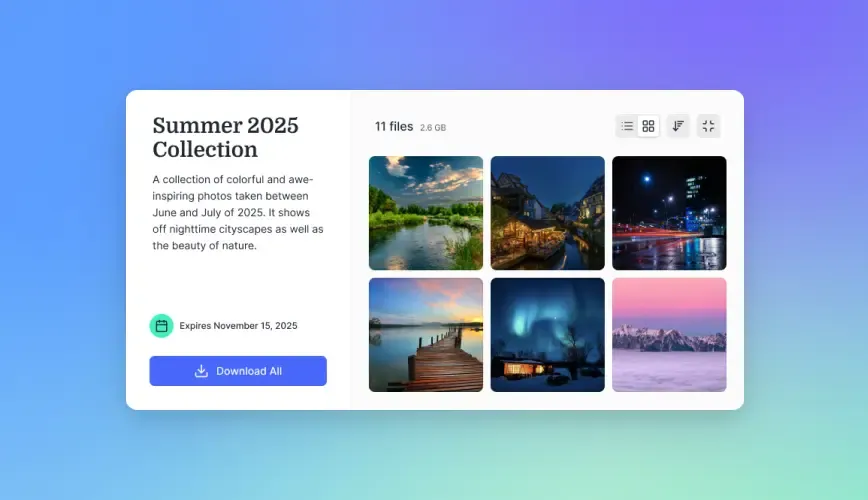
That shift creates a storage problem. Each tailored resume is a separate file. Cover letters multiply the count. Screening question answers pile up. Without a persistent workspace, these files scatter across local directories and terminal sessions. Tools like Fastio solve this by giving agents a shared workspace where every generated document is versioned, indexed, and accessible to both the agent and the human reviewing the materials.

Related guides
- How to Use Claude Code Skills in ClineAccording to GitHub's Octoverse 2024 report, the number of developers building with generative AI on the platform...
- How to Install and Manage Cline Agent SkillsAI coding agents boost code volume by 180%, but shipped code rises by only 30%, showing a critical gap in development...
- Best OpenClaw Skills for AI Cover Letter and Job Application WritingA field experiment of 7,287 job applications showed tailored cover letters produce 53% more callbacks, but follow-up...
- 7 Best OpenClaw Skills for AI Pixel Art and Retro Game AssetsClawHub hosts over 5,400 OpenClaw skills, but finding the ones that actually produce usable pixel art for a game...
- Best OpenClaw Skills for AI Quiz and Exam Question GenerationHigher education instructors already use AI for assessments at a meaningful rate, but most tools are standalone SaaS...
- Best OpenClaw Skills for AI Recipe Generation and Cooking AssistantsThe AI-generated recipe market passed $610 million in 2024, but most recipe apps still lock data behind closed...
More on this subject: OpenClaw Skills (109 guides)
1. Resume/CV Builder (ATS-Optimized Document Generation)
The resume-cv-builder skill from the official OpenClaw skills registry is the most complete starting point for generating professional resumes. It creates ATS-optimized documents in four export formats: Markdown, HTML, LaTeX, and PDF (the last requires Pandoc as an environment dependency).
The skill structures content using the CAR method (Context-Action-Result) for achievement bullets, enforces standard section ordering (Summary, Skills, Experience, Education), and avoids formatting that breaks applicant tracking parsers, like tables, graphics, and special characters. Pre-built templates cover Software Engineer, Product Manager, and Marketing Manager roles, though the agent can adapt the structure to any position.
Key Features:
- Exports to Markdown, HTML, LaTeX, and PDF via Pandoc
- ATS-friendly formatting with no tables, graphics, or special characters
- CAR-method bullet points with quantifiable metrics
- Job-specific tailoring by matching keywords from job descriptions
- Pre-built templates for common tech and business roles
Limitations:
- PDF export requires Pandoc installed on the host machine
- Templates are starting points, not polished designs. Expect to refine formatting
- No built-in job board integration. This skill generates documents only
Best For: Developers who want a clean, ATS-safe resume generated from a single prompt, then plan to use other skills for submission.
ClawHub Page: openclaw/skills/resume-cv-builder
2. Job Auto-Apply (End-to-End Application Submission)
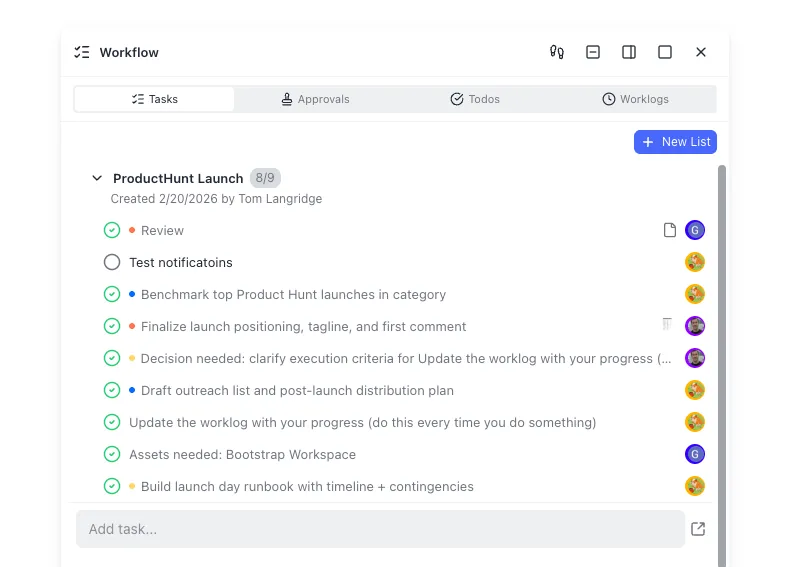
The job-auto-apply skill handles the full pipeline from job discovery to form submission. It searches job boards matching your criteria, scores each listing against your profile, generates a tailored cover letter, and submits the application, either automatically or with a confirmation step before each send.
Supported platforms include LinkedIn (Easy Apply), Indeed, Glassdoor, ZipRecruiter, and Wellfound (formerly AngelList). The skill includes safety mechanisms that matter for real use: a dry-run mode that tests the workflow without submitting, rate limiting to avoid triggering bot detection, and comprehensive logging of every application sent.
Configuration highlights:
- Set maximum daily applications (recommended 5 to 10)
- Define a minimum match score threshold (suggested 0.75 or higher)
- Choose between dry-run, auto-apply, or confirmation-required modes
- Filter by job title, location, remote preference, experience level, and salary range
Key Features:
- Profile management for resume, contact info, work authorization, and preferences
- Compatibility scoring against job descriptions before applying
- Tailored cover letter generation per application
- Form auto-fill for standard fields (personal info, education, skills, screening answers)
Limitations:
- LinkedIn and other platforms actively prohibit automated submissions. Aggressive use risks account suspension
- Job board HTML changes can break the automation without warning
- CAPTCHA challenges will halt the workflow until a human intervenes
- Token costs add up. Expect $1.50 to $2.00 per application at current LLM rates
Best For: Job seekers comfortable with the compliance risks who want to apply to high volumes of matching positions.


Store every tailored resume in one searchable workspace
Fastio gives your OpenClaw agent generous storage with built-in document search. Upload resumes, cover letters, and application logs to a workspace your whole team can access.
3. Resume Builder by Amruth Pillai (Design-Focused Generation)
The resume-builder skill by Amruth Pillai takes a different approach from the ATS-focused resume-cv-builder. Rather than prioritizing machine readability above all else, this skill produces visually polished resumes designed for human reviewers. It connects to the open-source Reactive Resume project, which has its own template library and customization options.
This skill is worth considering when you are applying to roles where the hiring manager reads resumes directly, like smaller companies, creative agencies, or startups that do not use enterprise ATS systems. The tradeoff is clear: better visual design at the cost of some ATS compatibility.
Key Features:
- Visual resume templates with modern layouts
- Customizable sections and formatting
- Built on the Reactive Resume open-source project
- Supports multiple export formats
Limitations:
- Less ATS-friendly than the resume-cv-builder skill
- Design-heavy templates may not parse correctly in automated screening systems
- Requires more manual review of output formatting
Best For: Candidates applying to design-conscious companies or roles where visual presentation matters as much as content.
ClawHub Page: openclaw/skills/resume-builder
4. Fastio (Persistent Storage and Team Review)
Resume generation creates files. Lots of them. A single job search can produce dozens of tailored resumes, cover letters, and application logs. Without persistent storage, these scatter across terminal sessions and local directories where they are hard to find, impossible to share, and lost when the agent restarts.
For persistent agent storage, connecting an OpenClaw agent to Fastio (cloud-based, with workspace sharing and built-in AI) provides persistent storage. Fastio is the faster starting point if you want document search and team collaboration without configuring bucket credentials.
Connecting your OpenClaw agent to the Fastio remote MCP server gives your agent a shared workspace where every resume version is saved, searchable, and accessible from the web UI. Connect your agent via Streamable HTTP at https://mcp.fast.io/mcp/tools using a scoped API key sent as a Bearer header. When you enable Intelligence Mode for the workspace, Fastio indexes your uploaded documents so you can ask questions like "which resume did I tailor for the Stripe backend role?" and get an answer with citations.
Key Features for Resume Workflows:
- Agents upload each tailored resume to a workspace folder organized by company or date
- Intelligence Mode indexes documents for semantic search across all your application materials once enabled
- Share a workspace folder with a career coach or mentor for review without emailing individual files
- Every file change is logged in an audit trail, so you can track which version was sent where
- MCP server access via Streamable HTTP for programmatic file operations
Limitations:
- Not a resume generator itself. Pairs with the generation skills above
- Best for unstructured files (PDFs, docs, cover letters) rather than replacing a structured application tracker
Best For: Job seekers who want a single workspace where every resume, cover letter, and application record lives, indexed and shareable.
Pricing: 14-day Business Trial, card required; paid plans start at $9.99/month. Get started at fast.io/pricing.
How to Chain These Skills Into a Complete Workflow
Each skill above handles one piece of the job application pipeline. The practical workflow chains them together:
Step 1: Generate a base resume. Use the resume-cv-builder skill to create an ATS-optimized master resume from your experience data. Store the master copy in a Fastio workspace so it persists between sessions.
Step 2: Tailor per application. When you find a target role, the agent reads the job description, identifies keyword gaps, and rewrites relevant sections. The job-auto-apply skill does this automatically as part of its pipeline. If you prefer manual control, use the resume-cv-builder skill with a job description pasted into the prompt.
Step 3: Store and organize. Each tailored version gets uploaded to Fastio in a folder structure like resumes/2026-05/company-name/. With Intelligence Mode enabled, you can search across all versions later.
Step 4: Review before sending. Share the Fastio workspace with a trusted reviewer. They see the files in a web browser without needing OpenClaw or any CLI tools. Use the confirmation-required mode in job-auto-apply so nothing gets submitted without your approval.
Step 5: Track submissions. Application logs from job-auto-apply record timestamps, company names, and submission confirmations. Upload these to your workspace for a complete record.
A few things to watch out for in this workflow. Job board terms of service are a real constraint, not a hypothetical one. LinkedIn specifically prohibits automated submissions, and violations can lead to permanent account restrictions. Rate-limit your applications, use dry-run mode first, and keep a human in the loop for final submission decisions. Token costs also scale linearly: at $1.50 to $2.00 per application, 100 applications cost $150 to $200 in LLM fees alone.
Sources
References used to verify factual claims in this guide.
-
One developer completed three fully tailored applications in one hour, spending roughly $5 in OpenAI token costs at approximately $1.50-$2.00 per application
-
OpenClaw has over 373,000 GitHub stars and 77,000 forks as of May 2026
-
The awesome-openclaw-skills repository curates 5,211+ skills filtered from the official registry's 13,729 total community-built skills
Frequently Asked Questions
Can OpenClaw write my resume?
Yes. The resume-cv-builder skill generates ATS-optimized resumes in Markdown, HTML, LaTeX, and PDF formats. You provide your experience data and a target job description, and the agent structures the content using professional formatting with quantified achievement bullets. The output is a starting point that benefits from human review before submission.
How do I automate job applications with OpenClaw?
Install the job-auto-apply skill from ClawHub. Configure your profile (resume, contact info, work authorization), set your job search filters (title, location, salary range), and choose a submission mode. The confirmation-required mode lets you review each application before the agent submits it. Start with dry-run mode to test the pipeline without sending real applications.
What resume skills are available on ClawHub?
ClawHub lists several resume-related skills. The main ones are resume-cv-builder (ATS-optimized generation), resume-builder by Amruth Pillai (design-focused templates), and job-auto-apply (end-to-end application automation). The awesome-openclaw-skills repository on GitHub curates over 5,200 skills filtered from the official registry's 13,000+ entries, with career tools spread across the Productivity and Marketing categories.
How much does it cost to run OpenClaw resume automation?
LLM token costs depend on which model you configure. One documented test showed roughly $1.50 to $2.00 per application using GPT-4 Turbo, with about 12 million tokens consumed across three applications in an hour. A hybrid approach pairing a cheaper model (like DeepSeek) for routine tasks with GPT-4 Turbo for high-stakes tailoring can bring monthly costs to around $5 for moderate use.
Is automated job application submission safe to use?
It depends on the platform. LinkedIn, Indeed, and other job boards have terms of service that prohibit automated submissions. Aggressive automation can trigger bot detection, CAPTCHA challenges, and account suspension. Use rate limiting, start with dry-run mode, and keep a human reviewing submissions before they go out. The compliance risk is real and falls entirely on the user.
Related Resources

Store every tailored resume in one searchable workspace
Fastio gives your OpenClaw agent generous storage with built-in document search. Upload resumes, cover letters, and application logs to a workspace your whole team can access.