Best OpenClaw Skills for AI Database Queries and SQL Automation
Top LLMs score above 85% on clean text-to-SQL benchmarks, but accuracy collapses below 21% on enterprise schemas with hundreds of tables and inconsistent naming. OpenClaw SQL skills close that gap by inspecting the real database structure before writing queries. This guide ranks seven skills by database coverage, safety controls, and practical fit for production workflows.


Why Text-to-SQL Needs More Than a Good LLM
LLMs score 85 to 92 percent execution accuracy on the Spider 1.0 text-to-SQL benchmark. When the Spider 2.0 evaluation introduced enterprise-scale schemas with hundreds of tables and inconsistent naming conventions, accuracy collapsed to 6 to 21 percent depending on model and agent design (Mysore, 2026). A separate 2026 benchmark by AIMultiple tested 34 LLMs on a 500-question BIRD-SQL subset and found even top performers produce incorrect SQL on more than 20 percent of complex queries.
The gap comes down to schema awareness. Generic LLMs guess at table and column names based on training data. Abbreviated or legacy column names get misinterpreted by models that have never seen the actual schema. OpenClaw SQL skills solve this by inspecting the real database structure before writing any query.
Safety is the other half. Pointing an LLM at a production database without guardrails invites trouble. Read-only enforcement, parameterized queries, blocked table lists, and row limits are not optional when your agent can generate DELETE statements as easily as SELECT.
This guide ranks seven OpenClaw skills for database query generation and SQL automation. Each entry covers supported databases, safety controls, and the specific use case where it fits best.
How we evaluated:
- Database coverage: Which engines does the skill support, and how well does it handle syntax differences?
- Safety controls: Parameterized queries, read-only mode, schema validation, row limits, audit logging
- Natural language accuracy: How reliably does it translate English questions into correct SQL?
- Setup friction: Time from install to first successful query
- Ecosystem maturity: Install count, verification status, maintenance frequency
Related guides
- How to Use Claude Code Skills in ClineAccording to GitHub's Octoverse 2024 report, the number of developers building with generative AI on the platform...
- How to Install and Manage Cline Agent SkillsAI coding agents boost code volume by 180%, but shipped code rises by only 30%, showing a critical gap in development...
- Top 7 OpenClaw Skills for Marketing AutomationMarketing automation often just means scheduling posts. OpenClaw skills let AI agents do more: they run campaigns,...
- 7 Best OpenClaw Skills for AI Pixel Art and Retro Game AssetsClawHub hosts over 5,400 OpenClaw skills, but finding the ones that actually produce usable pixel art for a game...
- Best OpenClaw Skills for AI Quiz and Exam Question GenerationHigher education instructors already use AI for assessments at a meaningful rate, but most tools are standalone SaaS...
- 7 Best OpenClaw Skills for AI Color Palette and Theme GenerationOpenClaw skills for color work go beyond what standalone palette generators offer. Instead of copying hex codes from a...
More on this subject: OpenClaw Skills (109 guides)
How SQL Toolkit Bridges Natural Language and Production Databases
The SQL Toolkit by gitgoodordietrying is the most complete database skill on ClawHub. It supports SQLite, PostgreSQL, and MySQL through a single interface, abstracting database-specific syntax so you can switch between engines without rewriting prompts.
The skill inspects your schema before writing any SQL. Ask your agent "what were the top 10 customers by revenue last quarter" and it resolves table names, join paths, and column types from the actual database structure. This schema-first approach is why it outperforms generic LLM SQL generation on messy real-world schemas where abbreviated column names bear no resemblance to their business meaning.
Safety features run deep. The toolkit enforces read-only mode so agents are restricted to SELECT queries. Blocked table lists prevent queries against sensitive tables. Mandatory WHERE clauses on UPDATE and DELETE stop accidental bulk changes. Row limits cap result sets and query timeouts kill long-running operations. Together, these controls create a layered defense between your agent and your production data.
Beyond safety, the toolkit includes EXPLAIN analysis for query plan inspection. You can ask the agent to optimize a query and it will analyze the execution plan, spot missing indexes, and suggest improvements. Advanced SQL capabilities cover window functions, CTEs, recursive queries, and database-specific features like PostgreSQL JSONB operators and MySQL GROUP_CONCAT.
Best for: Teams running relational databases who need natural language access with production-grade safety controls.
Pricing: Free (MIT-0 license).

DuckDB CLI: Serverless SQL on Local Files
Not every analysis needs a running database server. The DuckDB CLI skill by camelsprout runs SQL queries against CSV, Parquet, and JSON files directly from the terminal. No connection strings, no server process, no configuration beyond installing the DuckDB binary.
The practical advantage is speed for exploratory work. Point your agent at a 200MB CSV and ask "average order value by region" and it writes and executes the SQL without loading the file into a database or scripting in pandas. DuckDB's columnar engine handles files that would choke a spreadsheet application.
Key capabilities:
- In-place querying: SQL over CSV, Parquet, and JSON without import steps
- Format conversion: Transform Parquet to CSV or JSON to Parquet in a single command
- Cross-format JOINs: Combine a JSON API export with a CSV spreadsheet in one query
- Shell integration: Pipe results into other CLI tools for downstream processing
DuckDB CLI works well alongside the SQL Toolkit. Use DuckDB for quick analysis of exported files and the SQL Toolkit when you need to query live databases with transactional guarantees. A common workflow: export a table from PostgreSQL, run ad-hoc analysis with DuckDB, then share the results with your team.
Best for: Data engineers and analysts who work with file-based datasets and want SQL without database infrastructure.
Pricing: Free (requires DuckDB CLI installed locally).


Store Your SQL Outputs Where Your Team Can Search Them
Connect your OpenClaw agent to a shared Fastio workspace. Enable Intelligence on the workspace so teammates can search query results and ask questions.
What Each Specialized Skill Adds Beyond the General Toolkit
The SQL Toolkit covers three databases well, but teams locked into a specific vendor often need deeper tooling. Three additional OpenClaw skills handle use cases the general toolkit does not reach.
Data Analyst
The Data Analyst skill by oyi77 takes a broader approach than pure SQL. It combines database querying with spreadsheet analysis, pivot tables, chart generation, and automated report building. Business analysts who describe data requirements in plain English get formatted reports without writing SQL or Python.
The skill shines when the output is a presentation, not a raw result set. Ask it to "summarize monthly sales by category with a bar chart" and it handles the query, the aggregation, and the visualization in one pass. For teams where the person asking the question is not the person who normally writes the SQL, this removes the bottleneck entirely.
Best for: Non-technical team members who need reports and visualizations from structured data.
SQL Server Toolkit
The SQL Server Toolkit by sqlservr targets Microsoft SQL Server specifically. It covers schema creation, versioned migrations, index management, performance diagnostics, backup and restore, and bulk import. With 2,774 downloads and a 4.6-star rating from 244 reviews, it has earned a solid reputation in the OpenClaw ecosystem.
The key difference from the general SQL Toolkit is depth on SQL Server administration. Versioned migrations, performance diagnostics, and native SQL Server tooling go beyond query generation into full database lifecycle management.
Best for: Teams on Microsoft SQL Server who need migration, backup, and performance diagnostics in one skill.
db-query
The db-query skill solves a specific pain point: querying production databases behind bastion hosts. It manages SSH tunnel lifecycle automatically, establishing tunnels, forwarding ports to remote databases, and tearing them down after the query completes. Your agent matches databases by human-friendly name instead of raw connection strings, which simplifies ad-hoc queries against protected infrastructure.
Best for: DevOps and SRE teams that need ad-hoc queries on remote databases without manual SSH tunnel management.
How to Store and Share Query Results Across Your Team
SQL skills generate outputs: reports, CSVs, visualizations, analysis summaries. The question is where those outputs live after the agent finishes its session.
Local file systems work for solo analysis but fall apart when a team needs to review results. S3 buckets require IAM configuration and have no built-in search. Google Drive works for small teams but lacks an agent-native API.
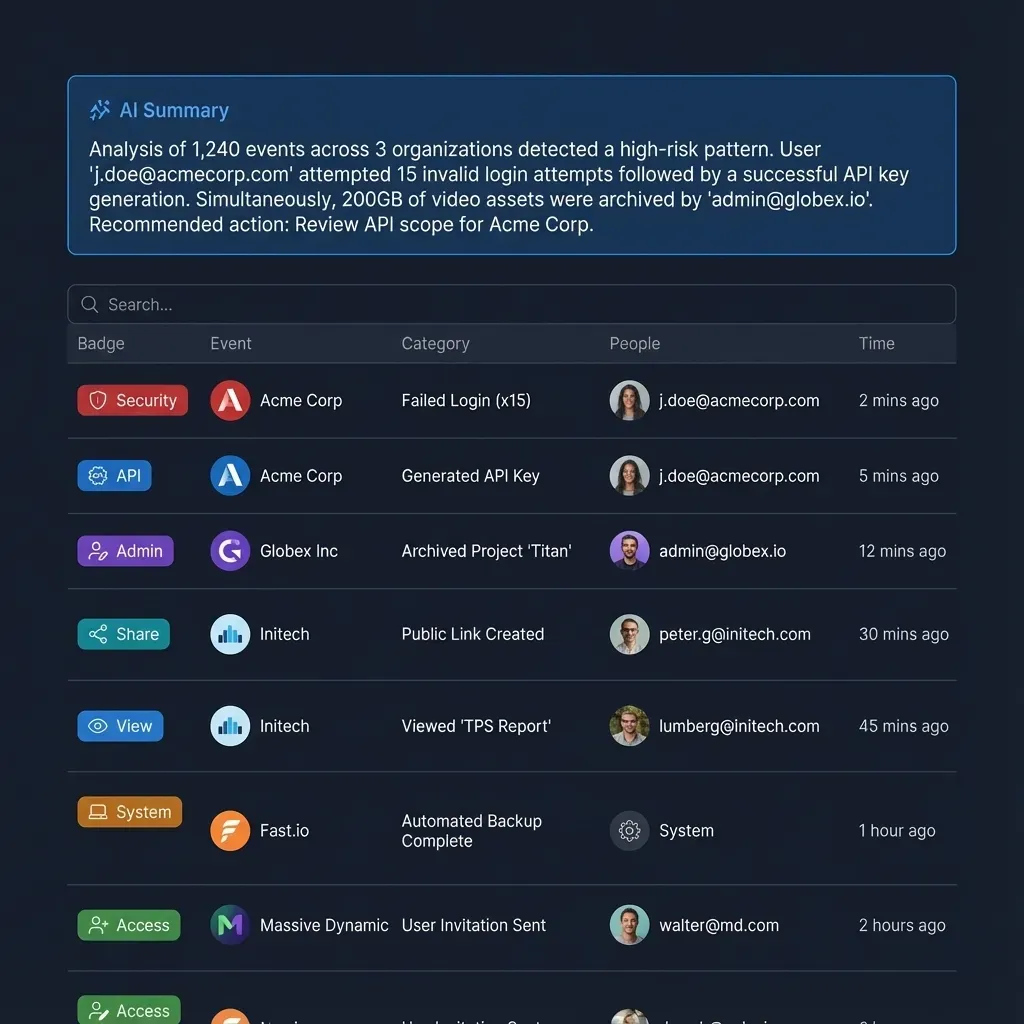
Fastio fills this gap for OpenClaw workflows. The Fastio remote MCP server lets your agent upload query results to a shared workspace where they are indexed once Intelligence Mode is enabled. An agent can run a SQL query with the SQL Toolkit, save the results as a CSV, upload them to a Fastio workspace, and a team member can then ask "what were Q2 revenue trends?" in the Intelligence Mode chat to get an answer grounded in the actual data file.
Fastio exposes its workspace through an MCP server with a consolidated toolset covering file uploads, workspace management, RAG-powered AI chat, and audit logs. Agents that use the MCP protocol can connect directly via streamable HTTP.
Pricing: 14-day Business Trial. Paid plans start at $9.99/mo for Starter with usage-based credits (see pricing).
Choosing the right skill depends on your stack:
- PostgreSQL, MySQL, or SQLite with safety requirements: Start with the SQL Toolkit
- File-based analytics on CSV, Parquet, or JSON: Use DuckDB CLI
- Microsoft SQL Server: Add the SQL Server Toolkit for migrations and diagnostics
- Remote databases behind SSH: Add db-query for automatic tunnel management
- Non-technical analysts who need reports: Data Analyst for visualizations without SQL knowledge
- Team collaboration on outputs: Fastio for persistent, searchable storage
Most effective setups combine two or three skills. A common pattern is SQL Toolkit for live database queries, DuckDB CLI for file exports, and Fastio for storing and sharing results with the wider team.
Sources
References used to verify factual claims in this guide.
-
Spider 2.0 benchmark shows text-to-SQL accuracy drops to 6-21% on enterprise schemas, down from 85-92% on Spider 1.0
-
AIMultiple 2026 benchmark of 34 LLMs found top-performing models produce incorrect SQL on more than 20% of complex queries
-
SQL Server Toolkit has 2,774 downloads and a 4.6-star rating from 244 reviews on AIClawSkills
Frequently Asked Questions
What is the best OpenClaw skill for SQL queries?
The SQL Toolkit by gitgoodordietrying supports SQLite, PostgreSQL, and MySQL with parameterized queries, read-only mode, and EXPLAIN analysis. For Microsoft SQL Server specifically, the SQL Server Toolkit by sqlservr covers migrations, diagnostics, and backup operations.
Can OpenClaw generate SQL from natural language?
Yes. The SQL Toolkit inspects your database schema before writing queries, resolving table names, join paths, and column types from the actual structure. This schema-first approach produces more accurate SQL than generic LLM generation, especially on complex schemas with non-obvious column names.
Is OpenClaw SQL Toolkit safe for production databases?
The SQL Toolkit includes read-only mode, blocked table lists, mandatory WHERE clauses on updates, row limits of 1,000 by default, and query timeouts of 30 seconds. Combined with a dedicated database user that has minimal permissions and SSL for non-localhost connections, it provides multiple layers of protection.
Which databases does OpenClaw support?
Through different skills, OpenClaw covers SQLite, PostgreSQL, and MySQL via the SQL Toolkit, Microsoft SQL Server via the SQL Server Toolkit, and file-based formats like CSV, Parquet, and JSON via DuckDB CLI. The db-query skill adds SSH tunnel management for querying remote databases behind bastion hosts.
Do I need SQL knowledge to use OpenClaw database skills?
Not necessarily. The Data Analyst skill accepts plain English descriptions and generates formatted reports. The SQL Toolkit also translates natural language to SQL. That said, understanding SQL helps you verify generated queries before running them on production data, especially for complex joins and aggregations.
Related Resources

Store Your SQL Outputs Where Your Team Can Search Them
Connect your OpenClaw agent to a shared Fastio workspace. Enable Intelligence on the workspace so teammates can search query results and ask questions.