12 Best AI Productivity Tools in 2026
Knowledge workers spend 60% of their day on coordination instead of skilled work. These 12 AI productivity tools cover every stage of a workday, from morning planning through deep work to end-of-day review. Each one earned its spot by solving a specific problem that costs real hours every week.


What separates useful AI tools from noise
The average knowledge worker spends 60% of their time on coordination, status updates, and searching for information. That leaves roughly five hours of focused output in an eight-hour day. AI productivity software promises to reclaim some of those lost hours, but most people end up paying for five different subscriptions when one or two would cover their needs.
We evaluated over 30 AI productivity apps and picked 12 that solve distinct problems across a full workday. Our criteria:
- Time saved per week: Does this tool measurably reduce busywork?
- Learning curve: Can you get value in the first week, not the first month?
- Integration depth: Does it work with your existing tools or force a migration?
- Pricing honesty: Free tiers that actually work, transparent paid plans
- AI quality: Does the AI component add real value, or is it a checkbox feature?
The tools below are organized by workflow stage: planning, deep work, communication, and automation. Skip to whatever bottleneck is costing you the most time.
Related guides
- Best AI Tools for Work in 2026, Sorted by What You Actually DoSeventy-eight percent of knowledge workers who use AI at work bring their own tools, creating fragmented workflows and...
- Best AI Extensions for Chrome in 2026, Picked by Use CaseAI Chrome extensions let you add writing assistance, research tools, page summarization, and workflow automation to...
- Best Tools for LangChain Development in 2026The LangChain ecosystem has expanded beyond the core library to include specialized tools for observability,...
- Best Generative AI Tools in 2026, Ranked by Output TypeThe generative AI market hit $69.85 billion in 2026, nearly doubling year over year, yet most users still default to...
- Best Free AI Tools in 2026: What's Actually Free and Worth UsingMost free AI tool lists include 14-day trials that quietly start charging you. This guide covers 11 tools that are free...
- Best AI for Game Development in 2026: 9 Tools by Dev StageHalf of game studios now use AI in production, yet most "best AI for gaming" articles lump game-playing bots in with...
More on this subject: AI Tool Directories and Comparisons (231 guides)
Morning planning and scheduling
The first hour of your day sets the tone. These three tools handle scheduling, task prioritization, and calendar protection so you can start working instead of planning work.
A practical test: open your calendar right now and count the meetings. If more than half your morning is blocked, a scheduling tool like Motion or Reclaim will protect the gaps. If your problem is scattered tasks rather than meeting overload, Todoist turns a messy brain dump into a prioritized list in under a minute. Pick based on where the time actually goes, not which tool looks best in a demo.
1. Motion
AI-powered calendar and project manager that automatically schedules your tasks around meetings and deadlines.
Strengths:
- Auto-schedules tasks into open calendar blocks based on priority and due dates
- Reschedules your entire plan when meetings shift or new work arrives
- Combines calendar, projects, meeting notes, and docs in one app
Limitations:
- Motion has no free plan (7-day trial only)
- Works best with a packed calendar; sparse schedules see less benefit
Best for: Individuals and small teams who lose hours to manual calendar shuffling.
Pricing: Pro at $19/month ($12.73/month annual). Business at $29/seat/month.
2. Todoist
Task manager with AI-powered voice capture and smart scheduling that turns scattered thoughts into organized to-do lists.
Strengths:
- Ramble feature converts unstructured voice notes into prioritized tasks with deadlines and assignees
- Clean, fast interface across every platform including web, desktop, iOS, and Android
- AI Assist breaks large projects into actionable subtasks automatically
Limitations:
- Calendar integration still maturing compared to dedicated scheduling tools
- AI features limited on the free plan (10 Ramble sessions per month)
Best for: Anyone who thinks in lists and wants the fast path from idea to organized task.
Pricing: Free plan available. Pro at $5/month ($4/month annual).
3. Reclaim AI
Calendar optimization tool that automatically blocks time for habits, focus work, and breaks around your existing meetings.
Strengths:
- Protects focus time by creating smart calendar holds that flex around meetings
- Finds optimal meeting times across all attendees' calendars
- Tracks time distribution across meetings, tasks, and personal commitments
Limitations:
- Google Calendar only on the free plan
- Scheduling intelligence improves over weeks, not immediately
Best for: People whose calendars are mostly meetings and who need guaranteed deep work blocks.
Pricing: Free Lite plan forever. Starter at $8/user/month, Business at $12/user/month.
Deep work: writing, research, and knowledge
Once your day is planned, you need tools that accelerate the actual work. These four cover everything from drafting documents to researching competitors to managing your team's knowledge base.
The constraint worth knowing: most AI writing tools produce generic output unless you feed them enough context. Claude handles this with a 200K-token context window, so you can paste an entire report and ask specific questions about it. Notion AI solves it differently by searching your existing workspace content. The common failure mode is treating these tools like magic wands instead of giving them the raw material they need to produce useful output.

4. Claude
AI assistant from Anthropic that handles writing, analysis, coding, and document review with long-context understanding.
Strengths:
- Processes documents up to 200,000 tokens for reviewing contracts, reports, or codebases in full
- Claude Code turns your desktop into an AI development environment with file access and a built-in terminal
- Cowork feature chains multi-step tasks within a single conversation
Limitations:
- Free tier has usage caps that heavy users hit within days
- No built-in project management integrations (works through copy-paste, API, or MCP)
Best for: Knowledge workers who draft long documents, analyze data, or write code daily.
Pricing: Free tier available. Pro at $20/month, Team at $30/user/month.
5. Perplexity
AI research engine that answers questions with cited sources from across the web, replacing the search-tab-read-repeat cycle.
Strengths:
- Pulls from dozens of sources and provides inline citations for every claim
- Deep Research mode generates full reports with structured output and presentations
- Personal Computer feature brings always-on desktop AI for research and file organization
Limitations:
- Pro Search quality varies by topic, stronger on technology than niche subjects
- Enterprise features require a separate plan with custom pricing
Best for: Researchers, analysts, and anyone who spends more than 30 minutes daily searching for answers.
Pricing: Free tier with limited searches. Pro at $20/month.
6. Grammarly
AI writing assistant that checks grammar, adjusts tone, and generates drafts directly inside your browser and desktop apps.
Strengths:
- Works inside Gmail, Google Docs, Slack, and most text fields without app-switching
- Smart Drafts generates complete first drafts from brief prompts with built-in grammar and tone checks
- Team features maintain brand voice consistency across contributors
Limitations:
- Premium features like tone detection and full rewrites require a paid plan
- Can be overly aggressive with suggestions on technical or informal writing
Best for: Professionals who write client-facing emails, reports, or marketing copy daily.
Pricing: Free plan covers basic grammar. Premium from $12/month.
7. Notion AI
Document and knowledge management platform with built-in AI that searches, summarizes, and creates content across your entire workspace.
Strengths:
- Ask Notion searches across pages, wikis, databases, and connected apps like Google Drive and Slack
- Custom Agents automate multi-step workflows on schedules or triggers
- Serves as docs, wiki, project tracker, and database in one tool
Limitations:
- Full AI features bundled with Business plan ($20/user/month); lower plans need add-on credits
- Performance slows on large workspaces with thousands of pages
Best for: Teams that want docs, wikis, and project management in a single searchable platform.
Pricing: Free plan available. Plus at $10/user/month. Business at $20/user/month with AI included.
Communication and meetings
The average knowledge worker spends over 15 hours per week in meetings. These tools cut the time you spend reading email and reviewing meeting recordings so you can act on decisions faster.
Here is a realistic before-and-after: without Otter AI, you spend 20 minutes after each meeting writing up notes and action items. With it, you review a generated summary in 3 minutes and forward the action items directly. Over five meetings a day, that is roughly 90 minutes reclaimed. The tradeoff is trusting automated transcription with sensitive conversations, so check your company's data handling policies before connecting these tools to client calls.
8. Superhuman
AI-native email client that drafts replies, summarizes threads, and automatically categorizes incoming messages.
Strengths:
- Auto Drafts writes follow-up emails in your voice without any prompting
- Thread summaries collapse long email chains into brief overviews
- Keyboard-first design lets power users process email at roughly twice normal speed
Limitations:
- Premium pricing with no free plan
- Gmail and Outlook only, no support for other email providers
Best for: Sales teams, executives, and anyone processing 100+ emails per day.
Pricing: Superhuman has no free plan. Starts at $30/month.
9. Otter AI
Meeting transcription tool that joins your calls, writes notes, and lets you search across past conversations.
Strengths:
- Auto-joins Zoom, Teams, and Google Meet calls to capture transcripts with action items
- AI Chat searches across all your meetings and connected apps for follow-up questions
- Speaker identification works well even in large group calls
Limitations:
- Pro plan dropped from 6,000 to 1,200 minutes per month
- Sales features like OtterPilot are locked behind Enterprise pricing
Best for: Managers and project leads who attend 4+ meetings daily and need searchable records.
Pricing: Free with 300 minutes/month. Pro at $8.33/user/month (annual billing).


Give your AI tools a shared workspace
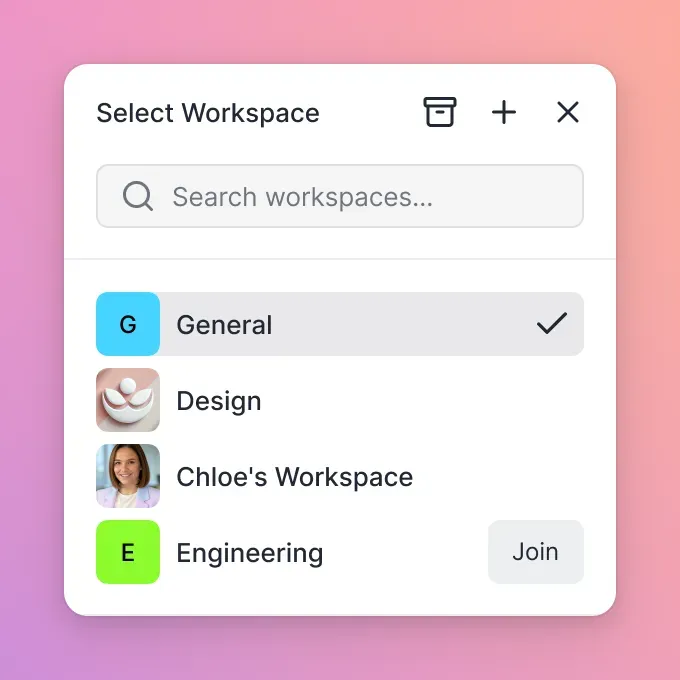
Shared workspace with built-in intelligence once enabled, MCP access for AI agents, and semantic search across all your files.
Automation and system-level tools
These tools work in the background or at the OS level to connect your apps, reduce context-switching, and give AI agents a place to store their output.
The distinction matters here: Zapier connects your existing apps through triggers and actions, Raycast puts everything behind a single keyboard shortcut on your Mac, and Fastio gives AI agents persistent storage they can read and write to through an MCP server. If you are building workflows where an AI agent generates content that a human later reviews, you need all three layers: automation to trigger the workflow, a launcher to access it quickly, and shared storage so nothing gets lost between steps.
10. Zapier
Workflow automation platform that connects 9,000+ apps through no-code triggers and AI-powered agents.
Strengths:
- Zapier Agents act as autonomous AI teammates that take multi-step actions across your connected apps
- 9,000+ integrations cover nearly every SaaS tool your team already uses
- Built-in guardrails scan for prompt injection, PII exposure, and toxic content
Limitations:
- Complex automations hit task limits quickly on lower-tier plans
- Agent capabilities require careful prompt design to avoid unexpected actions
Best for: Teams that want to automate handoffs between apps without writing code.
Pricing: Free with 100 tasks/month. Professional from $19.99/month.
11. Raycast
macOS launcher with built-in AI that puts multiple language models behind a single keyboard shortcut.
Strengths:
- Access OpenAI, Anthropic, Google, and Perplexity models from one interface without switching apps
- 1,300+ extensions for GitHub, Jira, Slack, Linear, and other developer tools
- Compact mode fits 40% more items on screen with pinned commands for quick access
Limitations:
- macOS only, no Windows or Linux version
- AI features require the Pro subscription
Best for: Developers and power users who want AI, search, and app shortcuts behind one keyboard command.
Pricing: Free for core features. Pro at $8/month for unlimited AI.
12. Fastio
Cloud workspace platform that gives teams and AI agents shared storage with built-in intelligence and document processing.
Strengths:
- Intelligence indexes uploaded files for semantic search and AI chat with citations once enabled for the workspace
- MCP server with a consolidated MCP toolset lets AI agents read, write, and query files programmatically
- Metadata Views extract structured data from PDFs, images, and documents without manual templates
Limitations:
- Newer platform with a smaller user base than Google Drive or Dropbox
- Agent-focused features may not fit teams that only need traditional file storage
Best for: Teams working with AI agents who need persistent, shared storage with built-in search and document intelligence.
Pricing: Plans start at $9.99/month with a 14-day Business Trial (card required; see pricing).
How to pick the right stack for your role
You don't need all 12 of these tools. Most people get the biggest return from two or three that target their specific bottleneck.
If your day is mostly meetings and email, start with Otter AI and Superhuman. The combination gives you searchable meeting records and faster email processing, freeing up time for the work those meetings generate.
If you write and research for a living, Claude and Perplexity handle the heavy lifting. Add Grammarly if your writing is client-facing and needs consistent polish.
If scheduling is the problem, Reclaim AI protects focus time on your calendar while Todoist keeps your task list clean. Motion works best if you want scheduling and project management combined.
For teams building with AI agents, Fastio provides the shared workspace layer where agents store, search, and hand off files to humans. Connect it to Zapier for cross-app automation without writing code.
The real test: track how you spend your time for one week, find the biggest time sink, and pick the tool that addresses it directly. Skip anything that does not solve a problem you actually have.
Sources
References used to verify factual claims in this guide.
-
Knowledge workers spend 60% of their time on work about work
-
Knowledge workers produce 5 hours and 12 minutes of focused output in an 8-hour day
-
Knowledge workers spend over 15 hours per week in meetings
Frequently Asked Questions
What AI tools boost productivity the most?
The tools that save the most time target your biggest bottleneck. For most knowledge workers, meeting transcription (Otter AI), email management (Superhuman), and calendar optimization (Reclaim AI or Motion) deliver the fast return. If your work is research-heavy, Perplexity and Claude can cut hours off weekly research cycles. Match the tool to the problem rather than adopting the most popular option.
Are AI productivity tools worth the cost?
For most professionals, yes. The average knowledge worker loses roughly three hours per day to coordination, status updates, and searching for information. Even a single tool that reclaims one hour daily pays for itself many times over. Start with free tiers to test whether a tool fits your workflow before committing to a paid plan.
What is the best free AI productivity tool?
It depends on what slows you down. Todoist offers a solid free task manager with basic AI features. Reclaim AI has a free-forever calendar optimization plan. Perplexity provides free research searches with citations. For file management and AI agent workflows, Fastio offers a 14-day Business Trial with built-in intelligence once enabled and MCP access. Claude's free tier covers basic writing and analysis tasks.
How can AI help with time management?
AI handles time management through scheduling and protection. Tools like Motion and Reclaim AI automatically schedule tasks and protect focus blocks based on your priorities and deadlines. Voice-to-task features like Todoist Ramble let you capture tasks in seconds instead of typing them out. The result is less time planning your day and more time doing the work.
Can AI productivity tools replace a human assistant?
Not entirely, but they cover significant ground. Superhuman drafts emails in your voice, Otter AI takes meeting notes, and Zapier Agents handle multi-step workflows across your apps. These tools automate the mechanical parts of knowledge work. Strategic decisions, relationship management, and creative problem-solving still require human judgment.
Related Resources

Give your AI tools a shared workspace
Shared workspace with built-in intelligence once enabled, MCP access for AI agents, and semantic search across all your files.