Best AI Tools for Supply Chain Management in 2026
Only 23% of supply chain organizations have a formal AI strategy, even as the market crossed $19.8 billion in 2026. This guide ranks the best AI supply chain tools by function, covering demand forecasting, inventory optimization, logistics routing, supplier risk monitoring, and cross-organization document collaboration, with options for both enterprise and mid-market teams.


Why This List Exists
The AI supply chain market hit $19.8 billion in 2026, according to Precedence Research, yet Gartner found that only 23% of supply chain organizations have a formal AI strategy. That gap between spending and strategy means most teams are buying tools without a clear framework for evaluation.
Most "best of" lists lean heavily toward enterprise platforms like Blue Yonder and o9 Solutions. Those are strong products, but they skip over mid-market options, AI-native startups, and a category that barely existed two years ago: tools that help teams collaborate on supply chain data and reports across organizational boundaries.
This guide organizes tools by function so you can find what matches your actual problem. Each entry includes what it does well, where it falls short, and who should use it.
How we evaluated:
- Forecasting accuracy improvements (documented case studies, not vendor claims)
- Time to value for mid-market companies (weeks, not quarters)
- Integration depth with existing ERP and TMS systems
- Whether the tool handles cross-organization data sharing
- Pricing transparency and availability of self-serve plans
Related guides
- Best AI Tools for Project Management in 2026Most organizations have started experimenting with AI for project management, but fewer than a quarter use it...
- Best AI Note Taking Apps in 2026: 10 Tools We Actually TestedAI note taking apps now go far beyond basic transcription. The best ones identify speakers, extract action items, and...
- 7 Best Grammarly Alternatives for 2026Grammarly Pro costs $144 per year, but several alternatives match or beat its grammar accuracy at a fraction of the...
- Slack AI Review 2026: What It Does, What It Costs, and Where It Falls ShortSlack AI posts sub-1% hallucination rates on summarization tasks, beating Microsoft Copilot at 3.2% and Google Gemini...
- Beautiful.ai Review 2026: Smart Slides, Pricing, and Honest VerdictBeautiful.ai scores 4.7 on G2 but 2.9 on Trustpilot, and that 1.8-point gap tells you exactly who this tool works for....
- Fireflies AI Review 2026: Features, Pricing, and Honest VerdictFireflies.ai hit a $1 billion valuation in mid-2025 on the strength of 500,000+ organizations and over 2 billion...
More on this subject: AI Tool Directories and Comparisons (231 guides)
Demand Forecasting and Planning
Demand forecasting is where supply chain AI delivers the clearest ROI. McKinsey found that AI-driven forecasting reduces errors by 20 to 50 percent, which translates to fewer stockouts and less dead inventory. The challenge is that better forecasts only help if the right people can act on them, which is why teams increasingly pair planning tools with shared workspaces where analysts and suppliers can access the same data.
1. Kinaxis (Maestro AI)
Kinaxis runs concurrent planning, which means it models supply, demand, and capacity simultaneously instead of sequentially. The Maestro AI layer adds agentic capabilities: it can test scenarios, balance supply against demand, and flag risks before a planner sees them.
Best for: Manufacturers and CPG companies with 18+ month planning horizons and seasonal demand swings.
Strengths: What-if simulation is high quality. Planners stay in control while AI handles the combinatorial work.
Limitations: Requires clean, integrated data. The platform is cloud-native but not cheap.
2. o9 Solutions (Digital Brain)
o9 calls its architecture a "Digital Brain," which sounds like marketing until you see it handle integrated business planning across demand, supply, and revenue in a single model. It connects AI/ML with knowledge-graph technology to surface relationships between variables that siloed tools miss.
Best for: Capital goods manufacturers and configure-to-order businesses where demand signals are noisy.
Strengths: Deep integration of planning domains. Strong at connecting financial planning with operational planning.
Limitations: Enterprise-focused pricing. Implementation timelines can stretch if data foundations are weak.
3. Flowlity
Flowlity targets the mid-market gap that Kinaxis and o9 leave open. It combines probabilistic demand forecasting with inventory optimization and plugs into major ERP systems through pre-built connectors. Deployments typically take weeks, not months.
Best for: Mid-market manufacturers and distributors who need AI forecasting without a six-figure implementation.
Strengths: Fast time to value. Users report 20 to 40% inventory reductions. The interface is approachable for planners who are not data scientists.
Limitations: Less suited for highly complex multi-echelon networks. Feature depth does not match the enterprise leaders.

Inventory Optimization and Procurement
Inventory is where forecasting meets reality. These tools close the gap between what you predicted and what you actually stock.
4. ToolsGroup (SO99+)
ToolsGroup has been doing inventory optimization longer than most companies on this list have existed. Its Service Optimizer 99+ uses ML to automate demand forecasting and replenishment across large SKU portfolios. The "99+" refers to service-level targeting: the system optimizes stock to hit your desired fill rate, not just a blanket safety stock rule.
Best for: Mid-market enterprises and distributors managing thousands of SKUs where working capital is tight.
Strengths: Specialized depth in inventory. Agents continuously align stock levels with market and supplier conditions. Strong track record with distributors.
Limitations: Inventory-focused. If you need end-to-end supply chain planning, you will need to pair it with other tools.
5. Coupa (with LLamasoft)
Coupa acquired LLamasoft for its supply chain design and modeling capabilities, then layered in spend analytics. The result is a platform that can model production constraints, compare sourcing scenarios, and optimize across multiple factories.
Onsemi reported 85% faster decision-making and 10 to 15% capital efficiency improvement after deploying the platform.
Best for: Multi-factory operations that need to standardize planning across locations.
Strengths: Combines procurement spend analysis with supply chain modeling. Strong scenario comparison.
Limitations: The LLamasoft integration is still evolving. Best suited for companies already in the Coupa ecosystem.
6. Pactum AI
Pactum takes a different approach: it deploys autonomous negotiation agents that handle supplier terms, pricing, SLAs, and contracts. Instead of replacing your procurement team, it negotiates with the long tail of suppliers that your team does not have time to manage.
Best for: Companies with hundreds of undermanaged supplier relationships.
Strengths: Frees procurement teams to focus on strategic suppliers. Handles the 80% of suppliers that get 20% of the attention.
Limitations: Narrow scope. This is a negotiation tool, not a full procurement suite.


Share supply chain data across partners without the folder chaos
Fastio gives supply chain teams shared workspaces with granular permissions, AI-powered document search, and structured data extraction. generous storage, no vendor lock-in.
Logistics and Route Optimization
Logistics AI has moved past basic route planning. The best tools now handle real-time rerouting, carrier coordination, and last-mile optimization. For teams that need to extract structured data from shipping documents at scale, document data extraction can pull invoice line items and customs fields into queryable formats without manual entry.
7. FourKites (Loft Platform)
FourKites launched Loft in early 2026, expanding from visibility into full AI orchestration. The platform tracks over 3.2 million shipments daily across road, rail, ocean, and air. Its Sophie AI agent converts natural-language operational requirements into production-ready workflows, which cuts deployment from months to days.
Best for: Global supply chains that need real-time visibility with actionable automation layered on top.
Strengths: Unmatched shipment tracking scale. The AI Inventory Twin connects planning with execution in real time. Integration across ERP, TMS, WMS, and CRM systems.
Limitations: Enterprise-priced. Smaller shippers may not need this level of infrastructure.
8. Pando
Pando handles freight booking, routing, load matching, and execution tracking in a single platform. It connects shippers, carriers, and suppliers, reducing the manual coordination that eats up logistics teams' days. A packaging manufacturer using Pando reported a 4% reduction in freight spend and an 80% team productivity boost.
Best for: Global manufacturers with fragmented freight operations across multiple carriers and modes.
Strengths: Multimodal visibility. Strong at reducing coordination overhead between trading partners.
Limitations: Still building out its AI agent capabilities. Less proven than the enterprise leaders for complex global networks.
9. Shipsy
Shipsy focuses on last-mile delivery and food logistics, where timing is everything. It provides real-time visibility dashboards, predictive analytics, and dynamic route optimization. Kout Food Group cut average delivery time by 20% after deploying it.
Best for: Last-mile delivery operations, particularly in food service and e-commerce.
Strengths: Purpose-built for last-mile. Rider scheduling and dynamic routing handle the chaos of urban delivery.
Limitations: Not designed for upstream supply chain planning. Best as a complement to broader tools.
How to Evaluate Supplier Risk and Document Automation Tools
Disruption management is where supply chain AI earned its reputation during and after the pandemic. These tools monitor supplier health, geopolitical risk, and the documents that flow between trading partners.
10. Interos
Interos maps supplier networks down to sub-tier relationships and monitors them for risk signals, including financial distress, regulatory changes, ESG violations, and geopolitical events. It scans millions of data points to surface risks before they cascade.
Best for: Organizations with complex, multi-tier supply chains where a Tier 3 supplier failure can halt production.
Strengths: Sub-tier visibility is a genuine differentiator. Continuous monitoring beats periodic audits.
Limitations: Risk monitoring is the core value. It does not handle procurement or logistics execution.
11. LevaData
LevaData analyzes marketplace data, supply risk signals, and price trends to support strategic sourcing decisions. A global manufacturer realized $14 million in cost savings by using it to benchmark and optimize non-strategic parts sourcing.
Best for: Procurement teams sourcing commodity and non-strategic parts at scale.
Strengths: Price trend prediction is strong. Cost benchmarking gives buyers hard data for negotiations.
Limitations: Focused on sourcing intelligence. Not a full source-to-pay suite.
12. Raft
Raft automates supply chain document workflows: bills of lading, proof of delivery, RFQs, customs declarations, and invoices. Navia Freight achieved a 75% automation rate and saved 3,000+ minutes monthly. For freight forwarders and customs brokers drowning in paperwork, Raft handles the document layer so teams can focus on exceptions.
Best for: Freight forwarding and customs brokerage operations with high document volumes.
Strengths: Handles the messy reality of logistics documents, which arrive in inconsistent formats from dozens of partners.
Limitations: Specialized for logistics documents. Not a general-purpose document management platform.
Cross-Organization Collaboration on Supply Chain Data
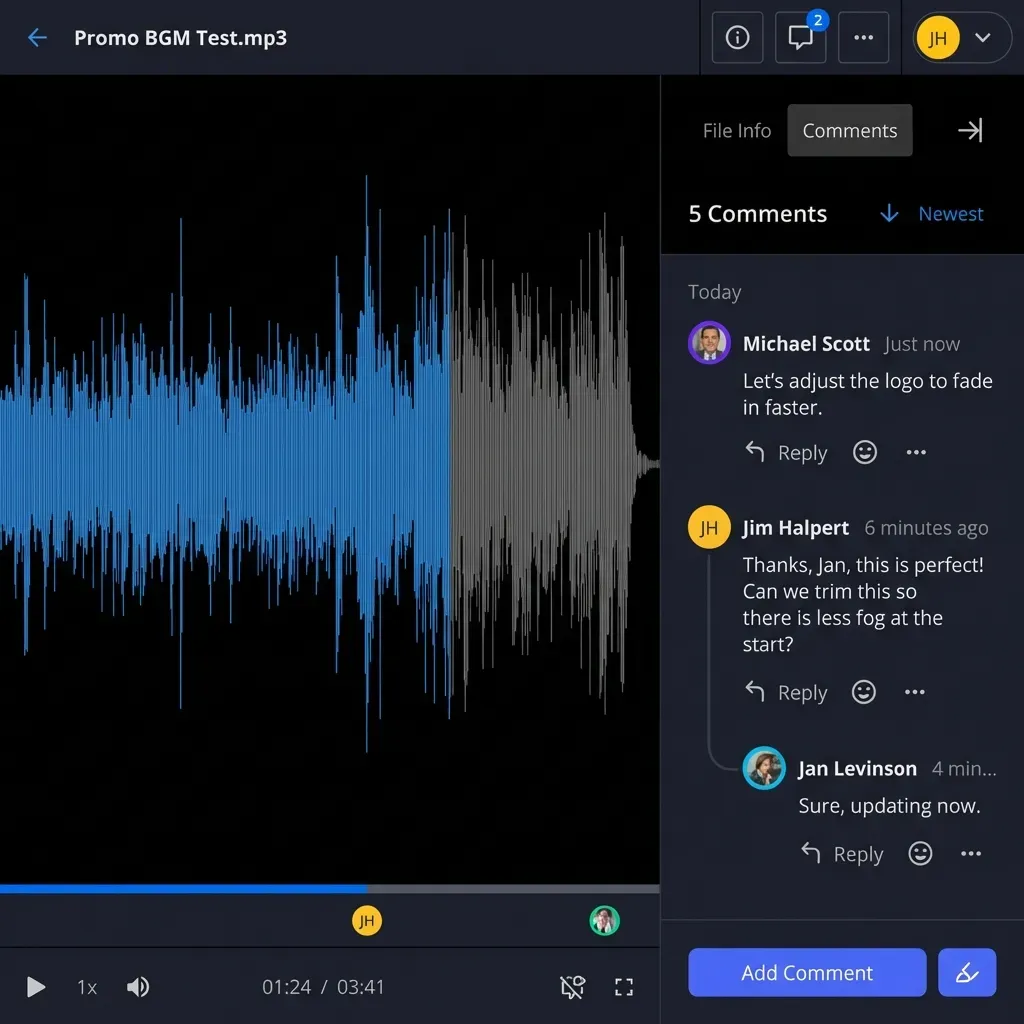
Here is the gap most "best AI tools" articles miss: supply chain teams do not just need better algorithms. They need better ways to share forecasts, audit results, compliance documents, and reports across organizational boundaries. Your demand planner's insights are useless if they sit in a folder your supplier cannot access.
EY's research on Collaborative Enterprise Intelligence highlights that organizations are moving toward jointly training and applying AI models across supply chain networks, but the practical bottleneck is often simpler: getting the right document to the right partner with the right permissions.
13. Fastio
Fastio is a workspace platform built for teams that span organizations. For supply chain use cases, it addresses the collaboration layer that sits between your planning tools and your trading partners.
What it does for supply chain teams:
- Shared workspaces with granular permissions at the org, workspace, folder, and file level, so a supplier sees only what they should
- Branded Send, Receive, and Exchange shares for structured document handoffs between buyers and suppliers
- Intelligence Mode auto-indexes uploaded files for semantic search and AI chat, so teams can ask questions about contracts, specs, and audit reports without digging through folders
- Metadata Views extract structured data from supply chain documents: pull invoice line items, contract dates, or compliance fields into a sortable spreadsheet without manual data entry
- Full audit trails and version history for compliance-heavy supply chains
- MCP server with a consolidated MCP toolset, so AI agents in your planning stack can read, write, and query supply chain documents programmatically
Best for: Teams that share supply chain documents, reports, and data across multiple organizations and need both human and AI access to those files.
Strengths: The 14-day Business Trial makes it easy to pilot. Intelligence Mode means uploaded documents are immediately searchable once enabled. Ownership transfer lets a consulting team or agent build a workspace and hand it off to the client.
Limitations: Fastio is a collaboration and intelligence layer, not a planning or logistics engine. It complements the tools above rather than replacing them.
Other collaboration options include dedicated supply chain portals within SAP Ariba or Oracle SCM Cloud, though these tend to lock you into a single vendor's ecosystem. For teams that work with partners across different systems, a vendor-neutral workspace avoids that constraint.

How to Choose the Right Tool for Your Supply Chain
The right tool depends on where your supply chain bleeds the most time and money. Here is a quick decision framework:
If demand variability is your biggest cost driver, start with Kinaxis, o9, or Flowlity. The enterprise platforms justify their cost when planning complexity is high. Flowlity is the fast path for mid-market teams.
If inventory carrying costs are out of control, ToolsGroup or Coupa give you the most direct path to reducing working capital tied up in stock.
If logistics coordination eats your team's day, FourKites, Pando, or Shipsy can automate the tracking and routing work that consumes hours of manual effort.
If supplier risk keeps surprising you, Interos and LevaData give you visibility into the parts of your supply network you cannot see today.
If document chaos between partners is the bottleneck, Raft handles logistics-specific documents, while Fastio provides a vendor-neutral workspace for sharing and querying any supply chain document across organizations.
Most supply chain teams will end up using two or three tools from different categories. The question is not "which one tool should we buy?" but "which combination covers our specific gaps?" Start with the category where you are losing the most money, prove value there, and expand.
Sources
References used to verify factual claims in this guide.
-
AI supply chain market hit $19.8 billion in 2026 Only 23% of supply chain organizations have a formal AI strategy 57% of supply chain companies have integrated AI into operations
-
AI-driven forecasting reduces errors by 20 to 50 percent
-
DHL achieved 7% direct savings through improved vehicle usage Onsemi achieved 85% faster decision-making and 10-15% capital efficiency improvement Navia Freight achieved 75% automation rate and 3,000+ minutes saved monthly Kout Food Group achieved 20% reduction in average delivery time Packaging manufacturer achieved 4% freight spend reduction and 80% productivity boost with Pando LevaData helped a global manufacturer realize $14 million in cost savings
-
FourKites tracks over 3.2 million shipments daily
Frequently Asked Questions
How is AI used in supply chain management?
AI handles demand forecasting (predicting what customers will buy), inventory optimization (deciding how much to stock and where), logistics routing (finding the cheapest and fast shipping paths), supplier risk monitoring (detecting disruptions before they hit), and document automation (processing invoices, customs forms, and compliance paperwork). The biggest shift in 2026 is toward agentic AI, where systems can autonomously reroute shipments or adjust orders without waiting for human approval.
What is the best AI tool for logistics?
FourKites is the strongest option for global logistics visibility, tracking over 3.2 million shipments daily with its Loft AI orchestration platform. For last-mile delivery, Shipsy is purpose-built for routing and scheduling. Pando works well for freight coordination across multiple carriers and modes. The best choice depends on whether your main challenge is visibility, last-mile routing, or carrier coordination.
Can AI predict supply chain disruptions?
Yes, but with caveats. Tools like Interos monitor supplier networks for financial distress, geopolitical events, and regulatory changes to flag risks early. FourKites uses real-time shipment data to detect delays as they happen. AI is better at detecting disruption signals (a supplier's credit rating dropping, a port congestion spike) than predicting black-swan events. The practical value is faster response time, not perfect foresight.
What companies use AI in their supply chain?
DHL uses Blue Yonder for logistics optimization, reporting 7% direct savings through improved vehicle usage. Onsemi uses Coupa/LLamasoft for supply chain modeling, achieving 85% faster decisions. Navia Freight automates 75% of document processing with Raft. Kout Food Group cut delivery times 20% with Shipsy. According to PwC, 57% of supply chain companies have integrated AI into operations as of 2025.
Are there affordable AI supply chain tools for mid-market companies?
Flowlity is designed specifically for mid-market manufacturers and distributors, with deployments that take weeks and pre-built ERP connectors. ToolsGroup serves mid-market enterprises managing large SKU portfolios. Pactum AI handles supplier negotiations without requiring a full procurement suite. For document collaboration across supply chain partners, Fastio offers plans starting at $9.99/month with a 14-day Business Trial and built-in AI search.
What is agentic AI in supply chain?
Agentic AI refers to AI systems that can take actions autonomously, not just generate insights. In supply chain, that means an AI agent that detects a shipping delay and automatically contacts an alternative carrier, renegotiates terms, or reroutes the shipment without waiting for a human to approve each step. Kinaxis Maestro, FourKites Sophie, and C3 AI all offer agentic capabilities, though most companies are still piloting this approach rather than running it in production.
Related Resources

Share supply chain data across partners without the folder chaos
Fastio gives supply chain teams shared workspaces with granular permissions, AI-powered document search, and structured data extraction. generous storage, no vendor lock-in.