9 Best AI Customer Service Agent Platforms in 2026
AI customer service agents now resolve 55-70% of support tickets without human help. This guide compares nine platforms that go beyond scripted chatbots, rating each by autonomy level, channel coverage, and pricing transparency.


What Separates AI Agents from Support Chatbots
Most customer service chatbots follow decision trees. They match keywords to pre-written responses and hand off to a human the moment a customer goes off-script. AI customer service agent platforms work differently. They deploy autonomous agents that read ticket context, reason through problems, call APIs to check order status or process refunds, and decide whether to resolve the issue themselves or escalate.
The performance gap reflects this architectural difference. Rule-based chatbots typically deflect 10-20% of incoming tickets. Production AI agents consistently resolve 55-70% of support inquiries end-to-end, based on deployment data across thousands of implementations. Top-performing platforms report higher numbers: Intercom's Fin averages 67% across 7,000+ customers, and Ada claims up to 83% for enterprise deployments.
Gartner predicts that agentic AI will autonomously resolve 80% of common customer service issues by 2029, driving a 30% reduction in operational costs. That timeline is accelerating as platforms add tool-calling capabilities and deeper backend integrations.
This guide evaluates nine platforms based on their actual autonomous capabilities, not marketing claims about AI.
Related guides
- PolyAI Review 2026: Voice AI Agents for Customer ServicePolyAI raised $86 million in late 2025 at a $750 million valuation, making it one of the best-funded voice AI startups...
- Best Free AI Agent Tools 2026: Top 12 Platforms ComparedBuilding autonomous agents doesn't have to be expensive. The free AI agent ecosystem now offers professional frameworks...
- Best AI Agent Development Platforms for Building Production AgentsAI agent development platforms give you the frameworks, infrastructure, and tooling to build, test, and deploy...
- 7 Best Streaming Data Platforms for AI Pipelines in 2026Streaming platforms let AI systems handle data feeds in real time, from sensor telemetry to user events. Market...
- AI Agent Tools Comparison: Frameworks, Platforms & Storage SolutionsAI agent tools are platforms and frameworks that help developers build, deploy, and manage autonomous AI systems...
- Best LLM Routing Platforms for Agents in 2026LLM routing platforms distribute agent requests across multiple language models based on task complexity, cost, and...
More on this subject: AI Tool Directories and Comparisons (231 guides)
How We Evaluated These Platforms
We scored each platform across five criteria:
- Autonomy level: Can the agent take real actions (process refunds, update accounts, modify orders) or does it only generate responses from a knowledge base?
- Channel coverage: Which channels does it support natively? Chat, email, voice, SMS, social messaging?
- Integration depth: Does it connect to backend systems like Shopify, Salesforce, or your order management platform?
- Pricing transparency: Is pricing outcome-based, per-seat, or conversation-based? Can you predict your monthly bill?
- Reported resolution rate: What does the vendor claim, and how does that compare to independent benchmarks?
Platforms that demonstrate genuine multi-step reasoning and tool-calling ranked higher than those that only generate text responses from a knowledge base.
Enterprise AI Customer Service Platforms
These platforms target enterprise support teams and offer the deepest autonomous capabilities, from multi-step reasoning to policy-driven governance.
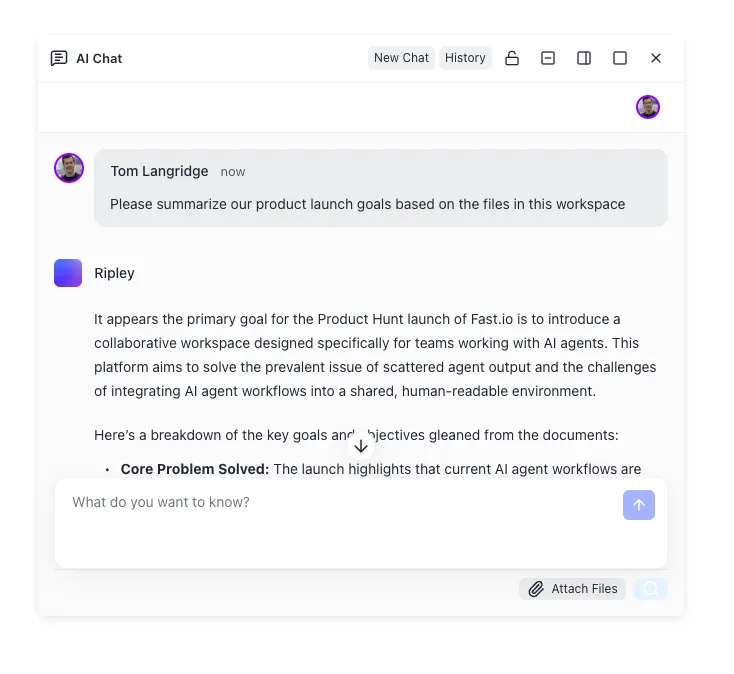
1. Intercom Fin
Intercom's AI agent resolves an average of 67% of support conversations across more than 7,000 customers, with a patented AI engine built for multi-step customer service queries.
Key strengths:
- Handles conversations across chat, email, voice, SMS, and social channels from a single agent
- Takes real actions like processing refunds, checking order status, and updating account details
- Outcome-based pricing at $0.99 per resolution means you pay only when the issue is actually solved
Limitations:
- Works best within the Intercom ecosystem, though it integrates with Zendesk and Salesforce
- Per-resolution pricing adds up quickly at high conversation volumes
Best for: Mid-market to enterprise teams that want a production-ready AI agent with minimal configuration.
Pricing: $0.99 per resolution. Fin is included with all Intercom plans.
2. Ada CX
Ada's Reasoning Engine powers AI agents that autonomously resolve up to 83% of support issues, with particular strength in high-volume ecommerce and fintech operations.
Key strengths:
- Omnichannel coverage across chat, email, voice, and social messaging from one intelligence layer
- Pre-built integrations with Shopify, Zendesk, Salesforce, and major CRM platforms
- Support teams can coach and fine-tune the agent without engineering help
Limitations:
- Enterprise pricing requires a sales conversation with no public rate card
- Designed for high-volume teams; smaller operations may not justify the investment
Best for: Enterprise ecommerce, SaaS, and fintech companies handling thousands of daily support conversations.
Pricing: Custom enterprise pricing. Contact Ada for a quote.
3. Sierra
Sierra raised $950M at a $15B valuation in May 2026, building an Agent SDK that lets engineering teams create custom AI agents with persistent memory and enterprise governance controls.
Key strengths:
- Agent SDK provides building blocks for custom agents without starting from scratch
- Agent Data Platform gives agents persistent memory across conversations, pulling from CRM and order data in real time
- Ghostwriter lets non-technical users describe an agent in natural language and deploys it automatically
Limitations:
- Enterprise-only positioning with no self-serve tier for smaller teams
- Newer platform with fewer published production case studies than Intercom or Ada
Best for: Enterprise teams with engineering resources that need custom, policy-driven agents with compliance controls.
Pricing: Custom enterprise pricing. Not publicly listed.
4. Zendesk AI
Zendesk integrates AI agents directly into its helpdesk, giving existing Zendesk customers a path to automation without switching platforms.
Key strengths:
- Native integration with Zendesk's ticket system, knowledge base, and reporting
- Hybrid conversation flows combine generative AI with scripted paths for regulated industries
- Voice AI agents (in early access) can handle phone calls end-to-end
Limitations:
- Pricing is complex: $1.50-$2.00 per automated resolution on top of per-seat costs ($55-$169/agent/month)
- AI add-on costs of $35-$50 per agent per month make the total bill hard to predict
Best for: Teams already running Zendesk that want to add AI agents without migrating to a new platform.
Pricing: $1.50 per automated resolution (committed), $2.00 pay-as-you-go. Base plans start at $55/agent/month.
5. Cognigy
Named a Leader in the Forrester Wave 2026 for Conversational AI, Cognigy specializes in voice-first AI agents for enterprise contact centers running on Genesys, Amazon Connect, or Avaya.
Key strengths:
- Native integrations with Amazon Connect, Genesys, 8x8, and Avaya contact center infrastructure
- Low-code visual builder paired with a full IDE for developers who need custom logic
- Multi-language support with real-time translation for global support operations
Limitations:
- Enterprise-focused pricing and deployment complexity put it out of reach for smaller teams
- Steeper learning curve than consumer-focused alternatives
Best for: Enterprise contact centers that run voice-heavy support on Genesys or Amazon Connect.
Pricing: Custom enterprise pricing based on interaction volume.
6. ASAPP
ASAPP deploys five purpose-built AI agents within its Customer Experience Platform, covering everything from automated conversation resolution to agent building and quality testing.
Key strengths:
- GenerativeAgent reasons through complex conversations autonomously across chat and voice
- Discovery Agent analyzes interaction patterns to identify new automation opportunities
- Simulation Agent stress-tests agent behavior against real-world edge cases before you go live
Limitations:
- Purpose-built for large enterprise contact centers, not accessible to SMBs
- Fewer public customer references and less pricing transparency than competitors
Best for: Large-scale contact center operations that need AI across the full support lifecycle, from discovery to deployment.
Pricing: Custom enterprise pricing.
Mid-Market and SMB Picks
These platforms balance AI agent capabilities with accessible pricing and faster deployment for smaller teams.
7. Freshworks Freddy AI
Freddy AI ships with 50+ pre-built agentic workflows for common support actions like refund processing, order tracking, and payment verification.
Key strengths:
- Ready-made integrations with Shopify, Stripe, PayPal, and FedEx let the agent take real actions on day one
- Deploys in minutes if your knowledge base content is prepared
- Freddy Copilot assists human agents with real-time sentiment analysis and suggested responses
Limitations:
- Advanced AI features require higher-tier Freshdesk plans
- Voice AI capabilities are less mature than Intercom or Sierra
Best for: SMBs and mid-market teams using Freshdesk that want quick-start AI automation at a reasonable price.
Pricing: Included with Freshdesk plans. Specific Freddy AI pricing varies by tier.
8. Kustomer
Kustomer combines CRM and AI agents in a single platform, using conversation-based pricing that includes AI capabilities without add-on fees.
Key strengths:
- All AI features are included in the base price, with no per-resolution or per-agent add-ons
- Native AI Voice channel handles phone conversations without third-party integrations
- Unified customer timeline shows complete interaction history across every channel
Limitations:
- Smaller integration ecosystem compared to Zendesk or Salesforce
- AI Agents for Reps and AI Agents for Leaders are still in development
Best for: Teams that want AI-native CRM with predictable, conversation-based pricing and no surprise add-on costs.
Pricing: Conversation-based pricing with unlimited users. Contact Kustomer for rates.
9. Tidio Lyro
Lyro is Tidio's AI agent designed for ecommerce and small businesses, resolving up to 67% of common customer questions by training on your existing help center content.
Key strengths:
- One-click setup that ingests your existing FAQ and help center content
- Affordable starting price at $39/month for 50 AI conversations
- Covers website chat, email, Instagram, Messenger, and WhatsApp
Limitations:
- Most plans cap at 10 human agents, limiting growth for larger teams
- Billing tracks conversations, AI interactions, and flow visitors separately, which complicates budgeting
Best for: Ecommerce stores and small businesses that want affordable AI support without enterprise complexity.
Pricing: Starts at $39/month for 50 Lyro conversations. Free trial includes 50 conversations.
Delivering Support Files Through AI Agents
When AI agents resolve support tickets, they often need to send actual files to customers: troubleshooting guides, replacement documentation, configuration exports, or updated invoices. Most platforms handle text-based responses well but lack a clean way to deliver files as part of the resolution.
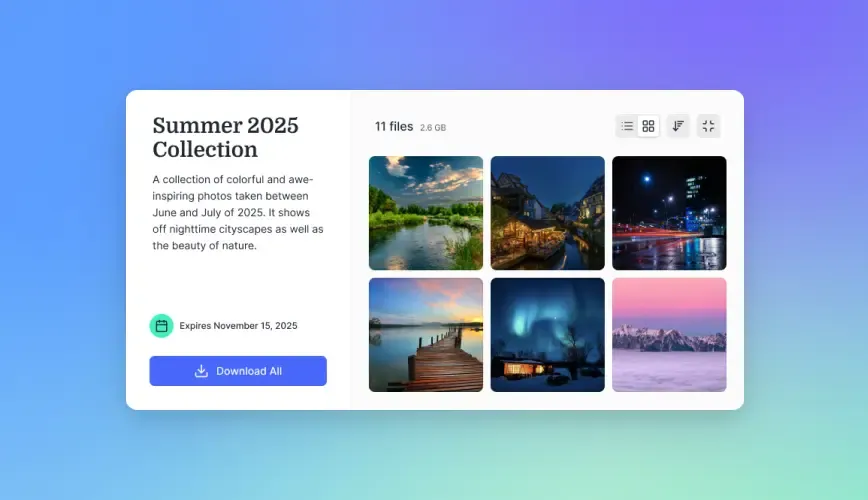
An AI agent connected to a file sharing platform can assemble support documents, create a branded share link, and include it in the chat or email response. The customer gets a dedicated download page instead of an email attachment that might get blocked by spam filters or lost in a chat thread.
Fastio fits into this workflow as the file delivery layer. Its MCP server lets agents create workspaces, upload support artifacts, and generate branded share links programmatically. Fastio offers a 14-day Business Trial, with paid plans starting at $9.99 per month at fast.io/pricing. For teams handling documentation-heavy support (software companies sharing API guides, legal teams sending contract revisions, manufacturers distributing spec sheets), connecting your AI agent platform to a workspace API turns file delivery from a manual step into an automated one.


Deliver Support Files Without the Manual Handoff
Fastio gives AI agents a workspace to store, share, and deliver support documents to customers, with generous storage and a remote MCP server your agents can call directly.
Which Platform Should You Choose?
The right choice depends on your existing stack, team size, and support volume.
If you already run Zendesk or Freshdesk, start with the AI agents built into your current platform. The migration cost of switching helpdesks usually outweighs the marginal improvement from a standalone AI agent.
For teams choosing from scratch, Intercom Fin offers the strongest balance of autonomous resolution and transparent pricing at $0.99 per resolution. Ada CX and Sierra are stronger picks for enterprise teams that need custom agents with governance controls and deeper backend integration.
Voice-heavy contact centers should evaluate Cognigy first. Its native integrations with Genesys and Amazon Connect give it an edge over platforms that add voice as an afterthought.
For ecommerce stores and small businesses working within a budget, Tidio Lyro's $39/month entry point makes production AI support accessible without a major commitment.
Whatever platform you choose, consider how your agents will handle file delivery alongside text responses. Any support workflow that involves sending documents, guides, or exports to customers benefits from a dedicated sharing layer like Fastio's workspaces.
Sources
References used to verify factual claims in this guide.
-
Agentic AI will autonomously resolve 80% of common customer service issues by 2029, driving a 30% reduction in operational costs
-
Intercom Fin averages 67% resolution rate across 7,000+ customers
-
Ada's AI agents autonomously resolve up to 83% of support issues
-
Production AI agents consistently resolve 55-70% of support inquiries end-to-end
-
Sierra raised $950M at a $15B valuation in May 2026
Frequently Asked Questions
What is the best AI for customer service?
Intercom Fin is the strongest all-around option for most teams, with a 67% average resolution rate across 7,000+ customers and transparent $0.99-per-resolution pricing. For enterprise teams needing custom agents, Ada CX and Sierra offer deeper customization. The best choice depends on your existing helpdesk, support volume, and whether you need voice channel support.
Can AI agents fully replace customer service reps?
Not yet. Production AI agents resolve 55-70% of support tickets autonomously, handling routine issues like order status checks, password resets, and refund processing. Complex issues that require judgment, empathy, or cross-system investigation still need human agents. Most platforms are designed to handle routine volume so human agents can focus on difficult cases.
How do AI customer service agents handle escalations?
AI agents typically escalate to human agents when they detect low confidence in their response, encounter a topic outside their training, or when the customer explicitly requests a human. Better platforms pass full conversation context and a summary of what the agent already tried, so the human agent does not start from zero.
What's the difference between an AI chatbot and an AI agent for support?
Chatbots follow scripted decision trees and match keywords to pre-written responses. AI agents reason through problems using language models, call APIs to take actions like processing refunds or updating accounts, and handle multi-step conversations. The practical difference shows in resolution rates: chatbots deflect 10-20% of tickets, while AI agents resolve 55-70%.
How much do AI customer service agent platforms cost?
Pricing models vary widely. Intercom Fin charges $0.99 per resolution. Zendesk AI costs $1.50-$2.00 per automated resolution plus per-seat fees. Tidio Lyro starts at $39/month for 50 conversations. Enterprise platforms like Ada, Sierra, and Cognigy use custom pricing based on interaction volume. Most platforms offer free trials to test before committing.
How long does it take to deploy an AI customer service agent?
Deployment time ranges from minutes to weeks depending on the platform. Tidio Lyro and Freshworks Freddy can go live in minutes if your knowledge base content is ready. Enterprise platforms like Sierra and Cognigy require integration work with backend systems and typically take weeks to deploy fully. Most platforms fall in between, with a basic deployment in days and full optimization over weeks.
Related Resources

Deliver Support Files Without the Manual Handoff
Fastio gives AI agents a workspace to store, share, and deliver support documents to customers, with generous storage and a remote MCP server your agents can call directly.