Top OpenClaw Workflows for AI Customer Review Response Generation
OpenClaw workflows chain review monitoring, sentiment analysis, and brand voice skills into automated response pipelines that draft personalized replies across platforms. With 68% of negative reviews going unanswered and half of consumers avoiding businesses that use templates, the gap between silence and bad responses costs real revenue. These workflow patterns close that gap by generating on-brand responses fast enough to meet same-day consumer expectations.


The 68% Response Gap Costing You Revenue
68% of negative Google reviews go completely unanswered, according to ReplyOnTheFly's 2026 response benchmark. That silence carries a direct cost: businesses that start responding see an 18% average sales uplift. And the pressure is growing. BrightLocal's 2026 consumer survey found that 19% of shoppers now expect a same-day response to their review, triple the 6% who expected that in 2025.
But responding isn't enough. The same BrightLocal data shows 50% of consumers actively avoid businesses that respond with generic templates. The challenge isn't just speed. It's generating responses that sound like a real person who understands the customer's specific concern and speaks in the brand's actual voice.
OpenClaw review response workflows solve both problems by chaining multiple skills into an automated pipeline. The typical workflow moves through five stages: monitor reviews as they appear, classify them by sentiment, draft personalized responses using a trained brand voice, hold negative reviews for human approval, and distribute responses back to the original platforms. Each stage maps to a specific ClawHub skill, and you can add or remove stages based on your review volume and risk tolerance.
The rest of this guide breaks down each workflow pattern, names the skills that power it, and shows how to connect the pipeline to persistent storage so your agent builds institutional memory from every interaction.
Related guides
- How to Automate Video Review Workflows with Manus AIWhile AI-driven automation can slash initial video editing and rough-cut assembly times by up to 80%, creative teams...
- How to Build Scalable Lead Generation Workflows in ClayWaterfall enrichment increases contact find rates by up to 80%, yet many sales teams fail to scale outbound workflows...
- Best OpenClaw Workflows for AI Customer Case Study and Success Story GenerationCase studies influence 73% of B2B purchase decisions, yet only 34% of companies produce them consistently. OpenClaw's...
- Best OpenClaw Workflows for AI Image Generation PipelinesOpenClaw 2026.4.5 turned agents into image producers. The native image_generate tool supports 10 providers out of the...
- Best OpenClaw Workflows for AI Contract Drafting and GenerationMcKinsey and Deloitte research puts AI time savings at 60 to 80 percent for routine contract work, but most of that...
- 8 OpenClaw Workflows for AI Batch Image Generation at ScaleAI platforms produce over 34 million images per day, but most batch generation guides only cover single-tool setups....
More on this subject: OpenClaw Workflows and Integrations (69 guides)
How to Route Incoming Reviews by Sentiment
Before drafting a response, you need to know a review exists. Manual monitoring across Google Business, Yelp, TripAdvisor, G2, and social platforms means reviews sit for days before anyone notices, especially negative ones that need fast attention.
An OpenClaw monitoring workflow checks review sources on a schedule. The Brave Search skill queries public review listings for your brand name and product keywords, returning an unfiltered view of what customers are saying across the web. For platforms with direct APIs, the API Gateway skill connects through managed OAuth to pull new reviews into a structured feed without building custom integrations for each platform.
Once reviews arrive, the agent classifies each one by sentiment and urgency. A five-star review praising your customer service gets routed to the fast-response track: draft a thank-you reply, flag it for optional human review, and publish within hours. A one-star review about a billing dispute takes a different path. The agent drafts a response acknowledging the issue, adds an escalation tag, and holds it for a team member to review before anything goes public.
This routing matters because consumer expectations have shifted faster than most teams realize. AI-assisted businesses respond 14 times faster than manual-only teams, according to ReplyOnTheFly's benchmark data. The monitoring workflow stores every incoming review and its classification in a workspace, creating an audit trail that the drafting step uses for context. When a similar complaint arrives months later, the agent can reference how your team handled it before rather than starting from scratch.
Brand Voice Training and Response Drafting
Generic responses are a trap. BrightLocal's 2026 data confirms that half of consumers avoid businesses that respond with templates. The fix isn't just personalization, it's consistency: every response should sound like it came from the same person who understands the brand, whether it's a five-star thank-you or a careful reply to a complaint.
OpenClaw addresses this through the Brand Voice Writer skill, which learns a brand's tone, vocabulary, and personality from example content. Feed it 15 to 20 of your best existing review responses, and it generates a voice profile the agent applies to every new draft. If your brand voice is casual and direct, responses come out that way. If it's formal and detail-oriented, the profile reflects that instead.
The Content Forge skill handles the actual drafting step. It takes the incoming review, the sentiment classification from the monitoring workflow, and the brand voice profile, then generates a response tailored to the specific feedback. A positive review about fast shipping gets a reply that thanks the customer and reinforces that speed is a priority. A negative review about a damaged product gets an empathetic acknowledgment, a clear next step, and contact information for resolution.
The human approval gate is not optional for negative reviews. Automated responses to complaints carry reputational risk, and even well-trained agents can miss nuance in sarcasm, cultural context, or legally sensitive situations. OpenClaw's multi-agent architecture supports this by separating the drafting agent from the publishing agent, with a human checkpoint between them. For positive and neutral reviews, teams often set the workflow to auto-publish after a brief hold period, keeping response times under an hour for the majority of reviews while reserving human attention for the cases that actually need it.
Why Persistent Storage Makes Review Workflows Smarter
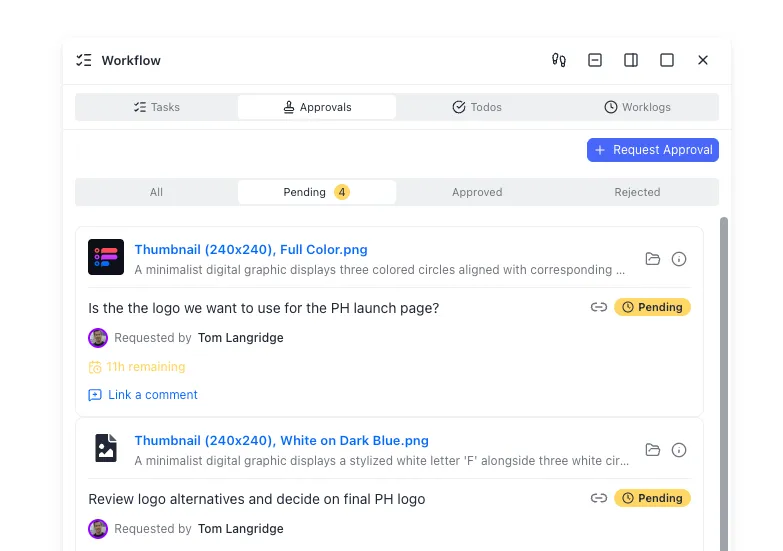
A review response workflow needs somewhere to store incoming reviews, draft history, brand voice profiles, and performance data. Local storage works for testing, but it doesn't survive agent restarts, isn't accessible to other team members, and offers no search capability when you need to find how you responded to a similar complaint six months ago.
Cloud storage services like Google Drive or Dropbox handle file persistence, but they lack the indexing and AI query capabilities that make a review workflow genuinely useful over time. S3 gives you durability and scale, but no built-in semantic search. Fastio fills this role by combining persistent storage with Intelligence Mode, which auto-indexes everything uploaded to a workspace.
When your OpenClaw agent stores a review and its response in a Fastio workspace, that content becomes queryable through semantic search. Six months later, when a similar complaint arrives, the agent searches past responses by meaning, not just keywords, with citations pointing to the original review. This prevents contradictory responses to similar issues and catches patterns of recurring complaints that signal a product problem worth escalating.
The Fastio MCP server gives OpenClaw a consolidated MCP toolset for file management, semantic search, and workspace operations. Connect your agent to Fastio through Streamable HTTP at /mcp. The documentation covers the full tool surface.
The 14-day Business Trial gives teams full access to persistent workspaces and usage credits. For a review response pipeline, Fastio stores years of review history with full audit trails and granular permissions controlling who can access customer data.
Documentation: mcp.fast.io/docs


Store review history where your agents can search it
Fastio's Business Trial provides persistent storage with Intelligence Mode for semantic search across your entire review archive. MCP-ready for OpenClaw.
Multi-Platform Distribution and Performance Tracking
Drafting a response is only half the job. The response needs to reach the original platform, and you need to know whether your response strategy is actually working.
For distribution, OpenClaw routes approved responses back to each review source. The API Gateway skill handles direct platform integrations where APIs exist. The AgentMail skill manages email-based review platforms and customer follow-ups through a dedicated agent inbox with automation hooks protection against prompt injection. For Google Workspace teams, the Gog skill connects to Gmail for review notifications routed through email.
The approval layer sits between drafting and distribution. Configure it based on risk: auto-publish positive review responses with a short hold period, require single-reviewer approval for neutral reviews, and enforce manager sign-off for anything classified as negative or legally sensitive. This tiered approach keeps response times fast for low-risk reviews while protecting the brand on high-stakes interactions.
Measuring results means tracking three metrics over time. Response rate tells you what percentage of reviews get a reply. Response time measures hours from review posting to response publication. Sentiment shift tracks whether your average star rating changes as your response coverage improves. The Harvard Business Review found that businesses which start responding to reviews see star ratings increase by an average of 0.12 points and generate 12% more total reviews.
Store these metrics alongside your review data in Fastio, and your agent can generate weekly summaries highlighting trends. If response times spike for a particular platform, you know the integration needs attention. If negative review volume clusters around a specific product feature, that's a signal for the product team, not just the support team. The workflow becomes a feedback loop that improves both customer experience and product decisions.
Sources
References used to verify factual claims in this guide.
-
68% of negative Google reviews go completely unanswered businesses that start responding see an 18% average sales uplift AI-assisted businesses respond 14 times faster than manual-only teams star ratings increase by 0.12 points and generate 12% more total reviews
-
19% of consumers now expect same-day review responses, up from 6% in 2025 50% of consumers avoid businesses that respond with generic templates
Frequently Asked Questions
Can OpenClaw automate customer review responses?
OpenClaw can draft review responses automatically by chaining monitoring, sentiment analysis, and brand voice skills. Positive and neutral reviews can be auto-published after a hold period, but negative reviews should always go through human approval before posting. The workflow handles the drafting and routing while you control what actually gets published.
How do you set up review response workflows in OpenClaw?
Start by installing the monitoring skills (Brave Search or API Gateway for platform connections), then add a brand voice profile trained on 15 to 20 of your best existing responses. Connect a storage workspace like Fastio via its remote MCP server for persistent context, configure your approval gates based on sentiment classification, and set up distribution through AgentMail or API Gateway to push responses back to each platform.
What skills does OpenClaw use for customer feedback?
The core skills are Brave Search for monitoring public reviews, API Gateway for direct platform integrations, Brand Voice Writer for maintaining consistent tone, and AgentMail for email-based follow-ups. Fastio provides persistent storage with semantic search so your agent can reference past responses when drafting new ones.
How fast can OpenClaw respond to customer reviews?
AI-assisted review response workflows typically draft replies in under a minute. With auto-publish enabled for positive reviews and a brief hold period, responses can go live within an hour of the review posting. Negative reviews take longer because they require human approval, but the draft is ready for review almost immediately.
Does automated review response hurt brand authenticity?
Only if the responses sound generic. The Brand Voice Writer skill trains on your actual best content to match your specific tone and vocabulary. Combined with sentiment-aware drafting that references the customer's specific feedback, automated responses read as personalized rather than templated. BrightLocal's 2026 data shows consumers penalize generic templates, not thoughtful responses that happen to be AI-assisted.
Related Resources

Store review history where your agents can search it
Fastio's Business Trial provides persistent storage with Intelligence Mode for semantic search across your entire review archive. MCP-ready for OpenClaw.