How to Set Up a Restructuring Data Room for Creditors and Advisors
A restructuring data room is a secure virtual workspace where debtors, creditors, legal advisors, and court-appointed trustees share financial documents during corporate restructuring or bankruptcy proceedings. This guide covers the document checklist, folder structure, access controls, and workflows that keep restructuring processes organized across dozens of stakeholders.


What a Restructuring Data Room Does Differently
A restructuring data room is a secure virtual workspace used during corporate restructuring or bankruptcy proceedings to share financial documents, creditor agreements, and restructuring plans with authorized parties. If you have worked with M&A data rooms before, restructuring rooms solve a fundamentally different problem.
In M&A, you have two sides: buyer and seller. The document flow is relatively controlled, and the timeline is often measured in months. Restructuring is messier. A typical Chapter 11 case involves the debtor, an official committee of unsecured creditors, secured lenders, bondholders, financial advisors to each group, restructuring counsel, court-appointed trustees, and sometimes a dozen or more additional creditor parties. The American Bankruptcy Institute noted that average restructuring cases involve 15 to 30 parties needing document access, each with different permission levels.
The core differences from M&A data rooms come down to three areas:
- More stakeholder groups with competing interests. In M&A, everyone is working toward a deal. In restructuring, creditors are competing for recovery. Secured lenders and unsecured creditors need different document access, and some information shared with one group cannot be visible to another.
- Court oversight and disclosure requirements. Bankruptcy courts require regular filings, monthly operating reports, and public disclosure of material financial information. Your data room needs to support both confidential creditor communications and public court filings.
- Time pressure. Companies in Chapter 11 burn cash while restructuring. The debtor-in-possession has reporting deadlines, exclusivity periods for filing a plan, and creditor committees that need fast access to financial data to evaluate proposals. Delays in document access can stall negotiations and increase administrative costs.
Business bankruptcy filings increased 5.6% in the twelve-month period ending September 2025, with mega bankruptcies (companies with over $1 billion in assets) reaching their highest half-year count since 2020. That volume means more restructuring professionals need reliable data room setups, and the stakes for getting it wrong are higher.
Helpful references: Fastio Workspaces, Fastio Collaboration, and Fastio AI.
Related guides
- Audit Data Room: How to Share PBC Files with External AuditorsAn audit data room is a secure workspace where a finance team shares prepared-by-client documents with external...
- How to Set Up a Bankruptcy Data Room for Creditors and BiddersA bankruptcy data room is a secure virtual workspace used to share financial records, asset inventories, and legal...
- How to Set Up a Private Placement Data RoomA private placement data room is a secure virtual workspace where issuers share private placement memorandums,...
- How to Set Up a Data Room for Renewable Energy ProjectsRenewable energy transactions involve dozens of specialized documents that generic file-sharing tools weren't built to...
- How to Set Up a Multi-Agent Data Room for Secure CollaborationA multi-agent data room gives AI agents a secure place to work together on files. Version history and permissions...
- How to Set Up AI Agent Due Diligence Data RoomsDue diligence data rooms with AI agents automate document reviews in secure VDRs. Manual DD takes weeks. AI agents...
More on this subject: Data Rooms and Due Diligence (53 guides)
What to check before scaling restructuring data room
The document set for a restructuring data room is broader than what most due diligence checklists cover. Beyond standard financials and corporate records, you need materials specific to the distressed situation, court proceedings, and creditor negotiations.
Here is a working checklist organized by category:
Financial and Operational Documents
Audited and unaudited financial statements (3 to 5 years)
- Monthly operating reports (MORs) as required by the U.S. Trustee
- Cash flow projections and 13-week cash flow models
- Accounts receivable and accounts payable aging reports
- Capital expenditure schedules and deferred maintenance logs
- Tax returns and outstanding tax liabilities
- Intercompany transaction records and transfer pricing documentation
Debt and Capital Structure
- Credit agreements for all secured and unsecured debt
- Bond indentures and bondholder lists
- Intercreditor agreements and subordination arrangements
- Default notices and forbearance agreements
- DIP (debtor-in-possession) financing term sheets and credit agreements
- Lien documentation and UCC filings
- Guaranty agreements and cross-default provisions
Legal and Court Filings
- Voluntary petition and first-day motions
- Schedules of assets and liabilities (Schedules A/B through J)
- Statement of financial affairs (SOFA)
- Disclosure statement and proposed plan of reorganization
- Bar date notices and proof of claim forms
- Court orders (cash collateral, DIP financing, adequate protection)
- Adversary proceeding filings, if any
Creditor Committee Materials
- Official committee formation order
- Committee bylaws and operating procedures
- Advisor engagement letters (financial advisor, legal counsel)
- Investigation reports on debtor conduct and pre-petition transactions
- Plan objections and counterproposals
Contracts and Leases
Executory contracts and unexpired leases under review for assumption or rejection
- Key customer and supplier contracts
- Employment agreements for senior management
- Insurance policies and coverage summaries
- Intellectual property licenses and assignments
This list is not exhaustive, but it covers the categories that creditors and their advisors will expect on day one. Missing documents slow down negotiations. Incomplete financial data gives creditor committees grounds to request court orders compelling disclosure, which adds cost and delays the process.
Folder Structure and Organization
A restructuring data room folder structure should follow the actual workflow of a restructuring case, not generic corporate categories. Number your top-level folders so they sort in proceeding order, making it easy for advisors who are reviewing materials across multiple cases simultaneously.
A practical structure:
- 01 - Corporate Overview: organizational chart, entity structure, board resolutions, bylaws
- 02 - Financial Statements: audited financials, management accounts, MORs, projections
- 03 - Debt and Capital Structure: credit agreements, bond indentures, intercreditor agreements, DIP documents
- 04 - Court Filings: petition, first-day motions, court orders, disclosure statement, plan documents
- 05 - Creditor Information: proof of claim forms, bar date notices, committee materials, distribution analysis
- 06 - Contracts and Leases: executory contracts, assumption/rejection schedules, cure cost estimates
- 07 - Operations: business plans, customer concentration analysis, supplier contracts, employee data
- 08 - Tax and Regulatory: tax returns, pending audits, regulatory filings, environmental liabilities
- 09 - Valuation and Analysis: valuation reports, liquidation analysis, comparable transactions, recovery waterfalls
- 10 - Correspondence: advisor communications, committee correspondence, court notices
Naming Conventions
Consistent file naming matters more in restructuring than in typical deals. You are often uploading hundreds of documents over several months, and different parties reference documents by name in court filings and negotiations.
A naming pattern that works: [Folder Number]-[Document Type]-[Date]-[Version]. For example: 03-Credit-Agreement-2024-03-15-v2.pdf. This format sorts chronologically within each folder and makes version tracking visible without opening the file.
Version Control
Restructuring plans go through multiple drafts. Disclosure statements get amended. Financial projections get updated monthly. Your data room needs version history so parties can see what changed between drafts. Platform-level file versioning is better than manually uploading "Plan_v3_final_FINAL.pdf" because it preserves the full revision chain and lets advisors compare versions.
Fastio handles this with automatic file versioning. Every upload to the same path creates a new version, and previous versions remain accessible. This is particularly useful for plan documents and disclosure statements where creditors need to track changes across negotiation rounds.



Organize Your Restructuring Data Room
Set up secure workspaces with granular permissions, audit trails, and AI-powered document search. Generous storage.
Access Controls for Multi-Party Restructuring
Access control in a restructuring data room is more complex than in any other data room use case. You are managing competing interests, confidential information that cannot cross party lines, and court-mandated disclosure requirements that apply selectively to different groups.
Stakeholder Groups and Permission Tiers
A typical Chapter 11 restructuring requires at least these permission groups:
- Debtor team: Full access to all documents. Includes debtor's management, restructuring counsel, and financial advisor.
- Official creditor committee: Access to financial data, operating reports, and investigation materials. Restricted from debtor work product and privileged communications.
- Secured lenders: Access to collateral documentation, cash collateral orders, adequate protection materials, and financial reporting. May be restricted from unsecured creditor negotiation documents.
- Ad hoc groups (bondholder groups, trade creditor groups): Limited access based on negotiation status and confidentiality agreements.
- Potential DIP lenders or plan sponsors: Access to financial and operational data needed for underwriting, restricted from other creditor group materials.
- Court and U.S. Trustee: Access to public filings and required reporting.
Each group needs its own permission set. Some documents are visible to multiple groups, while others are restricted to a single party plus the debtor. A recovery waterfall analysis shared with the creditor committee, for instance, should not be visible to equity holders until it appears in a public disclosure statement.
Setting Up Permissions
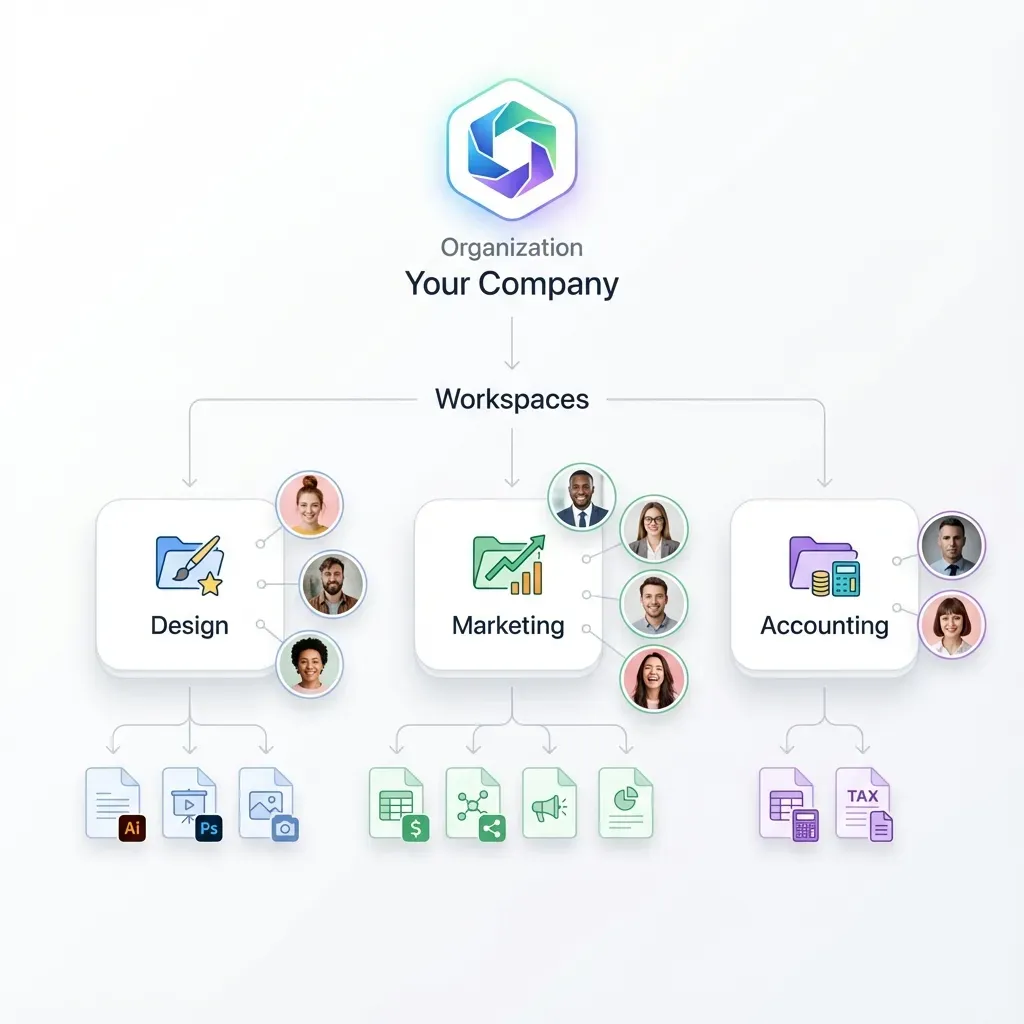
The cleanest approach is to create separate workspaces or top-level folders for each stakeholder group, with a shared workspace for documents that all parties can access (public court filings, monthly operating reports, general corporate information).
Fastio supports permissions at the org, workspace, folder, and file level. For a restructuring data room, you might set up:
- A "Public Filings" workspace visible to all parties
- A "Committee Materials" workspace restricted to the official committee and its advisors
- A "Secured Lender Group" workspace for the agent bank and secured creditor counsel
- A "Management" workspace for debtor-side work product
This structure prevents accidental disclosure. A paralegal uploading a document to the Committee Materials workspace cannot accidentally make it visible to secured lenders, because the workspace permissions enforce the boundary.
Confidentiality Agreements
Before granting data room access, each party typically signs a confidentiality agreement or is bound by a court-entered protective order. Track which parties have signed, what restrictions apply, and when access should expire. Some data room platforms automate this with click-through NDAs at login. If yours does not, maintain a tracking spreadsheet and cross-reference it against your user list monthly.
Audit Trails and Court Compliance
Restructuring proceedings happen under court supervision. That supervision creates specific requirements for how you track document access and demonstrate compliance with disclosure obligations.
What Courts Expect
Bankruptcy courts and the U.S. Trustee program require debtors to maintain detailed records of their financial affairs and make certain information available to creditors. Section 1102(b)(3) of the Bankruptcy Code requires official committees to "provide access to information" for creditors they represent who are not on the committee. A data room with comprehensive audit logging makes this obligation easier to demonstrate.
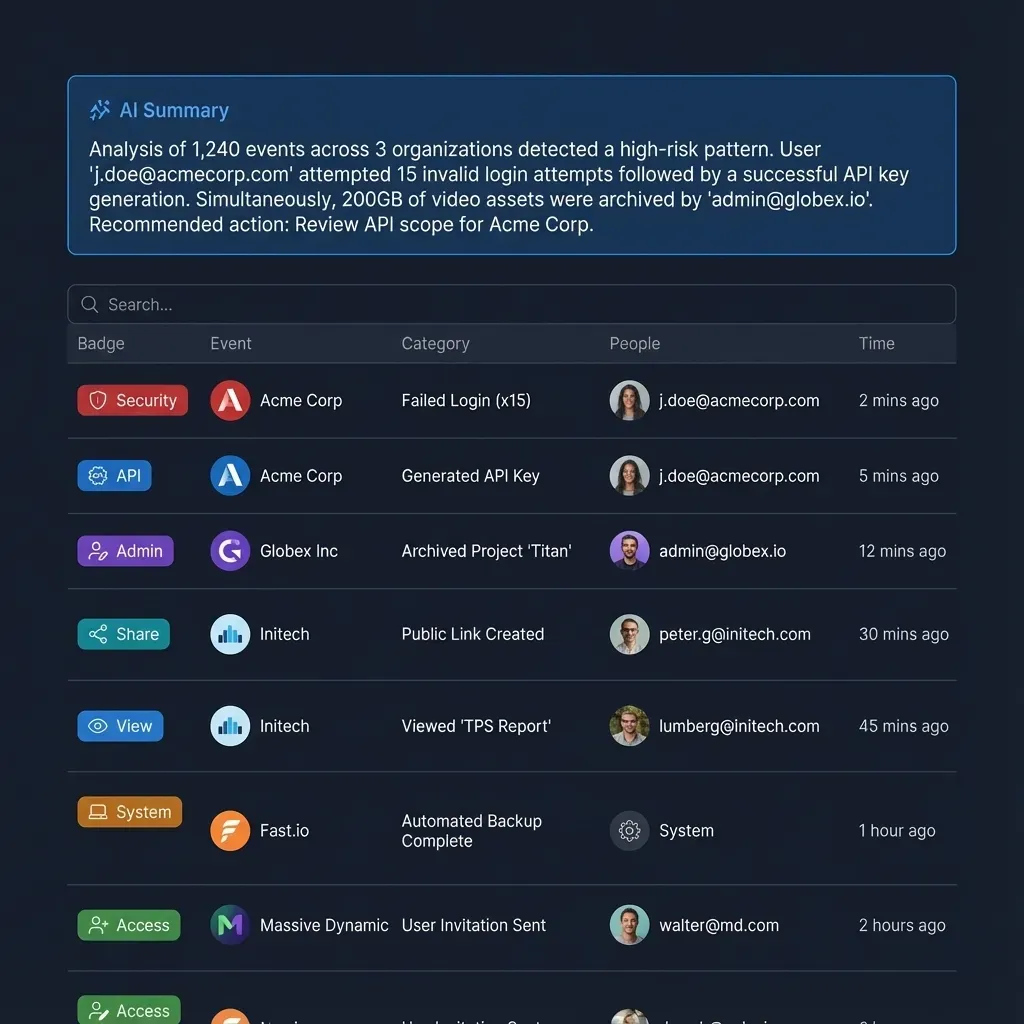
The audit trail should capture:
- Every document upload, including who uploaded it and when
- Every view, download, and print action, with timestamps and user identity
- Permission changes, including who granted or revoked access
- Failed access attempts, which can indicate someone trying to reach restricted materials
- Document version history, showing which version each party reviewed
Why Audit Trails Matter in Restructuring
Disputes about information access are common in restructuring cases. A creditor might allege they were not given timely access to financial projections. A committee might claim the debtor withheld material information. An equity holder might argue they were excluded from documents shared with creditors.
An immutable audit trail resolves these disputes with facts instead of competing declarations. You can pull a report showing exactly when a document was uploaded, who was granted access, and when each party first viewed it.
Fastio records every action within workspaces and shares, with exportable activity summaries. When a committee member asks whether their financial advisor had access to the latest cash flow model, you can answer definitively in minutes instead of reconstructing the history from email threads.
Monthly Operating Report Distribution
Debtors in Chapter 11 must file monthly operating reports with the court and make them available to parties in interest. Using your data room as the distribution mechanism creates an automatic record of when each party accessed the reports. Upload the MOR to the shared workspace, and the audit trail documents that it was made available, without relying on email delivery receipts.
When Intelligence Mode is enabled on a workspace, uploaded documents are automatically indexed for search and AI-powered Q&A. For a restructuring data room, this means creditor advisors can ask questions about financial reports, search across hundreds of documents by meaning rather than filename, and get cited answers pointing to specific pages, all without downloading every file individually.
Choosing a Platform for Restructuring Data Rooms
The restructuring data room market includes both specialized and general-purpose platforms. Your choice depends on case complexity, number of parties, budget, and whether you need features beyond basic document storage.
Specialized Restructuring Platforms
Intralinks.
Datasite (formerly Merrill DatasiteOne), and Firmex are the traditional choices for large restructuring cases. They offer restructuring-specific features like Q&A workflows, bulk user management for large creditor groups, and integrations with court filing systems. Pricing typically runs $15,000 to $50,000+ per deal, with per-page or per-user charges that scale with case size.
These platforms are well-known to restructuring professionals, which reduces onboarding friction. If your secured lender group's counsel has used Intralinks on their last ten deals, they will not need a tutorial.
Mid-Market and General-Purpose Options
ShareVault.
CapLinked, and similar platforms serve mid-market restructuring cases at lower price points. They cover the fundamentals (permissions, audit trails, document management) without the premium pricing of enterprise platforms. The tradeoff is fewer restructuring-specific workflows and smaller support teams.
Fastio for Restructuring Data Rooms
Fastio works well for restructuring cases where you need granular permissions, version tracking, and audit trails without enterprise pricing. The platform supports org, workspace, folder, and file-level permissions, which maps well to the multi-party access structure that restructuring requires.
Specific advantages for restructuring use:
- Granular permissions at four levels (org, workspace, folder, file) let you mirror the stakeholder group structure without workarounds
- Branded shares for distributing documents to specific creditor groups with download controls and access tracking
- Audit trails that log every action and support exportable activity summaries for court compliance
- File versioning that tracks plan document revisions without manual version naming
- Intelligence Mode that indexes uploaded documents once enabled for the workspace, supporting semantic search and AI-powered Q&A across the data room
- Business Trial with 14 days of access (card required; see /pricing/), giving restructuring teams time to evaluate workspace permissions and document delivery
The workspace intelligence feature is particularly relevant for restructuring advisors who need to review hundreds of documents quickly. Instead of downloading and reading every financial statement, an advisor can ask questions across the indexed data room and get cited answers pointing to specific pages.
What to Evaluate
Regardless of platform, test these capabilities before committing:
- Can you create at least five distinct permission groups with no document overlap?
- Does the audit trail capture views, not just downloads?
- Can you bulk-upload documents and maintain folder structure?
- Is there version control at the platform level, not just manual file renaming?
- Can you revoke access to a specific party without affecting others?
- What happens to the data room after the case closes? Some platforms delete data after a subscription lapses.
Sources
References used to verify factual claims in this guide.
-
Business filings increased 5.6% in the twelve-month period ending September 30, 2025
-
Mega bankruptcies in first half of 2025 reached highest count since COVID-19 outbreak in 2020
-
Chapter 11 filings hit a 10-year high in 2025
Frequently Asked Questions
What documents go in a restructuring data room?
A restructuring data room typically contains financial statements, monthly operating reports, cash flow projections, credit agreements, bond indentures, DIP financing documents, court filings (petition, first-day motions, disclosure statement, plan of reorganization), creditor committee materials, executory contracts, valuation reports, and recovery waterfall analyses. The exact scope depends on the type of restructuring and the number of creditor groups involved.
How is a restructuring data room different from an M&A data room?
Restructuring data rooms involve more stakeholder groups with competing interests (secured lenders, unsecured creditors, equity holders, court-appointed trustees), stricter court-mandated disclosure requirements, and greater time pressure. M&A data rooms typically have two sides (buyer and seller) working toward a deal, while restructuring rooms must manage information barriers between creditor groups that are competing for recovery.
Do you need a data room for bankruptcy?
A data room is not legally required for bankruptcy, but it is practically necessary for any restructuring involving multiple creditor groups. Courts require extensive document disclosure, creditor committees need ongoing access to financial data, and potential DIP lenders or plan sponsors require due diligence access. Managing this through email and physical document production is expensive and creates compliance risks that a structured data room eliminates.
How many parties typically need access to a restructuring data room?
A typical corporate restructuring involves 15 to 30 parties needing document access, including the debtor's management team, restructuring counsel, financial advisors, the official creditor committee and its advisors, secured lender groups, ad hoc bondholder groups, potential plan sponsors, and the U.S. Trustee. Each group needs different permission levels, making access management one of the primary challenges.
What access controls does a restructuring data room need?
Restructuring data rooms need permission controls at multiple levels (workspace, folder, and file) to manage competing creditor interests. You need separate access groups for the debtor team, official creditor committee, secured lenders, ad hoc groups, and potential plan sponsors. Some documents are shared across groups while others are restricted to specific parties. The platform must also support access revocation and comprehensive audit logging.
How long should you keep a restructuring data room active?
Keep the data room active through the plan effective date and for a reasonable period afterward, typically six to twelve months. Creditors may need to reference documents during plan implementation, distribution calculations, and any post-confirmation disputes. Some practitioners maintain read-only archives for several years in case of subsequent litigation or audits.
Related Resources

Organize Your Restructuring Data Room
Set up secure workspaces with granular permissions, audit trails, and AI-powered document search. Generous storage.