How to Set Up an Immigration Document Portal for Your Law Firm
Immigration cases generate dozens of documents from petitioners, beneficiaries, employers, and government agencies. An immigration document portal gives attorneys a central place to collect, organize, and share case files while keeping sensitive information secure. This guide covers the six features every immigration portal needs and walks through practical setup for different visa categories.


Why Immigration Cases Break Generic File-Sharing Tools
USCIS received 13.51 million immigration applications and petitions in fiscal year 2024. Behind each of those filings sits a stack of supporting documents: birth certificates, employment letters, tax transcripts, educational credentials, translations, and photographs. A single H-1B petition can involve 30 to 50 documents sourced from the petitioner, the beneficiary, the sponsoring employer, and sometimes a third-party evaluator.
Generic tools like email, Dropbox, or Google Drive weren't built for this. They lack document checklists tied to specific visa categories, offer no way to track which parties have uploaded what, and provide no expiration alerts for passports or work authorizations approaching their end dates. The result: paralegals spend hours chasing documents through scattered email threads while attorneys worry about missed deadlines.
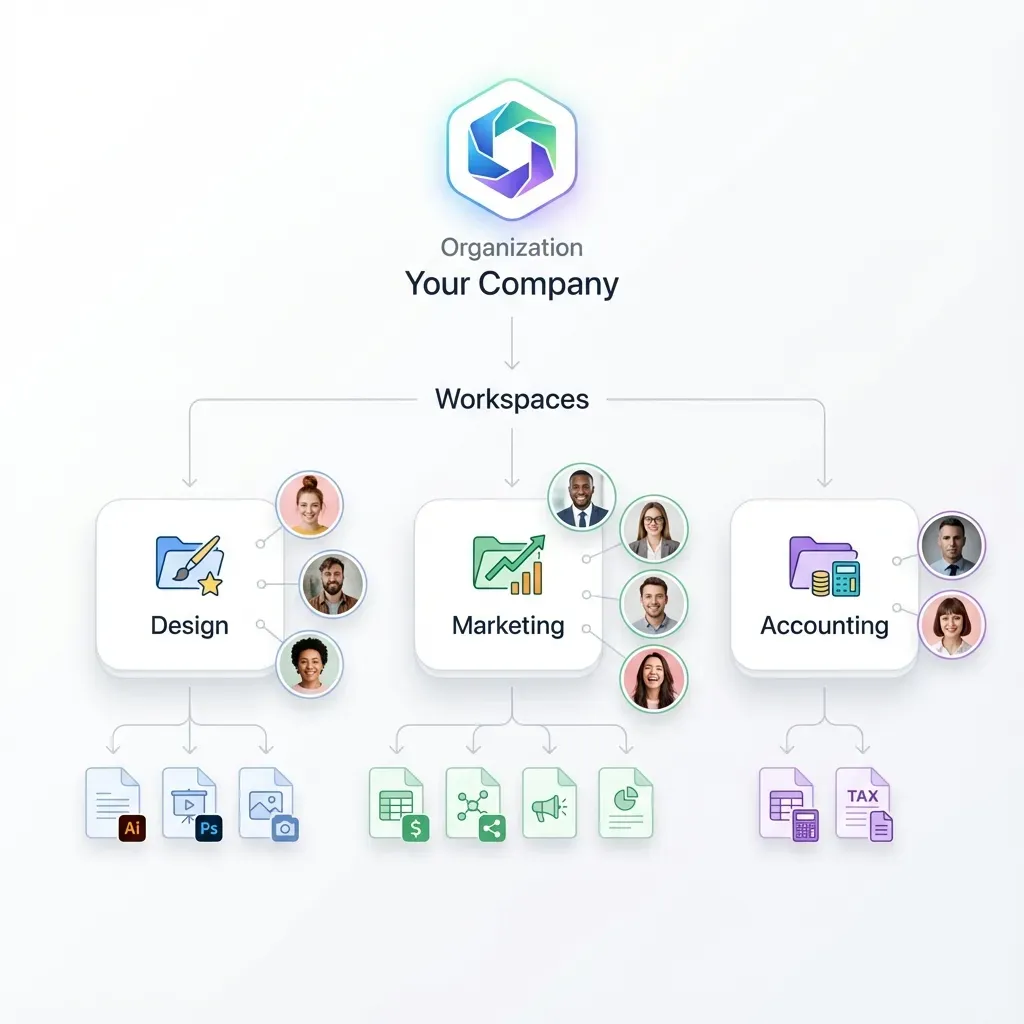
Immigration-specific portals solve this by organizing documents around cases rather than folders. Each case gets its own workspace with role-based access, so the employer sees only the documents they need to provide, the beneficiary uploads their own set, and the attorney sees everything.
Helpful references: Fastio Workspaces, Fastio Collaboration, and Fastio AI.
Related guides
- Immigration Client Portals: Secure Document Intake for Law PracticesImmigration client portals replace chaotic email threads with structured digital workspaces for collecting foreign...
- How to Build a Law Firm Client PortalLaw firm client portals give clients secure access to case documents. They replace risky email attachments and personal...
- How Law Firms Deploy Secure Client Document Upload Portals Without Login WallsCollecting sensitive records from clients is a frequent bottleneck in legal intake, where standard email attachment...
- Setting Up an Actionstep Client Portal for File DeliverySetting up an Actionstep client portal is a standard method for sharing legal case files, but native storage caps and...
- An Operations Review of LEAP Legal Software: Document Management and Client PortalsFirm operations leads evaluating practice management systems often focus on billing, overlooking the daily friction of...
- Modern Law Firm Technology: Building an AI-Ready Document HubLegacy document management was built for local servers and paper files, not for attorneys working across offices with...
More on this subject: Legal Teams (211 guides)
Six Features Every Immigration Document Portal Needs
Not every portal fits immigration workflows. Here are the features that separate useful tools from generic file storage.
1. Multi-party upload access
Immigration cases involve at least three parties: the attorney, the petitioner or beneficiary, and often a sponsoring employer or educational institution. Each party needs a way to upload documents without seeing the full case file. Look for portals that offer guest upload links with scoped permissions, so an employer can submit a support letter without accessing the beneficiary's personal records.
2. Document checklists by visa category
An H-1B checklist looks different from an EB-1A checklist. The portal should support customizable checklists that map to USCIS evidence requirements for each form type, from the I-129 to the I-485. USCIS publishes required initial evidence checklists for each petition type, and your portal should mirror those requirements so nothing gets missed.
3. Expiration tracking
Passports, I-94s, EADs, and work authorizations all have expiration dates that affect filing timelines. A portal that flags approaching expirations helps attorneys avoid filing petitions with expired supporting documents, a common reason USCIS issues Requests for Evidence.
4. RFE response workspace
When USCIS issues an RFE, the clock starts ticking. Attorneys typically get 30 to 87 days to respond. The portal should let you create a dedicated RFE response area where you can list the specific evidence requested, assign collection tasks to the right parties, and track what's been submitted versus what's outstanding.
5. Translation management
Any document not in English requires a certified translation before USCIS will accept it. The portal should track which documents need translation, which translations are complete, and whether each translation includes the required certification statement.
6. Secure sharing with audit trails
Immigration documents contain sensitive personal information: Social Security numbers, financial records, medical examination results. Every access, download, and upload should be logged. When a case is audited or an ethics complaint arises, the attorney needs a clear record of who accessed what and when.
How to Organize Documents by Case Type
The right folder structure depends on the visa category. Here are practical approaches for the most common case types.
Employment-Based Petitions (H-1B, L-1, O-1)
Organize by source party. Create separate upload areas for:
- Employer documents: support letter, LCA posting confirmation, tax returns, organizational charts
- Beneficiary documents: passport, resume/CV, diplomas, transcripts, prior approval notices
- Third-party evidence: expert opinion letters, credential evaluations, published work
Family-Based Petitions (I-130, I-485)
Organize by evidence category:
- Identity documents: birth certificates, passports, national IDs
- Relationship evidence: marriage certificates, joint tax returns, photos, lease agreements
- Financial support: I-864 affidavit, tax transcripts, pay stubs, employment letters
- Medical: I-693 sealed envelope (do not open, track separately)
Naturalization (N-400)
Simpler structure, but still benefits from a checklist:
- Identity and status: green card, passport, travel records
- Tax compliance: 5 years of tax transcripts
- Background: arrest records, court dispositions if applicable
- Selective Service: registration confirmation for male applicants
For each case type, set up a template checklist in your portal so paralegals don't have to rebuild the document list from scratch for every new client.


Build a Secure Document Portal for Your Immigration Practice
Collect documents from petitioners, beneficiaries, and employers in branded portals with granular permissions and full audit trails. Start 14-day trial. Built for immigration document portal workflows.
Setting Up a Portal in Practice
Most immigration firms start with one of three approaches to document portals, each with different tradeoffs.
Immigration-specific software with built-in portals
Tools like Docketwise, INSZoom, and LawLogix include client portals as part of their case management platform. The portal is tightly integrated with form generation and deadline tracking, but you're locked into that vendor's ecosystem and pricing model.
General legal practice management portals
Clio, MyCase, and similar platforms offer client portals that work across practice areas. These are more flexible but lack immigration-specific features like visa category checklists and USCIS form mapping. You'll need to build those workflows manually.
Dedicated file-sharing platforms configured for immigration
This approach uses a workspace platform and customizes it for immigration workflows. You get more control over branding, permissions, and file organization, but you need to set up the immigration-specific structure yourself.
Fastio fits this third category. Its content portal feature lets you create branded, password-protected portals where clients upload and access documents. Each portal gets its own permissions, so you can give the employer access to one portal while the beneficiary uses another. Receive shares handle inbound document collection from clients who don't need accounts, and audit trails log every file upload, download, and access event.
For firms that already use immigration-specific case management software but need better document collection from clients, a dedicated portal can complement the existing system. The case management tool handles forms and deadlines while the portal handles the messy work of gathering documents from multiple parties.

Handling RFE Responses Through Your Portal
Requests for Evidence are where document portals earn their keep. An RFE arrives with a specific list of evidence USCIS needs, and the attorney has a limited window to respond. Without a system, this turns into frantic email chains and phone calls trying to gather documents from clients who may not understand the urgency.
A structured approach works better:
Step 1: Create an RFE workspace. As soon as the RFE arrives, set up a dedicated area in your portal. List each piece of evidence USCIS requested as a separate checklist item.
Step 2: Assign collection tasks. For each checklist item, identify who needs to provide the document. Send the employer a link to upload the revised support letter. Send the beneficiary a link to upload the additional credential evaluation. Each party sees only their assignments.
Step 3: Track progress. The portal dashboard shows which items have been uploaded and which are still outstanding. Set internal deadlines well before the USCIS response deadline to leave time for attorney review.
Step 4: Review and compile. Once all documents are collected, the attorney reviews everything in one place, adds a cover letter mapping each document to the specific RFE request, and prepares the response package.
With Fastio, you can keep a folder for each RFE item, collect documents from each party through Receive shares, and use Ripley AI to search across uploaded documents when you need to locate specific evidence quickly. Per-file version history keeps every draft of the response package, and the activity log records who changed it before it goes to USCIS.
Security and Compliance Considerations
Immigration documents contain some of the most sensitive information a law firm handles: government-issued IDs, financial records, medical examination results, and sometimes details about asylum claims that could endanger clients if disclosed.
Access controls matter. Every person who touches the portal should have only the access they need. The employer's HR representative shouldn't see the beneficiary's medical records. The paralegal working on H-1B cases shouldn't have access to asylum case files. Role-based permissions at the folder and file level prevent accidental exposure.
Audit trails are non-negotiable. State bar ethics rules require attorneys to safeguard client information. When something goes wrong, or when a client asks who accessed their file, you need a clear log. Fastio records every file operation, membership change, and access event in its audit trail, giving you a defensible record of document handling.
Expiring access links reduce risk. When you share a portal link with a client, set it to expire after a reasonable period. If a client's email is compromised months later, an expired link prevents unauthorized access to their immigration documents.
Think about document retention. Immigration cases can span years, from initial petition through adjustment of status to naturalization. Your portal needs to support long-term document storage without unexpected deletion. Clarify retention policies with clients upfront and document them in your engagement agreement.
For firms evaluating portal options, look beyond feature checklists. Ask how the platform handles data residency, encryption at rest and in transit, and what happens to your data if you cancel the service. These questions matter more for immigration files than for most other practice areas.
Sources
References used to verify factual claims in this guide.
- 1 USCIS FY 2024 Annual Report on the Impact of the Homeland Security Act on Immigration Functions Accessed
USCIS received 13.51 million immigration applications and petitions in fiscal year 2024
-
USCIS publishes required initial evidence checklists for each petition type
Frequently Asked Questions
How do immigration lawyers collect documents from clients?
Most immigration lawyers use a combination of email, client portals, and in-person meetings. A client portal is the most efficient approach because it gives clients a secure place to upload documents on their own schedule, provides a checklist so they know exactly what's needed, and creates an audit trail of every upload. Without a portal, attorneys rely on email attachments, which scatter documents across inboxes and create version control problems.
What is the best portal for immigration case management?
It depends on your firm's size and workflow. Immigration-specific platforms like Docketwise and INSZoom include built-in portals with form integration. General practice management tools like Clio offer broader portals that work across practice areas. For firms that want more control over branding and document collection, a dedicated workspace platform like Fastio lets you build custom portals with granular permissions and AI-powered document search.
How do you organize immigration documents for filing?
Organize documents by USCIS submission order. Place the filing fee authorization on top, followed by the cover letter, the primary form (I-129, I-130, etc.), supporting forms, and then evidence grouped by category. Within the evidence section, follow the order listed in the USCIS checklist for your specific form type. Label each document and create a table of contents so the adjudicating officer can find everything quickly.
What documents are needed for an H-1B petition?
An H-1B petition requires documents from both the employer and the beneficiary. Employer documents include the Labor Condition Application (LCA), a detailed support letter describing the specialty occupation, and proof of ability to pay the offered wage. Beneficiary documents include passport copies, educational credentials (with evaluations for non-US degrees), a detailed resume, and any prior H-1B approval notices. Additional evidence may include expert opinion letters, published work, or organizational charts.
How long should immigration documents be stored after a case closes?
Most state bar associations recommend retaining client files for at least five years after a case closes. For immigration cases, longer retention is often prudent because clients may need documents for future petitions, adjustment of status, or naturalization applications that reference earlier filings. Some firms retain immigration files for seven to ten years. Always clarify your retention policy in the engagement agreement and notify clients before destroying files.
Can clients upload documents to an immigration portal without creating an account?
Yes, many portal platforms support guest access for document uploads. Fastio's Receive shares let clients upload files through a branded link without creating an account. This is particularly useful for immigration cases where employers or third parties need to submit a single document without ongoing portal access. Guest uploads still get logged in the audit trail for compliance purposes.
Related Resources

Build a Secure Document Portal for Your Immigration Practice
Collect documents from petitioners, beneficiaries, and employers in branded portals with granular permissions and full audit trails. Start 14-day trial. Built for immigration document portal workflows.