How to Get and Manage Your Claude API Key
Anthropic's Claude API key authenticates every request to Claude models, and mishandling it is the fast way to rack up unexpected charges or lose access. This guide walks through creating your first key in the Console, storing it in environment variables and secret managers, scoping keys to workspaces for team isolation, and managing the full key lifecycle through the Admin API.


What a Claude API Key Does and Why It Matters
Claude Opus 4.8 costs $25 per million output tokens, and a leaked API key with no spending cap can burn through that at scale in minutes. Anthropic responds to this risk aggressively: any key detected in a public GitHub repository gets automatically deactivated through a partnership with GitHub's secret scanning program. This guide covers not just where to click in the Console, but how to secure, scope, rotate, and programmatically manage your Claude API keys.
A Claude API key is a credential that authenticates requests to the Anthropic API. Every call to a Claude model requires a valid key, whether the request comes from a chat application, an autonomous agent, or a batch processing pipeline. Keys follow the format sk-ant-api03- followed by an alphanumeric string, and each key is tied to a specific workspace within your organization.
The Anthropic Console at console.anthropic.com is where you create and manage keys. This is separate from claude.ai, which is the consumer chat product. You need a Console account with active billing to generate API keys and make authenticated requests. The Console is also accessible at platform.claude.com.
Related guides
- How to Generate and Use a Devin AI API Key for WorkspacesAccording to Cognition, 67% of pull requests generated by Devin AI are merged by human engineering teams without manual...
- How to Set Up API Keys in OpenClawOpenClaw resolves API keys through a four-level environment variable priority chain, checking session overrides first...
- How to Use the Claude Code API and Agent SDKThe Claude Code Agent SDK gives developers the same tools, agent loop, and context management that power Claude Code,...
- Claude Code vs Cline: API Costs and Pricing Model ComparisonAn analysis of the operational costs and billing models behind Claude Code and Cline. We break down the math of token...
- Claude Developer Guide: API, Console, SDKs, and Building with ClaudeAnthropic's Claude developer platform spans nine APIs, seven official SDKs, a CLI, and a managed agents framework. Most...
- Anthropic Claude API: Models, Capabilities, and Getting StartedAnthropic's Claude API now spans nine endpoints, four model families, and two development tracks. This guide covers the...
More on this subject: Claude and Claude Code (278 guides)
How to Create Your First Claude API Key
Getting a working API key takes about five minutes. Here is the process from account creation to your first authenticated request.
1. Create an account on the Anthropic Console
Go to console.anthropic.com and sign up. You can register with an email address, Google SSO, or GitHub SSO.
2. Set up billing
Open Settings, then Billing, and add a payment method. This step is required before your key will work. A newly created key returns authentication errors on API calls until billing is configured. Anthropic offers a small credit for new accounts to test the API, but a payment method on file is still necessary for ongoing use.
3. Navigate to API Keys
Click "API Keys" in the left sidebar of the Console. You can also navigate directly to platform.claude.com/settings/keys.
4. Create a new key
Click "Create Key." Enter a descriptive name like my-app-dev or production-agent-v1. If your organization has multiple workspaces, select the workspace this key should be scoped.
5. Copy the key immediately
Anthropic displays the full key exactly once. After you close the creation dialog, only a partial hint like sk-ant-api03-R2D...igAA remains visible. If you lose the key before saving it, you need to generate a new one.
6. Test your key
Run a quick API call to confirm everything works:
curl https://api.anthropic.com/v1/messages \
  -H "content-type: application/json" \
  -H "x-api-key: YOUR_API_KEY" \
  -H "anthropic-version: 2023-06-01" \
  -d '{
    "model": "claude-sonnet-4-6-20250514",
    "max_tokens": 256,
    "messages": [{"role": "user", "content": "Hello"}]
  }'
A successful response returns a JSON object with Claude's reply. A 401 error means either billing is not active or the key was copied incorrectly.
How to Store Your API Key Securely
Never hardcode your API key in source code. Use environment variables or a secret manager so the key stays out of version control and application logs.
Environment variables for local development
Set the variable in your shell profile or a .env file:
export ANTHROPIC_API_KEY="sk-ant-api03-your-key-here"
The official Anthropic SDKs for Python, TypeScript, Java, and Go all read ANTHROPIC_API_KEY automatically. No extra configuration is needed:
import anthropic
client = anthropic.Anthropic()  # reads ANTHROPIC_API_KEY from the environment
If you use a .env file with a library like dotenv, add .env to your .gitignore immediately. This is the single most common way keys end up in public repositories.
Secret managers for production
For deployed applications, use your cloud provider's secret management service:
- AWS Secrets Manager or Systems Manager Parameter Store
- Google Cloud Secret Manager
- Azure Key Vault
- HashiCorp Vault for multi-cloud setups
These services encrypt keys at rest, provide audit trails for access, and support automatic rotation policies.
Separate keys per environment
Create distinct API keys for development, staging, and production. Per-environment keys make it straightforward to track spending, identify anomalies, and revoke access without disrupting other environments. If your development key leaks, production traffic continues unaffected.
For AI agents that need persistent file storage alongside their Claude API access, platforms like Fast.io provide workspace environments where agents can read and write files through the MCP server. You configure ANTHROPIC_API_KEY for Claude and a separate Fast.io API key for storage, keeping each credential scoped to its own service.


Put your Claude API key to work in a shared agent workspace
Fast.io gives AI agents workspace storage, built-in RAG, and MCP access at mcp.fast.io. Start with a 14-day trial (credit card required).
Workspace-Scoped Keys for Team Isolation
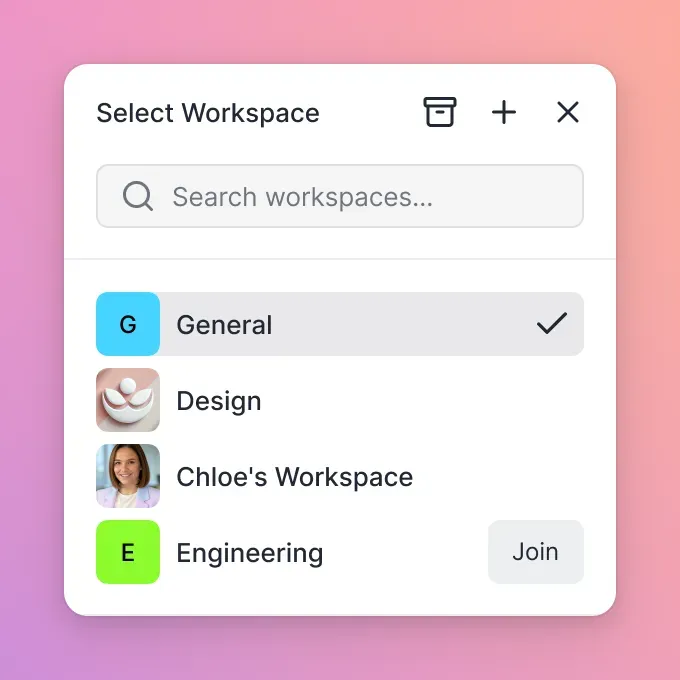
Anthropic workspaces let organizations segment API access by team, project, or environment. Each workspace gets its own set of API keys, rate limits, and usage tracking.
When you create an API key, you assign it to a specific workspace. That key can only access resources billed against that workspace. A key scoped to your "Research" workspace cannot generate charges on your "Production" workspace. This boundary is enforced at the API level, not just in the Console UI.
When to use workspace scoping
- Separate billing: track costs by team or project without parsing usage logs
- Rate limit isolation: one team hitting their rate ceiling does not throttle another
- Access control: developers only see and manage keys for their assigned workspaces
- Compliance boundaries: restrict certain models or features to specific workspaces
Organization roles and key creation
Not everyone can create API keys. Anthropic defines five organization-level roles: user, claude_code_user, developer, billing, and admin. Only members with the developer role or higher can create and manage API keys. Admins can manage workspace membership and organizational settings on top of that.
If a team member needs a key but lacks the developer role, you can either grant them the role in their workspace or create the key yourself and share it through a secure channel like a password manager. Never send API keys over email, Slack, or any unencrypted medium.
Key Lifecycle Management with the Admin API
The Admin API gives organizations programmatic control over API keys, members, and workspaces. For teams managing dozens of keys across multiple workspaces, this is more practical than clicking through the Console one key at a time.
Authentication
The Admin API accepts two credential types:
- An Admin API key (prefix
sk-ant-admin) sent in thex-api-keyheader - An OAuth bearer token with
org:adminscope sent in theauthorization: Bearerheader
Only organization admins can provision Admin API keys. Individual accounts do not have access to the Admin API.
Listing and filtering keys
Retrieve all active keys, optionally filtered by workspace:
curl "https://api.anthropic.com/v1/organizations/api_keys?limit=20&status=active" \
  -H "anthropic-version: 2023-06-01" \
  -H "x-api-key: $ANTHROPIC_ADMIN_KEY"
Each key object includes its id, name, status, workspace_id, expires_at, created_by, and a partial_key_hint for identification.
Key statuses
Every API key has one of four statuses:
active: the key is working and accepting requestsinactive: manually disabled but can be reactivatedarchived: permanently retired, cannot be reactivatedexpired: past itsexpires_attimestamp
Updating a key
Change a key's name or status through the update endpoint:
curl -X POST \
  "https://api.anthropic.com/v1/organizations/api_keys/apikey_01Rj2N8SVvo6BePZj99NhmiT" \
  -H "anthropic-version: 2023-06-01" \
  -H "content-type: application/json" \
  -H "x-api-key: $ANTHROPIC_ADMIN_KEY" \
  -d '{"status": "inactive", "name": "deprecated-prod-key"}'
Key creation is Console-only
You cannot create new API keys through the Admin API. Key creation is restricted to the Console UI as a security measure. The Admin API handles listing, retrieving, updating, and archiving existing keys.
Rotation workflow
A solid rotation practice follows this sequence: create a new key in the Console, update your deployment to use it, verify the new key works in production, then set the old key to inactive via the Admin API. Wait a grace period (one week is typical) before archiving the old key, in case a forgotten service still references it.
Anthropic recommends rotating keys every 90 days as a baseline. Rotate immediately after any staff departure, suspected exposure, or migration between environments.
Responding to a leaked key
If you suspect a key is compromised, deactivate it immediately through the Console or Admin API. For keys pushed to public GitHub repositories, Anthropic's secret scanning partnership handles this automatically: the key is deactivated and your organization is notified. For keys exposed through other channels, you need to act manually. Generate a replacement, update all services, and archive the compromised key.

Sources
References used to verify factual claims in this guide.
-
Claude Opus 4.8 costs $25 per million output tokens Haiku 4.5 costs $1/$5 per MTok, Sonnet 4.6 costs $3/$15, Opus 4.8 costs $5/$25; Batch API offers 50% discount
-
Any Claude API key detected in a public GitHub repository is automatically deactivated through Anthropic's partnership with GitHub's secret scanning program
-
API key statuses include active, inactive, archived, and expired; Admin API supports listing, retrieving, and updating keys
Frequently Asked Questions
How do I get a Claude API key?
Sign up at console.anthropic.com, add a payment method under Settings then Billing, navigate to API Keys, and click Create Key. Name it, choose a workspace, and copy the key immediately. Anthropic displays it only once.
Is the Claude API free?
New accounts receive a small credit for testing, but ongoing use requires a payment method. Pricing varies by model: Haiku 4.5 costs $1 input and $5 output per million tokens, Sonnet 4.6 costs $3 and $15, and Opus 4.8 costs $5 and $25. The Batch API offers a 50% discount across all models.
Where do I find my Anthropic API key?
Go to platform.claude.com/settings/keys. You will see all keys in your current workspace with partial hints like sk-ant-api03-R2D...igAA. Full keys are only shown at creation time. If you need the complete key string, generate a new one and copy it before closing the dialog.
How do I rotate my Claude API key?
Create a new key in the Console, update your application's environment variable or secret manager to use it, verify the new key works, then deactivate the old key through the Console or the Admin API update endpoint. Anthropic recommends rotating every 90 days.
What happens if my Claude API key is exposed on GitHub?
Anthropic partners with GitHub's secret scanning program to automatically detect and deactivate exposed keys in public repositories. You will receive a notification. Generate a replacement key immediately and update all services that used the compromised one.
Can I create API keys programmatically through the Admin API?
No. The Admin API supports listing, retrieving, updating, and archiving keys, but new keys can only be created through the Console UI. This is an intentional security restriction. The Admin API is useful for auditing key usage, automating rotation, and managing key status at scale.
Related Resources

Put your Claude API key to work in a shared agent workspace
Fast.io gives AI agents workspace storage, built-in RAG, and MCP access at mcp.fast.io. Start with a 14-day trial (credit card required).