How to Build a Drone Telemetry Logging Agent with OpenClaw on Raspberry Pi
A drone telemetry logging agent running OpenClaw on a Raspberry Pi companion computer captures MAVLink flight data in real time, applies AI reasoning to flag anomalies, and generates natural-language flight reports. This guide covers the hardware wiring, MAVLink routing, OpenClaw agent setup, and cloud sync workflow for storing and sharing flight logs.

Why Drone Telemetry Needs More Than Raw Logs
Most Raspberry Pi drone setups route MAVLink telemetry from a flight controller to a ground station and call it done. Tools like mavlink-router, MAVProxy, and Rpanion-Server handle the routing well. The flight controller streams attitude, GPS, battery voltage, and dozens of other message types over a serial connection, and the Pi forwards those packets to QGroundControl or a UDP endpoint.
The gap is what happens after logging. Raw MAVLink logs are binary or semi-structured JSONL files that require specialized software to interpret. A commercial operator with 15 flights in a day still needs to open each log manually, scan for voltage drops or altitude deviations, and write up summaries for compliance records. The FAA does not mandate specific logbook formats under Part 107, but operators are expected to produce flight records on request, and most best-practice guides recommend retaining logs for 12 to 24 months.
Adding an AI agent to the companion computer changes the workflow. Instead of raw packet dumps, the agent parses telemetry in real time, watches for anomalies like sudden altitude changes or battery sag, and produces a human-readable flight summary when the drone lands. That summary can include GPS coordinates, max altitude, flight duration, average wind estimates, and any flagged events, all written in plain language that a non-pilot team member can understand.
This is what an OpenClaw telemetry logging agent does: it sits between the MAVLink stream and your storage layer, turning flight data into actionable reports.
Related guides
- How to Build a Hermes Agent AI Code CheckerThe proportion of copy-pasted code in repositories rose from 8% in 2020 to 12% in 2024, representing a 48% relative...
- How to Build AI Agents with the Claude Agent SDKThe Claude Agent SDK is Anthropic's toolkit for building AI agents that can read files, run commands, search the web,...
- How to Build a Raspberry Pi Drone with an OpenClaw AI Flight AgentArduPilot's GitHub repository has over 12,000 stars and nearly 19,000 forks, making it the most forked open-source...
- How to Build a Portable Pen Testing Rig with OpenClaw and Kali Linux on Raspberry PiA portable Kali Linux rig with an OpenClaw agent on a Raspberry Pi turns manual pen testing into an orchestrated...
- How to Build a Wireless Sensor Decoder Agent with RTL-433 and OpenClaw on Raspberry Pirtl_433 decodes signals from over 320 wireless device protocols using a cheap USB radio dongle. Pairing it with an...
- How to Build an Earthquake Detection Agent with OpenClaw on Raspberry PiA geophone on a Raspberry Pi produces continuous seismic data, but most of what it records is foot traffic, trucks, and...
More on this subject: OpenClaw on Raspberry Pi (192 guides)
What to check before scaling openclaw raspberry pi drone telemetry logging agent
The Raspberry Pi connects to the flight controller's telemetry port over a serial UART link. ArduPilot and PX4 both support this setup natively.
What you need:
- Raspberry Pi 4 (8 GB) or Raspberry Pi 5 (recommended for faster LLM inference)
- Flight controller with a free TELEM port (Pixhawk, Cube, or similar)
- JST-GH to Dupont jumper cable (3 wires: TX, RX, GND)
- High-endurance microSD card (32 GB minimum) or M.2 SSD via HAT+
- USB power delivery from the drone's power distribution board or a BEC
Wiring the serial connection:
Connect the flight controller's TELEM2 TX pin to the Pi's GPIO 15 (RXD), TELEM2 RX to GPIO 14 (TXD), and TELEM2 GND to any Pi ground pin. Do not connect the 5V line from TELEM2 to the Pi. Power the Pi separately from a regulated 5V source on the drone.
On the flight controller side, set the serial port parameters. For ArduPilot, configure SERIAL2_PROTOCOL to 2 (MAVLink 2) and SERIAL2_BAUD to 921 (921,600 baud). For PX4, use the MAV_1_CONFIG parameter to assign the telemetry port.
On the Pi, enable the serial port through sudo raspi-config under Interface Options. The serial device appears at /dev/serial0. Disable the serial console if prompted, since the port will be dedicated to MAVLink traffic.
Weight and power considerations:
A Raspberry Pi 5 weighs roughly 46 grams without a case. With a lightweight frame mount and short cables, the total added payload is under 80 grams. Power draw sits around 3 to 5 watts at idle and can spike to 8 watts under heavy compute. Budget a 5V 3A BEC on the power distribution board for reliable operation.

Routing MAVLink Telemetry on the Pi
Before OpenClaw can reason about flight data, you need a MAVLink router that captures the serial stream and makes it available to local processes.
mavlink-router is the standard choice for companion computers. It is a lightweight C daemon that reads MAVLink packets from a UART and forwards them to one or more UDP endpoints. This lets you run a telemetry logger, a ground station link, and the OpenClaw agent simultaneously without conflicts.
An alternative is mavp2p, a Go-based MAVLink proxy with pre-built ARM64 binaries. It handles routing, filtering, and dialect translation in a single binary, which simplifies deployment on headless Pi setups.
Rpanion-Server adds a web dashboard on top of mavlink-router, making it easier to configure endpoints and monitor link health from a browser. It is a solid option if you want a visual interface during field testing.
Whichever router you choose, the core pattern is the same: the router reads from /dev/serial0 at 921600 baud, and you configure a local UDP endpoint (for example, 127.0.0.1:14550) where your telemetry consumer listens.
Five telemetry data points worth capturing:
- GLOBAL_POSITION_INT - latitude, longitude, altitude, and ground speed updated at 5 to 10 Hz
- ATTITUDE - roll, pitch, and yaw angles, typically streamed at 10 to 20 Hz
- SYS_STATUS - battery voltage, current draw, and remaining capacity
- GPS_RAW_INT - satellite count, HDOP, and fix type for positional accuracy
- STATUSTEXT - free-form messages from the flight controller, including warnings and error codes
MAVLink 2 transmits these at configurable rates, commonly producing 10 to 50 messages per second depending on the stream configuration. At 921600 baud over serial, bandwidth is not a bottleneck for a single companion computer.



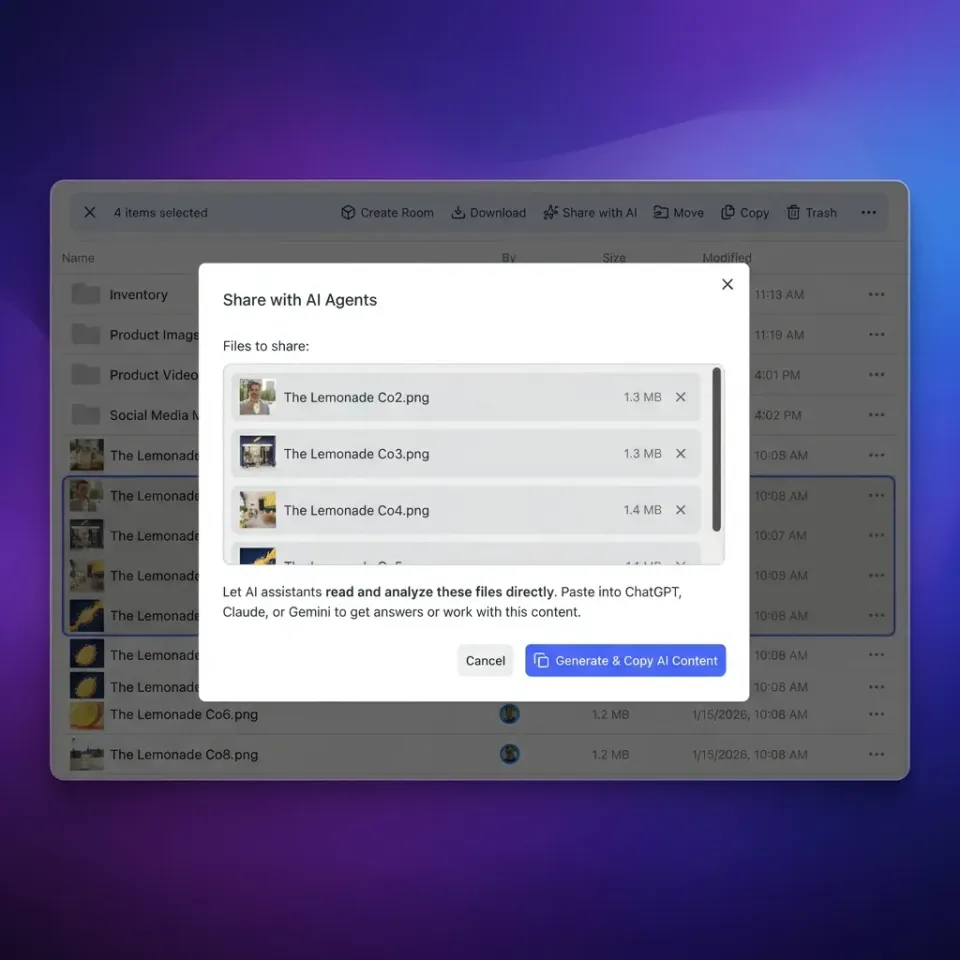
Store and search your drone flight logs from anywhere
Upload flight reports, ask questions across your log history, and share results with your team. Built for openclaw raspberry drone telemetry logging agent workflows.
Setting Up the OpenClaw Telemetry Agent
OpenClaw is an open-source AI agent framework that transforms LLMs from chat interfaces into action-oriented agents. On a Raspberry Pi, it runs on Node.js with first-class ARM64 support. The Raspberry Pi Foundation published an official guide for running OpenClaw on Pi hardware, and the framework supports both cloud-hosted LLMs (Claude, GPT-4, Gemini) and local models through Ollama or llama.cpp.
For a drone telemetry agent, OpenClaw acts as the intelligence layer between the MAVLink data stream and your output destinations (local logs, cloud storage, alerting). The agent receives parsed telemetry as context, applies reasoning to detect patterns or anomalies, and produces structured outputs.
How the agent pipeline works:
- A Python script using pymavlink or pymavlink2 connects to the local UDP endpoint and parses incoming MAVLink messages
- The script accumulates telemetry into time-windowed summaries (for example, 30-second intervals during flight)
- Each summary is passed to the OpenClaw agent as structured context
- The agent evaluates the window against configured rules and LLM reasoning
- On landing (detected via arming state change), the agent compiles a full flight report
What the agent watches for:
- Battery voltage dropping below a threshold during flight (potential cell damage)
- Altitude deviations exceeding the planned flight ceiling
- GPS satellite count dropping below 6 (degraded positioning)
- Sudden attitude changes that could indicate mechanical issues or wind shear
- STATUSTEXT warnings from the flight controller firmware
The Knostic openclaw-telemetry plugin provides a useful foundation for agent lifecycle logging. It captures tool calls, LLM usage, and agent events to JSONL files with hash-chain integrity and automatic sensitive-data redaction. While this plugin tracks the agent's own behavior rather than drone telemetry, it pairs well with a flight logging agent by providing an audit trail of what the agent decided and why.
Local vs. cloud inference:
On a Pi 5 with 8 GB RAM, small quantized models (7B parameter range) can run locally through Ollama. This works for simple rule evaluation during flight. For the post-flight report generation, which benefits from longer context and better writing quality, routing to a cloud LLM like Claude produces better summaries. A hybrid approach works well: local inference for real-time monitoring, cloud inference for the final report when the drone has landed and connectivity is restored.
Generating and Storing Flight Reports
When the agent detects a landing event (the flight controller transitions from armed to disarmed), it compiles the accumulated telemetry windows into a flight report. A well-structured report includes:
- Flight date, start time, and duration
- Takeoff and landing coordinates
- Maximum altitude and average ground speed
- Battery consumption (start voltage, end voltage, mAh consumed)
- Satellite count range and worst HDOP reading
- Any anomalies flagged during the flight
- A plain-language summary suitable for compliance records
The agent writes this report as a markdown or YAML file on the Pi's local storage. But local storage on a companion computer is fragile. SD cards fail, drones crash, and field conditions are unpredictable. The reports need to reach a durable destination.
Cloud sync options:
You can sync to any S3-compatible bucket, Google Drive, or Dropbox using standard CLI tools and cron jobs. Each of these works but requires managing credentials, handling offline queuing, and building your own folder structure.
Fastio simplifies this for agent-driven workflows. The OpenClaw agent can authenticate with Fastio's MCP server and upload flight reports directly to a shared workspace. Fastio exposes Streamable HTTP at /mcp and legacy SSE at /sse, so the agent can use either transport. Once uploaded, reports are automatically indexed by Fastio's Intelligence layer, making every flight log searchable by meaning, not just filename.
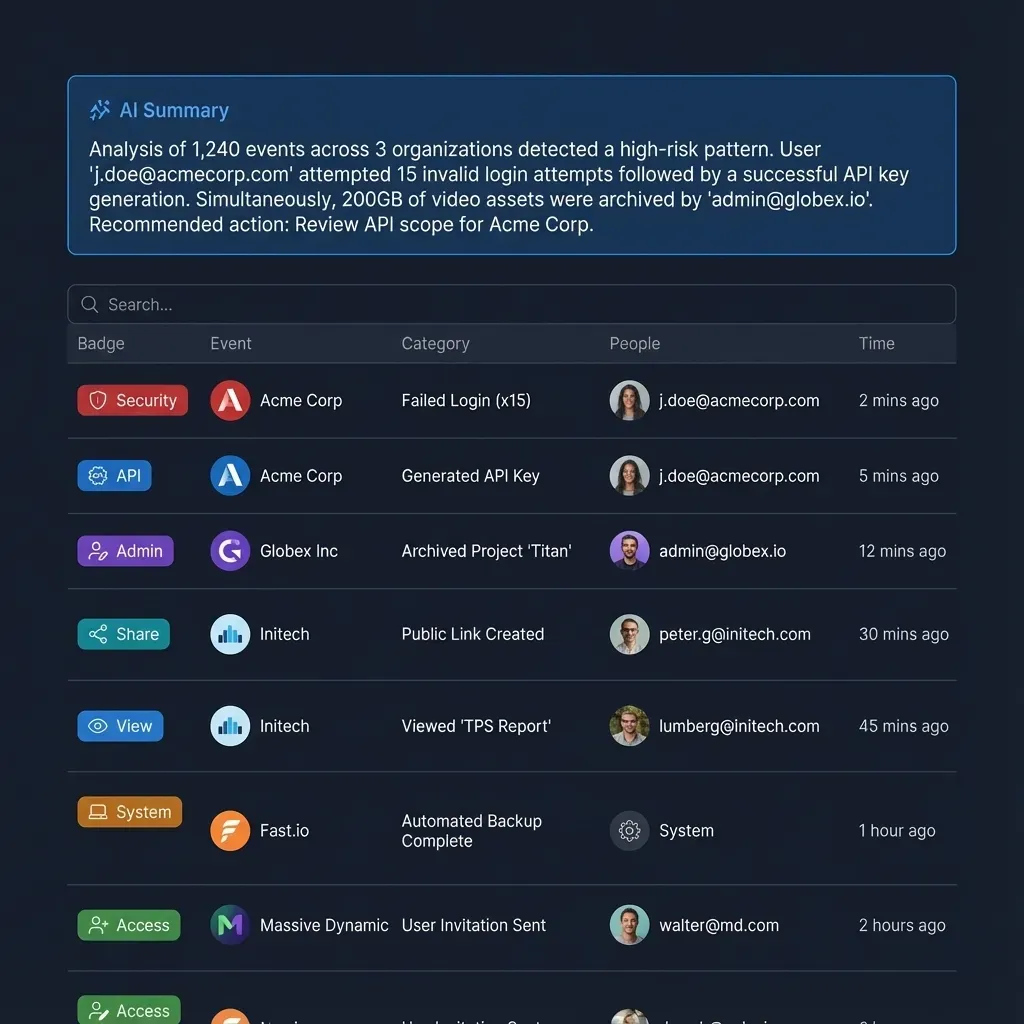
This matters for fleet operators. Instead of digging through folders of timestamped files, you can ask the workspace: "Show me all flights where battery voltage dropped below 22V" or "Summarize last week's flights at the construction site." The built-in RAG engine returns answers with citations pointing to specific reports.
Fastio offers a 14-day Business Trial, card required; see pricing for plan options. For a drone operation generating a few hundred KB of flight reports per day, that capacity lasts a long time.
Ownership transfer for client work:
If you are running drone surveys for a client, the agent can build a workspace with organized flight data, then transfer ownership to the client when the project is complete. The client gets a branded portal with all flight logs, AI-searchable, without needing to understand the underlying telemetry format.
Deploying and Operating in the Field
A drone companion computer runs in conditions that are different from a server room. Vibration, temperature swings, intermittent connectivity, and limited power all affect reliability.
Boot and auto-start:
Configure the Pi to boot directly into the telemetry agent without user interaction. A systemd service that starts mavlink-router and the OpenClaw agent on boot means the system is ready when the drone powers on. Set RestartSec and Restart=always so the agent recovers from crashes automatically.
Offline operation:
Drones often fly in areas with no cellular or Wi-Fi coverage. The agent should queue reports locally and sync when connectivity returns. A simple approach is to write completed reports to a staging directory and run a sync script that checks for network availability before uploading. Fastio's chunked upload API handles interrupted transfers gracefully, so a partial upload from a brief connectivity window will resume where it left off.
Storage management:
Raw MAVLink logs grow quickly. At 921600 baud with moderate message rates, expect 2 to 5 MB of raw data per 15-minute flight. The processed flight report is much smaller, typically under 50 KB. Keep raw logs on the SD card with a rolling retention window (for example, 30 days) and archive only the processed reports to cloud storage. This keeps the Pi's storage from filling up while preserving the summarized data indefinitely.
Multi-drone fleets:
For operators running several drones, each Pi-based agent can upload to the same Fastio workspace with a folder structure organized by drone ID and date. Team members access the workspace through the web UI, while agents use the API or MCP server. Both see the same files, the same search index, and the same audit trail. Advisory file locks, granular permissions, version history, and audit logging coordinate writes and track changes if two drones happen to sync simultaneously.
Monitoring the agent itself:
The Knostic openclaw-telemetry plugin logs every tool call and LLM interaction the agent makes. If a flight report looks wrong, you can trace the agent's reasoning chain through the JSONL event log to find where it misinterpreted a telemetry value. The plugin's hash-chain integrity means these logs are tamper-evident, which matters for operators who need to demonstrate that their automated systems are working correctly.
Sources
References used to verify factual claims in this guide.
-
MAVLink protocol transmits 10 to 50 messages per second depending on stream configuration
-
Commercial drone operators should retain flight logs for 12 to 24 months under Part 107 best practices
-
Raspberry Pi Foundation published official OpenClaw setup guide
-
OpenClaw telemetry plugin captures tool calls, LLM usage, and agent lifecycle events with hash-chain integrity
-
SERIAL2_PROTOCOL set to 2 for MAVLink 2 and SERIAL2_BAUD to 921 for Raspberry Pi communication
Frequently Asked Questions
Can a Raspberry Pi log drone telemetry in real time?
Yes. A Raspberry Pi connects to a flight controller's TELEM port via serial UART and receives MAVLink messages at up to 921,600 baud. Tools like mavlink-router or mavp2p handle the packet routing, and the Pi can simultaneously log data, forward to a ground station, and feed an AI agent for analysis.
How do you connect a Raspberry Pi to a drone flight controller?
Wire the flight controller's TELEM2 TX to the Pi's GPIO 15 (RXD), TELEM2 RX to GPIO 14 (TXD), and a shared ground. Set the flight controller's serial protocol to MAVLink 2 and baud rate to 921600. On the Pi, enable the serial port through raspi-config and disable the serial console. The device appears at /dev/serial0.
What is MAVLink protocol for drones?
MAVLink (Micro Air Vehicle Link) is a lightweight messaging protocol used by most open-source autopilot systems, including ArduPilot and PX4. It defines standard message types for telemetry (GPS position, attitude, battery status), commands (takeoff, waypoints, mode changes), and system status. MAVLink 2 adds message signing, variable-length fields, and extensibility over the original protocol.
Does OpenClaw run on Raspberry Pi?
OpenClaw runs on Raspberry Pi 4 (8 GB) and Pi 5 with Raspberry Pi OS 64-bit. It is built on Node.js with ARM64 support, so no cross-compilation is needed. The Raspberry Pi Foundation published an official tutorial for the setup. For resource-constrained boards like the Pi Zero 2 W, the PicoClaw variant is available.
Do commercial drone operators need to keep flight logs?
Under FAA Part 107, commercial operators are expected to produce flight records on request, though the regulation does not prescribe a specific logbook format. Best-practice guidance recommends retaining flight logs for 12 to 24 months, including date, time, location, pilot in command, and any LAANC authorizations. Automated telemetry logging with cloud backup makes this straightforward.
Can I use a local LLM on Raspberry Pi for drone telemetry analysis?
A Raspberry Pi 5 with 8 GB RAM can run small quantized models (7B parameters) through Ollama for basic real-time monitoring. For detailed post-flight report generation, cloud-hosted LLMs produce better results. A hybrid approach, using local inference during flight and cloud inference after landing, balances latency and quality.
Related Resources

Store and search your drone flight logs from anywhere
Upload flight reports, ask questions across your log history, and share results with your team. Built for openclaw raspberry drone telemetry logging agent workflows.