How to Build a Client Portal in Notion (And When to Outgrow It)
Notion works as a lightweight client portal when you combine databases, filtered views, and guest permissions into a single bookmarkable page. This guide walks through the full setup process, covers the permission and sharing gotchas that most tutorials skip, and explains when a dedicated portal platform makes more sense.


What a Notion Client Portal Actually Is
A Notion client portal is a shared workspace page configured with structured databases, embedded documents, and granular permissions so clients get a branded project hub. Instead of scattering project updates across email threads and Google Drive folders, everything lives behind a single bookmarkable link.
The typical setup includes a homepage dashboard with linked database views, a project tracker, a file repository, and a request intake form. Clients see only the filtered views you expose, while your internal databases and notes stay hidden on a separate data page.
Notion has over 100 million users globally, and the Notion marketplace lists over 300 client portal templates. That popularity means many of your clients already have a Notion account, which reduces onboarding friction. But popularity and suitability are different things, and the gap between "you can build a portal in Notion" and "you should" depends on what your clients actually need.
The rest of this guide covers the practical setup, the limitations that only surface after you start sharing with real clients, and when a purpose-built portal platform is the better call.
Related guides
- How to Build a Salesforce Client Portal (And What It Actually Costs)Salesforce Experience Cloud lets you build branded customer portals for case management, knowledge bases, and partner...
- How to Build a Client Portal in ClickUp (And Where It Breaks Down)ClickUp does not ship with a dedicated client portal, but you can assemble one using guest permissions, shared views,...
- How to Build a Client Portal in WordPressA WordPress client portal is a password-protected area on your WordPress site where clients access shared files,...
- How to Build a Wealth Management Client Portal That HNW Clients Actually UseA wealth management client portal is a branded digital workspace where wealth managers securely share portfolio...
- Best Free Client Portal Tools in 2026Most free client portal lists skip the fine print. This guide compares seven free client portal tools with their actual...
- Best Client Portal Software for Agencies in 2026Client portal software provides a branded, secure space where businesses share files, collect feedback, and collaborate...
More on this subject: Team Collaboration (125 guides)
Setting Up Your Notion Client Portal Step by Step
You can get a working client portal running in under 30 minutes. Here is the process from scratch.
1. Create a Data Page and a Client Homepage
Start with two top-level pages in your workspace. The first is your Data Page, which houses all your master databases. This page stays private and never gets shared with clients. The second is your Client Homepage, which is the page clients will bookmark and visit.
This two-page architecture is the foundation. Your data page is the engine room. The client homepage is the storefront.
2. Build Your Master Databases
On the data page, create these core databases:
- Projects: Track each project with properties for status, timeline, priority, and assigned team member
- Deliverables: Store files and assets linked to their parent project via a relation property
- Requests: Let clients submit new requests or change orders, linked to the relevant project
- Meeting Notes: Agendas, notes, and action items from client calls
Use relation properties to connect these databases. A project should link to its deliverables, requests, and meeting notes. This relational structure is what makes filtered views work on the client homepage.
3. Add Linked Views to the Client Homepage
On the client homepage, add linked views of each master database. Use filters to show only records tagged with that specific client. For example:
- A Board view of Projects filtered to the current client, grouped by status
- A Gallery view of Deliverables showing thumbnails and download links
- A List view of Requests sorted by date
- A Calendar view of Meeting Notes showing upcoming and past calls
Each linked view pulls from the master database but only displays what the filter allows. The client never sees another client's data because the filter restricts visibility at the view level.
4. Configure Permissions and Sharing
This is where most people trip up. Notion has three sharing approaches for client portals:
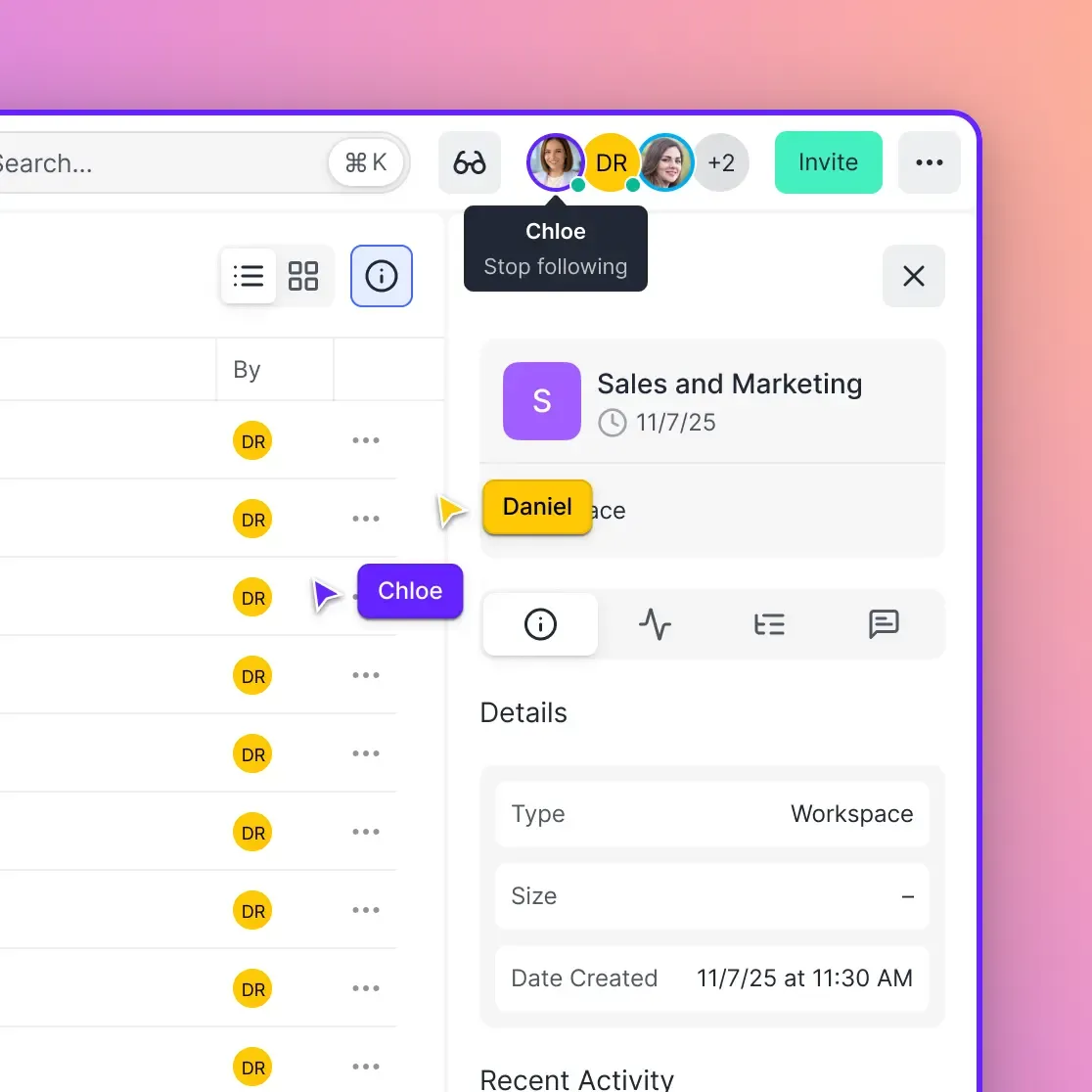
Guest sharing (recommended for most cases): Add the client's email as a guest with "Can View" or "Can Comment" access to the client homepage. Guests are free on all Notion plans, which keeps costs down. On the free plan, you are limited to 10 total guests across your entire workspace.
Page-level access rules: If you need different clients to see different database records within the same linked view, you will need page-level access rules. This feature requires Notion's Business plan at $20/month per workspace member. The good news is that workspace guests (your clients) do not count as paid members.
Public page sharing: For the simplest setup, publish the client homepage as a public page. No Notion account required. The tradeoff is zero access control: anyone with the link can see the content.
5. Polish the Homepage
Add your company logo as a page icon, set a cover image, and write a brief welcome message at the top. Use dividers and callout blocks to create visual sections. Add a toggle block labeled "How to Use This Portal" with instructions for clients who are new to Notion.
Use a URL shortener like Rebrandly to create a memorable link (e.g., yourcompany.re/clientname) since Notion URLs are long and unmemorable.
6. Create a Template for New Clients
Duplicate your finished client portal as a template. For each new client, duplicate the template, update the database filters to match the new client's name, and share. This keeps every portal consistent and saves you from rebuilding the layout each time.
The Gotchas Most Guides Skip
Notion works well enough as a portal for small operations, but several limitations only become obvious after you have real clients using the system. Here are the ones that catch people off guard.
No Native File Upload Widget
Clients cannot upload files directly into your Notion databases without editing the page. If you need clients to submit deliverables, contracts, or documents, you have to either give them edit access (which creates other problems) or use a separate tool like a Google Form linked to your database. The March 2026 "Can Create Pages" toggle helps, as it lets guests with limited access add database entries, but it still requires your workspace to be on the Business plan.
No Download Tracking
Notion does not tell you when a client downloads a file, opens a specific page, or views a deliverable. You can see when someone last viewed a page at the workspace level, but there is no per-file analytics, no download counts, and no engagement tracking. If you need to know whether a client reviewed the latest deliverable before a meeting, you are guessing.
Permission Complexity at Scale
Managing 5 client portals is straightforward. Managing 30 becomes a maintenance burden. Each new client needs their own filtered views, and if you change a database schema, you need to update every portal's linked views manually. There is no bulk management, no client grouping, and no way to push template changes to existing portals.
Guest Limits on Free Plans
Notion's free plan caps you at 10 guests total. If each client has 2-3 stakeholders who need access, you hit the limit with just 3-4 clients. At that point, you are choosing between upgrading to a paid plan or removing existing guests to make room.
Client Onboarding Friction
Not every client uses Notion. For clients who have never opened the app, you are asking them to learn a new tool just to view their project status. Some clients find this straightforward. Others find it confusing, especially if they are used to receiving deliverables via email or a simple download link.


Need a Client Portal That Handles File Delivery?
Fastio gives you branded portals with download tracking, file collection, and AI-powered document search.
When Notion Works (And When It Doesn't)
Notion portals work well in specific situations:
Good fit:
- Freelancers or small agencies with fewer than 10 active clients
- Clients who already use Notion for their own work
- Projects where the portal is primarily for status updates and meeting notes, not file delivery
- Internal teams that want to share a project dashboard with a single external stakeholder
Poor fit:
- Agencies that need fully branded portal experiences
- Businesses that collect files from clients (contracts, onboarding documents, creative assets)
- Teams that need download tracking and engagement analytics
- Operations managing 20+ client relationships simultaneously
- Regulated industries where audit trails and access logs are required
The pattern is clear. Notion portals scale well as information dashboards but struggle as file delivery and collection systems. If your primary need is "show clients what's happening," Notion handles it. If your need is "exchange files securely with tracking," you will outgrow it quickly.
One more thing worth noting: if your team already runs on Notion internally, adding a client portal layer on top adds complexity to your existing workspace. A misclick on sharing settings can expose internal databases to clients. Keeping internal work and client-facing portals in the same tool requires careful hygiene.
Alternatives for Teams That Need More
If Notion's limitations are deal-breakers for your workflow, here are purpose-built alternatives worth considering.
Dedicated client portal platforms like Copilot, SuiteDash, and Clinked are built specifically for client-facing workflows. They include branded portals, file collection, invoicing, e-signatures, and analytics out of the box. The tradeoff is cost. Most charge $20-50/month per user, and the learning curve is steeper than Notion.
Project management tools with portal features like ClickUp and Monday.com offer client-facing views as part of their broader project management suite. If your team already uses one of these tools, adding a client portal view is simpler than maintaining a separate Notion setup.
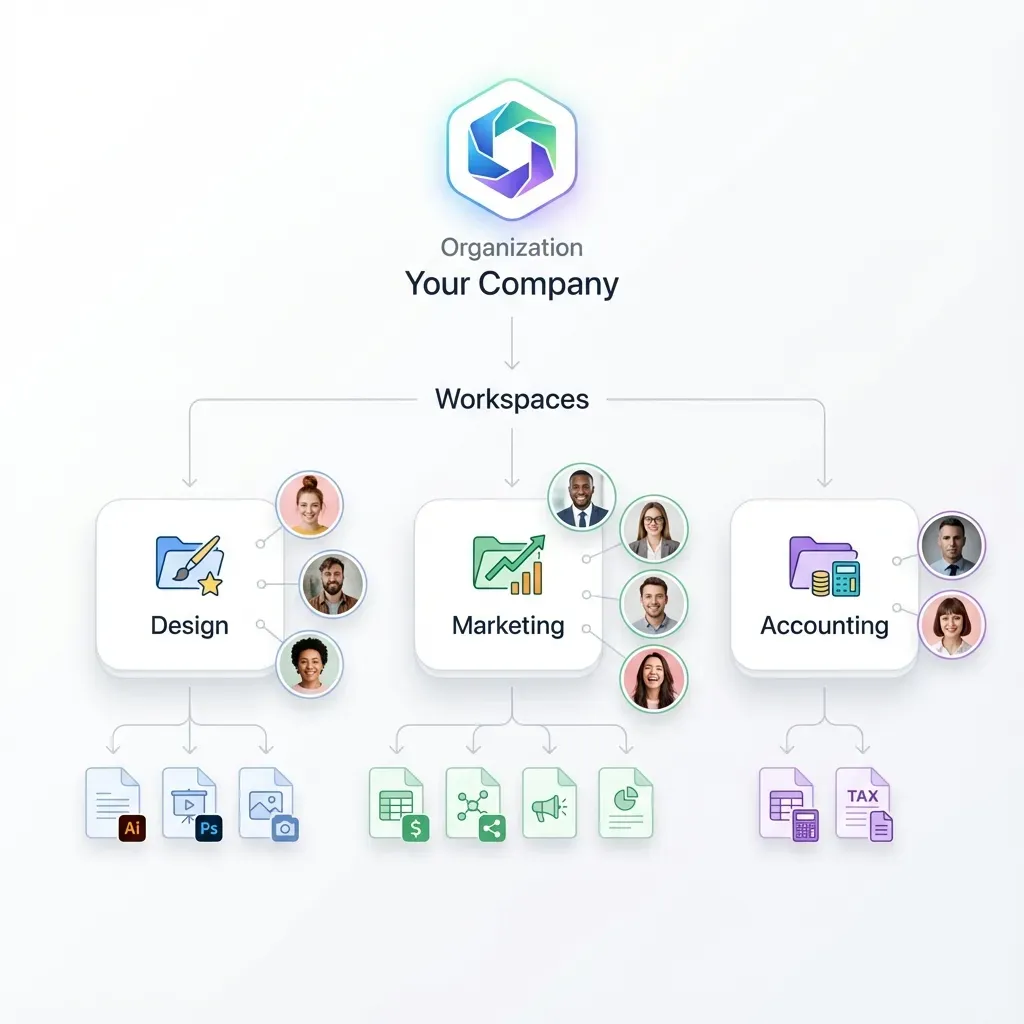
Workspace platforms with built-in portals are a middle ground between Notion's flexibility and dedicated portal software. Fastio, for example, offers branded content portals with custom logos and colors where clients access files without creating an account. Portals include download tracking, auto-expiring access links, and an embedded AI assistant (Ripley) that answers client questions about shared documents.
The key advantage of a dedicated portal platform over Notion is that the portal features are first-class, not bolted on. You get file collection workflows where clients upload directly into organized folders, engagement analytics that show who viewed and downloaded what, and permission models designed for external sharing from the start.
For teams already using Notion internally, a hybrid approach also works: keep Notion for your internal project management and use a separate tool for the client-facing portal. This avoids the risk of accidentally exposing internal databases while giving clients a cleaner, more professional experience.
Related guides: Content Portals, Client Portal Software Comparison, and How to Create a Client Portal.
Making Your Notion Portal Work Better
If you decide Notion is the right fit for now, these tips will help you get the most out of it.
Use database templates for consistency. Create a template for each database (project template, meeting notes template, request template) so every entry follows the same structure. This saves time and makes the portal feel polished rather than improvised.
Set up a request intake system. Since clients cannot upload files natively, create a "Submit Request" button template in your Requests database. Add properties for request type, urgency, description, and attachments (as links to Google Drive, Dropbox, or email). It is not as smooth as a real upload widget, but it gives structure to client submissions.
Build a status dashboard. Add a board view of your Projects database to the top of the client homepage, grouped by status (Not Started, In Progress, In Review, Complete). This gives clients an instant visual summary of where everything stands without needing to read through individual records.
Schedule regular cleanup. Notion portals accumulate clutter over time. Archive completed projects monthly, clear out resolved requests, and update any stale deliverable links. A clean portal builds client confidence. A cluttered one does the opposite.
Test every permission change. Before sharing a portal with a client, open it in an incognito browser window while logged in as a test guest account. Verify that filtered views show only the correct records and that private databases are actually hidden. One leaked database view can expose every client's data at once.
Document the handoff process. Write a one-page guide for your team explaining how to spin up a new client portal, what to check before sharing, and how to archive a portal when a project ends. This prevents the "only one person knows how to do it" problem that plagues small teams.
For teams that want AI-powered search across their portal files, enabling workspace intelligence on a platform like Fastio lets clients ask questions about shared documents and get cited answers, turning a static file repository into a searchable knowledge base.
Sources
References used to verify factual claims in this guide.
-
Notion has over 100 million users globally
-
Over 300 client portal templates on Notion marketplace
-
Page-level access rules require Business plan at $20/month per member
-
Free plan limited to 10 guests total
Frequently Asked Questions
Can you use Notion as a client portal?
Yes. Notion works as a lightweight client portal by combining databases, filtered linked views, and guest sharing on a single homepage. It handles status dashboards and meeting notes well. The main limitations are no native file upload widget for clients, no download tracking, and a 10-guest cap on the free plan. For file-heavy workflows or more than 10 active clients, a dedicated portal platform is usually a better fit.
How do I share a Notion page with clients?
You have three options. First, add the client's email as a guest with Can View or Can Comment access, which is free on all plans. Second, publish the page publicly so anyone with the link can view it without a Notion account, though you lose all access control. Third, use page-level access rules on the Business plan ($20/month per member) to control visibility at the database record level. For most client portals, guest sharing with filtered views is the simplest approach.
What are the limitations of Notion for client portals?
The biggest limitations are no native file collection from clients, no per-file download tracking or analytics, a 10-guest limit on free plans, and increasing maintenance overhead as you scale past 10-15 clients. Permission management also gets complex with multiple clients, since a misconfigured filter can expose one client's data to another.
Is there a free Notion client portal template?
Notion's marketplace has over 300 client portal templates, and many are free. These typically include pre-built databases for projects, deliverables, and meeting notes with linked views on a client homepage. Free templates work well as starting points, but you will still need to customize the database properties and filters for your specific workflow.
How many clients can I manage in a Notion portal?
On the free plan, you are limited to 10 guests total, which means 3-5 clients if each has multiple stakeholders. Paid plans remove this limit, but the real constraint is maintenance. Each client needs their own filtered views, and schema changes need manual updates across every portal. Most teams find that managing more than 15-20 client portals in Notion becomes unwieldy without dedicated automation.
Can clients upload files to a Notion portal?
Not directly through a native upload widget. Clients with edit access can attach files to database entries, but giving edit access creates permission risks. The March 2026 "Can Create Pages" feature lets guests add database entries with limited access, which helps, but requires the Business plan. For structured file collection, most teams use a separate tool like Google Forms, Typeform, or a dedicated portal platform with built-in receive workflows.
Related Resources

Need a Client Portal That Handles File Delivery?
Fastio gives you branded portals with download tracking, file collection, and AI-powered document search.