How to Set Up an IPO Data Room That Passes Underwriter Due Diligence
Going public means opening your company's books to underwriters, auditors, and legal counsel, all at once, under tight deadlines. An IPO data room gives you a single secure workspace to organize the 1,000+ documents they need, control who sees what, and track every interaction. This guide covers the document categories, access structures, and operational practices that keep due diligence on schedule.
What an IPO Data Room Actually Does
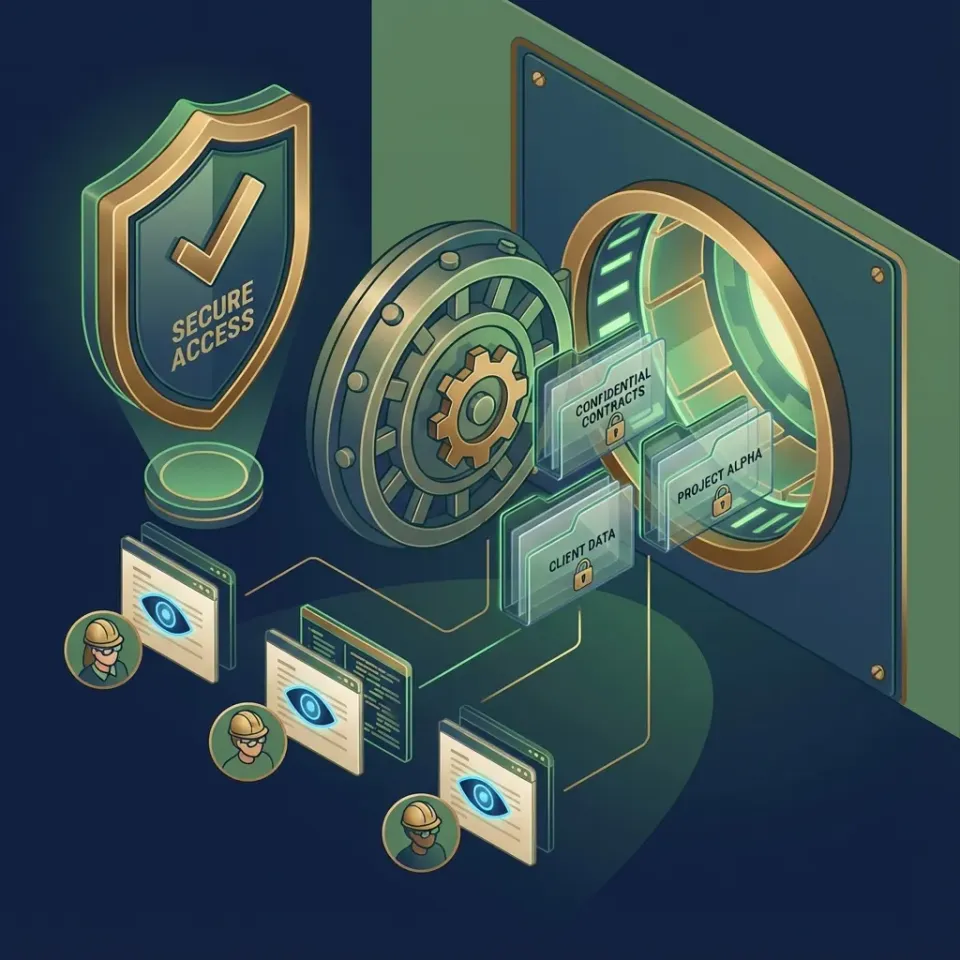
An IPO data room is a secure virtual workspace where a company preparing for an initial public offering shares financial records, legal documents, and corporate governance materials with underwriters, auditors, and regulatory reviewers.
Unlike the data rooms used in M&A transactions, where a buyer evaluates a single target, an IPO data room serves a wider audience with different access needs. Underwriters need everything. Auditors need financials and tax records. Legal counsel reviews contracts and litigation history. Potential investors see a curated subset. Each group requires different permissions, and every access event needs to be logged.
The data room also functions as your organizational forcing function. The process of assembling documents for an IPO exposes gaps: missing board resolutions, unsigned contracts, outdated cap tables. Companies that start building their data room 6 to 12 months before filing catch these problems early enough to fix them without delaying the offering.
Most IPO data rooms contain between 1,000 and 5,000 documents by the time the S-1 is filed. That volume demands structure, not just a shared folder with everything dumped in.
Helpful references: Fast.io Workspaces, Fast.io Collaboration, and Fast.io AI.
Essential Document Categories for an IPO Data Room
Underwriter due diligence follows a predictable pattern. Organizing your data room around these categories saves weeks of back-and-forth.
Corporate Records
- Certificate of incorporation and all amendments
- Bylaws (current version plus historical amendments)
- Board meeting minutes for the past three to five years
- Shareholder agreements and voting agreements
- Cap table with full option grant history
- Stock option plans, warrant agreements, and convertible note terms
- Organizational chart showing all subsidiaries and affiliates
Financial Documents
- Audited financial statements (minimum three years for most filers)
- Quarterly unaudited financials for the current period
- Revenue breakdowns by product line, geography, and customer segment
- Tax returns (federal and state) for the past three years
- Debt agreements, credit facilities, and loan covenants
- Financial projections and the assumptions behind them
- Accounts receivable and payable aging schedules
Legal and Regulatory
- Material contracts (customers, suppliers, partners)
- Pending and settled litigation
- Regulatory correspondence and compliance certifications
- Insurance policies and coverage summaries
- Environmental, health, and safety compliance records
- Government permits and licenses
Intellectual Property
- Patent portfolio with filing dates and jurisdictions
- Trademark registrations and pending applications
- Software licenses (inbound and outbound)
- Trade secret policies and employee invention assignment agreements
- Open source usage audit and license compliance
Human Resources
- Executive employment agreements
- Compensation structures and bonus plans
- Employee handbook and key HR policies
- Benefits programs and 401(k) plan documents
- Key employee retention agreements
Governance and Compliance
- Code of conduct and ethics policies
- Insider trading policy
- Whistleblower procedures
- Committee charters (audit, compensation, nominating)
- D&O insurance policies
- Related party transaction disclosures
How to Structure Access for Different Stakeholders
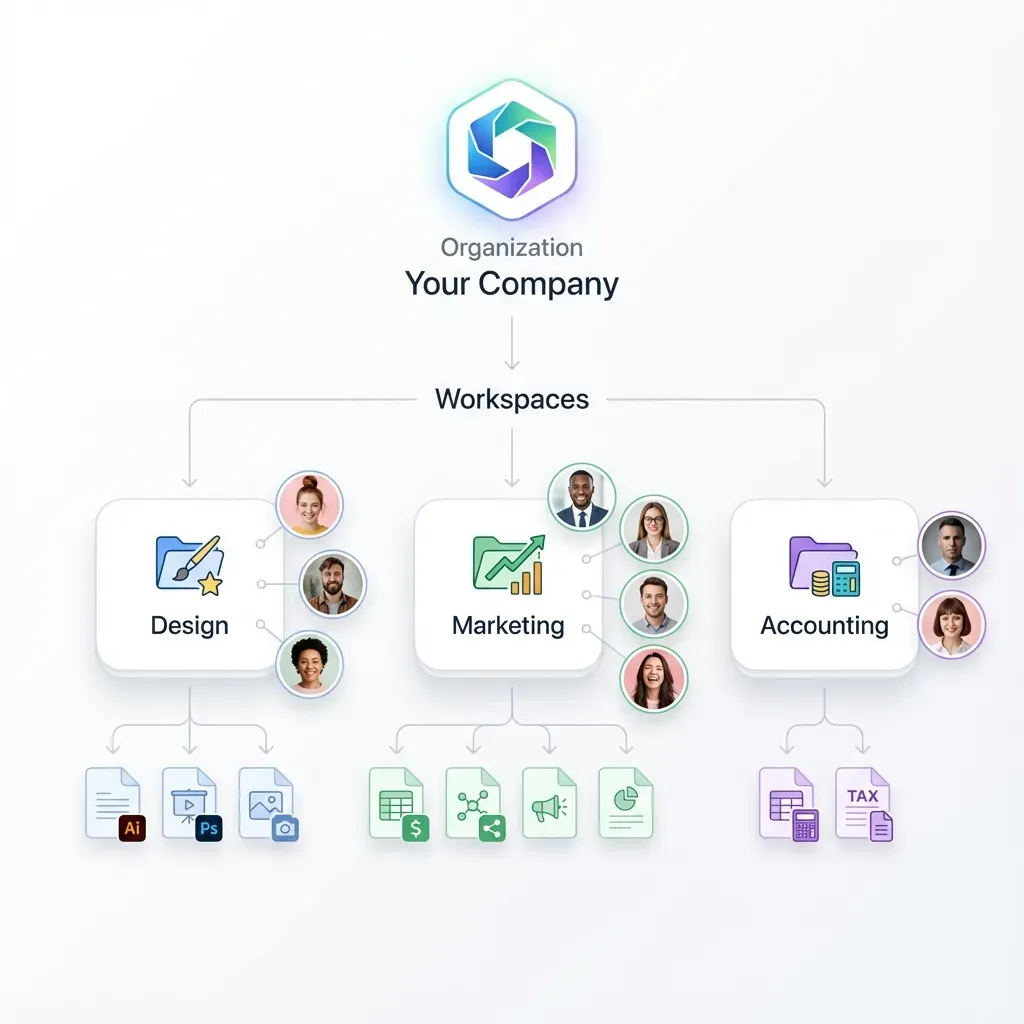
Not everyone in the IPO process needs to see the same documents, and most shouldn't. A tiered access model protects sensitive information while keeping due diligence moving.
Tier 1: Full Access (Underwriters and Lead Counsel)
The lead underwriter's deal team and the company's IPO counsel need access to every document in the room. They're responsible for the overall due diligence process and will flag anything that needs attention. Give them download permissions and the ability to request additional documents.
Tier 2: Functional Access (Auditors and Tax Advisors)
Auditors need financial statements, tax records, and supporting schedules. They don't need to see employment agreements or litigation files. Restrict their view to financial and tax folders. This keeps the auditors focused and reduces the risk of privileged legal documents being inadvertently reviewed outside the legal team.
Tier 3: Limited Access (Potential Investors and Analysts)
During the roadshow phase, selected investors may get access to a curated subset of the data room. This typically includes the prospectus draft, financial summaries, and management presentations. Never give investors access to the full data room. Create a separate restricted view with only the materials approved for investor distribution.
Tier 4: View-Only (Board Members and Advisors)
Board members and external advisors may need visibility into the process without download rights. View-only access with watermarking lets them review documents without creating copies that could circulate outside controlled channels.
Every permission tier should require NDA acceptance before access is granted. The data room should log the NDA acceptance with a timestamp and the signer's identity, creating an enforceable record.


Build a data room your underwriters will actually enjoy reviewing
Fast.io gives you granular permissions, full audit trails, and AI-powered document search across your entire IPO data room. Start with 50 GB free, no credit card required.
Building Your IPO Data Room Step by Step
IPO preparation typically requires 6 to 12 months of document assembly. Cramming it into the final weeks before filing creates errors, delays the offering, and frustrates underwriters who have seen this pattern before.
Months 12 to 9: Audit and Inventory
Start by listing every document your underwriters will request. Work from the due diligence checklist your IPO counsel provides. Identify what exists, what needs updating, and what doesn't exist yet. Common gaps at this stage include missing board minutes, unsigned amendments, and cap table discrepancies.
Months 9 to 6: Collection and Organization
Assign a data room manager from your legal or finance team. This person owns the folder structure, naming conventions, and upload schedule. Use consistent naming: "Contract_CustomerName_Date.pdf" is searchable. "Final_v3_revised_FINAL2.pdf" is not.
Build the folder structure before uploading anything. Top-level folders should mirror the document categories above. Within each category, use subfolders by year, entity, or document type depending on what makes sense for the volume. Include a master index document at the root level that maps every folder to its contents.
Months 6 to 3: Population and Review
Upload documents in batches by category. After each batch, verify completeness against the checklist. Flag missing documents immediately rather than hoping someone will notice later.
This is also when you set up access tiers. Grant underwriter access early so they can start reviewing corporate and financial records while you're still assembling legal and IP documents. Waiting until the room is "complete" wastes months of potential review time.
Months 3 to Filing: Active Due Diligence
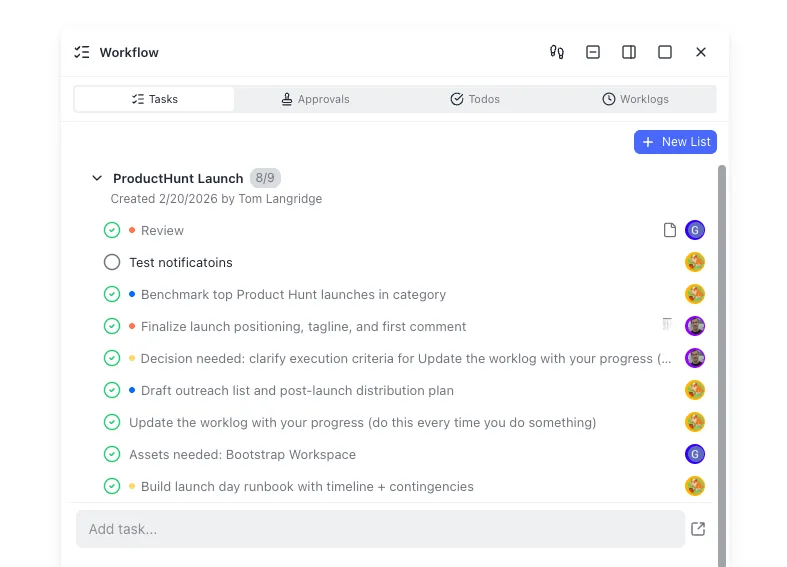
Once underwriters are actively reviewing, monitor their activity. Which documents are they spending the most time on? Which folders haven't been opened? If they're spending hours on a specific contract, prepare for questions about it. If they haven't touched the IP section, send a reminder.
Update documents in place with version tracking rather than uploading replacement files with new names. Underwriters need to see what changed between versions, not hunt for the latest copy across duplicate files.
Security and Compliance Requirements
An IPO data room handles material nonpublic information. A breach doesn't just embarrass the company. It can trigger SEC enforcement, derail the offering, and expose officers to personal liability.
Access Logging and Audit Trails
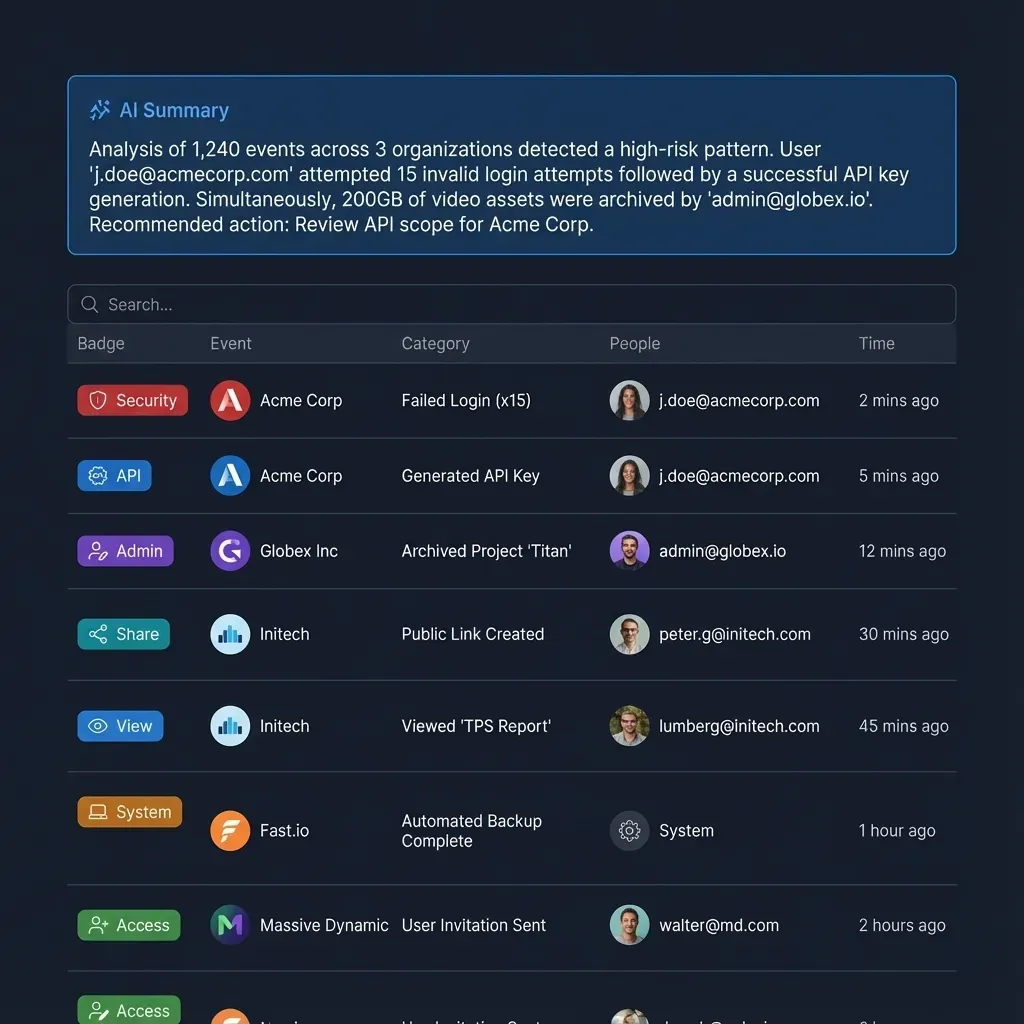
Every action in the data room should be logged: who accessed which document, when, for how long, and whether they downloaded or printed it. These logs serve two purposes. First, they demonstrate to underwriters and counsel that document access is controlled. Second, they create a defensible record if questions arise later about who had access to what information and when.
Watermarking
Dynamic watermarking embeds the viewer's name, email, and access timestamp on every page. If a document leaks, you can trace it to the source. This is standard practice for IPO data rooms, and underwriters expect it.
Two-Factor Authentication
Require 2FA for every data room user. A single compromised password shouldn't be enough to access pre-filing financial statements. This is a baseline expectation, not an upgrade.
Session Controls
Set session timeouts appropriate to the sensitivity level. Auto-expire inactive sessions after 30 minutes. Require re-authentication for sensitive folders like financial projections and draft registration statements.
Choosing a Platform
Traditional IPO data room providers like Intralinks, Datasite, and DFIN charge per-page or per-user pricing that can run into the hundreds of thousands for a large offering. Modern platforms offer flat-rate pricing that scales better.
For companies that want workspace-level intelligence alongside their data room, Fast.io provides granular permissions at the organization, workspace, folder, and file level, complete audit trails, and branded portals where clients access documents without creating accounts. Shares support password protection, expiration dates, and guest access controls. When intelligence is enabled, the platform auto-indexes uploaded documents for semantic search, so underwriters can ask questions across the entire document set rather than opening files one at a time.
Other solid options include Carta (especially if you already use them for cap table management), iDeals, and ShareFile. Evaluate based on your document volume, number of concurrent users, and whether you need analytics on reviewer behavior.
Common Mistakes That Delay IPO Due Diligence
After assembling hundreds of data rooms across different IPO processes, underwriters consistently flag the same problems.
Incomplete board minutes. If your board met 12 times last year and you only have minutes for 8 meetings, that's a red flag. Underwriters will ask what happened at the undocumented meetings and whether any material decisions were made without proper record.
Stale cap tables. A cap table that doesn't reconcile with your most recent option grants, note conversions, or secondary sales will stall the process. Reconcile your cap table against your legal records before populating the data room, not after underwriters find discrepancies.
Unsigned documents. Draft agreements and unsigned amendments suggest the company's contract management is disorganized. Track down signatures before uploading. If an agreement was executed verbally or via email, document that with a cover memo.
Poor version control. When three versions of the same contract appear in different folders, underwriters have to determine which is current. Maintain a single current version in the primary folder with prior versions archived in a labeled subfolder.
No master index. Without a document index, reviewers waste time navigating the folder structure trying to figure out what's where. A master index with document names, dates, and brief descriptions lets reviewers jump directly to what they need.
Delayed access grants. Some companies wait until every document is uploaded before granting underwriter access. This compresses the entire review into a few weeks instead of letting it happen in parallel with document collection. Grant access as soon as each category is substantially complete.
Ignoring activity data. If your data room provides analytics on reviewer behavior and you're not checking them, you're missing early signals. Low engagement with critical sections often means the reviewer is stuck, confused, or waiting for something. Reach out proactively instead of waiting for formal questions.
Frequently Asked Questions
What documents go in an IPO data room?
An IPO data room typically contains corporate records (incorporation documents, bylaws, board minutes, cap table), financial documents (audited statements, tax returns, projections), legal files (material contracts, litigation history, regulatory correspondence), intellectual property records (patents, trademarks, licenses), HR documents (executive agreements, compensation structures), and governance materials (committee charters, compliance policies, insider trading rules). Most IPO data rooms end up with 1,000 to 5,000 documents total.
How do you set up a data room for an IPO?
Start 6 to 12 months before your planned filing date. Assign a dedicated data room manager from legal or finance. Build a folder structure matching standard due diligence categories before uploading anything. Create a master index document. Set up tiered access permissions so underwriters, auditors, and investors each see only what they need. Require NDA acceptance and two-factor authentication for all users. Upload documents in category batches, verifying completeness against your due diligence checklist as you go.
Do you need a virtual data room for an IPO?
There's no legal requirement to use a virtual data room specifically, but it's effectively mandatory in practice. Underwriters require organized, controlled access to hundreds of documents with audit trails showing who accessed what and when. Regulators expect transparent document disclosure. Physical data rooms are impractical for modern IPOs with distributed deal teams. Every serious IPO process uses a virtual data room.
How long does IPO due diligence take?
Active underwriter due diligence typically runs 2 to 4 months, but the full document preparation process spans 6 to 12 months. Companies that start organizing documents early can run due diligence in parallel with document collection, shortening the overall timeline. Delays usually come from missing documents, cap table discrepancies, or incomplete board records rather than the review process itself.
How much does an IPO data room cost?
Traditional enterprise providers like Intralinks and Datasite charge $1,000 to $5,000+ per month, with some using per-page pricing that can reach into the hundreds of thousands for large offerings. Modern platforms offer flat-rate plans starting around $100 to published pricing for startup-focused tools and $400 to published pricing for mid-market solutions. The right choice depends on your document volume, number of concurrent users, and required security features.
What security features should an IPO data room have?
At minimum: granular folder and document-level permissions, two-factor authentication, dynamic watermarking that embeds viewer identity on every page, comprehensive audit trails logging every access event, session timeouts for inactive users, and NDA gating that requires signed agreements before granting access. Advanced features like IP address restrictions and remote document revocation add additional protection for highly sensitive pre-filing materials.
Related Resources

Build a data room your underwriters will actually enjoy reviewing
Fast.io gives you granular permissions, full audit trails, and AI-powered document search across your entire IPO data room. Start with 50 GB free, no credit card required.