Best MCP Servers for Real-Time Data in 2026
Real-time MCP servers let AI agents consume live data feeds, from stock tickers and Kafka topics to infrastructure metrics, and act on events as they happen instead of querying stale snapshots. This guide compares nine MCP servers across market data, event streaming, observability, and analytics, with evaluation criteria and recommendations for each use case.

What Makes an MCP Server Real-Time
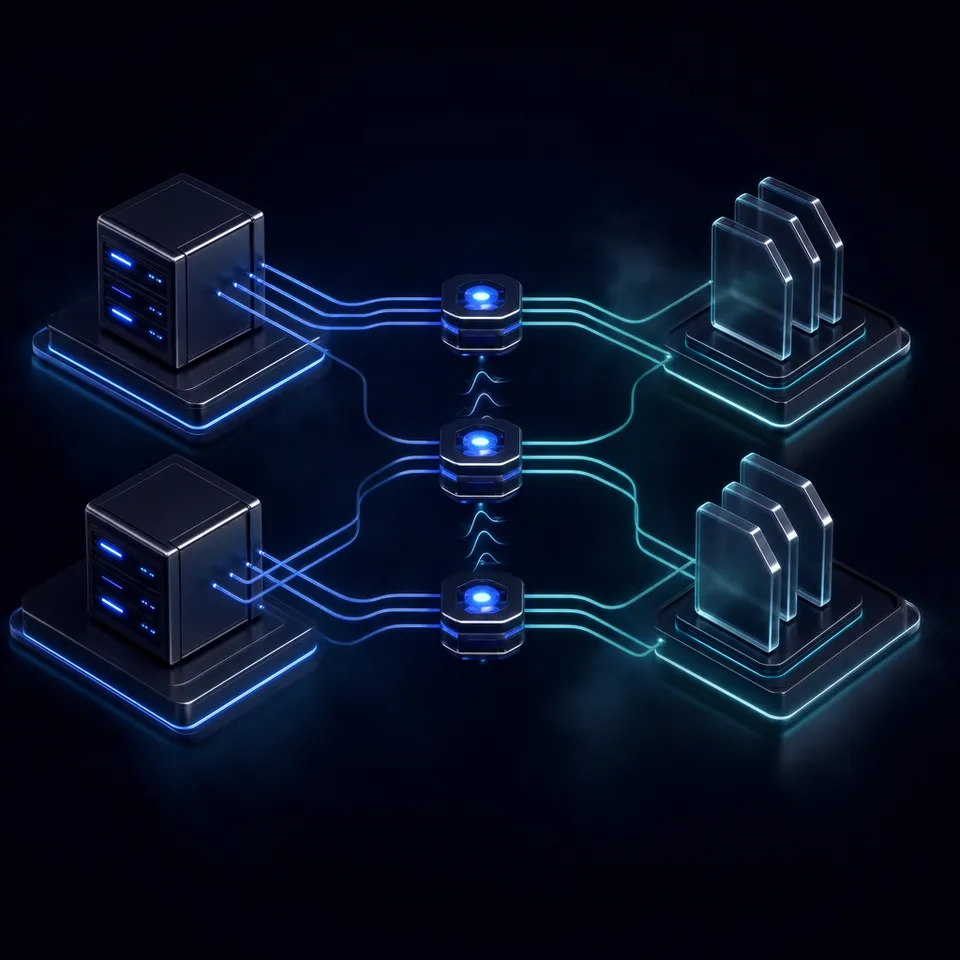
A real-time MCP server streams live data to AI agents, enabling them to react to events as they happen rather than querying stale snapshots. The difference matters because a stock trading agent checking prices every five minutes will miss opportunities that a WebSocket-fed agent catches in milliseconds.
Three patterns define how real-time data flows through MCP today:
- Poll-and-consume: The agent calls a tool that fetches the latest batch of messages from a queue or API. Confluent's Kafka MCP server works this way, pulling batches per tool call rather than maintaining a persistent consumer.
- WebSocket streaming: The data source pushes updates to the agent continuously. Polygon.io's MCP server uses this for tick-by-tick market quotes.
- Query-on-demand with low latency: The agent queries a pre-aggregated data store that updates in near real-time. Tinybird and Datadog both follow this pattern, keeping data fresh enough that each query reflects current state.
The MCP protocol itself has evolved to support these patterns. Transport layers progressed from stdio pipes in 2024 to HTTP with Server-Sent Events in early 2025, and then to Streamable HTTP with dynamic SSE upgrades by March 2025. Stateless architecture and async task support are on the roadmap for 2026.
The servers in this guide fall into four categories: market data, event streaming, observability, and analytics. Each section explains what the server does, who it's for, and where it falls short.

Related guides
- Best MCP Servers for Search: Connecting AI Agents to Real-Time DataSearch MCP servers connect AI agents to real-time web data, which cuts down on hallucinations and helps agents retrieve...
- Top 7 MCP Servers for Databases: Connecting Agents to Data (2026)MCP servers for databases connect AI agents to structured data storage. This guide ranks the top 7 servers for...
- Top MCP Servers for Data Analysis and SQL (2026 Guide)MCP servers for data analysis let LLMs safely query databases and visualize data without exposing credentials. They...
- Top 7 Open Source MCP Servers for AI Agents in 2026Open source MCP servers give AI agents direct access to files, databases, and APIs without black-box proprietary...
- Best MCP Servers for LLM Workflows in 2026Model Context Protocol servers give LLMs standardized access to tools, data, and services. With over 10,000 public...
- 8 Best MCP Servers for Video Processing in 2026MCP servers for video processing let AI agents transcode, analyze, edit, and stream video through Model Context...
More on this subject: MCP and Model Context Protocol (238 guides)
Market Data: Polygon, Alpaca, and Finnhub
Financial data is the most demanding real-time use case. Trading agents need sub-second price updates, and even research agents benefit from live quotes over delayed snapshots.
1. Polygon.io
Polygon is the speed specialist. Its MCP server provides tick-by-tick price data with WebSocket streaming for US equities, options, forex, and crypto. The same infrastructure powers trading desks and fintech startups, so latency is measured in milliseconds rather than seconds.
Best for: Agents that need raw, low-latency price feeds for algorithmic trading or real-time portfolio monitoring.
Limitations: WebSocket streaming requires a paid plan. The free tier caps at 5 requests per minute with 2 years of historical data, which works for research but not live trading.
Pricing: Free tier available. Paid plans scale with data coverage and latency requirements.
2. Alpaca
Alpaca is the only MCP server that combines market data with a commission-free brokerage API. Your agent can analyze a stock and place an order in the same workflow without switching platforms. It also supports paper trading, so you can test strategies without real money.
Best for: Agents that need to go from analysis to execution. If your agent should buy when RSI drops below 30, Alpaca handles both the signal and the trade.
Limitations: Coverage is limited to US equities and crypto. No options or forex data.
Pricing: Free core tier with real-time US equity data. Commission-free trading.
3. Finnhub
Finnhub bundles real-time quotes with fundamentals, earnings calendars, and financial news scored for sentiment. The free tier offers 60 API calls per minute, the most generous rate limit among market data MCP servers.
Best for: Research agents that need both price data and context. An agent monitoring earnings surprises can pull the calendar, check the price reaction, and read sentiment-scored news in one workflow.
Limitations: No WebSocket streaming on the free tier. Real-time streaming requires professional plans starting at $49/month.
Pricing: Free tier with 60 calls/minute. Professional plans from $49/month.


Give Your Real-Time Agents Persistent Storage
Fastio stores and indexes everything your streaming agents produce once Intelligence is enabled. Fastio is MCP-ready at /mcp with a 14-day trial.
Event Streaming: Confluent, StreamNative, and Lenses
Kafka and Pulsar power the event backbones of most large organizations. These MCP servers let agents tap into those streams directly.
4. Confluent MCP Server (Kafka)
Confluent's open-source MCP server connects AI agents to Kafka clusters through natural language. It exposes 20 built-in tools for managing topics, producing and consuming messages, running Flink SQL queries, and configuring connectors. The real advantage is Confluent's ecosystem of 120+ pre-built connectors, which means an agent can reach databases, SaaS platforms, and event streams without custom integration code.
Best for: Enterprise teams already running Confluent Platform or Confluent Cloud. The agent gets immediate access to whatever data flows through your Kafka infrastructure.
Limitations: Consumption is batch-based, not continuously streaming. Each tool call pulls a batch of messages. For true continuous consumption, you need an external orchestration layer or MCP's resource subscription pattern.
Source: github.com/confluentinc/mcp-confluent
5. StreamNative MCP Server
StreamNative's MCP server bridges both Kafka and Apache Pulsar to AI agents with over 30 tools covering data operations, topic management, broker monitoring, and serverless function deployment. It supports StreamNative Cloud instances and self-hosted clusters alike.
Best for: Teams running Pulsar or mixed Kafka/Pulsar environments. StreamNative is one of the few MCP servers that covers both streaming platforms under a single interface.
Limitations: No published performance benchmarks. Documentation focuses on Claude Desktop integration, so connecting other MCP clients may require manual configuration.
Source: Available on GitHub under the StreamNative organization.
6. Lenses MCP Server
Lenses takes a governance-first approach to Kafka MCP access. Its Snapshot engine lets agents explore data live in Kafka topics without moving it to an external store, while the SQL Processing engine (built on Kafka Streams) enables stream processing through familiar SQL syntax. Agent actions are audited, and data masking prevents exposure of PII to the model.
Best for: Regulated industries where agents need Kafka access but compliance requires audit trails and data masking. The Lenses IAM model controls exactly which topics and operations each agent can reach.
Limitations: Requires a Lenses platform deployment. Not a standalone Kafka connector.
Source: github.com/lensesio/lenses-mcp

Observability and Analytics: Datadog, Grafana, and Tinybird
Monitoring and analytics servers give agents access to the metrics, logs, and traces that describe what's happening in production right now.
7. Datadog MCP Server
Datadog's remote MCP server connects AI agents to live observability data: metrics, logs, traces, and incidents through a single interface. Agents can query telemetry using natural language, and the server enforces Datadog's existing RBAC and governance controls. One practical pattern is an incident response agent that correlates Datadog monitor alerts with feature flag changes to identify potential root causes automatically.
Best for: DevOps and SRE teams that already use Datadog. The MCP server turns your existing observability investment into an agent-accessible data source without building a separate pipeline.
Limitations: Requires a Datadog subscription. The server surfaces data from your Datadog account, so coverage depends on what you're already monitoring.
Source: docs.datadoghq.com/bits_ai/mcp_server
8. Grafana MCP Server
Grafana's official MCP server provides tools for querying across the full observability stack: Prometheus metrics, Loki logs, Tempo traces, plus alerting, OnCall, and incident management. The server translates natural language queries into PromQL or LogQL and executes them against your Grafana instance. It also supports Elasticsearch, OpenSearch, and Snowflake datasources.
Best for: Teams using the Grafana/Prometheus/Loki stack who want agents to query metrics and logs without writing PromQL by hand. The breadth of supported backends makes it a strong choice for heterogeneous monitoring environments.
Limitations: Currently in public preview for Grafana Cloud. Self-hosted users run the open-source mcp-grafana server, which requires manual setup.
Source: github.com/grafana/mcp-grafana
9. Tinybird MCP Server
Tinybird exposes your real-time analytics APIs and data sources through MCP, backed by managed ClickHouse. Agents can discover endpoints, execute SQL queries, and call your existing analytics APIs without manual integration. Access control uses scoped tokens or JWTs, so each agent only reaches the data sources within its scope.
Best for: Product and growth teams that already publish analytics APIs through Tinybird. The MCP server turns those existing endpoints into agent-callable tools with zero additional infrastructure.
Limitations: Requires a Tinybird workspace with published data sources or API endpoints. It's an analytics query layer, not a general-purpose database connector.
Persisting and Sharing Real-Time Agent Output
Real-time data flows through an agent, but the outputs need to land somewhere durable. A trading agent generates trade logs. A monitoring agent produces incident reports. A Kafka consumer agent extracts and transforms messages into summaries. All of these need persistent storage that survives the session.
Local filesystems work for prototyping, but they break down when multiple agents collaborate or when a human needs to review what an agent produced. S3 and Google Cloud Storage handle scale, but they lack built-in search, permissions at the file level, and any way for a human to browse and discuss results without a separate tool.
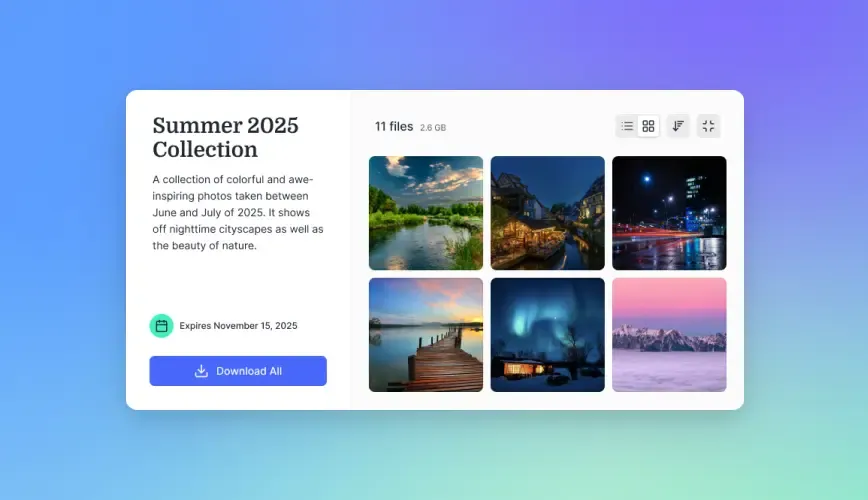
Fastio fills this gap as a workspace layer designed for agent-to-human handoff. Agents connect through the Fastio MCP server (Streamable HTTP at /mcp, legacy SSE at /sse) and get access to workspaces with file versioning, granular permissions, and Intelligence Mode for semantic search over stored content.
A practical pattern: a Kafka consumer agent pulls messages through the Confluent MCP server, processes them, and writes daily summaries to a Fastio workspace. Once Intelligence Mode is enabled on the workspace, it auto-indexes those summaries, so a product manager can search across weeks of digests using natural language, with citations pointing to specific files. When the agent's work is done, ownership transfer moves the entire workspace to a human account.
Fastio offers a 14-day Business Trial with paid plans starting at $9.99/month, providing ample storage and credits to evaluate agent output workflows.
Fastio is not a streaming server itself. It's the persistence and collaboration layer that completes a real-time data pipeline by giving agent output a place to live, get searched, and get handed off.
How to Choose the Right Server for Your Use Case
The right MCP server depends on what kind of real-time data your agent needs and what it does with the results.
Trading and market monitoring: Start with Polygon for raw price feeds or Alpaca if your agent also executes trades. Add Finnhub for sentiment and fundamentals research. Pair with a persistent workspace like Fastio to store trade logs, research reports, and performance analytics.
Event-driven pipelines: If your organization runs Kafka, Confluent's MCP server is the natural starting point with its 120+ connectors. StreamNative makes sense for Pulsar environments or mixed streaming platforms. Lenses adds governance controls for regulated industries.
Infrastructure monitoring: Datadog or Grafana, depending on which observability platform you already use. Both let agents query production telemetry through natural language. Grafana has the edge for open-source stacks (Prometheus, Loki, Tempo), while Datadog is more turnkey for teams already paying for their platform.
Product analytics: Tinybird turns existing analytics APIs into agent-callable tools. If you're already publishing ClickHouse-backed endpoints, the MCP server adds agent access with minimal setup.
Multi-server architectures: Most production agents combine two or three servers. A common stack pairs a streaming server (Confluent or StreamNative for ingestion), an observability server (Datadog or Grafana for monitoring the pipeline), and a persistence layer (Fastio for storing and sharing outputs). The MCP protocol's tool-based design makes this composition straightforward, since each server exposes its own tools and the agent calls whichever one fits the task.
Whatever you pick, start with one server and verify that the data quality and latency meet your needs before adding more. A single well-configured MCP server is more useful than three half-integrated ones.
Sources
References used to verify factual claims in this guide.
-
Confluent provides 120+ pre-built connectors for enterprise system integration Confluent MCP server includes 20 built-in tools
-
StreamNative MCP Server provides over 30 tools for streaming platforms
-
Finnhub free tier offers 60 API calls per minute Polygon free tier caps at 5 requests per minute with 2 years historical data
-
MCP transport layers progressed from stdio pipes to HTTP+SSE to Streamable HTTP by March 2025
Frequently Asked Questions
Can MCP servers stream real-time data?
Yes, but the mechanism varies. Some MCP servers like Polygon.io support WebSocket streaming for continuous price feeds. Others like Confluent's Kafka server use batch consumption, pulling a set of messages per tool call. The MCP protocol supports Server-Sent Events for server-to-client streaming, and Streamable HTTP transports allow dynamic SSE upgrades for ongoing data feeds.
What MCP server works with Kafka?
Three MCP servers connect to Kafka directly. Confluent's open-source server exposes 20 tools for topic management, message production/consumption, and Flink SQL queries, plus access to 120+ pre-built connectors. StreamNative's server covers both Kafka and Pulsar with 30+ tools. Lenses adds governance features like data masking and audit trails on top of Kafka access.
How do AI agents handle streaming data?
Agents typically consume streaming data in batches rather than maintaining persistent connections. An agent calls an MCP tool that fetches the latest messages from a Kafka topic or the most recent price quotes, processes them, and stores results. For continuous monitoring, agents run in loops with short intervals between calls, or use external orchestration to trigger tool calls when new data arrives.
Is there an MCP server for live market data?
Several. Polygon.io provides WebSocket-based tick-by-tick data for stocks, options, forex, and crypto. Alpaca combines real-time US equity quotes with commission-free trading execution. Finnhub offers real-time quotes alongside fundamentals, earnings calendars, and sentiment-scored financial news. Alpha Vantage also provides an MCP server with built-in technical indicators like RSI and MACD.
Do I need multiple MCP servers for a real-time data pipeline?
It depends on your use case, but most production agents use at least two. A streaming or data server handles ingestion (Confluent for Kafka events, Polygon for market data), while a persistence server like Fastio stores the processed output for search and human review. Adding an observability server (Datadog, Grafana) lets agents monitor the health of their own pipeline.
What is the fast MCP server for financial data?
Polygon.io is built for low-latency financial data. It uses WebSocket streaming for live trades and quotes, and serves the same infrastructure used by professional trading desks. For agents that need both data and trade execution in a single round-trip, Alpaca is the fast path since it eliminates the latency of calling two separate services.
Related Resources

Give Your Real-Time Agents Persistent Storage
Fastio stores and indexes everything your streaming agents produce once Intelligence is enabled. Fastio is MCP-ready at /mcp with a 14-day trial.