Best AI Note Taking Apps in 2026: 10 Tools We Actually Tested
AI note taking apps now go far beyond basic transcription. The best ones identify speakers, extract action items, and sync everything to your existing tools automatically. We tested ten of the most popular options across meeting transcription, personal knowledge management, and team collaboration to help you pick the right one.

How We Picked These Tools
We evaluated each app across five criteria: transcription accuracy, privacy controls, integrations, free tier generosity, and how well the AI actually understands context rather than just converting speech to text.
Accuracy across the best tools sits between 90% and 96% for clean single-speaker audio, dropping to 85-92% in multi-speaker calls with accents or overlapping voices. That gap matters more than most review sites acknowledge, so we tested each tool in real calls with multiple speakers.
We grouped the tools into three categories because "AI note taking" covers very different use cases:
- Meeting note-takers that join your calls and record automatically (Otter, Fireflies, tl;dv, Fathom, Jamie, Granola, Krisp)
- Personal knowledge tools that help you capture and connect ideas (Notion AI, Mem, Reflect)
- Sales-specific tools that go beyond notes into deal intelligence (Sybill)
Each entry below includes what the tool does best, where it falls short, and what it costs.
Related guides
- Best Free AI Tools in 2026: What's Actually Free and Worth UsingMost free AI tool lists include 14-day trials that quietly start charging you. This guide covers 11 tools that are free...
- Best AI Summarizers in 2026: 10 Tools Tested and ComparedKnowledge workers spend 1.8 hours every day just searching for information, according to McKinsey. AI summarizers cut...
- Best AI Tools for Excel in 2026Microsoft, OpenAI, and Anthropic all shipped native Excel add-ins in early 2026, joining established third-party tools...
- Best AI Meeting Assistants in 2026: 10 Tools ComparedA Calendly survey found that 58% of professionals feel uncomfortable when an AI meeting bot joins their call uninvited,...
- Best AI Browsers in 2026: 8 Options Ranked by Use CaseAI-driven search now accounts for 30% of all query interactions, up from under 10% in 2023, and the browsers carrying...
- 7 Best Grammarly Alternatives for 2026Grammarly Pro costs $144 per year, but several alternatives match or beat its grammar accuracy at a fraction of the...
More on this subject: AI Tool Directories and Comparisons (231 guides)
Meeting Note-Takers: The Big Seven
These tools focus on joining your video calls, recording the conversation, and producing structured notes afterward. The differences come down to how they handle recording (bot vs. bot-free), what they do with the transcript, and how much they cost.
1. Otter.ai: Best for Live Collaboration
Otter has been in the transcription game longer than most competitors, and it shows. Live transcription appears during the call so multiple participants can highlight, comment, and annotate in real time. The AI learns your team's vocabulary over time, improving accuracy for industry jargon and proper nouns.
Best for: Teams that want collaborative, real-time note editing during calls.
Key strengths:
- Live transcription with real-time collaboration
- Otter Chat lets you ask questions about past meetings
- Strong accuracy at roughly 95% for clear audio
Limitations:
- The visible bot joining calls creates social friction in client meetings
- Otter is currently facing four consolidated lawsuits related to recording consent, which raises questions about its consent workflows
Pricing: Free plan includes 300 minutes per month. Pro starts at $16.99/month.
2. Fathom: Best Free Tier
Fathom offers unlimited call recordings, transcripts, and storage on its free plan across Zoom, Google Meet, and Microsoft Teams. The catch: AI-generated summaries, action items, and follow-up notes are limited to five calls per month on the free tier. If you mostly need recordings and transcripts rather than AI summaries, Fathom's free plan is hard to beat.
Best for: Individuals and small teams who want free unlimited recordings.
Key strengths:
- Unlimited free recordings and transcripts
- "Ask Fathom" ChatGPT-style interface searches across all your meetings
- Clean integration with Slack, Salesforce, HubSpot, and Notion
Limitations:
- AI summaries capped at five per month on the free plan
- No bot-free recording option
Pricing: Free for unlimited recordings. Premium at $19/month. Team at $29/month.
3. tl;dv: Best for Multilingual Teams
tl;dv (too long; didn't view) stands out with transcription and summaries in over 30 languages, with automatic language detection. The highlight-sharing feature lets you clip specific moments and create shareable reels, useful when stakeholders need the key decision from a 60-minute call without watching the whole thing.
Best for: International teams needing multilingual transcription and highlight clips.
Key strengths:
- 30+ language support with automatic detection
- Unlimited free recordings on the free tier
- Timestamped clips and highlight reels for easy sharing
Limitations:
- Currently limited to Zoom and Google Meet (no Microsoft Teams on the free plan)
- Advanced features like CRM integration require the paid plan
Pricing: Free for unlimited recordings. Pro starts at $18/month per user.
Meeting Note-Takers (Continued)
4. Jamie: Best Bot-Free Experience
Jamie records meetings without sending a visible bot into the call, which makes a real difference in client-facing meetings, interviews, and sensitive conversations. It runs locally on your device, capturing audio directly rather than joining through a calendar integration. The tradeoff is that it can't capture video or screen shares.
Best for: Professionals who need notes without the awkwardness of a recording bot.
Key strengths:
- No bot joins your calls, eliminating social friction
- Works across any meeting platform since it captures system audio
- EU data residency for privacy-conscious organizations
Limitations:
- Free plan limited to 10 meetings per month with 30-minute cap
- Cannot capture screen shares or video content
- Higher-tier plans get expensive (Pro at 47 EUR/month)
Pricing: Free for 10 meetings/month. Standard at 24 EUR/month. Pro at 47 EUR/month.
5. Granola: Best for Minimal Friction
Granola takes a different approach: you jot quick notes during the meeting, then click "Enhance Notes" afterward. The AI combines your bullet points with the transcript to produce structured summaries. This means you stay engaged in the conversation instead of watching a bot transcribe in real time. Granola raised $125M in March 2026 at a $1.5B valuation, signaling serious momentum.
Best for: People who prefer taking their own notes and want AI to fill in the gaps.
Key strengths:
- Bot-free, privacy-first design
- Combines your manual notes with AI transcription for more relevant output
- Spaces feature for team collaboration with granular access controls
Limitations:
- 90-92% transcription accuracy, lower than some competitors
- Free plan has limited meeting history
- Requires your active participation during the meeting (the AI needs your notes as anchors)
Pricing: Free with limited history. Business at $14/user/month. Enterprise at $35/user/month.
6. Krisp: Best for Noisy Environments
Krisp combines AI noise cancellation with note-taking, making it the obvious choice for remote workers dealing with background noise. It removes barking dogs, construction sounds, and keyboard clatter from both your microphone and incoming audio before the transcription even starts, which improves accuracy downstream.
Best for: Remote workers in noisy environments who need clean transcriptions.
Key strengths:
- Industry-leading noise cancellation paired with transcription
- Works offline for in-person meeting recording
- Bot-free recording across Zoom, Teams, Google Meet, and Slack Huddles
Limitations:
- Free plan limited to 60 minutes of noise cancellation daily and two AI summaries
- Transcription accuracy depends heavily on the noise cancellation step
Pricing: Free with daily limits. Pro plans up to $30/month.
7. Fireflies.ai: Best for CRM Integration
Fireflies shines when you need meeting notes to flow automatically into CRMs, project management tools, and communication platforms. It has the deepest integration library of any tool we tested, connecting to Salesforce, HubSpot, Monday.com, Asana, Jira, and dozens more.
Best for: Sales and operations teams that need meetings synced to CRMs automatically.
Key strengths:
- The broadest integration library among meeting note-takers
- Conversation intelligence features for sales coaching
- Team-wide searchable meeting database
Limitations:
- Uses a visible bot that joins calls
- Also facing biometric privacy lawsuits in Illinois, similar to Otter
- The sheer number of features can overwhelm individual users
Pricing: Free plan available. Pro at $18/month per user. Business at $29/month per user.


Keep your meeting notes indexed, searchable, and permission-controlled
Fastio's intelligent workspaces auto-index documents for AI-powered search and chat, with granular permissions and a full audit trail.
Personal Knowledge and Hybrid Tools
Not everyone needs a meeting recorder. These three tools focus on capturing ideas, connecting thoughts, and building a personal or team knowledge base with AI assistance.
8. Notion AI: Best All-in-One Workspace
Notion AI turns your existing Notion workspace into an AI-powered note-taking system. AI Meeting Notes transcribes calls and generates summaries, action items, and shareable docs. The real power is that those notes live alongside your projects, wikis, and databases, so meeting outputs connect directly to the work they reference.
Since March 2026, custom instructions let you define how AI Meeting Notes formats your summaries, including section structure, tone, and level of detail.
Best for: Teams already using Notion who want AI notes inside their existing workspace.
Key strengths:
- Meeting notes connect to your projects, databases, and docs
- Custom AI instructions for tailored summary formats
- AI blocks can expand notes, generate counter-arguments, or draft content
Limitations:
- AI features require the Business plan ($20/user/month) or higher
- Meeting transcription is an add-on to an already complex product
- Transcription accuracy trails dedicated tools like Otter and tl;dv
Pricing: AI features included in Business ($20/user/month) and Enterprise plans. Limited trial usage on lower tiers.
9. Mem: Best for Automatic Organization
Mem captures notes, web clips, voice memos, and meeting transcripts, then uses AI to surface connections between them without manual tagging or folder hierarchies. Mem 2.0, released in early 2026, brought significant speed and stability improvements. The AI groups related ideas into "Collections" automatically, so your notes organize themselves as you write.
Best for: Individual knowledge workers who want notes that organize themselves.
Key strengths:
- AI-powered automatic organization without manual tagging
- Collections surface related notes across your entire knowledge base
- Meeting recording, transcription, and summarization built in
Limitations:
- Mem has no free tier (starts at $8.33/month for individuals)
- Smaller integration ecosystem compared to Notion
- Works best as a solo tool, team features are still maturing
Pricing: Starts at $8.33/month. Pro at $15/month.
10. Reflect: Best for Private, Encrypted Notes
Reflect is a networked note-taking app with end-to-end encryption, making it the strongest privacy option for personal notes and journals. Backlinks connect your ideas into a knowledge graph, and AI helps you draft, summarize, and transcribe voice notes. The encryption means Reflect genuinely cannot read your notes, even if compelled.
Best for: Privacy-conscious individuals who want encrypted, interconnected notes.
Key strengths:
- End-to-end encryption, the company cannot access your notes
- Backlinks and knowledge graph for connecting ideas
- Clean iOS and web apps with Chrome/Safari clipping
Limitations:
- Reflect has no free tier ($10/month flat)
- No team or collaboration features
- Meeting-specific features are limited compared to dedicated tools
Pricing: $10/month flat rate.

Privacy and Security: What to Check Before You Buy
AI note-taking tools process some of your most sensitive conversations. Before choosing one, you need to understand exactly what happens to your data.
Data training policies vary widely. Some freemium tools use your meeting data to train their AI models. A confidential strategy discussion on your Zoom call could theoretically influence a public model's future outputs. Check whether the vendor has a zero-training guarantee, and whether it applies to all tiers or just enterprise plans.
Recording consent is a legal minefield. Otter.ai faces four consolidated federal lawsuits over how its bot records participants without explicit consent. Fireflies has two separate biometric privacy suits in Illinois. Before deploying any tool that joins calls with a visible bot, confirm it meets your jurisdiction's consent requirements, especially in two-party consent states and under GDPR.
Here's what to verify for any tool you're evaluating:
- Does the vendor use your data for model training? Can you opt out?
- Where is your data stored? Is EU data residency available?
- Does the tool offer end-to-end encryption (Reflect) or at-rest encryption?
- Can you delete recordings and transcripts permanently?
- Does the tool comply with your industry's regulations (attorney-client privilege, healthcare data)?
- Is SSO and RBAC available for team deployments?
For teams handling confidential material, the safest options are Granola and Jamie (bot-free, process audio locally), Reflect (end-to-end encryption for notes), or enterprise tiers of any tool with SOC 2 Type II compliance and zero-training guarantees.
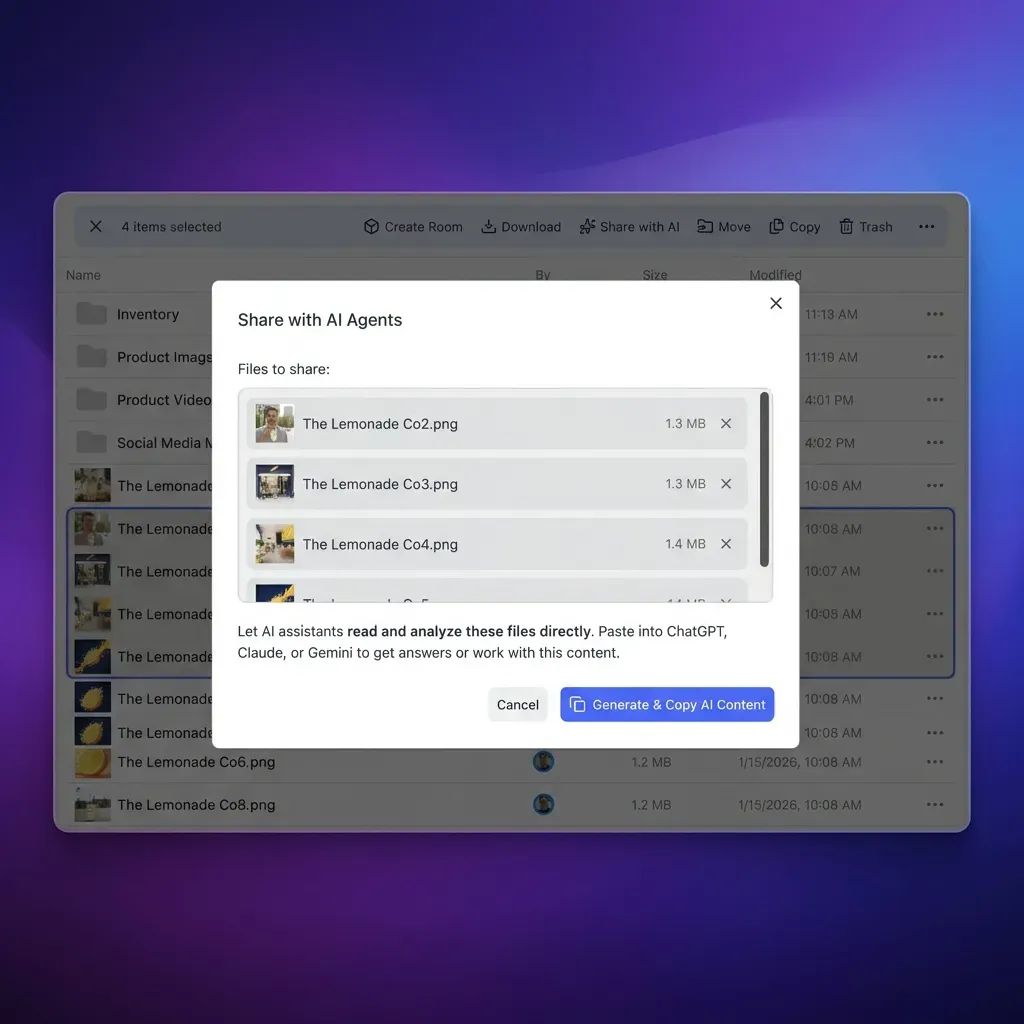
If your workflow involves storing meeting outputs alongside project files, an intelligent workspace like Fastio keeps documents indexed and searchable while giving you granular permissions at the org, workspace, folder, and file level. The audit trail tracks every access event, which matters when meeting notes contain sensitive decisions.
Which Tool Should You Pick?
The right tool depends on your primary use case:
If you run lots of meetings and want hands-off automation: Fathom (best free tier), Otter (best real-time collaboration), or Fireflies (best CRM sync).
If you're in client-facing roles where a bot feels inappropriate: Jamie or Granola. Both record without joining the call.
If your team is multilingual: tl;dv handles 30+ languages with automatic detection.
If you're in a noisy environment: Krisp's noise cancellation cleans the audio before transcription, improving downstream accuracy.
If you want notes as part of a broader workspace: Notion AI connects meeting output to your projects and docs. For teams that need file storage, search, and AI chat alongside their meeting notes, Fastio's intelligent workspaces auto-index uploaded documents for semantic search and RAG queries, with a 14-day Business Trial and MCP server access for agents.
If privacy is the top priority: Reflect for personal encrypted notes. Jamie or Granola for bot-free meeting recording. Always check the vendor's data training policy regardless of which tool you choose.
If you're in sales: Fireflies or Sybill. Fireflies covers the broad use case with strong CRM integration. Sybill goes deeper with deal intelligence, follow-up email drafts, and CRM autofill, starting at $30/user/month for Pro.
The market is moving fast. Granola's $1.5B valuation in March 2026 shows investor confidence in the privacy-first approach, while established players like Otter and Fireflies are navigating consent lawsuits that could reshape how recording bots work. Whichever tool you pick, revisit your choice in six months because the landscape will look different.
Sources
References used to verify factual claims in this guide.
-
Accuracy across top tools sits at approximately 95-98% for clean single-speaker audio
-
Granola raised $125M at a $1.5B valuation in March 2026
-
Otter.ai facing four consolidated lawsuits over recording consent Fireflies has two separate biometric privacy suits in Illinois
-
84% of professionals alter how they speak when an AI note-taker is present
Frequently Asked Questions
What is the best AI note taking app?
It depends on your use case. Fathom offers the best free tier with unlimited recordings. Otter excels at real-time collaborative transcription. For bot-free recording, Jamie and Granola avoid the social friction of a visible bot. Notion AI works best if your team already uses Notion and wants meeting notes connected to projects.
Are AI note taking apps safe for confidential meetings?
Not all of them. Some tools use meeting data to train their AI models, and several vendors face active lawsuits over recording consent. For confidential meetings, choose tools that process audio locally (Jamie, Granola), offer end-to-end encryption (Reflect), or provide enterprise tiers with SOC 2 Type II compliance and zero-training guarantees. Always check the vendor's data retention and training policies before recording sensitive conversations.
Can AI note takers work offline?
Most AI note-taking apps require an internet connection for transcription and summarization since the AI processing happens in the cloud. Krisp is a notable exception, offering offline recording and transcription for in-person meetings. Some tools let you record offline and process the audio when you reconnect, but real-time features like live transcription and bot-based recording need a stable connection.
What is the most accurate AI transcription app?
Otter.ai and tl;dv lead in accuracy, both reaching approximately 95-96% for clear single-speaker audio in English. Fathom follows at around 92%, and Granola sits at 90-92%. Accuracy drops across all tools when dealing with multiple speakers, heavy accents, technical jargon, or poor audio quality. Krisp's noise cancellation can improve accuracy in noisy environments by cleaning the audio before transcription.
How much do AI note taking apps cost?
Several tools offer functional free tiers. Fathom and tl;dv provide unlimited free recordings. Otter's free plan includes 300 minutes monthly. Paid plans range from $10/month (Reflect) to $47 EUR/month (Jamie Pro). For teams, expect $14-29/user/month for tools like Granola Business, Fathom Team, or Fireflies Business. Enterprise plans with SSO and advanced security typically start around $35/user/month.
Related Resources

Keep your meeting notes indexed, searchable, and permission-controlled
Fastio's intelligent workspaces auto-index documents for AI-powered search and chat, with granular permissions and a full audit trail.