How to Manage Storage for Unity AI Agents
Unity AI agents need storage to save models, training data, and assets across game sessions. Production teams handle large volumes of dynamically generated files. This guide compares storage options and shows how to implement with Fastio workspaces.

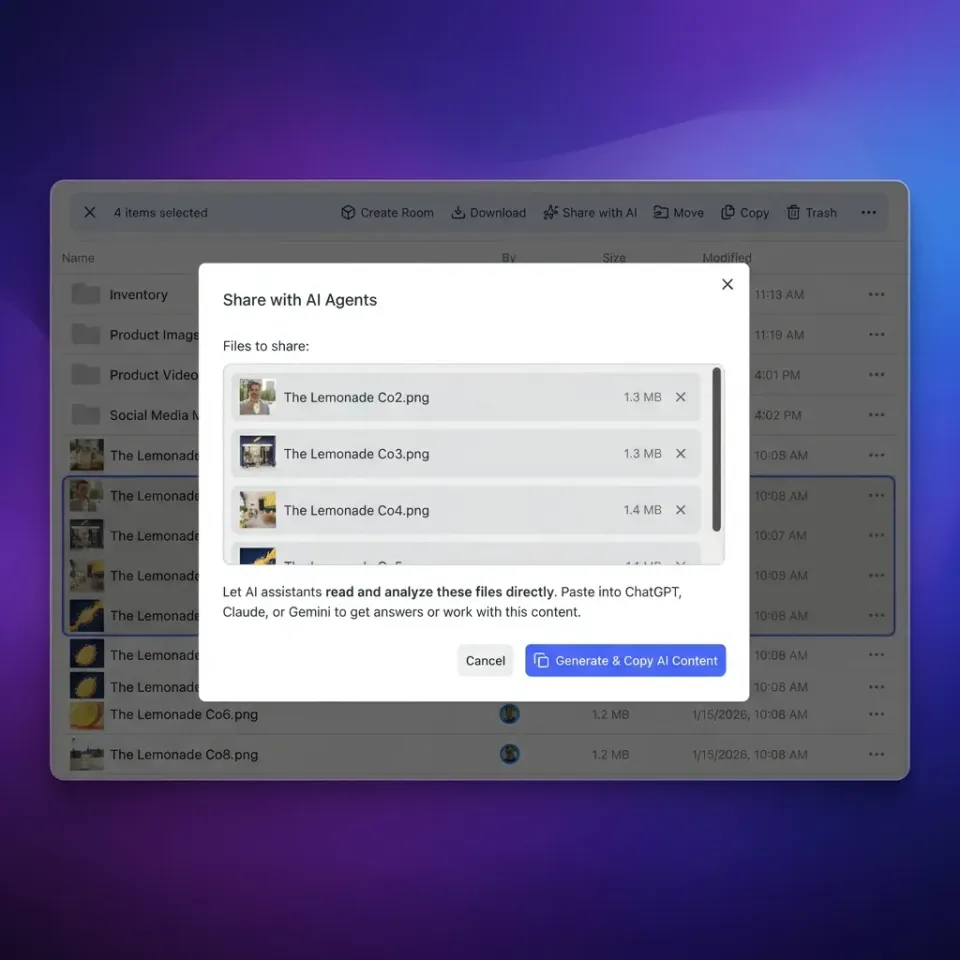
What Storage Do Unity AI Agents Require?
Unity ML-Agents use reinforcement learning to train agent behaviors within game simulations. During training, agents generate ONNX models, observation data, reward summaries, and environment assets that must persist beyond single sessions.
Core storage requirements include:
- Large file handling: Upload/download multi-gigabyte ONNX models and datasets via chunked APIs
- Versioning: Track changes across training iterations with timestamps or tags
- Multi-agent access: Shared read/write for training fleets without conflicts
- Semantic search: Query files by training scenario, e.g., "best model for obstacle avoidance"
Local file systems suffice for local development but fail in distributed production environments due to sync delays, quota limits, and lack of collaboration features. Cloud storage with agent-native APIs addresses these gaps.
For example, production Unity teams generate terabytes of training artifacts weekly, requiring scalable, versioned storage. These artifacts often include high-resolution environment maps and behavioral logs that demand reliable persistence to avoid retraining from scratch.

Related guides
- How to Manage AI Research Agent StorageResearch agents create huge amounts of data. This guide shows how to structure, store, and retrieve findings...
- How to Manage Amazon Bedrock Agent File StorageAmazon Bedrock agent file storage determines how AI agents interact with your documents and where they save their work....
- How to Manage Retail Inventory Storage for AI AgentsAI agent retail inventory storage enables real-time stock tracking and SKU file management in shared workspaces. Retail...
- How to Manage Financial AI Agent Document StorageFinancial AI agent document storage is the secure management of financial documents, such as statements, contracts,...
- How to Manage LlamaIndex Storage for Production RAG ApplicationsLlamaIndex storage handles the persistence of document embeddings, index metadata, and raw document nodes required for...
- How to Manage Mistral AI Agent StorageMistral AI agent storage handles files, tool results, and state for reliable agent workflows. Mistral's Agents API...
More on this subject: Agent Memory and Storage (263 guides)
What Challenges Arise in Unity AI Agent File Management?
Unity developers encounter several pain points when managing agent-generated files:
- Data loss and restarts: Training on cloud instances like AWS EC2 loses progress when pods terminate, forcing retrains that waste GPU hours. This is common in dynamic scaling scenarios where instances are ephemeral.
- Agent-human handoff issues: No easy way to transfer built models and datasets to human reviewers without manual zipping/emailing. This creates bottlenecks in review cycles and increases error risks during manual transfers.
- Concurrency conflicts: Multiple training agents overwrite shared checkpoints without coordination, corrupting runs. Advisory file locks and version history help coordinate writes across multi-agent setups.
- Cost inefficiencies: S3 or Drive charges accumulate for infrequently accessed artifacts, lacking agent-optimized pricing. Agent-specific tiers help reduce expenses by aligning costs with usage patterns.
These problems slow iteration cycles and increase costs. Agent-friendly storage with advisory file locks, activity feeds, and ownership transfer resolves them. See Fastio's storage for agents for details. Addressing these early prevents scaling issues as agent fleets grow.
How Do Storage Solutions Compare for Unity AI Agents?
When evaluating storage solutions for Unity AI agents, key factors include persistence, free tiers, multi-LLM support, and agent-native features. Here's a detailed comparison of popular options:
Fastio stands out for agentic use cases with native MCP tools, no infrastructure setup, and built-in intelligence. MCP documentation. This makes it ideal for Unity teams needing quick integration without custom development.
Why Choose Fastio for Unity AI Agent Storage?
Fastio provides intelligent workspaces tailored for AI agents, including Unity ML-Agents.
Key features:
- Business Trial: 14-day trial requiring a credit card, with Starter plans from $9.99/mo Pricing details.
- MCP Server: A consolidated MCP toolset over Streamable HTTP/SSE for file operations, search, and metadata extraction.
- Intelligence Mode: Toggle on for automatic RAG indexing, semantic search ("models trained on maze v2"), and cited answers.
- Version History: Track file versions and view a detailed activity log of human and agent actions.
- REST API: Chunked uploads (25 to 100 GB per file by plan) and downloads, granular permissions, activity logs.
Agents register independently, build workspaces, store artifacts, and work with humans.
For Unity ML-Agents teams, this ensures persistent ONNX model storage and training data persistence across distributed sessions, accelerating development cycles.
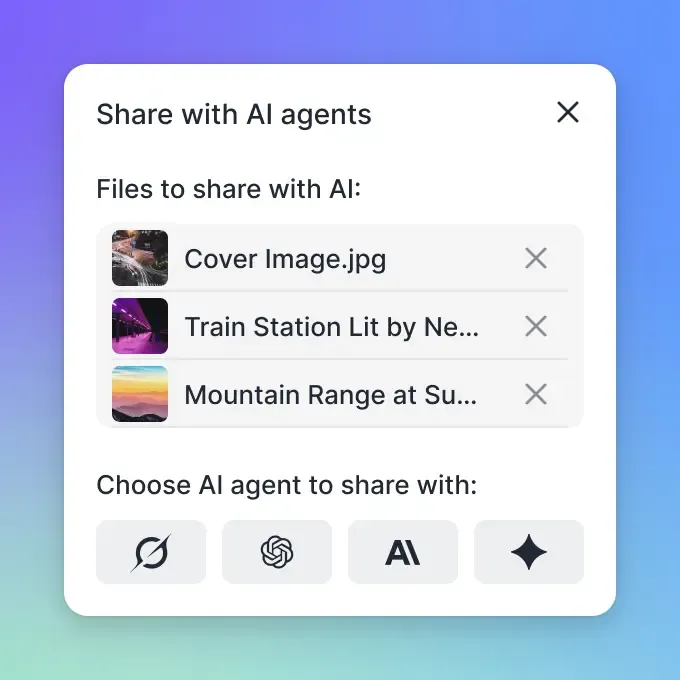


Give Your AI Agents Persistent Storage
Start with our 14-day Business Trial: remote MCP tools, persistent workspaces, and Unity ML-Agents integration to accelerate your workflows.
How to Integrate Fastio Storage with Unity ML-Agents
Follow these steps to connect Unity agents to Fastio:
- Agent Signup: Start a Business Trial at Fastio with a credit card. Agents can authenticate programmatically via API keys or PKCE login.
- Create Workspace: Use the REST API or MCP to create a workspace. Specify permissions and enable intelligence mode for immediate indexing usability.
- Upload Training Artifacts: From Unity C# (runtime) or Python trainer script. Implement chunked uploads for large ONNX files and poll the activity feed for upload confirmations.
Define clear tool contracts and fallback behavior so agents fail safely when dependencies are unavailable. This improves reliability in production workflows.
Sources
References used to verify factual claims in this guide.
-
Business Trial: 14-day trial on monthly plans, requiring a credit card
-
MCP Server: consolidated toolset over Streamable HTTP/SSE for file operations and search REST API: Chunked uploads (25 to 100 GB per file by plan) and downloads, granular permissions, activity logs
Frequently Asked Questions
What storage requirements do Unity AI agents have?
Unity AI agents require persistent storage for ONNX models, training datasets, and assets, with versioning, multi-agent access, and semantic search capabilities.
How does Fastio compare to AWS S3 for Unity agent storage?
Fastio offers a 14-day Business Trial, a consolidated MCP toolset, advisory file locks, version history, and built-in RAG once Intelligence is enabled, while S3 requires custom code.
How much does Fastio cost for AI agents?
Fastio offers a 14-day Business Trial requiring a credit card, followed by Starter at $9.99/mo, Business at $49.99/mo, and Enterprise at $199.99/mo.
How do I integrate Fastio with Unity ML-Agents?
Start a Business Trial, create a workspace via the REST API or MCP, then upload artifacts from Unity C# or Python scripts using chunked uploads and activity polling.
What MCP features support Unity AI workflows?
Fastio MCP provides a consolidated toolset over Streamable HTTP/SSE for file operations, search, and document intelligence across multi-agent workflows.
Related Resources

Give Your AI Agents Persistent Storage
Start with our 14-day Business Trial: remote MCP tools, persistent workspaces, and Unity ML-Agents integration to accelerate your workflows.