Top Multi-Agent Deployment Platforms for Scalable Workflows
Multi-agent platforms let you run fleets of AI agents in production. They handle scaling, state sharing, and coordination for jobs too big for a single agent. Benchmarks show they perform better. For example, scaling agents raised MMLU scores from 71.5% to 85.1%.

What Are Multi-Agent Deployment Platforms?
Multi-agent deployment platforms let teams run multiple AI agents together on real workloads. Each agent handles a specific role, like research, analysis, or execution. They pass data between them.
Single agents often hit limits on long tasks. Multi-agent systems split the work, leading to better outcomes. One study found MetaGPT's multi-agent code generation scored 82.2% pass@1 on HumanEval, ahead of GPT-4 alone at 67%.
Key requirements are persistent storage for sharing state and human handoff for oversight.
These platforms handle orchestration, scaling, monitoring, and deployment. Without proper state management, agents lose context between runs, dropping performance. Persistent storage solves this by keeping artifacts, logs, and intermediate results accessible across sessions.
Human handoff is key for production, where agents build outputs that humans review or extend. Built-in collaboration tools make this simpler, without emailing files or using external drives.
Related guides
- Comparing AI Orchestration Tools for Multi-Agent WorkflowsChoosing the right AI orchestration tool is critical for building reliable multi-agent systems. While frameworks like...
- How to Design a Multi-Agent Architecture for Enterprise WorkflowsMigrating from monolithic agent designs to a modular multi-agent system architecture improves task execution efficiency...
- Best 10 AI Team Collaboration Platforms for 2026Building AI requires more than just code sharing. It needs specialized tools for model versioning, dataset management,...
- How to Coordinate AI Agents with Multi-Agent Orchestration PatternsMulti-agent orchestration patterns define how AI agents work together to complete tasks. This guide covers the four...
- 7 Best Observability Stacks for Multi-Agent Systems (2026)Multi-agent observability stacks help you track how agents interact and where they fail by looking into the reasoning...
- 6 Best Debugging Tools for Multi-Agent Systems in 2026Multi-agent systems fail in ways that single-agent setups never do.
More on this subject: Multi-Agent Systems (62 guides)
Top Platforms Comparison
Here's how top platforms compare:



Give Your AI Agents Persistent Storage
Give agent fleets generous shared storage, a consolidated MCP toolset, and seamless collaboration. Ideal for production AI teams; start building scalable systems today.
How We Evaluated Platforms
We looked at platforms using these criteria for production multi-agent use:
Scalability: Handling concurrent agent fleets.
State Management: Persistent storage for shared context across agents and sessions.
Deployment Ease: Getting from code to production without heavy ops work.
Human Collaboration: Handoffs, reviews, ownership transfers.
Integrations: MCP tools, APIs, webhooks.
Pricing: Free options and scaling costs.
Most orchestration frameworks handle logic well but lack built-in persistent storage. You have to integrate S3 or databases. Platforms with built-in workspaces avoid the problem.
1. CrewAI
CrewAI sets up role-based agent teams for tasks like market research, content creation, or sales automation. Give agents tools and goals, then run them sequentially or in parallel.
Deploy on CrewAI Cloud or self-host. It scales with AMP for enterprise use.
Strengths
- Visual studio and APIs for quick builds
- Sequential and hierarchical execution
- Enterprise scaling with AMP
Limitations
- Debugging multi-agent loops can be tricky
- Less focus on persistent file state
Best for
Teams prototyping collaborative agents.
Pricing
Open source free; enterprise custom.
2. LangGraph Cloud
LangGraph lets you deploy stateful multi-agent graphs built with LangChain.
Strengths
- Graph orchestration with cycles
- Human-in-loop nodes
- LangChain ecosystem
Limitations
- Steep LangChain learning curve
- Storage via external services
Best for
LangChain users scaling graphs.
Pricing
Usage-based cloud.
3. Dify
Dify's visual builder helps create agent apps with built-in RAG pipelines.
Strengths
- Native MCP integration
- RAG pipelines built-in
- Self-host or cloud
Limitations
- Less flexible for code-heavy agents
Best for
No-code agent workflows.
Pricing
Free community; Pro $59/workspace/mo (Dify pricing).
4. Flowise
Flowise provides drag-and-drop setup for LLM chains and agents.
Strengths
- Numerous integrations including LLMs, vector stores, and databases
- Embeddings support
- Quick prototyping
Limitations
- Doesn't scale well for production fleets
Best for
Rapid LLM prototypes.
Pricing
Starts with paid cloud plans (pricing).
5. n8n
n8n automates workflows with AI agents and 500+ nodes.
Strengths
- MCP server trigger
- Human-in-loop
- Self-host free
Limitations
- Node-based, less agentic
Best for
Workflows blending AI and apps.
Pricing
Free self-host; cloud Starter €20/mo (n8n pricing).
6. AWS Bedrock Agents
Bedrock runs agents with Lambda tools on AWS.
Define clear tool contracts and fallback behavior so agents fail safely when dependencies are unavailable. This improves reliability in production workflows.
Strengths
- Enterprise scale
- Tracing built-in
- AWS integrations
Limitations
- IAM setup is complex
- Vendor lock-in
Best for
AWS teams.
Pricing
Pay-per-use, approx. $0.004/query (AWS Bedrock pricing).
7. Google Vertex AI Agent Builder
Vertex AI Agent Builder creates agents grounded in your data stores.
Define clear tool contracts and fallback behavior so agents fail safely when dependencies are unavailable. This improves reliability in production workflows.
Strengths
- Low-code
- BigQuery grounding
- Fast deployment
Limitations
- GCP ecosystem lock-in
Best for
Google Cloud users.
Pricing
Usage-based.
8. Fastio
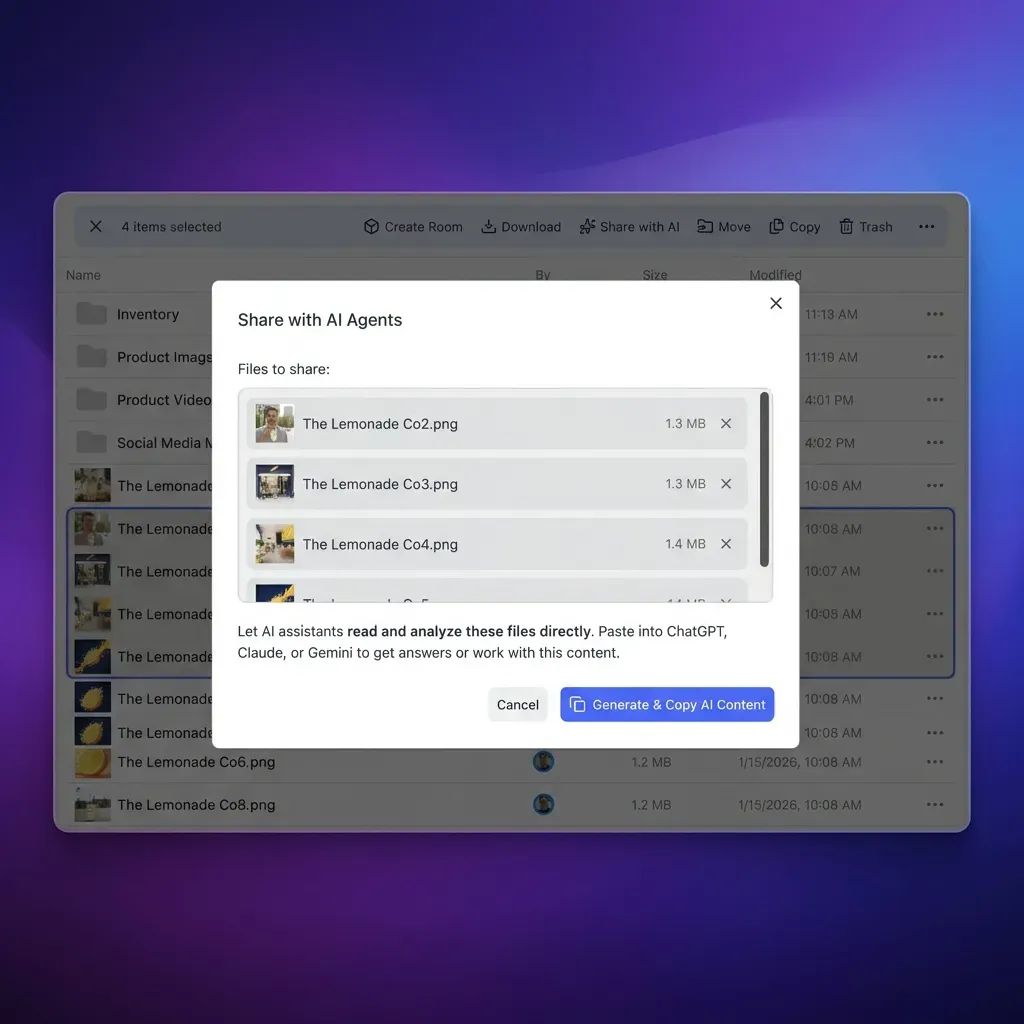
Fastio does not run or host agents. It is the shared storage layer that agents deployed on the platforms above connect to through its remote MCP server (https://mcp.fast.io/mcp/tools, over Streamable HTTP), so they can share files, hand work off, and leave results in a workspace a human can open.
Strengths
- Shared workspaces with granular permissions
- Built-in RAG over workspace files (Intelligence Mode)
- Ownership transfer from agent to human
Limitations
- Not an orchestration or hosting platform; pair it with one of the tools above
Best for
Agent teams that need persistent shared files and a human handoff.
Pricing
Starter plan from $9.99/mo. Monthly plans include a trial of up to 14 days (credit card required).
Sources
References used to verify factual claims in this guide.
-
scaling agents raised MMLU scores from 71
-
MetaGPT's multi-agent code generation scored 82 pass@1 on HumanEval ahead of GPT-4 alone at 67% Scaling agents can raise MMLU, and MetaGPT reports pass@1 around 82
-
AWS Bedrock Lambda groups S3 Custom code Pay-per-use $0 AWS Bedrock $0.004/query AWS Bedrock pricing can start around $0.004 per query
-
Dify Pricing Free community Pro $59/workspace/mo
-
Flowise Pricing Starts at $35/mo Flowise pricing starts at $35 per month
-
n8n automates workflows with AI agents and 500+ nodes
-
n8n Pricing Free self-host cloud Starter €20/mo
Frequently Asked Questions
What are multi-agent deployment platforms?
Multi-agent deployment platforms enable running fleets of specialized AI agents in production environments, managing orchestration, scaling, and state sharing for complex tasks.
Why use persistent storage in multi-agent workflows?
Persistent storage keeps shared context, logs, and artifacts across agent sessions, preventing context loss and enabling reliable handoffs to humans.
How does Fastio support agent fleet collaboration?
Fastio offers a consolidated MCP toolset for agent fleets in collaborative workspaces over Streamable HTTP, with ownership transfer and granular permissions.
How do multi-agent systems improve benchmark performance?
Multi-agent collaboration often improves benchmark outcomes because specialized agents can split tasks, verify each other, and reduce single-agent blind spots.
Related Resources

Give Your AI Agents Persistent Storage
Give agent fleets generous shared storage, a consolidated MCP toolset, and seamless collaboration. Ideal for production AI teams; start building scalable systems today.