Top 5 File Sharing Tools for AI Workflows
Over 60% of AI workflows involve document or file processing. Multi-agent systems can generate hundreds of artifacts per session. This guide evaluates the top five file sharing platforms designed to handle AI agent workflows, from API-first storage to LLM-native integrations.


Why AI Workflows Need Different File Sharing: top 5 file sharing tools for AI workflows
File sharing tools for AI workflows are platforms that enable AI agents, automated pipelines, and human operators to exchange documents, datasets, and generated outputs through APIs and collaborative interfaces. Traditional file sharing services expect OAuth flows with browser redirects. Agents running in containers or serverless functions can't open a browser window. Many workflow tools treat storage as ephemeral. Files exist during execution, then disappear. A 2025 Turing Post survey found that 60% of AI teams call file handoff a top bottleneck. AI agents share files through APIs. One agent uploads a file to shared storage and passes the file identifier (not the file itself) to the next agent, which retrieves it. This pattern repeats across research agents, writing agents, code generation agents, and data processing pipelines.
What makes file sharing "AI-ready":
- API-first access for headless environments
- Persistent storage that survives between sessions
- Audit trails showing which agent touched which file
- Support for large files (datasets, model weights, video)
- Optional RAG indexing for semantic search
Helpful references: Fastio Workspaces, Fastio Collaboration, and Fastio AI.

Related guides
- How to Set Up AI Agent File Indexing (The Easy Way)Most AI agent file indexing requires complex Python pipelines and vector databases. This guide shows you how to skip...
- How to Automate File Classification with AI AgentsAI agent file classification automation uses intelligent agents to categorize incoming documents, apply tags, and route...
- How to Manage Files for Resume Parsing AgentsManaging files for resume parsing agents means organizing candidate documents for AI recruitment systems. Learn to...
- How to Extract Metadata from Docker Container ImagesDocker container images carry structured metadata far beyond the filesystem layers themselves. OCI manifests, image...
- OpenAI Files API Alternatives for AI Document StorageOpenAI Files API provides basic document storage for GPT applications, but has significant limitations for production...
- Multi-Agent File Sharing: Patterns, Storage & CodeHow multiple AI agents share, read, write, and collaborate on files in production systems. Covers storage...
More on this subject: Agent File and Document Workflows (325 guides)
How We Evaluated These Tools
We tested each platform against common AI workflow requirements:
API Quality: Does the API support authentication methods that work in headless environments (API keys, service accounts)? Can agents perform CRUD operations without human intervention?
Persistence: Do files stick around between agent sessions? Can you build a knowledge base that grows over time?
Integration Ecosystem: Does it work with popular agent frameworks (LangChain, AutoGen, CrewAI)? Are there SDKs or protocol servers (like MCP)?
Cost Model: Is pricing predictable for automated workloads? Are there free tiers suitable for development and testing?
Collaboration: Can human operators easily review what agents have built? Can you hand off agent-generated artifacts to clients? Now let's look at the top five platforms.
1. Fastio
Fastio is cloud storage built for AI agents. Agents sign up for their own accounts, create workspaces, upload and download files, and manage permissions through a REST API. It has an official remote MCP (Model Context Protocol) server with a consolidated toolset, so Claude Desktop, Cursor, and other MCP-compatible assistants can access files without writing custom integration code.
Key Strengths:
- Business Trial: 14-day trial with usage-based credits
- Consolidated MCP toolset via Streamable HTTP transport
- Built-in RAG: Intelligence Mode auto-indexes files. Ask questions, get cited answers. No separate vector database needed.
- Ownership transfer: Agent builds org, workspaces, and shares, then transfers ownership to a human. Agent keeps admin access.
- Remote MCP server: MCP clients connect over Streamable HTTP at
https://mcp.fast.io/mcp/tools; coding agents such as Claude Code and Cursor usehttps://mcp.fast.io/mcp/code. - Realtime Activity & Events: Monitor file updates via activity polling and the WebSocket events feed.
Limitations:
- 14-day trial requires a credit card; paid plans scale storage by tier
- Fewer third-party integrations than AWS S3
Best for: Developers building multi-agent systems where agents need persistent workspaces, RAG capabilities, and the ability to hand off deliverables to humans.
Pricing: 14-day Business Trial. Paid plans start at $9.99/mo (Starter), $49.99/mo (Business), and $199.99/mo (Enterprise). See pricing.
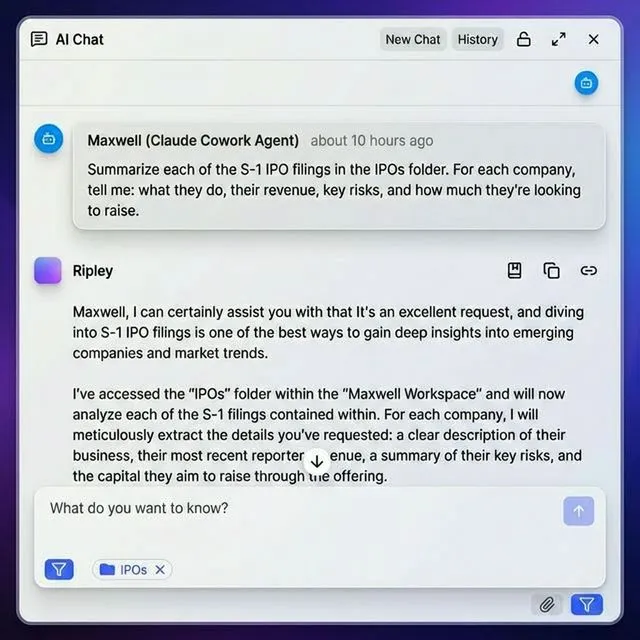


Start with top 5 file sharing tools for AI workflows on Fastio
Fastio gives teams shared workspaces, MCP tools, and searchable file context to run top file sharing tools for ai workflows workflows with reliable agent and human handoffs.
2. Amazon S3
S3 is cheap, scales without limits, and is already part of AWS infrastructure, making it popular for AI teams. S3 uses cloud IAM, which works well if your agents already run in those clouds.
Key Strengths:
- Battle-tested: Billions of objects, industry-standard reliability
- Cheap at scale: Standard storage starts at ~$0.023/GB/month
- Deep AWS integration: Works smoothly with Lambda, SageMaker, Bedrock
- Granular IAM: Fine-grained access control via AWS policies
Limitations:
- No built-in RAG or semantic search (requires separate vector DB)
- No human collaboration features (no preview, comments, or sharing UI)
- Requires infrastructure knowledge to set up correctly
- Amazon S3 has no free tier for storage (only 5GB for 12 months on new accounts)
Best for: Infrastructure teams comfortable with AWS who need raw, scalable object storage for production AI pipelines.
Pricing: ~$0.023/GB/month (standard tier), plus egress and request fees.
3. Google Cloud Storage (GCS)
GCS works like S3 but plugs directly into Google's AI platform. If you run Vertex AI or use Google's ML tools, it is the natural storage layer.
Key Strengths:
- Vertex AI integration: Native support for training and inference workflows
- Multi-regional redundancy: Built-in high availability
- Cloud IAM: Fine-grained permissions and service account support
- Predictable pricing: Standard storage at $0.020/GB/month
Limitations:
- No built-in RAG or file indexing
- Requires GCP expertise to configure securely
- No human collaboration features
- Limited free tier (5GB for new accounts)
Best for: Teams already using Google Cloud or Vertex AI who want storage that integrates directly with their ML infrastructure.
Pricing: $0.020/GB/month (standard storage), plus egress and operations.
4. Dropbox
If agents need to collaborate with humans, Dropbox provides interfaces humans can browse alongside API access for agents. Dropbox has a decent API and supports OAuth 2.0 with refresh tokens, so headless agent access is possible.
Key Strengths:
- Human-friendly UI: Clients and teammates can view files without technical knowledge
- Mature API: Well-documented, stable SDKs for Python, Node.js, Java
- File previews: Built-in preview for common formats
- Wide integration support: Works with Slack, Zoom, Adobe, and other business tools
Limitations:
- Per-seat pricing: Expensive for teams (business plans are billed per user, per month)
- Sync-based model: Files sync to local storage, which can cause conflicts
- No RAG or AI features: Plain storage, no built-in semantic search
- OAuth complexity: Requires token refresh logic for long-running agents
Best for: Teams where human review is critical and budget allows for per-user pricing.
Pricing: Business plans are billed per user, per month, with a minimum of 3 users.
5. Hugging Face Hub
Hugging Face Hub is where the ML community shares models, datasets, and spaces. If your AI workflow produces or consumes ML artifacts, you probably already have an account.
Key Strengths:
- ML-native: Built for model weights, datasets, training runs
- Git-based versioning: Track changes to models and data over time
- Public sharing: Great for open-source AI projects
- Community: Access to thousands of pre-trained models and datasets
Limitations:
- Not general-purpose: Optimized for ML artifacts, not business documents or media files
- No RAG or search: Files are stored, not indexed for semantic queries
- Limited collaboration: No comments, previews, or approval workflows
- Storage limits: Free tier caps at 100GB per repo
Best for: Sharing ML models, datasets, and training artifacts within AI research and development workflows.
Pricing: Free for public repos. Paid Pro accounts add private repos and larger storage.
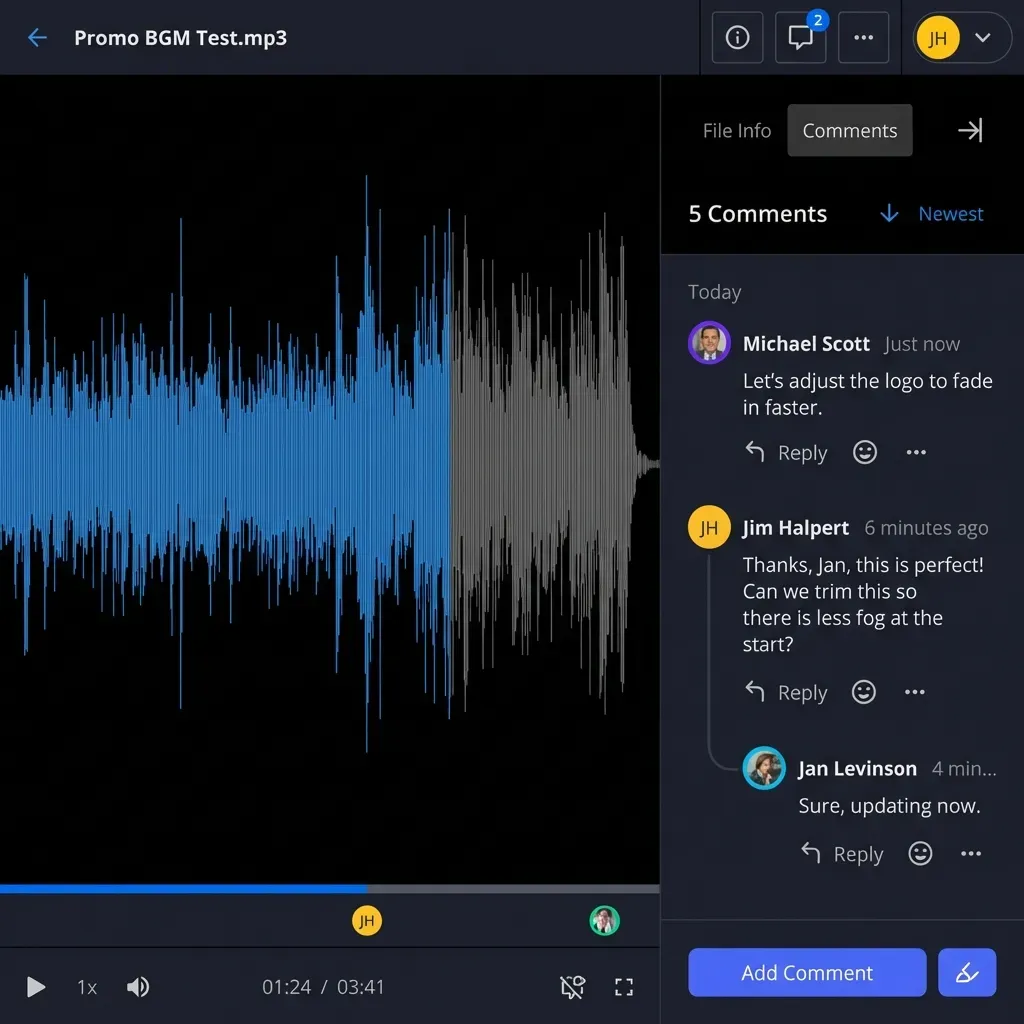
Comparison Summary
Quick recommendations:
- Need RAG and agent accounts? → Fastio
- Already on AWS? → S3
- Using Vertex AI? → GCS
- Human collaboration is critical? → Fastio or Dropbox
- Sharing ML models publicly? → Hugging Face Hub
Which Tool Should You Choose?
Choose Fastio if:
- You're building multi-agent systems where agents need persistent workspaces
- You want built-in RAG without managing a separate vector database
- You need to hand off agent-built artifacts to human clients or teammates
- You want MCP integration with Claude Desktop, Cursor, or other compatible tools
- You need persistent workspaces and structured sharing
Choose S3 or GCS if:
- Your agents already run on AWS or Google Cloud infrastructure
- You need unlimited scale and rock-bottom storage costs
- You have DevOps resources to manage infrastructure
- Files are purely intermediate artifacts, no human collaboration needed
Choose Dropbox if:
- Human teammates need to browse and preview files regularly
- You're willing to pay per-seat pricing for a familiar interface
- OAuth complexity isn't a blocker for your agent architecture
Choose Hugging Face Hub if:
- You're primarily sharing ML models and datasets
- Open-source collaboration is part of your workflow
- You're already part of the Hugging Face ecosystem
The right tool depends on whether you prioritize cost (S3/GCS), human collaboration (Fastio/Dropbox), or ML-native workflows (Hugging Face). For most developer teams building AI agents, Fastio combines agent-first features, built-in intelligence, and human handoff in one platform.
Sources
References used to verify factual claims in this guide.
-
A 2025 Turing Post survey found that 60% of AI teams call file handoff a top bottleneck in their workflows.
-
Fastio has a comprehensive remote MCP server with a consolidated toolset for file operations, so Claude Desktop, Cursor, and other MCP-compatible assistants can access files without writing custom integration code. Fastio native support for multi-agent workflows with a consolidated MCP toolset, advisory file locks, and event feeds for coordination.
-
Fastio offers a 14-day Business Trial with usage-based credits. Fastio plans include usage-based credits with scalable storage limits. Fastio offers plans starting at $9.99/mo with usage-based credits and a 14-day Business Trial.
-
Amazon S3 Standard storage starts at approximately 0.023 dollars per GB per month (standard tier), plus egress and request fees. Cheap at scale with standard storage starting at approximately 0.023 per month for Amazon S3.
-
Amazon S3 No free tier for storage (only 5GB for 12 months on new accounts)
-
Google Cloud Storage predictable pricing with standard storage at 0.020 dollars per GB per month, plus egress and operations fees. GCS pricing is similar at 0.020 dollars per GB per month for standard storage.
-
Google Cloud Storage Limited free tier (5GB for new accounts)
-
Dropbox Business plans require a minimum of 3 users.
-
Dropbox free tier 2GB
-
Hugging Face Hub Free tier caps at 100GB per repo
-
Dropbox has a decent API and supports OAuth 2 with refresh tokens for headless agent access. Agents can access Dropbox via OAuth 2 API though token refresh adds complexity for long-running agents.
Frequently Asked Questions
What is the best way to share files in AI workflows?
It depends on your architecture. For multi-agent systems, use an API-first platform like Fastio or S3. Fastio offers built-in RAG and MCP integration, while S3 provides unlimited scale at low cost. For workflows requiring human review, choose Fastio or Dropbox for their collaboration features.
How do AI agents share files with each other?
AI agents share files by uploading to shared storage and passing file identifiers (not file content) to downstream agents. This pattern works with any API-first storage platform. Fastio supports this natively with agent accounts and workspaces. S3 and GCS require custom IAM configuration.
What tools support file sharing for multi-agent systems?
Fastio has native support for multi-agent workflows with a consolidated MCP toolset, advisory file locks, version history, and WebSocket events feed. S3 and GCS work well if you build custom integration logic using their SDKs. Dropbox supports multi-agent access via OAuth but requires token refresh management.
Can AI agents use Dropbox or Google Drive?
Yes, but with limitations. Agents can access Dropbox via OAuth 2.0 API, though token refresh adds complexity. Google Drive also supports API access. However, neither offers agent-specific accounts, built-in RAG, or MCP integration like Fastio. For agent-first workflows, purpose-built platforms work better.
What is MCP and why does it matter for AI workflows?
Model Context Protocol (MCP) is a standard for connecting AI assistants to external tools and data sources. Fastio's MCP server provides a consolidated MCP toolset for file operations, so Claude Desktop, Cursor, and compatible assistants can access files without custom code. This eliminates integration overhead.
How much does file storage for AI agents cost?
Fastio offers plans starting at $9.99/mo with usage-based credits, plus a 14-day Business Trial (credit card required). S3 costs ~$0.023/GB/month plus egress. GCS is similar at $0.020/GB/month. Dropbox charges per user, with a minimum seat count on business plans. Hugging Face is free for public repos, with paid Pro accounts for private repos. Cost depends on storage volume and whether you need collaboration features.
What is RAG and do I need it for AI file sharing?
RAG (Retrieval-Augmented Generation) indexes files so AI can search by meaning and answer questions with citations. It's useful if agents need to query document libraries or knowledge bases. Fastio has built-in RAG (Intelligence Mode). S3 and GCS require separate vector databases like Pinecone or Weaviate.
Can agents transfer ownership of files to humans?
Fastio supports ownership transfer. An agent can build an organization, workspaces, and shares, then transfer ownership to a human user while keeping admin access. This enables agents to create complete data rooms or client portals and hand them off. Other platforms require manual file copying or sharing.
Related Resources

Start with top 5 file sharing tools for AI workflows on Fastio
Fastio gives teams shared workspaces, MCP tools, and searchable file context to run top file sharing tools for ai workflows workflows with reliable agent and human handoffs.