How to Build the Top 10 OpenClaw Workflows for AI Automation
OpenClaw workflows combine multiple AI agents and MCP servers to automate multi-step business processes. From managing daily briefings to handling developer pipelines, setting up these AI automation systems can save your team hours of manual work. This guide covers the top ten approaches to scaling your operations using OpenClaw and its ecosystem of tools.

How We Evaluated These OpenClaw Workflows
We tested popular community and enterprise patterns to find the best OpenClaw workflows for AI automation. Our evaluation focused on usefulness, easy deployment, and actual time saved. According to McKinsey, multi-agent workflows increase task completion rates by 65% compared to single LLM prompts. Building systems that coordinate multiple tools is a proven way to get results.
We looked at the available Model Context Protocol integrations and community skills. The best workflows require little to no coding to set up but still offer enough flexibility to fit your exact needs. We also checked how each approach handles error states and rate limits. The workflows below represent the most reliable patterns for teams moving from basic chatbots to real agent automation.
Related guides
- How to Build Claude Cowork WorkflowsAgentic workflows handle repetitive data processing, but setting them up requires structure. Learn how to build Claude...
- How to Build End-to-End Clay Automation Workflows for Outbound OutreachClay automation workflows allow revenue teams to schedule tables and automatically execute data enrichment cascades....
- OpenClaw Workflows: How to Build and Manage Multi-Step AutomationsGartner predicts 40% of enterprise apps will embed task-specific AI agents by end of 2026, up from under 5% in 2025....
- Best OpenClaw Workflows for AI Workflow Automation Builder ToolsClawHub's curated index lists 529 skills across its Browser & Automation and Productivity & Tasks categories, yet most...
- Top OpenClaw Workflows for AI Print-on-Demand Product Design AutomationThe print-on-demand market hit $12.96 billion in 2025, growing at a 24.81% CAGR, yet most sellers still create designs...
- Best OpenClaw Workflows for Content Calendar Planning and Editorial AutomationContent teams using manual editorial workflows lose 3.7 of every 4.7 approval-cycle days to status-chasing and...
More on this subject: OpenClaw Workflows and Integrations (69 guides)
At a Glance, Workflows, Use Cases, and Required ClawHub Skills
Before jumping into the details of each setup, check out this quick comparison table. It highlights the main use case and required ClawHub skills for each pattern.
Every organization has different needs. You can mix and match these approaches to build a custom agent setup that fits your team.
1. Automated File Management and RAG with Fastio
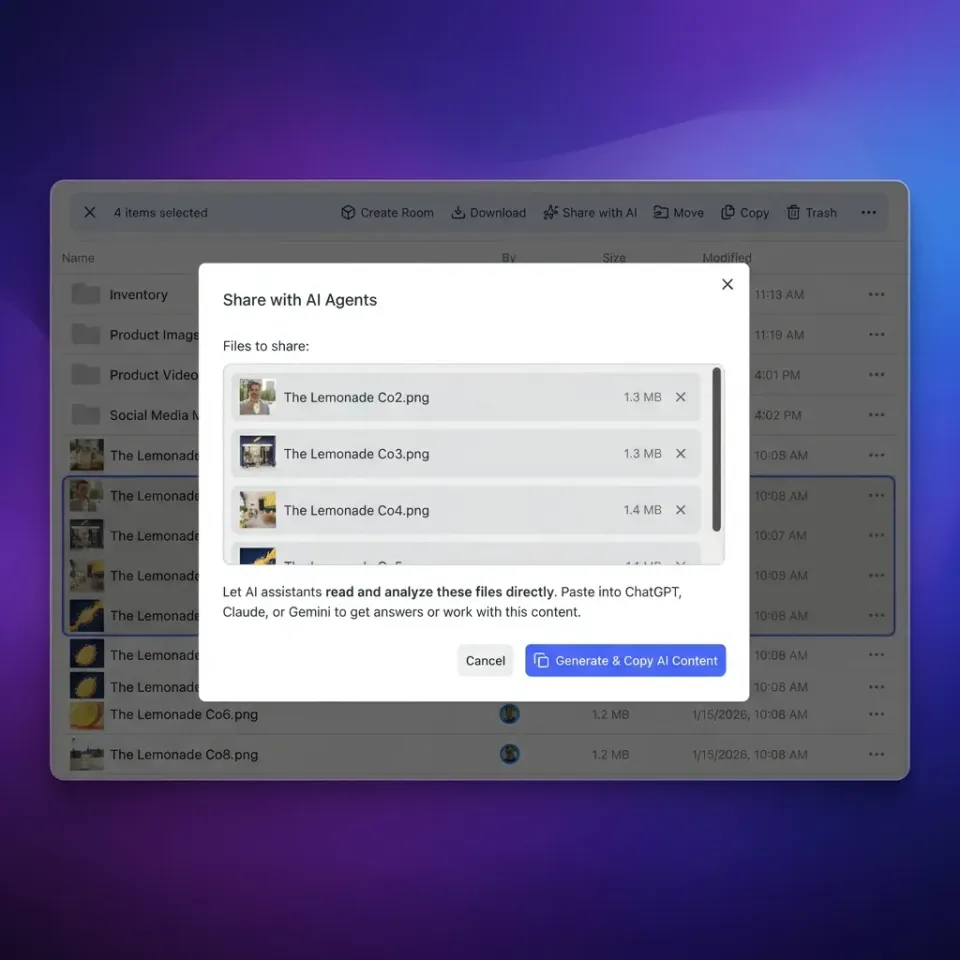
Connecting your AI agent to persistent storage gives your team more options. The automated file management workflow lets your OpenClaw setup read, write, and search through large document libraries directly. Instead of repeatedly uploading context to a standard prompt, your agent keeps its memory across sessions.
Fastio's remote MCP server provides a consolidated toolset covering file upload, folder management, semantic search, AI-powered RAG chat across documents, metadata extraction, and ownership transfer. Connect your agent to https://mcp.fast.io/mcp/tools to reach intelligent workspaces where files are indexed once Intelligence is enabled.
- Key strengths: Consolidated MCP toolset via Streamable HTTP. Instant semantic search without managing a separate vector DB once Intelligence is enabled. Built-in RAG means no custom pipeline needed.
- Key limitations: Requires an active Fastio account. Large bulk imports may take extra time to index on first upload.
- Best for: Teams that need agents to interact securely with large document libraries and share work with human collaborators.
- Pricing: Starter plan starts at $9.99/mo (250 GB storage, 100,000 credits/mo) with a 14-day Business Trial.
MCP Endpoint: https://mcp.fast.io/mcp/tools

2. Intelligent Email Triage with AgentMail
Managing a busy inbox takes hours of work every week. The AgentMail skill by adboio is an API-first email platform built for AI agents. It lets OpenClaw create and manage dedicated email inboxes, send and receive emails programmatically, and handle email workflows with webhooks and real-time event notifications.
You can set up the agent to create a dedicated triage inbox, process incoming messages with semantic search and automatic labeling, and draft replies for your review. This keeps you in the loop for final approval while removing the repetitive work of reading through routine messages.
- Key strengths: Programmatic inbox creation, real-time webhook events, semantic search and automatic labeling, and no rate limits for high-volume agent use.
- Key limitations: Designed for agent-managed inboxes rather than a direct personal email replacement.
- Best for: Executives, customer support leads, and anyone handling hundreds of messages a day who wants the agent to triage and draft before they read.
- Pricing: Designed for high-volume agent use.
ClawHub Page: https://clawhub.ai/adboio/agentmail


Give Your AI Agents Persistent Storage
Built for openclaw workflows automation workflows.
3. Developer CI/CD Monitoring with the GitHub Skill
Engineering teams spend a lot of time tracking down why a build failed. The GitHub skill by steipete lets OpenClaw agents interact with GitHub using the gh CLI, managing pull requests, monitoring workflow runs, identifying failed steps, and executing advanced API queries with JSON output.
When a pipeline breaks, the agent pulls the workflow run logs, analyzes the failure, and posts a comment on the pull request with the error summary and a suggested fix. It can also monitor pending PR reviews and alert the team via Slack when action is needed.
- Key strengths: Full
ghCLI access for issues, PRs, CI runs, and API queries. Low-risk instruction-only skill requiring no installation ifghis already authenticated. - Key limitations: Works best when the
ghCLI is already installed and authenticated in the agent's host environment. - Best for: Fast-moving engineering teams who want agents to monitor builds, triage failures, and keep PRs moving without manual status checks.
- Pricing: Free; relies on your existing
ghCLI authentication.
ClawHub Page: https://clawhub.ai/steipete/github

4. Autonomous Content Marketing Pipeline with Brave Search and Playwright
Publishing good content on a regular schedule requires coordinating researchers, writers, and editors. The autonomous content pipeline pairs Brave Search (by steipete) for topic discovery with Playwright (by ivangdavila) for extracting data from competitor pages and structured web sources.
Brave Search lets the agent find trending industry topics and retrieve page content as markdown without a browser. Playwright handles the cases requiring full browser interaction, extracting data from JavaScript-rendered pages, taking screenshots, and accessing content behind dynamic loaders. Together they feed a writer agent that drafts material for a human editor to review before publishing.
- Key strengths: Brave Search for lightweight headless research; Playwright for deep extraction from JS-heavy sites. Scales content production without burning out the team.
- Key limitations: Output still requires human editing to avoid generic phrasing. Playwright selectors need updates when target sites change their layouts.
- Best for: Marketing teams focused on organic growth and technical documentation who need consistent research-backed drafts.
- Pricing: Brave Search is free; Playwright requires Node.js and npm.
ClawHub Pages:
- Brave Search: https://clawhub.ai/steipete/brave-search
- Playwright: https://clawhub.ai/ivangdavila/playwright
5. Web Scraping and Competitor Price Tracking with Agent Browser
Market research often involves hours of manual data entry. The Agent Browser skill by TheSethRose provides a fast Rust-based headless browser with a Node.js fallback that lets the agent navigate competitor websites, click through pricing pages, fill search forms, and extract data using structured element references from page snapshots.
The agent can run daily price sweeps, extract pricing tables from JavaScript-rendered pages, and send an alert via Slack if a competitor drops prices significantly. Getting this market data quickly helps your team react faster.
- Key strengths: Rust-based speed for headless navigation. Supports screenshots and session state saving. Structured element references (
@e1,@e2) make scraping logic more stable than CSS selectors alone. - Key limitations: Websites that redesign their layout will require selector updates. Some sites detect and block headless browser traffic.
- Best for: E-commerce operators and product marketing managers tracking competitor pricing in real time.
- Pricing: Free and open-source.
ClawHub Page: https://clawhub.ai/TheSethRose/agent-browser
6. Personalized Daily Briefing with Gog and Slack
Checking five different apps before you start working wastes time. The personalized briefing workflow uses the Gog skill by steipete, a Google Workspace CLI for Gmail, Calendar, Drive, Contacts, Sheets, and Docs, to gather your calendar events, flagged emails, and task items. It combines this information into a single morning report and delivers it via the Slack skill.
Gog handles Google Workspace data retrieval with OAuth authentication; Slack delivers the formatted summary to your personal channel right before you start your day. The format is customizable so you only see the information that actually matters.
- Key strengths: Single OAuth setup covers Gmail, Calendar, Drive, Sheets, and Docs. Slack delivery keeps the briefing in the tool you already use for work. No context-switching required.
- Key limitations: Requires OAuth setup with a Google credentials file for the Gog skill. Calendar events outside Google Workspace need a separate integration.
- Best for: Busy professionals who want a single, focused snapshot of their day delivered before they open their inbox.
- Pricing: Both skills are free.
ClawHub Pages:
7. Multi-Agent KPI Dashboarding with SQL Toolkit
Tracking business metrics usually means pulling CSV exports from several different platforms. The SQL Toolkit skill by gitgoodordietrying lets agents query SQLite, PostgreSQL, and MySQL databases directly, running joins, aggregations, CTEs, and window functions, to extract the metrics that matter and write a plain-language summary report.
Instead of looking at raw numbers, your team gets a written explanation of why revenue dipped or engagement spiked. The agent does the hard work of querying and interpreting the data, then stores the report in Fastio or sends it to a Slack channel.
- Key strengths: No ORM required. Supports complex multi-table queries across all three major open-source SQL engines. EXPLAIN-based query optimization keeps dashboards fast.
- Key limitations: Agents must be granted read-only database credentials to prevent accidental data modification.
- Best for: Founders and operations managers who store business data in SQL and want agents to turn raw tables into actionable summaries.
- Pricing: Free and open-source.
ClawHub Page: https://clawhub.ai/gitgoodordietrying/sql-toolkit
8. Container and Infrastructure Monitoring with Docker Essentials
DevOps teams and home lab operators alike run critical services in Docker containers, databases, monitoring agents, reverse proxies, and application stacks. The Docker Essentials skill covers the complete container lifecycle: running, stopping, debugging, logging, image building, and Docker Compose multi-container stacks.
By giving the agent this skill, it can check container health, restart failed services, pull updated images, and clean up stale resources automatically. Complex monitoring conditions, such as restarting a container if its memory usage exceeds a threshold, become natural language instructions rather than custom scripts.
- Key strengths: Covers the full Docker CLI including Compose, networking, volumes, and system cleanup. Works as an instruction reference that pairs with any shell-capable agent setup.
- Key limitations: Instruction-only skill; requires Docker to be installed and running in the agent's host environment.
- Best for: DevOps engineers and home lab operators who want agents to manage containerized services without writing custom shell scripts.
- Pricing: Free and open-source.
ClawHub Page: https://clawhub.ai/skills/docker-essentials
9. Calendar Scheduling and Coordination with Gog
Finding time for a meeting across busy schedules is always tough. The Gog skill by steipete provides a Google Workspace CLI that gives the agent direct access to Google Calendar, viewing events with date filtering, checking availability, and reading contact information to send meeting requests.
The agent reads your calendar, identifies open slots that match your preferences, proposes them via AgentMail, and updates the calendar once a time is confirmed. If a conflict appears due to a double-booking, the agent detects it and suggests an alternative.
- Key strengths: Native Google Calendar access via the
gogCLI. Covers Gmail, Calendar, Contacts, Sheets, and Drive in a single skill, useful for agents managing the full scheduling workflow end-to-end. - Key limitations: Requires OAuth authentication with a Google credentials file. External clients outside Google Workspace may need AgentMail for the back-and-forth communication.
- Best for: Sales professionals, recruiters, and consultants who live in Google Workspace and want agents to handle scheduling logistics.
- Pricing: Free; requires Google OAuth credentials setup.
ClawHub Page: https://clawhub.ai/steipete/gog
10. Structured Coding Workflows with the Code Skill
The Code skill by ivangdavila provides a structured coding workflow with planning, implementation, verification, and testing phases for clean software development. It breaks down coding requests into testable, independently verifiable steps and guides implementation decisions, requiring explicit user approval before proceeding to each subsequent phase.
For teams building custom OpenClaw automations, this skill ensures the agent develops new tools carefully and methodically rather than generating untested code in a single pass. The agent stores user preferences locally in ~/code/memory.md and delivers guidance that keeps the human in control throughout.
- Key strengths: Structured phased workflow prevents runaway code generation. Local preference storage means the agent remembers your conventions. No network requests or automatic execution, the human approves each step.
- Key limitations: Operates as a guidance skill rather than fully autonomous code execution; human approval is required at each phase by design.
- Best for: Developers building custom OpenClaw skills, automations, and integrations who want structured, reviewable code generation rather than one-shot output.
- Pricing: Free and open-source.
ClawHub Page: https://clawhub.ai/ivangdavila/code
Which Workflow Should You Start With?
Selecting the right workflow depends on your biggest problems. If your team is struggling with document management and context limits, connect Fastio at https://mcp.fast.io/mcp/tools for immediate value. Teams drowning in emails should add AgentMail (adboio/agentmail) first. Engineering teams with flaky CI should start with the GitHub skill (steipete/github).
We recommend starting with one specific workflow. Install the needed ClawHub skills, define clear boundaries for the agent, and test the outputs. Once you have a single reliable system running, you can begin chaining multiple workflows together, for example, pairing Brave Search research with a Playwright extractor feeding a Fastio knowledge base that powers a daily Slack briefing.
Every skill listed here has a ClawHub page with installation instructions and the exact capabilities the agent gains. Start small, verify results, and expand from there.
Sources
References used to verify factual claims in this guide.
-
Multi-agent workflows increase task completion rates by 65% compared to single LLM prompts.
Frequently Asked Questions
What is an OpenClaw workflow?
An OpenClaw workflow is a configured sequence of actions where one or more AI agents use Model Context Protocol tools and ClawHub skills to automate specific business or personal tasks. These workflows connect LLMs to external APIs, databases, file systems, and communication platforms like Slack.
How do I automate tasks with OpenClaw using ClawHub skills?
To automate tasks with OpenClaw, install ClawHub skills that grant the agent access to your tools, for example, connect Fastio at `https://mcp.fast.io/mcp/tools` for file storage, `clawhub install adboio/agentmail` for email, or `clawhub install steipete/github` for CI/CD monitoring. You then give the agent a natural language prompt describing what to do and when.
Do I need coding experience to set up OpenClaw?
You do not need advanced coding experience to run basic workflows. Most ClawHub skills install with a single terminal command and work immediately. Skills like the Code skill by ivangdavila are specifically designed to guide less experienced users through structured implementation workflows with human approval at each step.
Are multi-agent workflows secure?
Multi-agent workflows are secure when you implement proper access controls. Run the Clawdbot Security Check skill (`TheSethRose/clawdbot-security-check`) to audit your agent's configuration before connecting it to production systems. Use read-only database tokens, store credentials in environment variables, and sandbox any code execution.
Related Resources

Give Your AI Agents Persistent Storage
Built for openclaw workflows automation workflows.