How to Set Up OpenClaw Multi Agent Workspaces
OpenClaw agents share files, context, and tasks in Fastio multi-agent workspaces. Access consolidated MCP tools for file management, advisory locks for concurrency, and handoffs for human review. Storage and seats come with your plan, while included credits cover AI work.


What is an OpenClaw Multi Agent Workspace?
An OpenClaw multi-agent workspace is a shared Fastio space where multiple OpenClaw agents collaborate on files and data. Each agent connects to Fastio's remote MCP server (https://mcp.fast.io/mcp/tools) using a scoped API key to access consolidated workspace tools.
The lead agent creates the workspace, sets folder permissions, and invites worker agents or human team members. File changes, version history, and audit logs persist across all agent sessions.
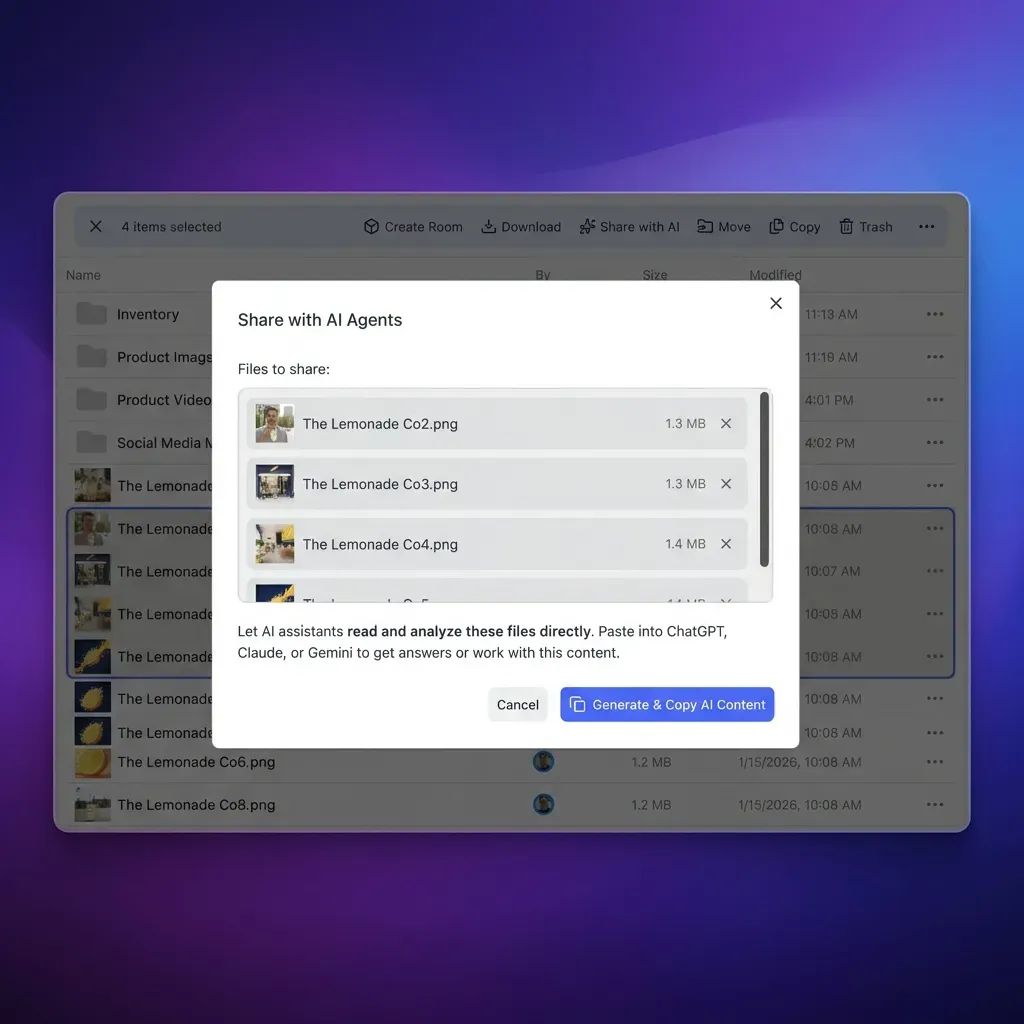
Agent Roles and Permissions
Assign roles: viewer for read-only, editor for read/write, admin for management. Permissions apply to workspaces, folders, files. Specialist agents get editor access to their task folders.
Key Benefits Over Single-Agent
Parallel processing reduces completion time. Specialized agents handle niche tasks better. Fault tolerance: if one fails, others continue.
Related guides
- How to Configure Multi-Root Workspaces in ClineConfiguring a multi-root workspace in Cline allows your AI agent to edit files and execute commands across multiple...
- How to Set Up Claude Flow for Multi-Agent Code OrchestrationClaude Flow passed 710,000 lifetime npm downloads by mid-2026, making it the most-installed community orchestrator for...
- How to Build OpenClaw Cloud WorkspacesOpenClaw cloud workspaces give multi-agent teams shared storage with built-in RAG. Agents save files that last,...
- OpenClaw A2A Protocol: Agent-to-Agent Communication for Multi-Agent WorkflowsThe A2A protocol hit 150 supporting organizations in its first year, but native OpenClaw support was closed as "not...
- How to Build Multi-Agent Workflows in OpenClawOpenClaw multi-agent workflows let multiple agents coordinate on tasks like data processing or report generation....
- How to Build Custom Agents in OpenClawOpenClaw hit 3.2 million monthly active users in April 2026, yet most deployments still run a single default agent...
More on this subject: OpenClaw Setup and Guides (199 guides)
Why Use Multi-Agent Workspaces in OpenClaw?
Single agents are good for simple tasks but hit limits on complex workflows with limited context windows. Multi-agent setups split work across specialized roles, run in parallel, and share lasting storage.
Fastio's file version history with restore, folder-level permissions, and a detailed activity log make concurrent access safe. Agents write outputs to designated folders while preserving complete revision records, preventing accidental overwrites.
Concurrency with File Locks
Fastio coordinates multi-agent edits using file version history with restore, granular permissions, and a detailed activity log. Check previous versions and inspect the audit log before and after writes to prevent race conditions.
Reactive Workflows with the Activity Feed
Subscribe to Fastio's realtime activity feed or WebSocket events feed to react to file uploads or edits, triggering the next agent in the pipeline automatically.
Setup Prerequisites
Before starting:
- OpenClaw installed in your runtime environment.
- LLM backend (Claude, GPT, Gemini, or local models).
- Fastio account with a 14-day Business Trial (credit card required) or an active plan (Starter, Business, Enterprise; see /pricing/).
- Scoped API key from your Fastio organization settings.


Ready for OpenClaw Multi-Agent Collaboration?
Fastio gives OpenClaw agents persistent intelligent workspaces with version history and consolidated MCP tools. Built for multi-agent workflows.
Step-by-Step Multi-Agent Workspace Creation
- Connect MCP: Configure OpenClaw with Fastio's remote MCP endpoint
https://mcp.fast.io/mcp/tools. - Create workspace: Call the workspace creation tool with your project name.
- Upload data: Use one-time cloud import from Google Drive, Dropbox, OneDrive, Box, or upload files directly.
- Share access: Grant team members or worker agents access with granular folder permissions.
Error Handling
API errors: check key/credits. Large files: use resumable uploads. Locks fail: retry or status check.
File Locks for Concurrency Control
Fastio coordinates multi-agent updates through advisory per-file locks paired with file version history and activity logs.
Coordination Pattern Before writing, an agent acquires an advisory lock on the target file using the storage tool's lock-acquire action. While working, the agent sends periodic heartbeats to maintain the lease. If another agent attempts to lock the same file, it receives an HTTP 409 error and can wait or perform read operations. Once writing finishes, the agent releases the lock. If an agent disconnects, the lease automatically expires or can be taken over by anyone with write permission. Because locks are advisory, version history preserves every write with full restore capability.

Advanced MCP Orchestration
Use Fastio's consolidated MCP toolset to match UI features, including in-browser file previews, anchored comments, and semantic search.
Agents track workspace activity through Fastio's realtime activity feed or WebSocket events feed. Define clear tool contracts and fallback behavior so agents fail safely when upstream dependencies are delayed.
Human-Agent Handoffs
Complete a task? Create an organization transfer token and share the claim link (https://go.fast.io/claim?token=...) with a human owner.
Or generate branded shares (Send, Receive, Exchange) with custom passwords, branding, and expiry.
Humans can inspect previews and leave anchored comments, while agents monitor updates via the activity feed.
Real-World Example: Data Pipeline
- Researcher: Imports source documents via cloud import.
- Analyst: Reads files, extracts data, and writes structured outputs.
- Reporter: Runs semantic queries once Intelligence is enabled, then writes the final report.
- Human: Reviews deliverables and claims workspace ownership.
Scales reliably to production pipelines.
Troubleshooting Common Issues
Troubleshooting
- Stale data: Check the activity feed to verify when a file was last modified before reading.
- Credit limits: Monitor usage in the Fastio dashboard. Fastio plans provide monthly usage-based credits for AI work such as queries and ingestion. Overage runs $10 per 100,000 credits.
- Connection issues: Verify your scoped API key and ensure network access to
https://mcp.fast.io/mcp/tools.
Best Practices for Production
Production Best Practices
- Use dedicated subfolders per agent role for clean separation of concerns.
- Verify file version history before writing major updates.
- Poll the activity feed or listen to WebSocket events to react to file changes.
- Enable Intelligence on the workspace to support document chat with citations.
Sources
References used to verify factual claims in this guide.
-
URL import from Drive/Box Ownership transfer
-
50-60% faster than progressive download per Fastio benchmarks
-
Step-by-Step Multi-Agent Workspace Creation
-
Real-World Example: Data Pipeline
Frequently Asked Questions
What is an OpenClaw multi-agent workspace?
A Fastio workspace shared by multiple OpenClaw agents for file collaboration, using advisory file locks, version tracking, and MCP tools.
How does agent coordination work?
Through advisory file locks, file version history, granular permissions, activity feed polling, and shared workspace state.
Is there a free tier for agents?
No. The account is free to create, but an organization needs a 14-day trial (credit card required) or a subscription. Storage and seats come with the plan, and included credits cover AI work.
How to connect OpenClaw to Fastio?
Configure OpenClaw with Fastio's remote MCP URL (`https://mcp.fast.io/mcp/tools`) and a scoped API key.
Does it support any LLM?
Yes, Claude, GPT, Gemini, local models.
How large can a single file be?
Maximum upload size is 25 GB on the Starter plan, 50 GB on the Business plan and 100 GB on the Enterprise plan, with chunked uploads for large files.
How to handle large uploads?
Use a chunked upload session (the `upload` tool's create-session action) so a dropped connection resumes instead of restarting.
How are concurrent edits handled?
Agents acquire advisory file locks before writing, while Fastio preserves every revision in file version history and logs operations in a detailed activity log.
Related Resources

Ready for OpenClaw Multi-Agent Collaboration?
Fastio gives OpenClaw agents persistent intelligent workspaces with version history and consolidated MCP tools. Built for multi-agent workflows.