How to Build an Image Analysis Agent with OpenClaw Vision Models
OpenClaw separates text and vision processing into independent model pipelines, letting you pair a fast text model with a specialized vision model in the same agent. You'll configure the imageModel setting, select the right vision model for your use case, and connect your agent to persistent storage for analysis results.

What OpenClaw's imageModel Does
OpenClaw's imageModel is a dedicated model configuration for visual understanding that operates independently from the main conversation model, automatically activating when image content is detected. This separation lets you pair a fast, lightweight text model with a capable vision model so your agent avoids the latency and cost penalty of running a multimodal model for every message.
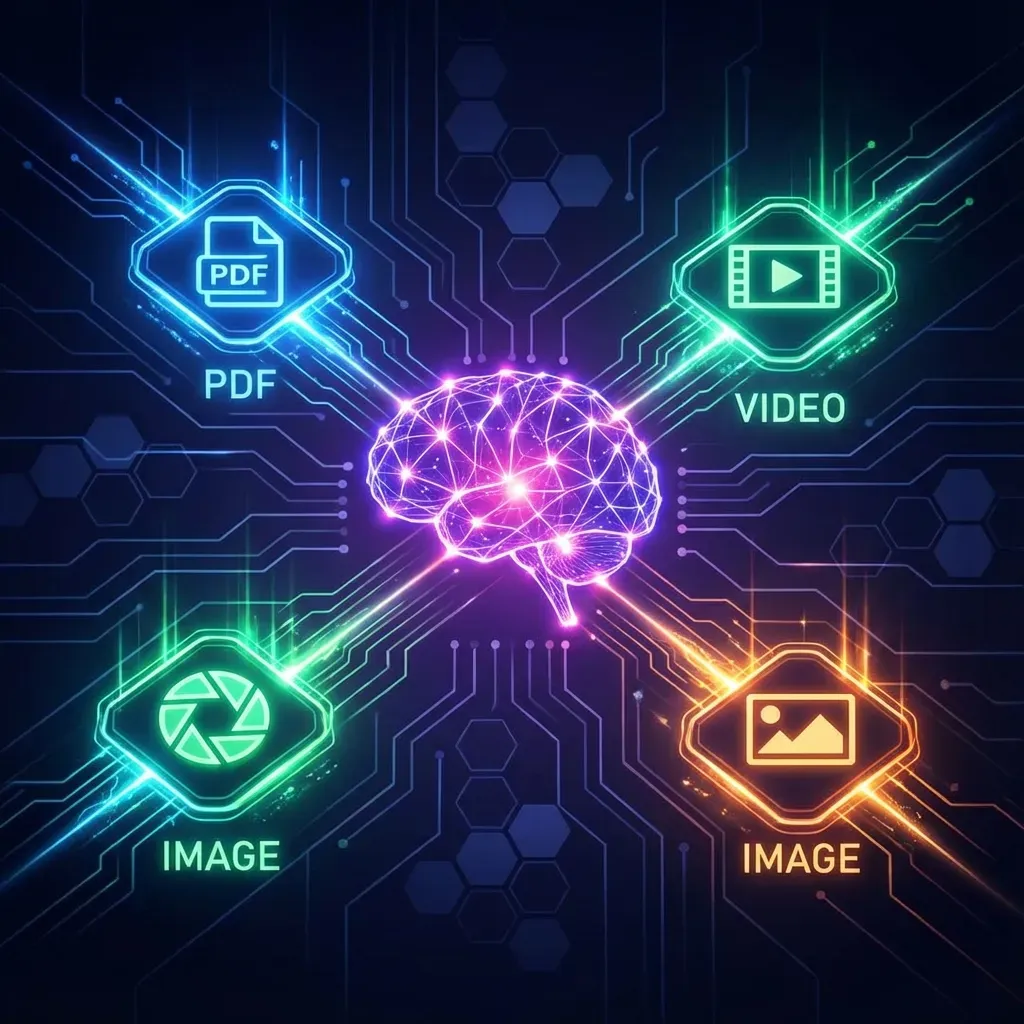
The architecture works like a router. When your agent receives a text-only message, it goes to the primary model you've configured for conversation. When the input includes an image, a screenshot, or a PDF with visual content, OpenClaw switches to the imageModel pipeline instead. The switch is automatic, with no code changes or conditional logic required on your end.
This matters for real workloads. Running a large vision model on every interaction wastes tokens and adds latency. By splitting the workload, you can use something fast like MiniMax-M2.5-highspeed for text conversations while reserving a model like GLM-5V-Turbo or Claude's vision capability for actual image analysis. The text model never sees image tokens, and the vision model only activates when there's something visual to process.
The practical result is an agent that handles both text and image tasks without compromise. A code review agent, for example, can discuss pull requests using a fast text model and then analyze UI screenshots or architecture diagrams using a specialized vision model, all in the same conversation thread.
Related guides
- How to Build an AI Image Upscaler Pipeline in Clay WorkflowsImages account for the largest mobile page payload, representing roughly 900 kilobytes of the median 2,360 kilobyte...
- How to Build an Automated Image Combiner Pipeline in ClayBuilding an automated image combiner pipeline in Clay allows growth teams to overlay variable dynamic graphics onto...
- How to Build a Data Analysis Agent with OpenClaw for CSV and Spreadsheet AutomationOpenClaw's data-analyst skill turns your AI agent into a working data analyst that can query databases, process CSV and...
- How to Set Up OpenClaw with Google Gemini ModelsOpenClaw's Gemini integration connects your agent to Google's full model family, including Gemini 3.1 Pro for chat,...
- How to Set Up OpenClaw with OpenAI GPT ModelsOpenClaw supports two authentication paths for OpenAI: direct API key billing and Codex subscription OAuth. This guide...
- How to Extract and Analyze PDFs with OpenClaw AgentsOpenClaw's built-in PDF tool lets agents extract text and analyze documents through native provider APIs or an...
More on this subject: OpenClaw Setup and Guides (199 guides)
How the Dual-Model Router Decides What to Use
OpenClaw's model router uses a priority-based approach when it encounters visual content. Understanding how routing works helps you configure fallbacks correctly and avoid situations where your agent silently drops image analysis capabilities.
When a message arrives containing an image attachment or inline image reference, OpenClaw detects the visual content and routes it to the vision pipeline automatically. This detection is transparent: it works the same way whether the input arrives from a chat interface, an API call, or a messaging integration. You don't need conditional logic to handle the switch.
The router supports fallback chains so your agent stays functional during provider outages. If your primary vision model is unavailable, the router moves through your configured fallbacks in sequence. Mixing providers in the fallback list (for example, one paid model and one free-tier model through OpenRouter) reduces the chance of losing vision capability entirely.
PDFs get their own routing tier. You can assign a model optimized for document layouts separately from your general image model, giving you better results on structured content like invoices, forms, and multi-column reports without affecting how photographs or screenshots are processed.
One important constraint: if your primary text model is text-only, you need a vision model configured explicitly. Text-only models cannot process image tokens, so they won't attempt to handle visual content. Setting any supported vision model as your imageModel resolves this.
Configuring Your Vision Model
OpenClaw supports two configuration formats for the imageModel setting. The shorthand format works when you only need a single vision model:
"imageModel": "moonshot/kimi-k2.5"
The full format adds a fallback chain for reliability:
"imageModel": {
  "primary": "moonshot/kimi-k2.5",
  "fallbacks": ["openrouter/qwen/qwen-2.5-vl-72b-instruct:free"]
}
You can also manage vision models through the CLI. To set your primary vision model:
openclaw models set-image moonshot/kimi-k2.5
To add fallback models:
openclaw models image-fallbacks add openrouter/google/gemini-2.0-flash-vision:free
Other useful commands include openclaw models status to check your current configuration and openclaw models image-fallbacks list to review your fallback chain. You can clear all fallbacks with openclaw models image-fallbacks clear if you need to start over.
Each provider comes with built-in defaults that activate when you don't set a custom imageModel. OpenAI defaults to gpt-5-mini, Anthropic to claude-opus-4-6, Google to gemini-3-flash-preview, MiniMax to MiniMax-VL-01, and ZAI to glm-4.6v. These defaults cover basic vision tasks, but configuring a specific model gives you more control over quality, cost, and latency.
A practical starting configuration pairs a fast text model with a reliable vision model and a free fallback:
{
  "model": "minimax/MiniMax-M2.5-highspeed",
  "imageModel": {
    "primary": "zai/glm-5v-turbo",
    "fallbacks": [
      "openrouter/qwen/qwen-2.5-vl-72b-instruct:free",
      "google/gemini-3-flash-preview"
    ]
  }
}
This gives you fast text processing, a capable primary vision model, a free fallback for cost control, and a third option through Google if both others are unavailable.


Store and share your agent's image analysis output
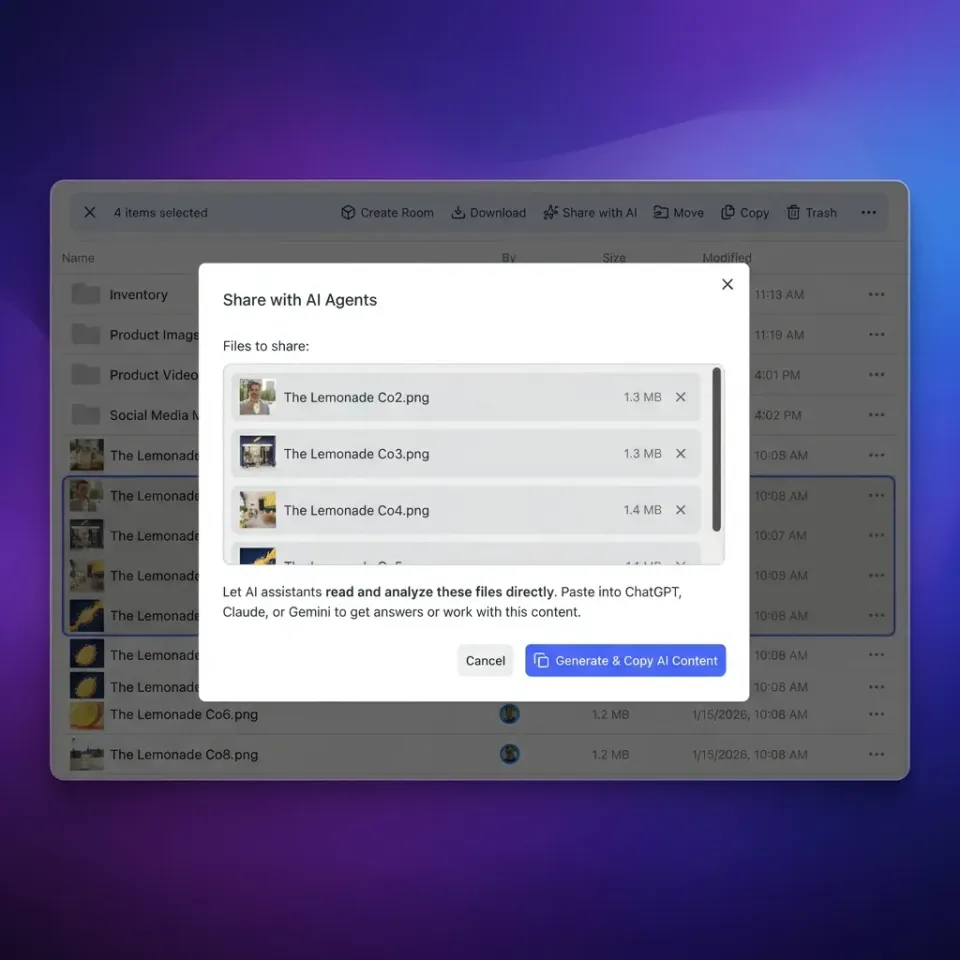
Fastio gives your OpenClaw vision agent persistent cloud storage with AI indexing and an MCP endpoint for reads and writes. Start with a 14-day Business Trial.
Choosing a Vision Model for Your Use Case
The right vision model depends on what your agent needs to analyze. Here's how the main options compare based on verified specifications.
GLM-5V-Turbo stands out for code generation from visual input. It uses a CogViT vision encoder to preserve spatial hierarchies and fine-grained visual details, then applies Multi-Token Prediction (MTP) to generate long code sequences efficiently. Its 200K token context window handles large screenshots and multi-page documents, and it can produce up to 128K tokens of output for repository-scale tasks. Z.ai trained it with 30+ task joint reinforcement learning, balancing visual recognition with programming logic across STEM reasoning, visual grounding, and tool use. If your agent needs to convert UI mockups, architecture diagrams, or whiteboard photos into working code, GLM-5V-Turbo is the model to evaluate first.
Kimi K2.5 from Moonshot is a general-purpose vision model that handles photographs, charts, and mixed-content images well. It appears frequently in OpenClaw imageModel examples and provides a good balance of speed and accuracy for everyday image analysis tasks.
Claude (Anthropic) excels at document and UI analysis, with strong performance on structured layouts like forms, tables, and multi-column PDFs. The default Anthropic vision model (claude-opus-4-6) integrates natively since OpenClaw has a built-in Anthropic provider.
Gemini Flash (Google) offers competitive vision capabilities with low latency. The gemini-3-flash-preview model prioritizes fast responses, making it suitable for interactive workflows where your agent needs quick visual feedback rather than deep analysis.
When choosing, consider what type of visual content your agent processes most often and how much latency you can tolerate. A code review agent analyzing screenshots might prioritize GLM-5V-Turbo's code generation strengths. A document processing agent might prefer Claude's layout understanding. An interactive assistant might need Gemini Flash's speed.
For cost-sensitive setups, OpenRouter provides access to free-tier vision models like qwen/qwen-2.5-vl-72b-instruct:free that work as fallbacks when your primary model is throttled or unavailable.

Persisting and Sharing Analysis Results
An image analysis agent generates structured output: descriptions, extracted text, classification labels, detected objects, generated code. That output needs to go somewhere persistent, especially when other team members or downstream systems need access.
Local storage works for prototyping. OpenClaw stores agent data in a SQLite database at ~/.openclaw/openclaw.db by default. But this approach has clear limitations. The data lives on one machine, there's no built-in way to share results with collaborators, and you lose everything if the disk fails.
Cloud object storage like S3 or Google Cloud Storage handles durability, but it doesn't give your team a way to browse, search, or discuss the results without building a separate interface. You end up maintaining infrastructure alongside your agent.
For workflows where an agent produces output that humans need to review, a shared workspace is a better fit. Fastio provides persistent cloud storage that your OpenClaw agent can read from and write to through its MCP server. The agent writes analysis results, annotated images, or generated code to a workspace, and team members see the output immediately through the web interface.
Fastio's Intelligence Mode adds a search layer on top. When enabled on a workspace, every file your agent uploads is automatically indexed for semantic search and RAG-powered chat. If your vision agent processes hundreds of product photos and writes description files, anyone on the team can later search those descriptions by meaning rather than by filename and ask questions across the entire collection.
For structured extraction at scale, Metadata Views turns your analysis output into a queryable database. Describe the fields you want in plain language (product name, dominant color, defect detected, confidence score) and the system extracts those fields from each document into a sortable, filterable spreadsheet. This is useful when your vision agent processes batches of images and you need to compare results across hundreds of files.
Fastio offers a 14-day Business Trial (credit card required; see /pricing/). When your agent's analysis work is done, Fastio's ownership transfer feature lets you hand the entire workspace to a client or team member, complete with organized results and indexed files.
Debugging Vision Model Problems
Vision model issues usually fall into three categories: configuration errors, routing failures, and model-specific problems. Here's how to diagnose each one.
No vision response on image input. Check openclaw models status to confirm your imageModel is set. If you're using a text-only primary model without a configured imageModel, images will fail silently or return an error. Run openclaw models set-image followed by your preferred vision model to fix this.
Fallback chain exhaustion. If your primary and all fallback models are unavailable simultaneously, the agent can't process images at all. Add at least two fallbacks from different providers to reduce this risk. Mixing providers (one paid, one free-tier through OpenRouter) gives you resilience against any single provider's downtime.
Unexpected model selection for PDFs. Remember that PDFs follow a three-tier priority: pdfModel first, then imageModel, then the built-in default. If PDF analysis results seem inconsistent, check whether a pdfModel is configured that you've forgotten about. Run openclaw models status to see the full configuration.
Security considerations. The ClawJacked vulnerability (CVE-2026-25253) demonstrated that malicious image-based skills could achieve remote code execution through crafted visual input. Keep your OpenClaw installation updated, and review any third-party skills that process image input before installing them.
Slow vision responses. Check whether you're sending unnecessarily large images. Most vision models work well with images under 4 megapixels. Resize before sending when possible. If latency is still a problem, consider switching your primary imageModel to a faster option like Gemini Flash and keeping the slower, more capable model as a fallback you invoke explicitly for complex analysis tasks.
Sources
References used to verify factual claims in this guide.
-
GLM-5V-Turbo has a 200K token context window GLM-5V-Turbo supports up to 128K tokens of output for repository-scale tasks
-
ClawJacked vulnerability CVE-2026-25253 allowed remote code execution through malicious image skills
Frequently Asked Questions
How do I enable image analysis in OpenClaw?
Set the imageModel configuration to a vision-capable model using either the shorthand format in your config file or the CLI command openclaw models set-image followed by the model name. Once configured, OpenClaw automatically routes image content to the vision model without additional code changes.
What vision models work with OpenClaw?
OpenClaw supports vision models from most major providers. Built-in defaults include gpt-5-mini (OpenAI), claude-opus-4-6 (Anthropic), gemini-3-flash-preview (Google), MiniMax-VL-01, and glm-4.6v (ZAI). You can also configure third-party models through OpenRouter, including Kimi K2.5 from Moonshot, Qwen VL, and other multimodal models.
Can OpenClaw process images and text separately?
Yes. OpenClaw's dual-model architecture routes text messages to your primary conversation model and image content to the dedicated imageModel. The two pipelines operate independently, so you can pair a fast text model with a more capable vision model without either affecting the other's performance or cost.
What happens if my configured vision model is unavailable?
OpenClaw follows a sequential fallback chain. It tries your primary imageModel first, then moves through each model in the fallbacks array in order. If all configured models fail, the agent returns an error. Adding at least two fallbacks from different providers prevents total vision capability loss during provider outages.
How does OpenClaw handle PDFs differently from images?
PDFs follow a three-tier priority chain. OpenClaw checks pdfModel first (if configured), then imageModel, then the built-in provider default. This lets you assign a model optimized for document layouts to PDFs while using a different model for photographs and screenshots.
Related Resources

Store and share your agent's image analysis output
Fastio gives your OpenClaw vision agent persistent cloud storage with AI indexing and an MCP endpoint for reads and writes. Start with a 14-day Business Trial.