How to Deploy OpenClaw with Docker: A Production Guide
Deploy OpenClaw with Docker to make sure your AI agents run the same way in every environment, from your laptop to production servers. This guide covers the full setup process, including Docker Compose configuration, managing environment variables securely, and adding Fastio for persistent cloud storage. Containerizing your agent prevents dependency conflicts and builds a scalable base for advanced AI workflows.

Why Deploy OpenClaw in Docker?
Running AI agents directly on a host machine often leads to "dependency hell," where conflicting Python versions, mismatched libraries, and environment-specific bugs plague production deployments. Docker solves this by putting OpenClaw and all its dependencies into a standardized unit.
In a production setting, containerization provides three key benefits that separate hobbyist projects from enterprise-grade deployments:
- Isolation: Your agent's runtime is completely separated from the host OS. This prevents a misconfigured agent from affecting other services or the underlying server stability.
- Reproducibility: The exact same container image runs on your laptop, your staging server, and your production cluster. This eliminates the "it works on my machine" problem entirely.
- Scalability: You can easily spin up multiple agent instances to handle increased workloads without manual configuration.
Evidence and Benchmarks
- Startup Speed: According to Docker, containers can spin up in milliseconds, compared to the minutes often required for virtual machines. This rapid startup is important for auto-scaling agents based on demand.
- Resource Efficiency: Containers share the host kernel, reducing the overhead compared to running full virtual machines for each agent.
- Security: Containers provide a reduced attack surface by limiting the agent's access to the host file system and network, a critical feature when running autonomous code.
Related guides
- How to Deploy Hermes Agent in Production With DockerHermes Agent runs as a persistent background service inside Docker, exposing an OpenAI-compatible API on port 8642 and...
- How to Deploy CrewAI to ProductionDeploying CrewAI crews to production moves notebook experiments to reliable systems. Notebooks suit tests, but lack...
- How to Deploy OpenClaw with Ansible82% of server configuration errors originate from manual setup, and AI agent deployments are no exception. The official...
- How to Deploy OpenClaw on Coolify for Self-Hosted Agent InfrastructureCoolify gives you a managed deployment experience for OpenClaw without surrendering control to a cloud vendor. This...
- How to Deploy OpenClaw on AWS Lambda for Serverless AI AgentsRunning OpenClaw on AWS Lambda eliminates the fixed monthly cost of a dedicated server while keeping your AI agent...
- How to Deploy OpenClaw on DigitalOcean App PlatformDigitalOcean gives you three ways to run OpenClaw: a 1-Click marketplace Droplet, the managed App Platform for...
More on this subject: OpenClaw Setup and Guides (199 guides)
Prerequisites and System Requirements
Before beginning the deployment, check that your host environment meets the necessary specifications. While OpenClaw itself is lightweight, the requirements scale based on whether you are using external APIs (like GPT-4 or Claude) or running local LLMs.
Hardware Recommendations
- RAM: A minimum of 2GB is required for basic chat functionalities, but 4GB is recommended for production stability, especially when using browser automation features. If you plan to run local quantized models (e.g., LLaMA 3), you will need significantly more, typically starting at 16GB.
- CPU: A minimum of 2 CPU cores is suggested for basic operations to ensure the agent can handle concurrent tasks and network I/O without bottling.
- Storage: At least 10GB of free disk space is required to accommodate Docker images, application data, and logs.
Software Requirements
- Docker Engine: Use the latest stable release (v24.0+ recommended) for modern BuildKit features.
- Docker Compose: Make sure you have a recent version (v2.20+) that supports the Compose Specification format.
- Fastio Account: Needed for offloading agent memory and files to the cloud. You can sign up for the 14-day Business Trial (credit card required).
External Accounts
You will need a Fastio account to provide your agent with persistent storage.
Designing Your Production Environment
A solid deployment starts with a clean directory structure and secure configuration management. Avoid hardcoding secrets in your docker-compose.yml file. Instead, we will use a .env file which is excluded from version control.
Recommended Directory Structure:
/opt/openclaw/
├── docker-compose.yml
├── .env
├── config/           # Mapped volume for agent config
└── workspace/        # Mapped volume for local scratchpad
Security Best Practice:
Never commit your .env file to Git. Add it to your .gitignore immediately. For enterprise deployments, consider using Docker Swarm Secrets or Kubernetes Secrets, but for a single-server production node, a .env file with restricted file permissions (chmod 600 .env) is the standard approach.
Your .env file should contain all sensitive credentials, including your OPENAI_API_KEY, FASTIO_API_KEY, and any other service tokens. This separation of configuration from code is a core principle of the Twelve-Factor App methodology.
Step 1: Configure Docker Compose
Docker Compose allows you to define your OpenClaw service, networks, and volumes in a declarative YAML file. This makes your deployment version-controllable and easy to update.
Create a docker-compose.yml file with the following configuration:
version: '3.8'

services:
  openclaw:
    image: openclaw/openclaw:latest
    container_name: openclaw-agent
    restart: unless-stopped
    env_file:
      - .env
    environment:
      - LOG_LEVEL=info
    volumes:
      - ./config:/root/.openclaw
      - ./workspace:/root/openclaw/workspace
    ports:
      - "8000:8000"
    networks:
      - agent-network
    healthcheck:
      test: ["CMD", "curl", "-f", "http://localhost:8000/health"]
      interval: 30s
      timeout: 10s
      retries: 3

networks:
  agent-network:
    driver: bridge
Key Configuration Details:
restart: unless-stopped: Ensures the agent automatically restarts if the server reboots or the process crashes. This is important for keeping the agent running without manual intervention.volumes: Maps local directories to the container. This persists configuration files even if the container is destroyed. We map aconfigvolume for settings and aworkspacevolume for temporary files.healthcheck: Docker will periodically check if the agent is responsive. If the check fails 3 times, Docker marks the container as unhealthy, which can trigger alerts or restarts depending on your orchestration setup.networks: Using a custom bridge network (agent-network) isolates your agent traffic from the default Docker bridge, providing an extra layer of security and better DNS resolution between containers.
Step 2: Solving the Storage Problem
One of the biggest challenges with Dockerized agents is data persistence. Containers are ephemeral. When you delete them, their data is gone. While local Docker volumes (mapped in the previous step) allow data to survive a restart, they trap your data on a single machine.
If your production server fails, or if you want to migrate to a new cloud provider, moving those local volumes is a manual, error-prone process. Also, local volumes don't allow you to easily view, share, or debug the files your agent creates.
The Cloud-Native Solution
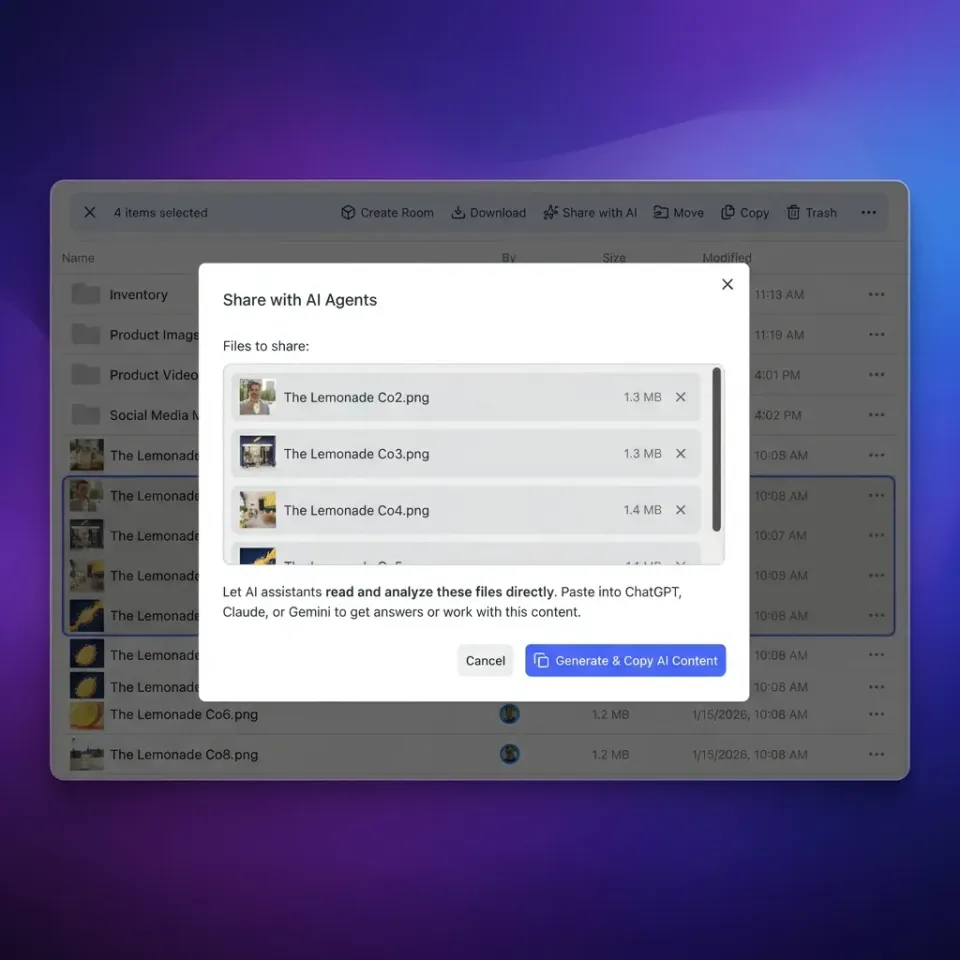
Instead of relying on local disk for long-term storage, production agents should offload file storage to a cloud workspace. By integrating Fastio, your agent gains a persistent filesystem that exists independently of the container. This approach is better than simple S3 buckets because Fastio provides smart search and retrieval directly via the MCP protocol.
- Universal Access: Files created by the agent are instantly accessible to you via the Fastio web dashboard.
- Infinite Memory: The agent can search and retrieve files from months ago, no matter how many times the container has been redeployed.
- Collaboration: You can drop a file into the workspace from your laptop, and the agent sees it immediately.
This architecture decouples compute (the Docker container) from state (the files), making your infrastructure truly stateless and easy to manage.
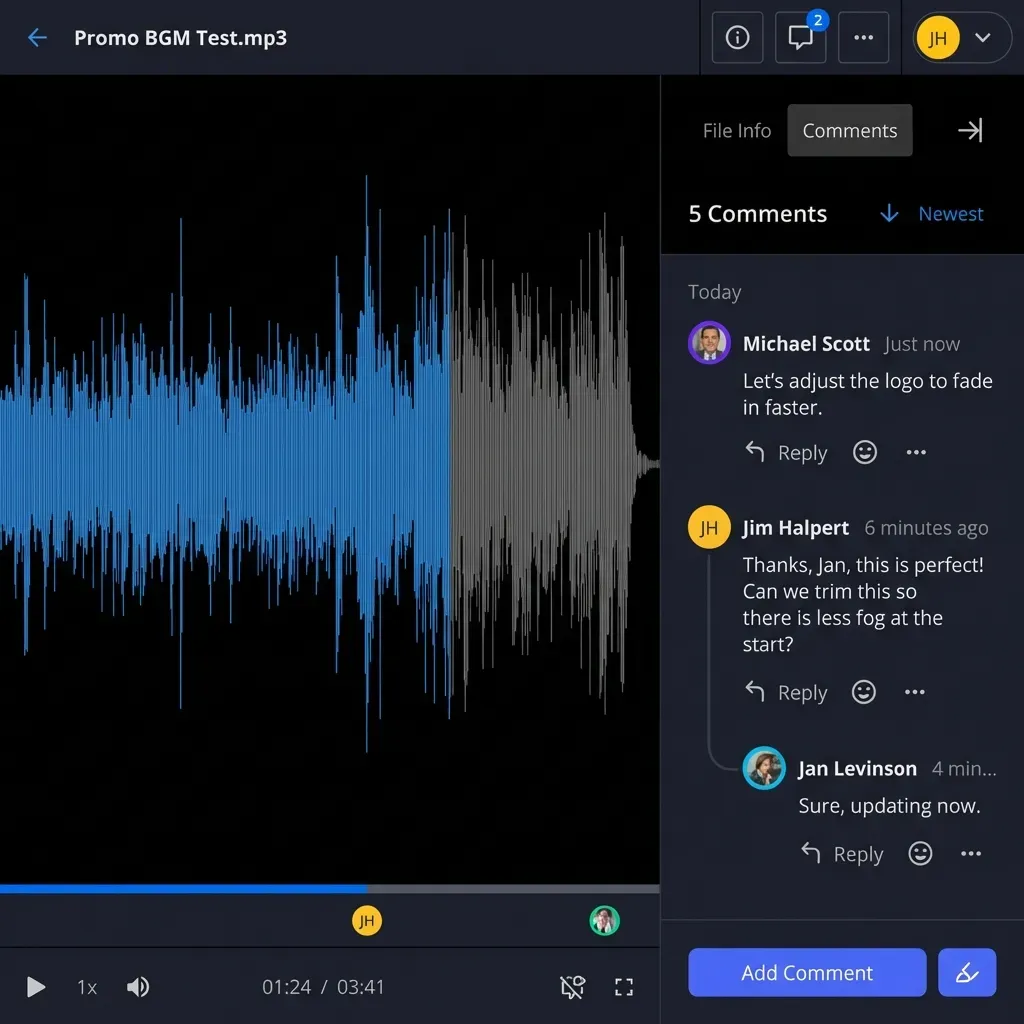


Give Your Agent Infinite Memory
Stop worrying about Docker volumes. Connect your OpenClaw agent to a Fastio workspace for persistent, searchable, and shareable cloud storage.
Step 3: Deploying and Connecting
With your configuration in place, it's time to launch the agent and connect it to your storage layer.
1. Start the Container Run the following command to pull the latest image and start the service in background mode:
docker-compose up -d
2. Verify Status Check that your container is running correctly:
docker-compose ps
You should see the state as Up. If it says Restarting, check the logs immediately.
3. Connect Fastio via Remote MCP
Once the container is running, configure OpenClaw to connect to the remote Fastio MCP server. Fastio does not require installing local packages or running containerized server daemons; clients connect directly via URL. Add the Fastio remote MCP endpoint (https://mcp.fast.io/mcp/tools using Streamable HTTP, with a scoped API key sent as an Authorization: Bearer header) to your agent configuration.
According to Fastio MCP documentation, connecting to the remote endpoint provides a consolidated MCP toolset for your agent, from basic file operations to semantic search and RAG capabilities once Intelligence is enabled.
4. Authenticate Authenticate using your human-granted scoped API key or PKCE browser login. Once authenticated, your agent has persistent storage connected to your cloud workspace. You can confirm the connection by asking your agent to list files in your workspace.
Step 4: Maintenance and Operations
Running in production requires ongoing maintenance. Here are the standard operating procedures for a healthy OpenClaw deployment.
Updating the Agent To upgrade to the latest version of OpenClaw, you don't need to manually reinstall anything. Just pull the new image and recreate the container:
# Download the latest image
docker-compose pull

# Apply the update (recreates the container only if image changed)
docker-compose up -d
Viewing Logs If your agent is behaving unexpectedly, check the logs. Since we configured the standard logging driver, you can stream logs directly from the daemon:
docker-compose logs -f --tail=100
Monitoring Resources
Keep an eye on memory usage, especially if using local embeddings. The docker stats command gives you a live view of CPU and RAM consumption for all running containers. If you notice your agent consistently hitting its memory limit, consider upgrading your host or optimizing your model selection.
Backup Strategy
While Fastio handles your data persistence, you should still back up your config directory. A simple cron job that zips the ./config folder and uploads it to a secure location (or even your Fastio workspace) makes sure you can recover your specific agent settings in case of catastrophic server failure.
Troubleshooting Common Issues
Even with a solid Docker setup, issues can arise. Here are solutions to the most common deployment problems.
Container Exits Immediately
If docker-compose ps shows Exit 0 or Exit 1 immediately after starting, it's usually a configuration error. Check the logs with docker-compose logs. Common culprits are missing environment variables in your .env file or syntax errors in config.yaml.
Permission Denied Errors
If the agent cannot write to the ./workspace directory, it's likely a file permission issue on the host. Ensure the user running the Docker process has write access to the mapped volumes. You can fix this by running chown -R 1000:1000 ./workspace on the host, assuming the container runs as the default user (UID 1000).
Network Connectivity If the agent cannot reach the internet (e.g., to call OpenAI or Fastio), check your firewall rules. Docker requires outbound access on ports 80 and 443. You can test connectivity from inside the container:
docker exec -it openclaw-agent curl -I https://api.fast.io
If this fails, your host's DNS settings or Docker network configuration may be incorrect.
Sources
References used to verify factual claims in this guide.
-
Docker containers can spin up in milliseconds, compared to the minutes often required for virtual machines.
-
Fastio offers a 14-day Business Trial requiring a credit card
-
Fastio remote MCP server provides a consolidated MCP toolset for your agent
-
4GB is recommended for production stability, especially when utilizing browser automation features At least 10GB of free disk space is required to accommodate Docker images
-
A minimum of 2 CPU cores is suggested for basic operations
Frequently Asked Questions
Can I run OpenClaw on Windows or Mac with Docker?
Yes, Docker Desktop for Windows and Mac handles the virtualization automatically. The Docker Compose configuration provided in this guide works identically on all major operating systems.
How do I back up my agent's configuration?
Since we mapped the `./config` directory to a local volume, you simply need to back up that folder. However, if you use [Fastio for storage](/storage-for-agents/), your critical data is already safely stored in the cloud.
What happens if the Docker container crashes?
The `restart: unless-stopped` policy in our Docker Compose file ensures the daemon automatically attempts to restart the container. Persistent data in Fastio remains safe regardless of container state.
Can I run multiple agents on the same server?
Yes. You can duplicate the service block in `docker-compose.yml` (e.g., `openclaw-1`, `openclaw-2`). Just ensure you map them to different host ports (e.g., 8000 and 8001) and give them separate config volumes.
Does this setup support GPU acceleration?
Yes, but you must install the NVIDIA Container Toolkit on your host and add the `deploy: resources: reservations: devices` block to your Compose file to pass the GPU through to the container.
Is it safe to expose the OpenClaw port to the internet?
Generally, no. We recommend running OpenClaw behind a reverse proxy like Nginx or Traefik with SSL termination and basic authentication, or using a VPN to access the agent interface securely.
Related Resources

Give Your Agent Infinite Memory
Stop worrying about Docker volumes. Connect your OpenClaw agent to a Fastio workspace for persistent, searchable, and shareable cloud storage.