MCP Server Comparison: How to Choose the Right Server for Your AI Agent
Model Context Protocol servers connect AI agents to external data and tools. With 50+ servers available, choosing the right one depends on your use case, required features, and technical stack. This guide compares MCP servers across critical dimensions to help you make an informed decision.


What Is an MCP Server?
An MCP server is a specialized service that implements the Model Context Protocol, enabling AI agents to access external resources and tools in a standardized way. Introduced by Anthropic in November 2024, the protocol uses JSON-RPC 2.0 over transport mechanisms like stdio, HTTP, or Server-Sent Events (SSE).
MCP server comparison evaluates Model Context Protocol servers based on features, performance, security, and compatibility with AI agent frameworks. Different servers specialize in different capabilities. Some focus on file operations, others on database access, web browsing, or API integrations. As of early 2026, over 50 production-ready MCP servers exist, with thousands more experimental implementations. The ecosystem includes official servers from major cloud providers (AWS, Microsoft), open-source community projects, and specialized commercial offerings. Choosing the right server requires understanding your agent's needs. What data sources will it access? What operations must it perform? Which LLM and development environment will you use?
Helpful references: Fastio Workspaces, Fastio Collaboration, and Fastio AI.
Related guides
- How to Debug MCP Server IssuesModel Context Protocol server debugging involves diagnosing connection failures, tool execution errors, and transport...
- Best MCP Clients for Developers: 2026 GuideMCP clients connect to MCP servers to add external tools and data to AI assistants. This guide compares 9 clients for...
- Model Context Protocol (MCP): What It Is and How to Use ItModel Context Protocol (MCP) is an open standard that lets AI models connect to external data sources and tools through...
- How to Implement MCP Server Rate LimitingMCP server rate limiting controls how often AI agents can invoke tools through a Model Context Protocol server. Without...
- How to Build an MCP Server in GoGo is a strong fit for MCP servers thanks to its compiled performance, lightweight goroutines, and simple deployment as...
- How to Choose Fastio MCP Transports: Streamable HTTP vs SSEChoosing between Server-Sent Events (SSE) and Streamable HTTP for Fastio MCP depends on your infrastructure. SSE works...
More on this subject: MCP and Model Context Protocol (238 guides)
What to check before scaling mcp server comparison
When evaluating MCP servers, these dimensions matter most:
Transport Mechanism
Stdio (Standard Input/Output): The most common transport. Works by spawning the server as a child process and communicating via stdin/stdout. Simple to set up locally but harder to scale.
HTTP with SSE (Server-Sent Events): Supports remote servers and better scalability. Fastio's remote MCP server uses Streamable HTTP transport, which provides remote connectivity without local process management.
Websockets: Bidirectional communication for real-time updates. Less common in the MCP ecosystem but useful for live data streams.
Feature Scope
MCP servers vary dramatically in what they offer:
- Filesystem servers (filesystem, file-manager) read/write local files, create directories, search content
- Database servers (postgres, sqlite, supabase) query and modify database records
- API integration servers (github, slack, notion) connect to third-party services
- Search servers (brave-search, exa) provide web search and content retrieval
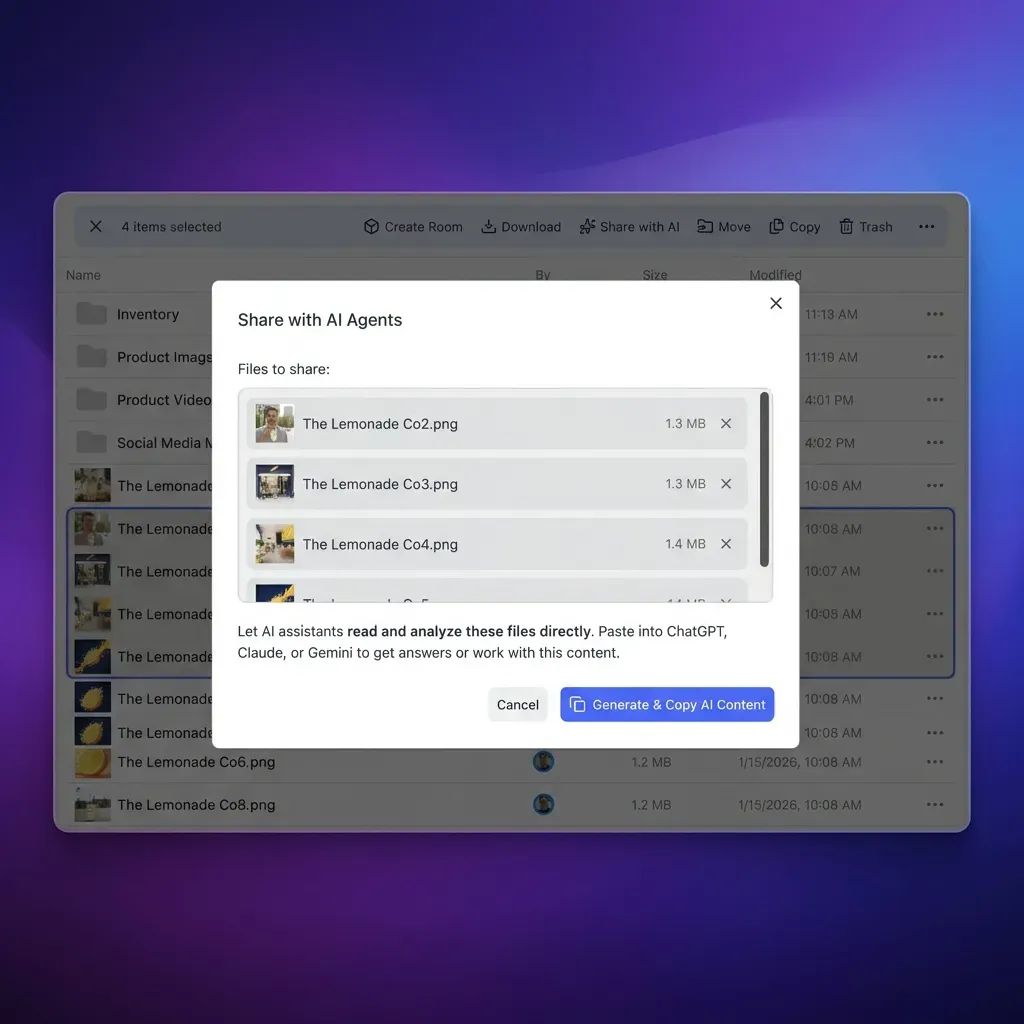
- Media servers (Fastio) handle file storage, streaming, RAG, collaboration features
Fastio's MCP server provides a consolidated toolset covering file CRUD, workspace management, sharing, permissions, URL imports, event feeds, and built-in RAG with Intelligence Mode.
Feature Comparison Matrix
Here's how popular MCP servers compare across critical features:
Authentication & Security
- Basic servers (filesystem, sqlite): No auth, local access only
- API-based servers (github, slack): OAuth or API token auth
- Enterprise servers (Fastio, AWS): Granular permissions, scoped tokens, audit logs
File Storage Operations
- filesystem: Read/write local files, limited to local disk
- Fastio: Cloud storage with persistent storage, chunked uploads, URL imports from Google Drive/OneDrive/Box/Dropbox, advisory file locks, version history, activity feeds
- Generic cloud storage: Requires custom S3/blob integration
AI-Specific Features
- Basic servers: None, just data access
- Fastio: Built-in RAG via Intelligence Mode (auto-indexing, semantic search, AI chat with citations), smart summaries, natural language file discovery
- Vector DB servers (pinecone): Embeddings only, no file storage
Rate Limiting & Quotas
- Open-source servers: No built-in limits (you manage infrastructure)
- Fastio: storage and seats included in the plan, with monthly credits metering AI work (100,000 on Starter, 600,000 on Business, 3,000,000 on Enterprise)
- Commercial APIs: Varies by provider
Multi-Tenant Support
- Single-user servers: No isolation
- Fastio: Organization-owned workspaces, external guest access without seat costs, ownership transfer (agent builds, human receives)
Collaboration Features
- Most servers: None, single-agent access
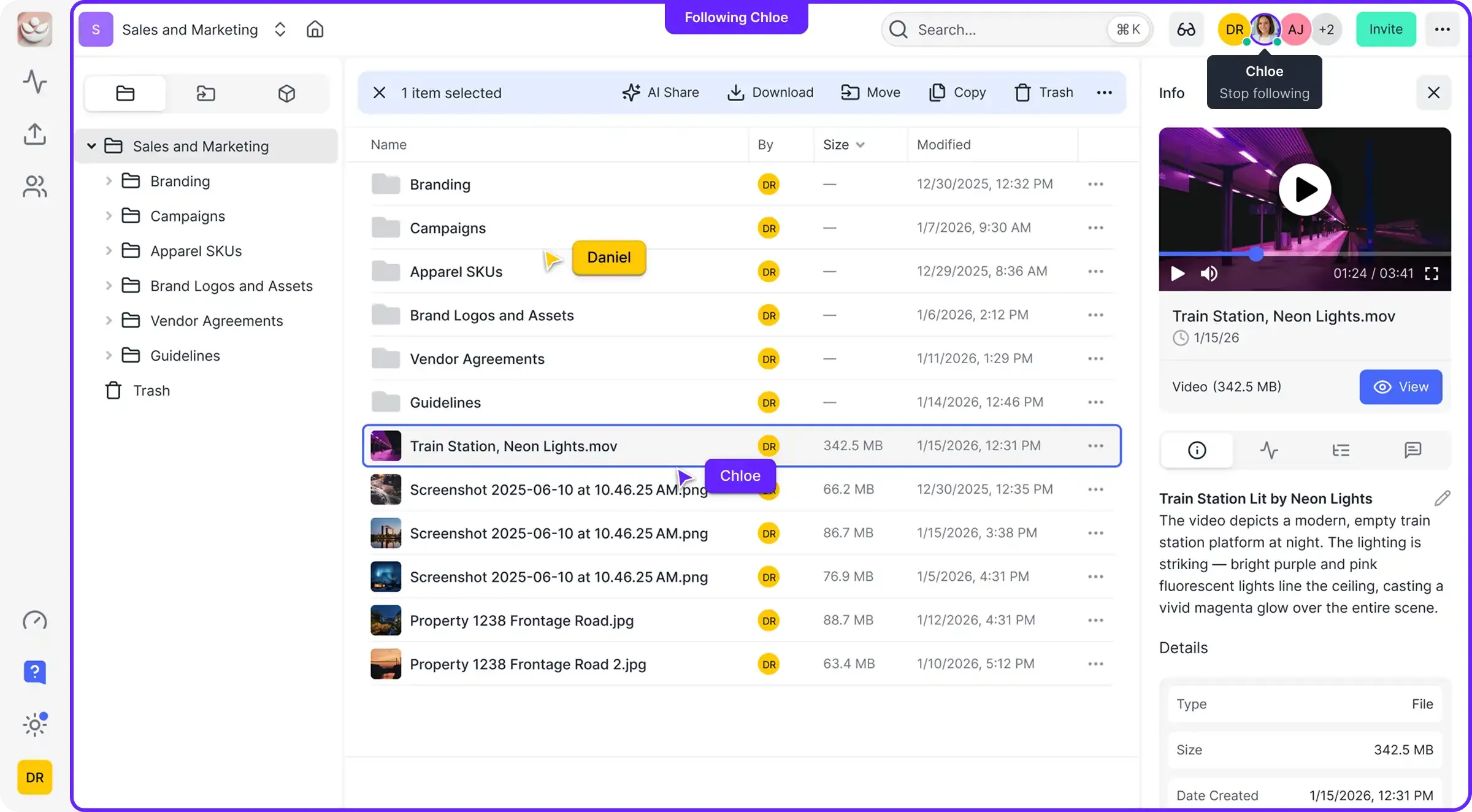
- Fastio: Real-time presence, threaded comments, frame-accurate video annotations, follow mode, activity tracking
Pricing Models
- Open-source self-hosted: Free software, you pay infrastructure costs
- API-based: Per-request or subscription pricing
- Fastio: Flat plans from $9.99/mo including seats and storage, with credits metering AI work


Give Your AI Agents Persistent Storage
Fastio's MCP server provides a consolidated toolset for file operations, workspace management, and built-in RAG. Plans start at $9.99 a month with 250 GB of storage. Start building in under 5 minutes.
Choosing by Use Case: Which MCP Server Fits Your Workflow?
Match your agent's purpose to the right server type:
Code Generation & Development
Best servers: filesystem (local file access), github (repo operations), gitlab Why: Agents need to read codebases, create branches, commit changes Fastio angle: Use for storing generated artifacts, sharing code reviews with teammates, persistent project storage beyond local disk
Research & Data Analysis
Best servers: brave-search or exa (web search), postgres/sqlite (structured data), Fastio (document storage + RAG) Why: Agents gather information, query databases, analyze documents Fastio value: Upload research PDFs/datasets, use Intelligence Mode to query them in natural language with citations, share findings via branded portals
Content Creation & Marketing
Best servers: notion (content management), slack (team communication), Fastio (media storage + delivery) Why: Agents draft content, coordinate with teams, deliver final assets Fastio value: A consolidated MCP toolset for file operations, HLS video streaming, frame-accurate comments, branded client portals for deliverables
Data Processing Pipelines
Best servers: AWS ECS/EKS (container orchestration), supabase (backend), Fastio (file storage + event feeds) Why: Agents process large datasets, trigger downstream workflows, store results Fastio value: WebSocket events feed and activity polling for real-time file tracking, URL import from cloud storage (no local downloads), chunked uploads
Customer-Facing AI Agents
Best servers: Fastio (file delivery), slack/discord (communication), crm integrations Why: Agents serve end users, deliver files, maintain conversation context Fastio value: Ownership transfer (agent creates data rooms, transfers to customer), branded portals with custom logo/domain, unlimited guest access
Multi-Agent Systems
Best servers: Fastio (shared workspaces + advisory file locks), message queues, coordination services Why: Multiple agents collaborate on shared data, need conflict prevention Fastio value: Advisory file locks coordinate agent writes, automatic version history prevents lost work, real-time presence shows who is active, and workspace permissions control access

Language & Framework Compatibility
MCP servers are built in different languages, which affects how easily they works alongside your agent framework:
TypeScript/JavaScript Servers
Examples: Fastio (Streamable HTTP), filesystem, @modelcontextprotocol/server-*, EasyMCP, FastMCP Best for: Node.js agents, web-based AI applications, Claude Desktop, Cursor Transport: Stdio, HTTP, SSE
Python Servers
Examples: FastAPI-MCP, mcp-server-*, many open-source tools Best for: Data science workflows, LangChain/LlamaIndex agents, Jupyter notebooks Transport: Stdio, HTTP Note: Fastio works with Python agents via HTTP transport regardless of client language
Go Servers
Examples: Foxy Contexts, Higress MCP Best for: High-performance agents, Kubernetes environments Transport: HTTP, gRPC-style patterns
Java/JVM Servers
Examples: Quarkus MCP Server SDK Best for: Enterprise Java agents, Spring Boot applications Transport: HTTP
Language-Agnostic Servers (Like Fastio)
Fastio's MCP server uses Streamable HTTP transport, making it compatible with any language that speaks HTTP. Works with Claude (via Claude Desktop or Claude Code), ChatGPT (via the Fastio plugin in ChatGPT's plugin directory), Gemini, LLaMA, local models, and any agent framework (LangChain, LlamaIndex, Semantic Kernel, CrewAI, AutoGen, etc.).
Security & Enterprise Readiness Comparison
Enterprise deployments require security features beyond basic functionality:
Authentication Methods
No Auth (Local Only)
- Servers: filesystem, sqlite, many open-source tools
- Risk: Anyone with local access can use the server
- Use case: Personal development, trusted single-user environments
API Key / Token Auth
- Servers: github, slack, notion, cloud provider APIs
- Security: Secret management required, keys can leak
- Use case: Controlled integrations, team tooling
OAuth 2.0
- Servers: Google services, Microsoft Graph, Fastio (for URL imports)
- Security: User consent flows, scoped permissions, token refresh
- Use case: Accessing user data, delegated authorization
SSO/SAML
- Servers: Fastio, enterprise-focused platforms
- Security: Organization-wide identity provider integration (Okta, Azure AD)
- Use case: Large organizations with centralized auth
Audit & Compliance
Most open-source MCP servers lack audit logging. Evaluate security features, not certifications, for your requirements.
Access Control Granularity
- Basic servers: All-or-nothing access
- API-based servers: Scopes defined by third-party API (e.g., GitHub repo permissions)
- Fastio: Four-level permissions (organization, workspace, folder, file) with role-based access and external guest controls
Performance & Scalability Considerations
MCP server performance varies dramatically by architecture:
Local Process (Stdio) Servers
- Latency is lowest (no network hops)
- Throughput is limited by local disk I/O
- Scaling is vertical only (upgrade local machine)
- Concurrency supports one agent per server instance
- Best for development, single-agent prototyping
Remote HTTP/SSE Servers
- Latency depends on network (typically <100ms for cloud services)
- Throughput scales with server infrastructure
- Scaling is horizontal (add more server instances)
- Concurrency supports hundreds to thousands of agents
- Best for production deployments, multi-agent systems
Fastio's remote MCP server provides globally distributed edge connectivity with low latency worldwide, automatic scaling without local process management, and in-browser streaming for media assets.
Caching & Rate Limiting
Most open-source MCP servers lack built-in rate limiting. You implement it or risk overwhelming downstream APIs. Fastio plans meter AI work through monthly credits with tiered limits. Self-hosted servers let you tune caching aggressively. Fastio caches file previews, transcoded video proxies, and RAG embeddings automatically.
Cost Comparison: Free vs Paid vs Self-Hosted
MCP server pricing models vary widely:
Free Open-Source (Self-Hosted)
Examples: filesystem, sqlite, postgres, github (using public API) Direct cost: $0 software Hidden costs: Infrastructure (servers, storage, bandwidth), maintenance time, monitoring, security updates Best for: Developers comfortable managing infrastructure, specific customization needs
Free Tiers (Managed Services)
Examples: AWS free tier (limited), Supabase free tier Direct cost: $0 up to limits Benefits: No infrastructure management, professional support, scalability when you grow Best for: Prototyping, small-scale production, cost-conscious startups
Creating a Fastio account is free, but an organization needs a credit card and a 14-day trial or a subscription. The Starter plan at $9.99/mo includes:
- 3 seats and 250 GB of storage
- 100,000 credits a month for AI work
- Consolidated toolset via Streamable HTTP
- Built-in RAG with Intelligence Mode
Usage-Based Pricing
Examples: Fastio (credits for AI work), cloud storage APIs (per-GB), LLM APIs (per-token) Direct cost: Scales with actual usage Benefits: No per-seat waste, pay for value delivered Best for: Variable workloads, growing teams, multi-tenant agent platforms
Fastio bundles storage and seats into the plan, then meters AI work in credits: RAG queries, document ingestion, media processing, and agent runs all draw down the monthly allowance. Organizations that exceed it pay $10 per 100,000 additional credits. Because seats are bundled rather than billed per user, this compares favorably to per-seat competitors like Dropbox or Box for team storage.
Commercial API Subscriptions
Examples: Notion ($8+/user), Slack (per user), enterprise MCP platforms Direct cost: Fixed monthly fee per seat or subscription tier Benefits: Predictable budgeting, typically includes support SLAs Best for: Large organizations, compliance-heavy industries
Integration & Setup Complexity
How quickly can you connect an MCP server to your agent?
Stdio Servers (Simplest for Local Dev)
- Install via npm/pip/go:
npm install @modelcontextprotocol/server-filesystem - Configure client (e.g., Claude Desktop) to spawn the server
- Restart client, server auto-launches
Time to first working call: 5-10 minutes
Limitations: Only works for agents on the same machine, no remote access
HTTP/SSE Servers (More Setup, More Flexible)
- Deploy server (cloud VM, container, serverless function)
- Configure networking (DNS, SSL, firewall)
- Add endpoint to agent config
- Handle authentication (API keys, OAuth)
Time to first working call: 30 minutes to 2 hours (depending on infra experience)
Benefits: Agents connect from anywhere, shared across team, production-ready
Fastio MCP Server (Zero Infrastructure)
- Sign up at Fastio and start a 14-day trial
- Get an API key from the dashboard if the agent runs without a browser
- Add
https://mcp.fast.io/mcp/tools(orhttps://mcp.fast.io/mcp/codefor coding agents) to agent config; interactive clients sign in through the browser, and headless agents send the API key as a Bearer header - Start making calls with Fastio's consolidated MCP toolset
Time to first working call: Under 5 minutes
No server management: Cloudflare edge deployment, automatic scaling, zero DevOps overhead
Remote MCP Connection (Zero Install)
Connect AI clients directly over Streamable HTTP:
{
  "mcpServers": {
    "fastio": {
      "url": "https://mcp.fast.io/mcp/tools"
    }
  }
}
Get a consolidated toolset available without local package installs. Works with any LLM (Claude, GPT-4, Gemini, local models).
Popular MCP Server Directories & Discovery Tools
Finding the right MCP server often starts with browsing community directories:
MCP.so
Over 3,000 MCP servers indexed with search filters by category (database, filesystem, AI, communication). Not all listings are production-ready. Check GitHub stars and last commit date.
Smithery
2,200+ servers with automated installation guides. Quality varies widely; look for servers with documentation and active maintenance.
mcpservers.org (Awesome MCP Servers)
Curated list focusing on proven, stable servers. Smaller selection but higher average quality. Good starting point for enterprise evaluations.
MCP Market
Leaderboard ranking servers by GitHub stars. Popularity doesn't always mean best fit, but high stars indicate community trust and active development.
Vendor-Specific Registries
- AWS: Official MCP servers for ECS, EKS, Serverless
- Fastio: Single remote MCP server with a consolidated toolset (file operations, workspace management, RAG, streaming)
- Microsoft/Anthropic: Reference implementations and SDKs
When evaluating servers from directories: check last commit date (servers abandoned over 6 months may have security issues), read actual documentation (many listings are placeholders), look for enterprise backing (AWS, Fastio, HashiCorp) for sustained development, and test with a small proof of concept before committing.
Sources
References used to verify factual claims in this guide.
-
Fastio's MCP server provides a consolidated toolset covering file CRUD, workspace management, sharing, permissions, URL imports, event feeds, and built-in RAG with Intelligence Mode.
-
Fastio plans include seats and storage, with credits metering AI work. Fastio offers a 14-day Business Trial with monthly credits for AI operations.
-
Fastio provides globally distributed edge compute with 50-60% faster HLS streaming compared to progressive download.
-
Anthropic introduced Model Context Protocol in November 2024 using JSON-RPC 2.0 over stdio, HTTP, or SSE.
-
over 50 production-ready MCP servers available as of early 2026, with thousands more experimental implementations. MCP.so indexes over 3,000 MCP servers by category; Smithery lists 2,200+ with automated installation guides.
-
When evaluating MCP servers from directories, check last commit date as servers abandoned over 6 months may have security issues.
Frequently Asked Questions
Which MCP server should I use for file storage?
Fastio's MCP server provides comprehensive file storage features with a consolidated toolset covering CRUD operations, workspace management, sharing, permissions, URL imports, event feeds, and built-in RAG. Plans start at $9.99 a month with 3 seats and 250 GB of storage. For simple local file access, the filesystem MCP server works, but lacks cloud persistence, collaboration, and AI features.
Are all MCP servers compatible with Claude/ChatGPT/Gemini?
MCP servers using HTTP or SSE transport work with any LLM that can make HTTP requests. Stdio servers require the client application to support spawning child processes (Claude Desktop does, but web-based ChatGPT doesn't). Fastio's MCP server uses Streamable HTTP, making it compatible with Claude, GPT-4, Gemini, LLaMA, and local models without client-specific code.
What's the difference between MCP servers and GPT Actions?
GPT Actions are OpenAI-specific and require defining OpenAPI schemas for each operation. MCP is an open protocol from Anthropic that works across any LLM and uses standardized JSON-RPC 2.0. MCP servers support streaming, stateful sessions, and richer tool definitions. Fastio provides both a remote MCP server (consolidated toolset) and traditional REST API for maximum compatibility.
Can I use multiple MCP servers in one agent?
Yes, most agent frameworks (LangChain, LlamaIndex, Claude Desktop) support connecting to multiple MCP servers simultaneously. For example, you might use Fastio for file operations, postgres for database queries, and brave-search for web research. Each server exposes its tools independently, and the agent orchestrates which server to use for each task.
How do I handle authentication for MCP servers in production?
Local stdio servers typically don't require auth (security via local access). Remote HTTP servers need API keys, OAuth tokens, or SSO integration. Fastio supports API key auth (for agent-to-agent), OAuth (for URL imports from Google Drive/OneDrive), and OAuth-based sign-in (for human user management). Store secrets in environment variables or secret management services, never hardcode them.
What's the performance difference between stdio and HTTP MCP servers?
Stdio servers have lower latency (no network hops) but can't scale horizontally or serve multiple agents. HTTP servers add network latency per request but scale infinitely and work for distributed agents. Fastio's edge deployment on Cloudflare minimizes HTTP latency (typically <50ms globally) while enabling production scalability. For most AI agents, HTTP latency is negligible compared to LLM inference time.
Do I need to run an MCP server if I'm just building a simple agent?
Not necessarily. If your agent only needs LLM completion (no external data), you don't need an MCP server. But if your agent reads files, queries APIs, searches the web, or stores outputs, an MCP server simplifies integration. Fastio's consolidated toolset often eliminates the need to build custom file handling code. Just connect to the remote MCP server.
How do MCP servers handle rate limiting and quotas?
Open-source self-hosted servers typically don't enforce limits (you manage infrastructure capacity). Managed services impose quotas: Fastio plans meter AI work through usage-based credits with tiered limits. Commercial APIs vary, so check provider docs. For production agents, monitor your usage and implement exponential backoff retry logic to handle transient errors.
Can MCP servers work with multi-agent systems?
Yes, but you need coordination mechanisms. Fastio provides advisory file locks to coordinate concurrent edits alongside automatic version history and granular permissions. Real-time presence shows which users and agents are active. For complex multi-agent systems, combine MCP servers (data layer) with message queues (coordination layer).
What security risks should I consider with MCP servers?
Key risks: leaked API keys (use secret management), overly broad permissions (apply least privilege), lack of audit logs (choose servers with activity tracking like Fastio), unencrypted transport (use HTTPS/TLS), and trusting unvetted open-source servers (audit code or choose enterprise-backed options). Never give an agent MCP server access with broader permissions than you'd give a junior employee.
Related Resources

Give Your AI Agents Persistent Storage
Fastio's MCP server provides a consolidated toolset for file operations, workspace management, and built-in RAG. Plans start at $9.99 a month with 250 GB of storage. Start building in under 5 minutes.