How to Manage Files with the Gemini API
Google's Gemini API offers powerful multimodal capabilities, allowing you to analyze images, audio, and video directly. However, its native file storage is transient, with a 48-hour expiration window.


What to check before scaling gemini api file management
Gemini API file management handles uploading, storing, and retrieving files for multimodal analysis. Unlike standard cloud storage, the Gemini API is built for context. It feeds data to the model for immediate processing rather than hosting it long-term. There are three primary ways to get files into Gemini:
- Files API: The standard method for most media. It supports files up to 2GB. Files uploaded here are stored by Google for 48 hours before being automatically deleted. This is ideal for session-based analysis but unsuitable for long-term memory.
- Inline Data: For small files (under 100MB) or quick text/image prompts, you can pass base64-encoded data directly in the prompt request. This avoids a separate upload step but increases payload size and latency.
- External URLs: You can pass publicly accessible HTTPS URLs (or signed URLs) to Gemini. This is often the most efficient method for production applications, as it decouples storage from the inference process.
Helpful references: Fastio Workspaces, Fastio Collaboration, and Fastio AI.

Related guides
- How to Upload a Base64 String as a File to the Fastio APIAgents can upload a file as a Base64 string through the Fastio MCP upload_manage tool. Pass content_base64 on a...
- How to Manage Files for Image Generation AgentsImage generation agents create thousands of files in minutes. Learn how to organize prompts, version outputs, and...
- How to Manage Files in Rasa ChatbotsRasa file management includes storing conversation data, training files, model artifacts, and user documents. Rasa...
- How to Manage Files for Resume Parsing AgentsManaging files for resume parsing agents means organizing candidate documents for AI recruitment systems. Learn to...
- How to Master WhatsApp AI Agent File ManagementWhatsApp agents need more than text to be useful. Learn how to set up your bot to receive PDFs, images, and videos, and...
- Best AI File Organizers in 2026: 8 Tools That Actually Sort Your FilesMcKinsey estimates that employees spend 1.8 hours every day just searching for and gathering information. AI file...
More on this subject: Agent File and Document Workflows (325 guides)
Step-by-Step: Uploading Files to Gemini
To use the Files API, you'll need the Google Generative AI SDK. Here is the standard workflow for uploading a local file and passing it to the model.
Python Implementation:
import google.generativeai as genai

### Configure your API key
genai.configure(api_key="YOUR_API_KEY")

### 1. Upload the file
video_file = genai.upload_file(path="video.mp4")
print(f"Uploaded file: {video_file.name}")

### 2. Wait for processing (important for video/audio)
import time
while video_file.state.name == "PROCESSING":
    print("Processing...")
    time.sleep(10)
    video_file = genai.get_file(video_file.name)

### 3. Use in a prompt
model = genai.GenerativeModel('gemini-1.5-pro')
response = model.generate_content(["Describe this video", video_file])
print(response.text)
Important Constraints:
- Maximum File Size: 2GB per file.
- Project Limit: 20GB total storage per project.
- Expiration: Files are deleted after 48 hours. You cannot extend this time.
The 48-Hour Expiration Problem
The main limitation of the Gemini Files API is its short lifespan. Because files expire after 48 hours, you cannot use the API as a knowledge base or long-term memory for your AI agent. If your agent needs to reference a PDF manual, a brand asset kit, or a user's historical data next week, you must re-upload that file. This wastes bandwidth, adds latency, and risks hitting API rate limits.
Why this matters for agents:
- Loss of Context: An agent that "forgets" documents every two days cannot maintain state.
- Redundant Uploads: Re-uploading the same 500MB video for every analysis is inefficient.
- Integration Complexity: You need to build logic to check if a file still exists or needs re-uploading.


Give Your AI Agents Persistent Storage
Stop re-uploading files every 48 hours. Get persistent, secure storage for your AI agents.
Best Persistent Storage Solutions for Gemini Agents
To solve the expiry issue, production AI agents use a "dual-storage" architecture: persistent storage for keeping files safe, and the Gemini API for temporary analysis.
Option 1: Google Cloud Storage (GCS)
If you are deep in the Google ecosystem, GCS is a native option. You can grant Gemini access to read directly from GCS buckets.
- Pros: native integration, enterprise-grade scaling.
- Cons: requires credit card, complex IAM permission setup, billing can be unpredictable for high egress.
Option 2: Fastio (Recommended for Agents)
Fastio provides a dedicated storage layer designed for AI agents. It offers persistent storage that agents can control programmatically, with built-in features that standard cloud storage lacks.
Fastio Advantages:
- Permanent Storage: Files never expire.
- generous storage Tier: Generous limit for datasets and media.
- MCP Support: Connects directly to Claude, Gemini, and other LLMs via the Model Context Protocol.
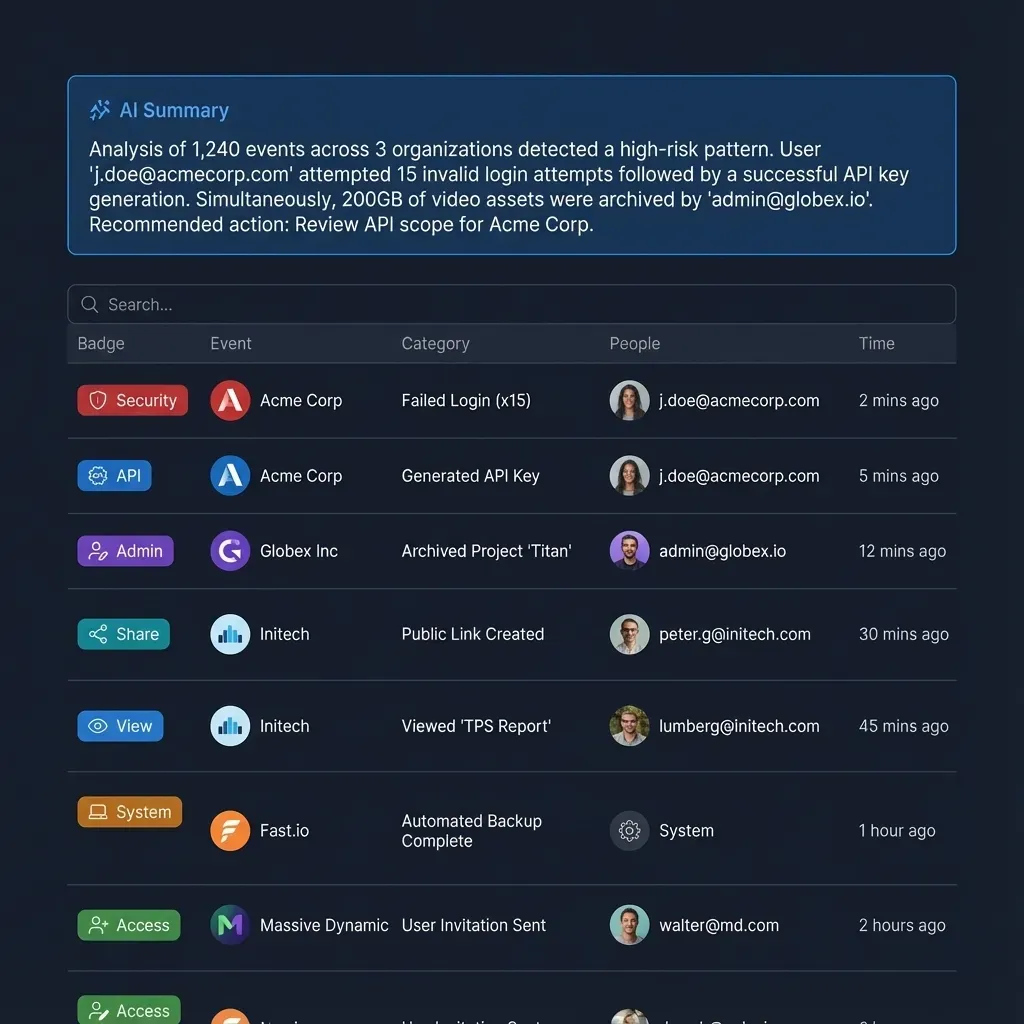
- Human-Friendly: Files are accessible via a branded portal, so humans can review what the agent created.
Integrating Fastio with Gemini
A stronger workflow uses Fastio for long-term storage and Gemini for analysis.
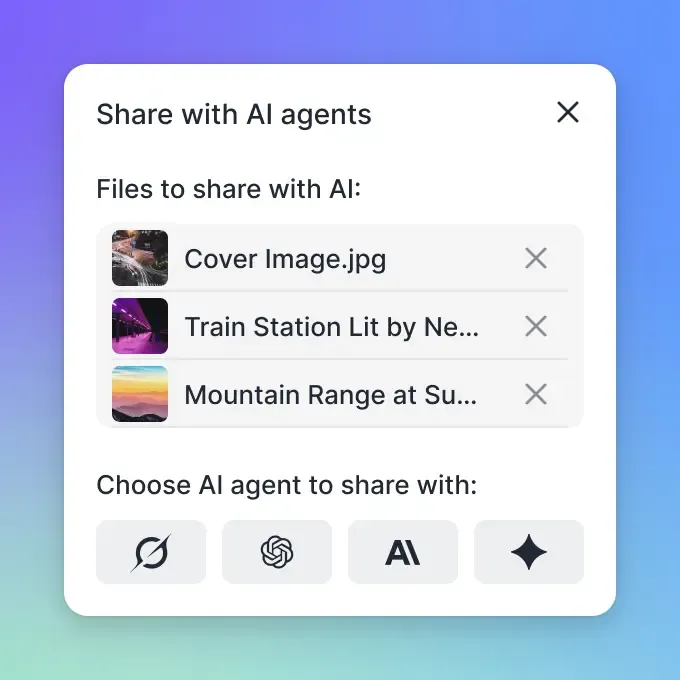
- Ingest: Agent (or human) uploads file to Fastio.
- Store: File is kept safe, versioned, and accessible via a stable URL.
- Analyze: When Gemini needs to see the file, your agent fetches it from Fastio and uploads it to Gemini's transient storage (or passes the URL if supported).
Using the Fastio MCP Server: If you are building agents with tools like LangChain or CrewAI, you can use the Fastio MCP server to manage this automatically.
// The agent can list files to find the right one
{
  "tool": "list_files",
  "args": { "path": "/marketing/videos" }
}

// Then read or move files as needed
{
  "tool": "read_file",
  "args": { "path": "/marketing/videos/demo.mp4" }
}
This approach gives your Gemini agent a "hard drive" that persists across sessions, reboots, and API updates.
Managing Multimodal File Types
Gemini is multimodal, so it understands more than just text. Good file management makes these features usable. * Video: Gemini processes video as a sequence of frames and audio. Use this for video summarization, extracting clips, or analyzing sentiment in user interviews. * Audio: Upload MP3 or WAV files for transcription and translation. Gemini 1.5 Pro has a large context window (up to 2 million tokens), allowing it to process hours of audio in a single pass. * Documents: PDFs can be uploaded for RAG (Retrieval Augmented Generation). While Gemini can read PDFs natively, for large libraries, it is more efficient to extract text and store it in a vector database or use Fastio's Intelligence Mode to search across documents.
Sources
References used to verify factual claims in this guide.
-
native file storage transient with 48-hour expiration window Files uploaded stored 48 hours automatically deleted Files deleted after 48 hours files expire after 48 hours The 48-hour expiration problem means files have a short lifespan in the Gemini API
-
Files API supports files up to 2GB Maximum File Size 2GB per file maximum file size Gemini Files API 2 GB per file
-
Inline Data small files under 100MB base64-encoded directly
-
model = genai.GenerativeModel('gemini-1.5-pro')
-
Project Limit 20GB total storage per project total storage limit 20 GB per project
-
Re-uploading same 500MB video every analysis inefficient
-
generous storage Tier generous limit datasets media
-
Gemini 1.5 Pro large context window up to 2 million tokens process hours audio
Frequently Asked Questions
How long do files stay in the Gemini API?
Files uploaded via the Gemini Files API expire automatically after 48 hours. They cannot be recovered after this period. For long-term access, you must store the original file in a persistent storage solution like Fastio or Google Cloud Storage.
What is the file size limit for Gemini API?
The maximum file size for the Gemini Files API is 2 GB per file. Also, there is a total storage limit of 20 GB per project. If you need to process larger datasets, you may need to chunk data or process files sequentially.
Can Gemini access files from my local computer?
No, the Gemini API runs in the cloud and cannot see your local disk. You must either upload the file content (via the Files API or inline data) or provide a publicly accessible URL that the API can reach.
Does Gemini support video uploads?
Yes, Gemini supports video file uploads (MP4, MPEG, MOV, AVI, etc.). It processes both the visual frames and the audio track, allowing for complex queries like 'Summarize what the speaker said while holding the product'.
Related Resources

Give Your AI Agents Persistent Storage
Stop re-uploading files every 48 hours. Get persistent, secure storage for your AI agents.