5 Best Freelance Client Collaboration Tools for 2026
Freelancers who centralize file delivery, feedback, and project tracking in one place spend less time on admin and more time on paid work. This guide compares five collaboration tools built for client-facing freelance workflows, from project hubs and async video to intelligent file handoffs.


Why Freelancers Need Dedicated Collaboration Tools
The freelance workforce keeps growing. Roughly 1.57 billion people globally do some form of independent work, according to DemandSage, and in the US alone that number sits around 76.4 million. With that much competition, how you manage a client relationship matters as much as the quality of your deliverables.
Most freelancers start with email threads, Google Drive folders, and the occasional Zoom call. That patchwork works until you juggle three or four clients at once. Files get lost in inboxes, feedback lives in scattered threads, and version control is whoever remembered to add "v3_final" to the filename. These friction points add up. According to Xolo, roughly 62% of freelancers find new projects through referrals and repeat clients rather than active outreach, which means a smooth client experience is directly tied to your income pipeline.
A dedicated collaboration tool solves this by giving each client a single place to find the latest deliverables, leave feedback, and track progress. That consistency builds trust, and trust is what turns a one-off gig into a retainer.
Helpful references: Fastio Workspaces, Fastio Collaboration, and Fastio AI.
Related guides
- 9 Best Online Proofing Tools for Creative Teams in 2026Online proofing tools let creative teams collect precise, contextual feedback on visual content in one centralized...
- 7 Best Video Approval Software Tools for Faster Sign-OffsVideo approval software manages the sign-off process for video content, providing a structured workflow where...
- How to Choose a Client Feedback Tool That Fits Your WorkflowA client feedback tool centralizes comments, approvals, and revisions in one place so creative teams stop chasing...
- 8 Best Video Review Platforms for Collaborative FeedbackA video review platform is software that enables stakeholders to watch, annotate, and approve video content through a...
- How to Set Up a Video Review and Approval Workflow That WorksVideo review and approval is a structured workflow where stakeholders provide timestamped feedback on video content...
- Best Free Client Portal Tools in 2026Most free client portal lists skip the fine print. This guide compares seven free client portal tools with their actual...
More on this subject: Team Collaboration (125 guides)
1. Notion: Build a Custom Client Hub
Notion works well as a freelancer's command center because it bends to fit almost any workflow. You can build a "Client Hub" for each project containing a Kanban board for task tracking, a database of brand assets, and meeting notes linked to specific deliverables.
What makes it useful for client work:
- Shared project boards let clients see task status without asking for updates
- Synced blocks mean you update a status in one place and it reflects everywhere
- Template galleries let you spin up a new client workspace in minutes
- The free tier covers most solo freelancer needs
Notion does not have built-in invoicing, contracts, or native file approval workflows. If your clients need to leave comments on a specific image region or timestamp in a video, you will need a separate tool for that. But as a project management and documentation layer, it is hard to beat for the price.
Best for: Writers, marketers, and consultants who need to organize project information and share status updates with clients.
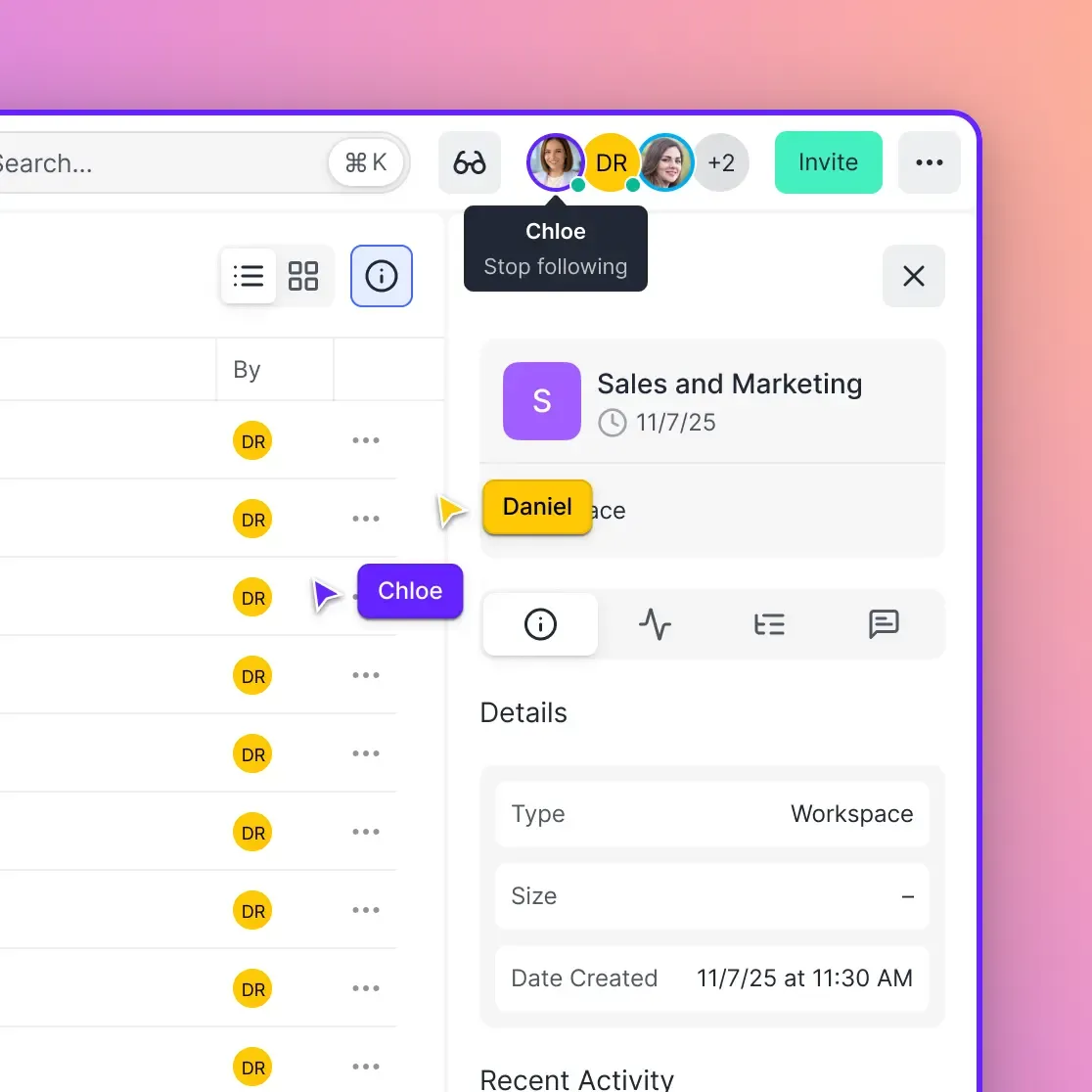
2. Fastio: Intelligent File Handoffs with Built-in AI
Most collaboration tools treat file sharing as a one-way delivery. You upload a folder, send a link, and hope the client can find what they need. Fastio takes a different approach by making uploaded files searchable and queryable through AI.
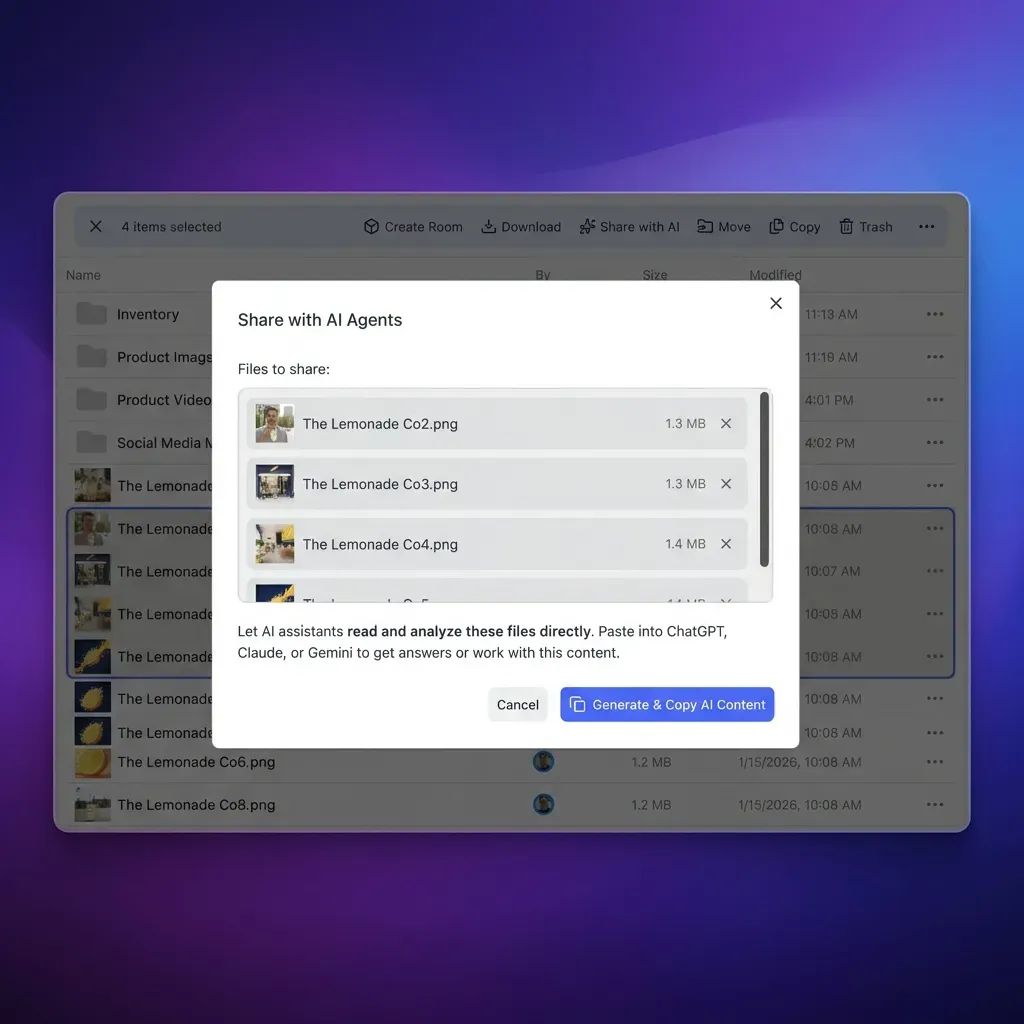
When you upload deliverables to a Fastio workspace with Intelligence Mode enabled, files are automatically indexed for semantic search. Your client can ask questions like "What changed in the latest brand strategy document?" or "Summarize the feedback from the last round of revisions" and get cited answers pulled directly from the files. No manual tagging or folder organization required.
What sets it apart for freelancers:
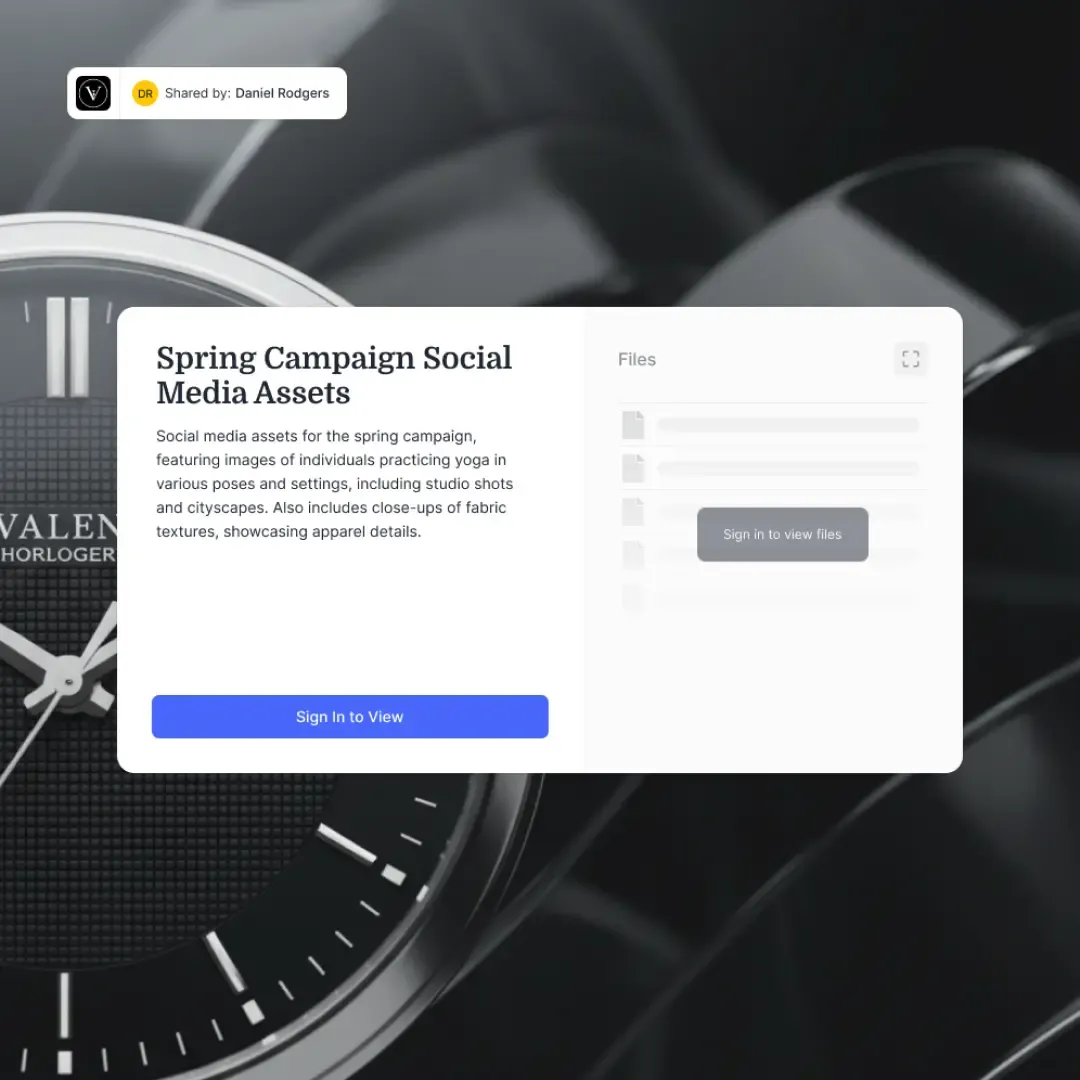
- Branded Shares let you create Send, Receive, and Exchange workflows so clients can upload briefs and download deliverables through a single portal
- Comments with anchors attach feedback to specific image regions, PDF pages, video timestamps, or text selections, so revision notes are precise rather than vague
- Ownership transfer lets you build an entire workspace for a client and hand it off when the project wraps, while keeping admin access for future updates
- Granular permissions at the org, workspace, folder, and file level mean you control exactly what each client stakeholder can see
Fastio offers a 14-day Business Trial (credit card required; see /pricing/) with paid plans starting at Starter ($9.99/mo, 250 GB). For freelancers who work with AI agents or automate parts of their workflow, Fastio also exposes an MCP server with a consolidated MCP toolset to manage files, comments, and workspace operations directly.
Best for: Freelancers delivering complex projects with many assets, especially those who want clients to explore and understand deliverables rather than just download them.


Give Your Clients a Smarter Way to Access Deliverables
Create an intelligent workspace where clients search, preview, and comment on your files. Start a 14-day Business Trial. Built for freelance client collaboration tools workflows.
3. Bonsai: Contracts, Invoices, and Client Management
Bonsai is purpose-built for the business side of freelancing. Where Notion and Fastio focus on project work and file delivery, Bonsai handles proposals, contracts, time tracking, invoicing, and tax preparation in one platform.
The contract templates are attorney-vetted and cover common freelance scenarios like intellectual property assignment, kill fees, and payment terms. Once a client signs, Bonsai can automatically send the deposit invoice. Time tracking integrates directly with invoicing, so billable hours flow into line items without manual entry.
What freelancers actually use it for:
- Sending proposals that convert into signed contracts with e-signatures
- Tracking time against projects and generating invoices from logged hours
- Managing a lightweight CRM to track client interactions and deal stages
- Filing quarterly tax estimates with built-in accounting features
Bonsai's Basic plan covers tasks and time tracking, while the Essentials plan adds invoicing, proposals, and the client portal. The client portal itself is straightforward: clients log in to see their invoices, contracts, and project status.
Best for: Freelancers who want one tool for the admin side of their business. Pairs well with a separate file-sharing tool for actual deliverables.
4. Loom: Async Video Instead of Status Meetings
The "quick 15-minute sync" that eats 45 minutes is a freelancer's worst enemy. Loom replaces those meetings with short recorded videos. You record your screen walking through a design, a code change, or a strategy document, and the client watches on their own time.
This works especially well for feedback cycles. Instead of emailing a flat screenshot and asking "What do you think?", you record a two-minute walkthrough explaining your reasoning. Clients can reply with comments at specific timestamps, which makes revision notes precise. That back-and-forth that used to take three meetings now happens asynchronously over a day or two.
Practical details:
- The free Starter plan gives you 25 videos with a 5-minute limit per recording at 720p
- The Business plan removes all limits on video count and length
- AI features like auto-summaries, chapters, and filler word removal require an upgraded paid tier
- Loom is now part of Atlassian, so it integrates well with Jira and Confluence if your clients use those
One thing to watch: Atlassian recently removed the free Creator Lite seat tier, so teams that relied on giving clients basic access without paying per seat will need to factor in the cost.
Best for: Technical freelancers (developers, data analysts, UX researchers) who need to explain complex work to non-technical clients.
5. Figma: Real-Time Design Collaboration
For visual freelancers, Figma has become the default collaboration surface. Clients can open a Figma link in their browser, leave comments directly on the design, and watch edits happen in real time. No software installation, no exports, no "which version is the latest?" confusion.
Dev Mode bridges the gap between design and implementation. When you hand off a design to a client's development team, they get CSS values, spacing measurements, and exportable assets without you having to prepare a separate spec document. FigJam, the whiteboard feature, works well for early-stage brainstorming sessions where you want the client involved in shaping the direction before you start polishing.
What works well for client collaboration:
- Browser-based access means clients never need to install anything
- Comments pin to specific elements on the canvas
- Version history lets you show how a design evolved
- Component libraries keep brand consistency across multiple client projects
Figma's free tier covers up to 3 projects with unlimited collaborators, which is enough for most solo freelancers. The Professional plan at $15/editor/month adds unlimited projects and advanced features.
Best for: Designers, illustrators, and UX freelancers who need clients to review and comment on visual work directly.
How to Pick the Right Tool for Your Workflow
These five tools solve different problems, so the right choice depends on what kind of freelance work you do and where your current workflow breaks down.
If your bottleneck is project organization: Start with Notion. Build a client hub template once and replicate it for every new project.
If your bottleneck is file delivery and client understanding: Use Fastio. The AI indexing means clients can actually find and make sense of what you deliver, and branded shares create a professional handoff experience.
If your bottleneck is admin and getting paid: Bonsai handles the business operations so you can stop cobbling together separate tools for contracts, invoicing, and time tracking.
If your bottleneck is feedback cycles: Loom cuts meeting time and makes feedback more precise. Combine it with whichever file-sharing tool you already use.
If your bottleneck is design review: Figma is the standard for visual collaboration. Clients comment on the actual design rather than describing changes over email.
Many freelancers combine two or three of these. A common stack is Notion for project management, Fastio or Google Drive for file delivery, and Bonsai for invoicing. The goal is not to use every tool available, but to eliminate the specific friction points that cost you time and client trust.
Sources
References used to verify factual claims in this guide.
-
1.57 billion people globally engage in freelancing or independent work 76.4 million freelancers in the United States
-
62% of freelancers find projects through referrals, recruiters, or repeat clients
-
Bonsai Basic plan at $15/month, Essentials at $25/month
-
Loom free Starter plan with 25 videos and 5-minute limit
Frequently Asked Questions
What are the best collaboration tools for freelancers on a budget?
Notion and Figma offer free tiers that cover basic solo freelancer needs. For professional file delivery and AI search, Fastio provides a 14-day Business Trial (card required; see /pricing/) before upgrading to Starter ($9.99/mo). Loom provides a free tier capped at 25 videos with a 5-minute limit.
How do I set up a client portal as a freelancer?
Create a dedicated workspace in a tool like Fastio or Notion and invite your client with view or comment permissions. Include a section for deliverables, a project timeline, and a place for feedback. With Fastio, you can use branded Shares to create a professional portal where clients upload briefs and download finished work through a single link.
Do collaboration tools help freelancers get more repeat business?
Yes. About 62% of freelancers find new work through referrals and repeat clients rather than cold outreach. A smooth, professional collaboration experience builds the trust that drives those referrals. When clients can easily find files, leave precise feedback, and track project progress without chasing you over email, they are more likely to come back.
What is the difference between a client portal and a shared drive?
A shared drive like Google Drive or Dropbox gives clients access to folders and files. A client portal adds structure on top, including branded interfaces, permission controls, feedback workflows, and activity tracking. Tools like Fastio go further by auto-indexing files so clients can search by meaning rather than filename, and by supporting anchored comments on specific file regions.
Can AI tools help freelancers manage client collaboration?
AI-integrated collaboration tools can save significant time on administrative tasks. For example, Fastio's Intelligence Mode auto-indexes uploaded files so clients can ask questions about deliverables and get cited answers. Loom's AI tier generates video summaries and chapters automatically. These features reduce the back-and-forth that typically stretches out revision cycles.
Related Resources

Give Your Clients a Smarter Way to Access Deliverables
Create an intelligent workspace where clients search, preview, and comment on your files. Start a 14-day Business Trial. Built for freelance client collaboration tools workflows.