How to Build Federated Workspaces for AI Agents
Federated AI agent workspaces enable distributed agents to collaborate without centralizing all data. Learn the architecture, key benefits like edge data processing, and how to implement secure handoffs in a unified environment.

What is a Federated AI Agent Workspace?
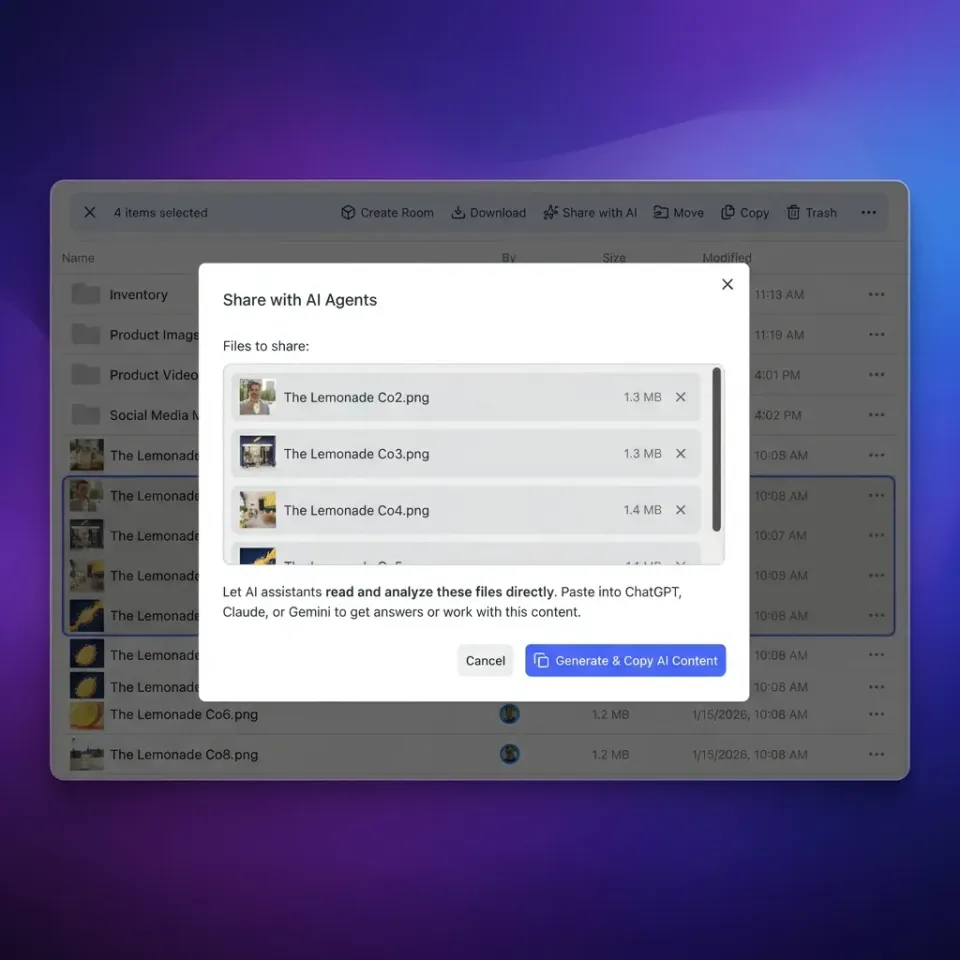
A federated AI agent workspace is a shared digital environment where independent AI agents, potentially running on different infrastructure, can securely collaborate on files, manage state, and hand off work to humans. Unlike traditional centralized systems where all data must be moved to a single cloud server for processing, federated workspaces bring the collaboration layer to where the data lives. This architecture is essential for modern AI deployments. According to Gartner, by 2025, 75% of enterprise data will be created and processed at the edge, outside traditional data centers. Moving this massive volume of data to a central location for agent processing is slow, expensive, and often violates privacy regulations. In a federated workspace, agents connect to the data source directly. A researcher agent running on a local laptop in London can collaborate with a coder agent on a server in New York, both accessing the same shared files in a Fastio workspace without constantly moving terabytes of data back and forth. The workspace acts as the synchronization layer, maintaining a unified view of the project state while allowing distributed execution.
Beyond Federated Learning
It is important to distinguish this concept from "Federated Learning" (FL). FL is a technique for training models on decentralized data without sharing it. A Federated Workspace, by contrast, is for deployment and collaboration. It assumes the agents are already trained and are now performing work, analyzing documents, generating code, or processing media. The workspace is the "office" where these distributed workers meet, share results, and coordinate their actions.
Helpful references: Fastio Workspaces, Fastio Collaboration, and Fastio AI.
Related guides
- How to Use AI Agent Workspaces for Manufacturing TeamsAI agent manufacturing workspaces enable production agents and human engineers to access CAD files, logs, and supply...
- How to Build Audio Transcription Agent Workflow StorageAudio transcription agent workflow storage manages the full data pipeline from audio file ingestion through...
- Fastio API vs Supabase Storage for Agent WorkspacesPicking the right backend for your AI application shapes your engineering roadmap. Developers often treat all cloud...
- How to Build a Company Brain for Human-Agent CollaborationBuilding a centralized company brain is essential for organizations deploying AI agents. As teams adopt autonomous...
- How to Set Up an AI Agent Shared WorkspaceA shared workspace gives multiple AI agents a single place to read, write, and organize files without stepping on each...
- Dust AI Workspace: Features, Pricing, and AlternativesDust is an AI workspace that lets teams build custom assistants connected to company knowledge and tools. This guide...
More on this subject: Agent Memory and Storage (261 guides)
The 3 Core Challenges of Multi-Agent Systems
Building effective multi-agent systems requires solving three fundamental problems that arise when agents operate independently. Without a unified workspace, these issues often lead to broken workflows and data corruption.
1. Data Gravity and Silos
Agents often run in different environments, local machines, private clouds, or edge devices. Without a federated workspace, each agent creates a data silo. An agent might generate a report on a local drive that other agents cannot see. Constant synchronization scripts are brittle and prone to failure. For example, if a "Writer Agent" cannot access the raw data collected by a "Researcher Agent" because it sits on a different server, the workflow breaks immediately.
2. State Persistence and "Amnesia"
Most AI agents are stateless; they forget everything once their process ends. To build complex, long-running workflows, agents need a place to store their "memory", file indexes, conversation history, and intermediate results. Without a persistent layer, an agent that crashes or restarts loses all context. A federated workspace provides this persistent storage layer, allowing an agent to save its state (e.g., in a JSON or SQLite file) to the shared workspace. This allows it to pause work today and resume it tomorrow, or hand it off to another agent entirely.
3. The "Black Box" Problem
When agents work in the background, humans often have no visibility into what they are doing until the final output is delivered. This "black box" operation makes debugging difficult and trust impossible. If an agent overwrites a critical file, how do you know which agent did it and when? A federated workspace solves this by making agent actions visible. Every file created, modified, or deleted is logged and accessible to human supervisors in real-time.


Give Your AI Agents Persistent Storage
Give your agents a shared, secure workspace where they can collaborate with each other and your human team. Built for federated agent workspaces workflows.
Architecture of a Federated Workspace
A strong federated workspace relies on four key components working in concert. This architecture ensures that agents can collaborate securely while maintaining the performance benefits of distributed processing.
The Storage Layer: Data Virtualization
This is the foundation. Fastio provides a unified namespace that spans across different storage backends (Google Drive, S3, local storage). Agents see a single file system regardless of where the actual bytes are stored. This "Data Virtualization" means you don't need to migrate your data to use it with agents. You mount your existing cloud storage into the workspace, and agents can access it immediately.
The Identity Layer: Model Context Protocol (MCP)
Security is paramount when multiple agents access shared files. Using the Model Context Protocol (MCP), Fastio authenticates agents securely. Each agent has its own identity and permissions. This is critical for the "Principle of Least Privilege." You might want your "Public Relations Agent" to have read-only access to financial reports but write access to the press release folder. MCP handles this negotiation standardly across different LLM providers.
The Compute Layer: Distributed Runtimes
This is where the agents actually run. Frameworks like CrewAI, AutoGen, or LangChain handle the agent logic. In a federated model, these agents can be distributed across different servers or devices, connecting to the workspace via API. One agent might be running on a secure on-premise server for privacy, while another runs in the cloud for scalability.
The Synchronization Layer: Concurrency Control
To coordinate writes, Fastio provides advisory file locks. An agent acquires a file lock before writing, heartbeats it while working, and releases it when finished. If another agent tries to lock the same file, it receives an HTTP 409 error and can wait or read. Because locks are advisory leases rather than rigid blocks, any write that lands without a lock is safely captured by Fastio's automatic version history without data corruption, while the audit log records who made each change.
How to Implement Federated Storage with Fastio
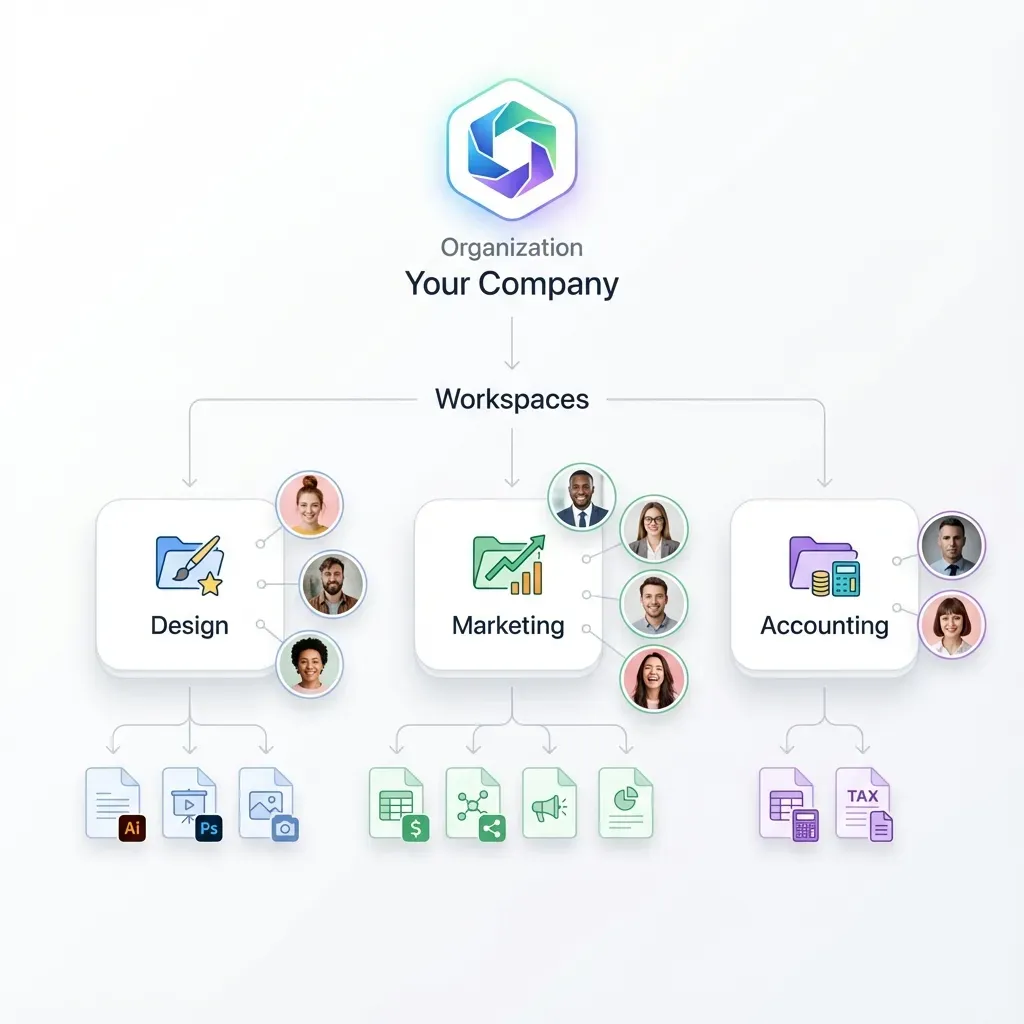
Setting up a federated workspace with Fastio transforms how your agents collaborate. Here is the process to get started.
Step 1: Create a Unified Workspace
Start by creating a workspace in Fastio. You can link existing storage providers like Google Drive or Dropbox, or use Fastio's built-in storage. This creates the "virtual hard drive" that your agents will share.
Pro Tip: Create separate folders for input, processing, and output to structure the agent workflow .
Step 2: Connect Agents via MCP
Fastio offers an MCP server that allows agents to connect directly to your workspace. By installing the Fastio MCP tool, your agents gain capabilities to list, read, write, and search files. To connect an agent, you typically configure the MCP client with your workspace endpoint and API key. This standard protocol means you can mix and match agents, a Claude-based agent using the Anthropic API and a GPT-based agent using OpenAI can both work in the same folder smoothly.
Step 3: Enable Intelligence Mode
Turn on Intelligence Mode for your workspace. This automatically indexes every file uploaded by any agent. Now, agents can not only read files but also perform semantic searches. Instead of an agent needing to download and parse multiple PDF files to find a specific clause, it can issue a query: "Find the liability limit in the MSA with Acme Corp." The workspace returns the specific text chunk and citation, saving massive amounts of compute and bandwidth.
Step 4: Manage Ownership Transfer
One of the powerful features of a federated workspace is ownership transfer. An agent can create a project structure, populate it with initial drafts, and then programmatically transfer ownership of the entire folder to a human user. This allows for "human-in-the-loop" workflows where agents do the heavy lifting and humans perform the final review and sign-off.

Real-World Use Cases
Federated workspaces unlock new possibilities for complex, multi-step workflows involving distinct specialized agents.
The Distributed Research Agency
Consider a distributed research agency that uses a team of specialized AI agents.
- Researcher Agent (London): Runs on a local server, scanning academic papers and aggregating data. It saves these findings to a
research/folder in the federated workspace. - Writer Agent (New York): Runs on a cloud instance, watching that folder. When new data appears, it reads the findings and drafts a report, saving it to
drafts/. - Human Editor (Tokyo): Receives a notification via the workspace. They open the file, review the draft, and make final edits. Because the workspace is federated, the human sees the files immediately, without needing to download zip files or access the agent's server directly.
The Software Development Pipeline
In a software development context, a federated workspace acts as the central repository for code and documentation.
- Product Manager Agent: Writes a PRD (Product Requirements Document) and saves it to the
specs/folder. - Architect Agent: Reads the PRD and generates a system design diagram, saving it to
design/. - Coder Agent: Reads the design and generates the initial scaffolding code in
src/. - QA Agent: Scans the
src/folder, runs tests, and logs bugs toissues/.
Throughout this process, the workspace maintains the "source of truth." If the Architect Agent updates the design, the Coder Agent can be notified via the WebSocket events feed or activity polling to update the code. This event-driven architecture allows for highly responsive and autonomous development cycles.
Security and Compliance in Federated Systems
When agents operate autonomously, security cannot be an afterthought. A federated workspace provides several layers of protection that are difficult to implement in ad-hoc solutions.
Granular Permissions: You can define exactly which agents have read or write access to specific folders. A "Public" agent might only have read access to a specific marketing folder, while an "Admin" agent has full access to the entire workspace.
Audit Logs: Every action taken by an agent is logged. You can see exactly which agent accessed which file and when. This is crucial for compliance and debugging. If a file is deleted, the audit log reveals the culprit immediately.
Encryption in Transit and at Rest: All data moving between the agents and the workspace is encrypted via TLS. Files stored in Fastio are encrypted at rest. This ensures that even if an agent runs in an untrusted environment, the data remains secure during transit.
Sources
References used to verify factual claims in this guide.
-
By 2025, 75% of enterprise data will be created and processed at the edge, outside traditional data centers.
Frequently Asked Questions
How is a federated workspace different from federated learning?
Federated learning focuses on training AI models across decentralized devices without sharing raw data. A federated workspace focuses on the *collaboration* and *storage* aspect, allowing fully trained agents to work together on files and projects in a shared environment.
Can I use agents from different frameworks in the same workspace?
Yes. Because Fastio uses standard protocols like MCP and standard file operations, you can have a CrewAI agent, an AutoGen agent, and a custom Python script all collaborating in the same workspace.
How do I prevent agents from overwriting each other's work?
Fastio handles multi-agent collaboration through advisory file locks, per-file version history with restore, granular permissions, and a detailed activity log. Agents acquire a lock before writing so other agents can wait; if uncoordinated writes occur, version history preserves every version so no work is lost.
Is the data in a federated workspace secure?
Yes. Fastio provides enterprise-grade security with granular access controls. You can define exactly which agents have read or write access to specific folders, and all data transfer is encrypted.
Can agents access files stored on my Google Drive?
Yes. By connecting your Google Drive to a Fastio workspace, agents can access those files through the Fastio API or MCP server, treating them just like local files.
Related Resources

Give Your AI Agents Persistent Storage
Give your agents a shared, secure workspace where they can collaborate with each other and your human team. Built for federated agent workspaces workflows.