How to Handle Event Idempotency with Fastio API
Event idempotency ensures that if an event message is received or processed multiple times during network retries, your system processes the intended action exactly once. When bridging Fastio real-time file feeds to downstream agent workflows, deduplication prevents runaway token burn and duplicate jobs. This guide covers how to track event IDs and manage state safely.


What is Event Idempotency?
Event idempotency ensures that if an event notification is delivered or retried multiple times, your receiving system processes the intended action exactly once. In distributed agent architectures, network drops and reconnects are routine occurrences rather than rare exceptions.
Whether your application consumes events directly from Fastio's WebSocket feed, polls GET /current/activity/poll/{entity_id}, or receives webhooks from an event bridge, network partitions can cause re-deliveries. Without idempotency, a single file modification could trigger duplicate AI indexing jobs or redundant LLM calls.
Related guides
- How to Handle Fastio Event Delivery FailuresManaging Fastio file events reliably requires using the WebSocket events feed and activity polling rather than outbound...
- How to Build Event-Driven Agent Workflows with Fastio EventsFastio enables event-driven agent workflows the moment a file changes through real-time WebSocket event feeds and...
- How to Handle Stripe Events for Fastio File DeliveryGuide to handling Stripe events for Fastio file delivery: Automating digital product delivery is faster when payment...
- How to Integrate the Fastio API with n8n WorkflowsGuide to integrate fast api with n8n workflows: Connect n8n workflows to Fastio's API to automate file storage and...
- How to Build a Discord AI Agent with the Fastio APIBuilding an intelligent Discord bot often means hitting a wall: Discord restricts free users to small file uploads....
- How to Use the Fastio API for HLS Video StreamingBuilding a video application usually requires chaining together cloud storage and separate transcoding services. The...
More on this subject: Agent Integrations and APIs (192 guides)
The Problem with Duplicate Events
Duplicate event execution causes cascading failures that are difficult to debug. When an AI agent relies on event notifications to know when a file finishes uploading, processing the same event twice wastes computational resources and corrupts application state.
Consider a workflow where Fastio emits a file.created event after importing a document. If the event receiver triggers a document summarization agent without checking if the event was already processed, two separate agent runs will execute simultaneously. Both agents might attempt to write summaries, doubling token costs and creating conflicting file versions in the workspace.

How to Implement Idempotent Event Handling
Building an idempotent event receiver requires immediate acknowledgment and persistent state tracking. You must separate event reception from downstream execution.
Here is how to implement idempotent event handling:
- Extract the Unique Event ID: Every Fastio activity event includes a unique
event_idin its payload. Extract this identifier before performing any business logic. - Check the Idempotency Store: Query a fast, persistent key-value store (such as Redis) to see if this
event_idhas already been recorded. - Set an Atomic Lock: If the key does not exist, set it atomically with a Time-To-Live (TTL) using a command like Redis
SET key value NX EX 86400. - Process Asynchronously: Pass the payload to a background worker queue to handle agent reasoning, allowing your event receiver to acknowledge delivery immediately.


Give Your AI Agents Persistent Storage
Automate your AI agent workflows with persistent cloud workspaces, version history, and a consolidated MCP toolset.
Managing State and Concurrency
Storing event IDs introduces concurrency considerations. If duplicate events arrive within milliseconds across load-balanced worker instances, naive database checks can create race conditions.
For high-throughput systems, Redis provides the ideal state management mechanism. Using atomic operations like SETNX ensures that only one worker can claim the processing rights for a specific event ID. If another worker attempts to claim the same ID, Redis returns zero, signaling the duplicate to exit gracefully.
Fastio API and MCP Tool Integration
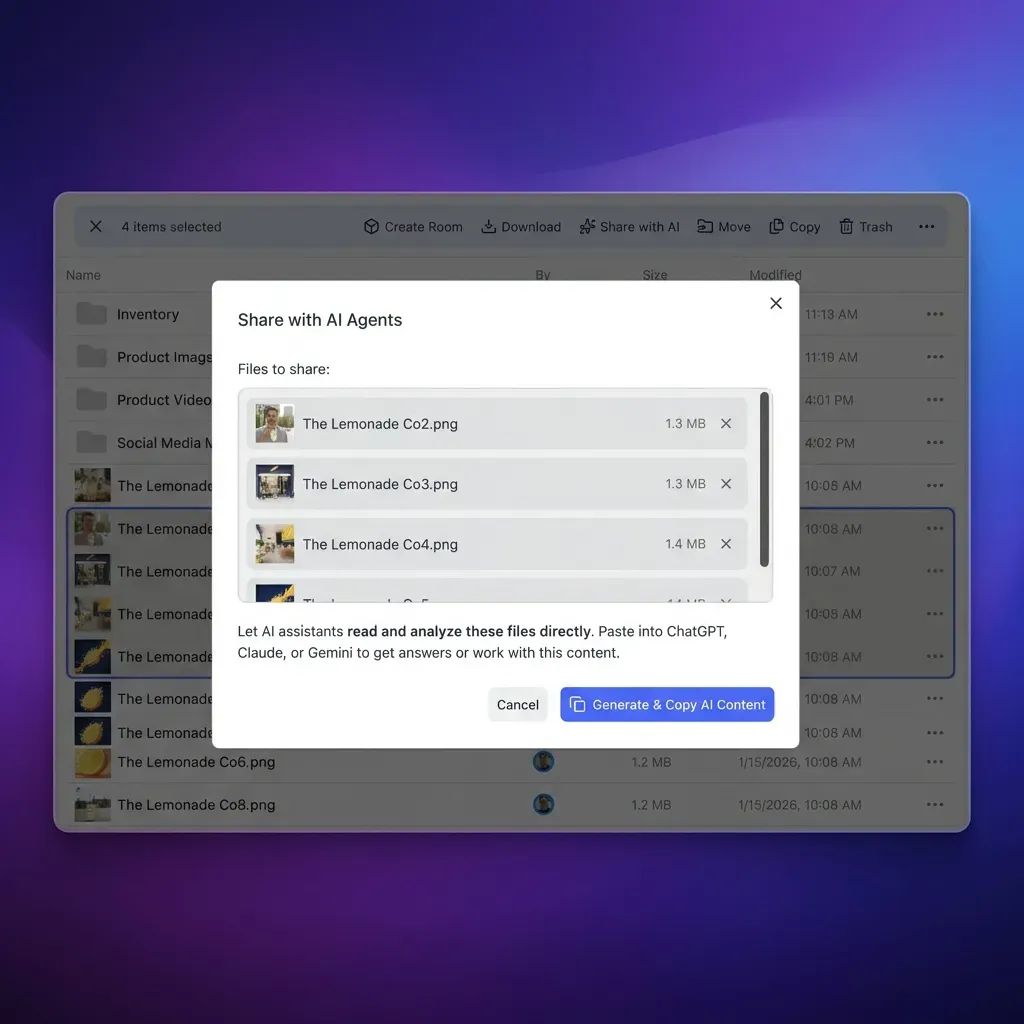
Fastio is designed as an intelligent workspace where agents and humans collaborate. With a consolidated MCP toolset available via Streamable HTTP (https://mcp.fast.io/mcp/tools), agents can interact with files, acquire advisory file locks, and manage permissions programmatically.
When integrating event bridges with the Fastio MCP server, idempotency becomes essential. Teams can test persistent workspaces using the 14-day Business Trial (credit card required). Once Intelligence is enabled for the workspace, files are indexed automatically, enabling agents to execute targeted RAG queries with citations without redundant processing.
Handling Errors and Background Processing
Asynchronous processing is the most reliable way to handle event-driven pipelines. Your primary event listener should do nothing more than parse the event ID, record the idempotency key, and push the message onto an internal job queue.
If your background worker encounters a transient error (such as an external LLM rate limit), the queue can safely retry the execution because the event state is tracked explicitly. This separation of concerns isolates your event streaming from third-party outages.
Evidence and Benchmarks
Understanding the scale of event retries helps prioritize idempotency in your development roadmap. While most systems assume happy-path delivery, operational data shows that network fluctuations and client disconnects make duplicate deliveries inevitable.
According to Stripe Webhook Documentation, network unreliability causes up to 2% of webhooks to be retried by the sending server. In high-frequency agent environments processing thousands of files, unhandled duplicates result in noticeable token waste. Implementing structured deduplication guarantees predictable operational costs.
Sources
References used to verify factual claims in this guide.
-
Network unreliability causes up to 2% of webhooks to be retried by the sending server
Frequently Asked Questions
What is an idempotent webhook or event handler?
An idempotent receiver ensures that processing the same event payload multiple times results in the same system state as processing it once, preventing duplicate downstream tasks.
How do you handle duplicate events?
Extract the unique event_id from the payload, check an atomic store like Redis using SETNX, and discard any payloads whose ID has already been recorded.
How does Fastio handle event delivery and reconnection?
Fastio provides a persistent WebSocket events feed and an activity polling endpoint. If a connection drops, clients reconnect and resume from their last processed event ID or timestamp.
How long should I store event IDs for deduplication?
Store event IDs for 24 to 72 hours. This provides a sufficient buffer to absorb any delayed retries or network replays without consuming excessive cache memory.
Why should I process file events asynchronously?
Processing events asynchronously prevents listeners from timing out while agents perform complex tasks, ensuring immediate acknowledgment and reliable queue-backed retries.
Related Resources

Give Your AI Agents Persistent Storage
Automate your AI agent workflows with persistent cloud workspaces, version history, and a consolidated MCP toolset.