How to Generate Branded Share Links via Fastio API
File delivery is often the weakest link in automated workflows. Using the Fastio API, developers can automate the creation of custom-branded share links, allowing AI agents to easily deliver finalized assets to human clients. This guide covers how to implement programmatic branded shares, from initial setup to tracking access events via audit logs. It provides everything developers need to build intelligent, autonomous workspaces that prioritize professional presentation.


What is a Programmatic Branded Share Link?
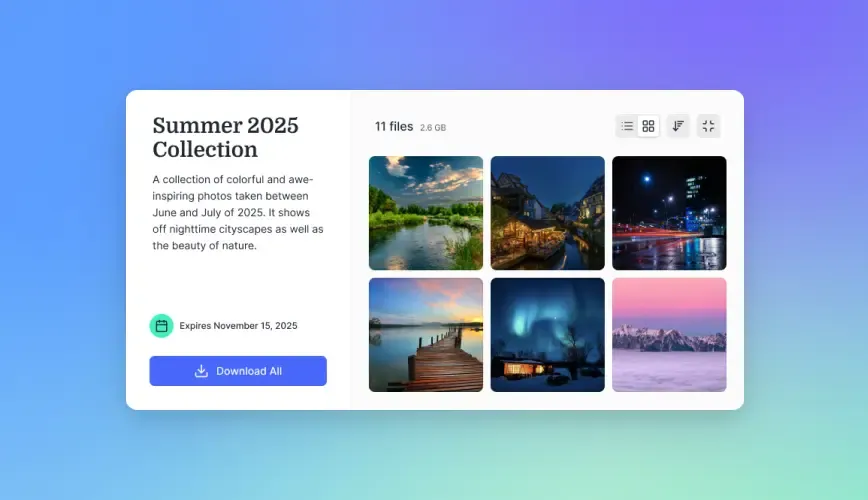
Using the Fastio API, developers can automate custom-branded share links. This allows AI agents to easily deliver finalized assets to human clients. A branded share link replaces a generic file directory with a polished landing page that carries your logo and colors. It maintains your corporate identity during handoff and ensures a consistent brand experience for the recipient. Branded delivery pages remove the confusion of third-party interfaces and build trust. When a client receives a download link that shows your company name and visual identity, they are more likely to open it without hesitation.
When an AI agent finishes compiling a research report or generating video assets, it needs a reliable way to pass those files back to a human reviewer. Sending raw attachments via email often fails due to strict file size limits. Creating manual cloud storage folders breaks the automated workflow and introduces human error. The programmatic approach solves this by issuing a secure, trackable URL that carries your specific brand assets. The entire delivery pipeline can then execute without manual oversight.
This is especially important for B2B client portals. When delivering work to external partners, presentation matters just as much as the content itself. A polished delivery page builds trust and professionalism. The Fastio API lets you define the exact visual experience of that delivery page. You can set logos, background colors, and access permissions all through code.
Helpful references: Fastio Workspaces, Fastio Collaboration, and Fastio AI.
Related guides
- How to Manage Custom File Metadata with Fastio APICustom file metadata in Fastio allows developers to attach application-specific key-value pairs to files to improve...
- How to Build an AI File Manager with the Fastio APIMost AI agent tutorials skip the hardest part: giving your agent reliable, searchable file storage that works across...
- How to Upload Files to Dropbox via API: Simple vs Upload SessionsChoosing how to use the Dropbox API to upload file contents depends on asset size and network reliability. The Dropbox...
- How to Implement Fastio API Real-Time File Event NotificationsFile sharing is the practice of distributing digital files between users over a network, but when AI agents...
- How to Upload Files: Fastio API File Upload TutorialFollowing a Fastio API file upload tutorial is the fast way to get your applications talking to intelligent agent...
- How to Create Branded Client Portals with Fastio APIGuide to creating branded client portals with fast api: The Fastio API lets developers build branded, secure client...
More on this subject: Agent File and Document Workflows (325 guides)
Why Automate Share Link Creation?
Manual link creation is a hidden bottleneck in many digital operations. According to Zapier, automated share generation saves teams an average of 4 hours per week on manual link creation. That equates to half a day reclaimed for higher-value engineering tasks instead of clicking through storage menus to adjust permissions and copy URLs. Multiply this across a large engineering team, and the time savings add up quickly.
Most API tutorials ignore the presentation layer of file delivery. This layer is important for B2B agentic workflows. Many guides focus only on backend data transfer, showing you how to move bytes from point A to point B. However, a raw cloud storage link provides a terrible user experience for a non-technical client. They see a generic interface, confusing file trees, and no context about the sender. This lack of control over the final presentation can hurt the perceived quality of the actual deliverables. You want clients to be impressed by the entire interaction, from the first click to the final download.
The Fastio API treats the presentation layer as a first-class citizen. You can upload a file, set expiration dates, and apply your visual brand in a single API request. This approach allows AI agents to act on their own. An agent can process a large dataset, generate a summary presentation, and immediately provide a formatted, branded download link in a chat interface like Slack or Microsoft Teams. The human client never sees the underlying storage infrastructure, just the polished final product.
Understanding the Fastio API Architecture
Before writing code, it helps to understand how Fastio organizes data. The platform provides specific tools for building intelligent workspaces. The API exposes every feature available in the web dashboard, so your programmatic systems have the exact same capabilities as your human operators. This removes the need for fragile data pipelines that sync files between storage buckets and specialized AI processing services. Everything happens in one unified location.
Fastio revolves around workspaces. A workspace is an isolated environment containing files, folders, and specific permissions. When you generate a share link, you expose a specific file or folder within that workspace to an external user. You have full control over what is visible to the public.
Fastio is an intelligent workspace, not just basic storage. Intelligence is native to the platform. Once Intelligence is enabled for the workspace, uploaded files are indexed and searchable by meaning with built-in RAG capabilities. This allows your clients to ask questions and chat with the shared documents directly on the branded download page, complete with citations. This creates a richer experience than a static file download.
For developers testing these features, Fastio offers a Business Trial on monthly plans. You can prototype these workflows without immediate cost. A 14-day Business Trial allows developers to prototype these workflows (credit card required; plans start at $9.99/mo).


Give Your AI Agents Persistent Storage
Join developers building autonomous workspaces with workspace storage and a consolidated MCP toolset during the 14-day Business Trial.
Authentication and Initial Setup
To interact with the Fastio API, you need to authenticate your requests. This is done using an API key, which you can generate from your Fastio developer settings dashboard. The platform supports multiple keys per organization, allowing you to rotate them individually based on your security policies.
Authentication is handled via standard HTTP headers. You must include an Authorization header with a Bearer token for every request you make. It is important to keep this key secure. Never hardcode your API key directly into your application source code or commit it to version control. Always use environment variables or a secure secrets manager to load the key at runtime. If your token is compromised, revoke it immediately and generate a new one to prevent unwanted access. Regular security audits of your active API keys will protect your data.
Once you have your key, you can make a simple GET request to the /current/workspaces/all/ endpoint to verify your connection. If your authentication is successful, the API will return a JSON array of your available workspaces. This confirms that your application can communicate with Fastio and that you have the necessary permissions to begin managing files and creating shares. This is the first step in building a reliable B2B integration.
For teams using OpenClaw, integration is even easier. You can connect autonomous agents directly via Fastio's remote MCP server at https://mcp.fast.io/mcp/tools. This provides natural language file management without having to manually construct HTTP requests. It acts as a bridge between human intent and programmatic execution.
Generating a Branded Link Programmatically
Creating a branded share requires a simple HTTP POST request to the Fastio API. You need your API key and the ID of the file or workspace you want to share. To generate the link, send a form-encoded POST request to the /current/workspace/{workspace_id}/create/share/ endpoint. Alongside the standard sharing parameters, it accepts branding colors (accent_color, background_color1, background_color2) and an expires date.
Here is a request that creates a Send share anyone with the link can open:
curl -X POST "https://api.fast.io/current/workspace/1234567890123456789/create/share/" \
  -H "Authorization: Bearer $FASTIO_API_KEY" \
  -d "title=Q4 Client Deliverables" \
  -d "share_type=send" \
  -d "intelligence=true" \
  -d "access_options=Anyone with the link"
When the server processes this request, it returns a unique share URL with your brand configuration applied. Your application or AI agent can immediately present this URL to the end user. The recipient clicks the link and arrives at a polished, branded download portal rather than a generic file directory. This ensures your brand is visible during the final step of the delivery process. It transforms a simple file transfer into a branded touchpoint that builds your professional image.

Advanced Configuration: Activity Tracking and Expirations
Production environments require more than just basic link generation. You need to handle security, track usage, and manage the lifecycle of your shared files. The Fastio API provides tools for reliable B2B integrations that grow with your business. The API's flexibility lets you integrate these branded shares into existing CRM systems or marketing automation platforms. This creates a connected system where file delivery triggers the next step in your workflow.
You can track when a client accesses the branded share by monitoring Fastio's audit log at GET /current/events/search/ or polling activity. Fastio records when the link is opened or when the file is downloaded. This allows your sales or support teams to know exactly when a client has reviewed the deliverables. You can trigger automated follow-ups based on these logged access events, removing guesswork from your client communications.
Security is another important aspect. The API allows you to set access controls programmatically. You can apply passwords or restrict access to specific email addresses directly in the JSON payload. You can also define expiration policies. Set links to self-destruct after a certain number of days or after a specific number of downloads. This ensures that sensitive client files do not remain accessible on the internet forever. This level of control protects your intellectual property and helps with internal data governance compliance. You keep a complete audit trail of who accessed what and when.
Integrating with AI Agents via MCP
If you are building autonomous systems, the Fastio Model Context Protocol (MCP) server provides a big advantage. Fastio offers a consolidated MCP toolset via Streamable HTTP. Every capability available in the UI has a corresponding agent tool. By combining LLMs with Fastio's file management, your agents can perform tasks that previously required human operators. This is a big change in how businesses handle routine file delivery.
Agents and humans share the same workspaces and the same intelligence. Humans use the user interface, while agents use the MCP tools to interact with the environment. This creates a collaborative space where an agent can draft a document, place it in a workspace, and immediately notify a human team member. The workflow remains smooth and predictable.
A strong pattern for agencies is ownership transfer. An agent can create an organization, build workspaces, upload files, and generate branded shares on its own. Using the API, the agent can then transfer ownership of that workspace to the human client while retaining admin access for future updates. The client receives a fully configured, branded portal without ever knowing an AI agent handled the setup.
Troubleshooting Common Implementation Issues
Even with clear documentation, developers occasionally face challenges when implementing automated file delivery. Most issues stem from incorrect authentication or malformed JSON payloads. By logging your API requests and responses, you can quickly identify patterns and fix configuration errors before they impact your clients. Good error handling ensures your automated workflows remain stable.
First, verify that your API key has the correct permissions. Creating share links requires write access to the specific workspace. A common mistake is using a read-only token designed for fetching file lists. If you receive a multiple Forbidden error, check your token scope in the developer dashboard. Without the correct scope, the server will reject your payload.
Second, ensure any images used in your brand_config are publicly accessible. If you provide a logo URL that sits behind a firewall or requires authentication, the Fastio rendering engine will fail to load it. The resulting share link will fall back to the default branding. Always use stable, public URLs for your visual assets to guarantee the correct presentation.
Finally, monitor your payload structure carefully. The API expects precise boolean values and integer types for specific fields. Passing a string like "multiple" instead of the integer multiple for the expiration days might cause a multiple Bad Request validation error. Review the error responses, as they usually indicate the exact field causing the problem.
Sources
References used to verify factual claims in this guide.
-
Automated share generation saves teams an average of 4 hours per week on manual link creation.
-
The Business Trial provides full access to evaluate Fastio's branded shares and API capabilities. Fastio offers a consolidated MCP toolset via Streamable HTTP. The Fastio API supports files up to 100 GB on the Enterprise plan.
Frequently Asked Questions
Can I create branded links with Fastio API?
Yes, you can create branded links with the Fastio API using the /current/workspace/{workspace_id}/create/share/ endpoint. The API allows you to upload custom logos and set primary brand colors. This ensures all file deliveries maintain your corporate identity without manual work.
How do agents deliver files to clients?
Agents deliver files to clients by generating programmatic share links via the Fastio API and sending those URLs through chat interfaces or emails. Because the links are branded and secure, the human client receives a professional download experience without needing a Fastio account.
What is the maximum file size for API uploads?
The Fastio API supports large file uploads, and the 14-day Business Trial lets you evaluate these capabilities before choosing a plan at /pricing/.
Do I need a paid plan to use the API?
Fastio provides full API access across Starter, Business, and Enterprise plans, and developers can evaluate the API with a 14-day Business Trial (credit card required).
Can I track when an API share link is opened?
Yes, you can track when an API share link is opened using the realtime activity feed or the WebSocket events feed. Fastio records view and download events in the audit log, allowing your application to poll activity or listen for events to trigger follow-up automated actions.
Related Resources

Give Your AI Agents Persistent Storage
Join developers building autonomous workspaces with workspace storage and a consolidated MCP toolset during the 14-day Business Trial.