How to Run Commercial Property Due Diligence with a Secure Data Room
Commercial property due diligence involves reviewing 50 to 100+ documents across financial, legal, environmental, and physical categories, usually within a 30 to 60 day window. Most guides explain what to check but skip the harder question: how to organize and share those documents across buyers, sellers, attorneys, lenders, and inspectors without losing control. This guide covers both the checklist and the data room workflow that keeps everything on track.


What Commercial Property Due Diligence Actually Covers
Commercial property due diligence is the systematic investigation of a commercial real estate asset before acquisition. It covers financial performance, legal standing, physical condition, and environmental risk. The goal is to confirm that what the seller claims matches reality, and to surface problems before they become yours.
Unlike residential transactions, where inspections and title checks follow a relatively standard playbook, commercial deals involve more parties, more document categories, and higher stakes. A single missed lease amendment or an overlooked environmental condition report can shift a deal's economics by hundreds of thousands of dollars.
The typical due diligence period runs 30 to 60 days for standard acquisitions. Complex deals involving entitlements, Phase II environmental testing, or multi-tenant properties can extend to 90 days or longer. U.S. commercial real estate investment volume reached $560.2 billion in 2025, a 14.4% gain over 2024, so the number of teams running these reviews is growing.
The challenge isn't just knowing what to check. It's keeping dozens of documents organized, version-controlled, and accessible to the right people at the right time.
Helpful references: Fastio Workspaces, Fastio Collaboration, and Fastio AI.
Related guides
- How to Set Up a Real Estate Data Room for Due DiligenceCommercial real estate transactions generate hundreds of documents that multiple parties need to review under tight...
- How to Set Up a Secure Document Portal for Your Title CompanyTitle companies handle some of the most sensitive documents in any real estate transaction, from wire instructions to...
- How AI Is Changing Commercial Real Estate WorkflowsAI in commercial real estate has moved past the hype cycle into practical deployment. This guide covers the six core...
- 8 Best Real Estate Transaction Coordinator Software Tools for Document ManagementGuide to real estate transaction coordinator software: Transaction coordinators juggle 40+ documents per deal across a...
- Real Estate Document Management Guide for AgentsReal estate document management is the systematic organization, storage, and sharing of property transaction documents...
- How to Create and Share Real Estate 3D Tours That Actually Drive ShowingsA real estate 3D tour is an interactive, navigable digital model of a property that lets prospective buyers explore...
More on this subject: Real Estate (21 guides)
The 10 Document Categories You Need to Cover
A thorough commercial property due diligence checklist spans 8 to 10 categories. Here's what each one includes and why it matters.
1. Financial Records
Request three to five years of profit and loss statements, operating expense reports, and capital expenditure budgets. Compare actual performance against budgets. Pull the current rent roll and verify it against tenant payment histories. You want to confirm that the property's net operating income matches the seller's representations, not just the pro forma.
2. Leases and Tenant Documents
Get full copies of every lease, including all amendments, side letters, and estoppel certificates. Pay attention to co-tenancy clauses, exclusivity provisions, tenant improvement allowances, and renewal options. A lease expiration schedule helps you map rollover risk. CAM reconciliation histories reveal whether common area charges have been applied consistently.
3. Title and Survey
Order a preliminary title report to confirm ownership and identify liens, encumbrances, and easements. An ALTA/NSPS survey maps the boundaries and improvements against the title records. Title exceptions that seem minor, like utility easements or access agreements, can restrict future development plans.
4. Legal and Entity Documents
Review the seller's entity formation documents, operating agreements, and partnership structures. Confirm that the entity signing the purchase agreement has authority to sell. Check for pending or threatened litigation affecting the property. If the deal involves loan assumption, request the full assumption package early since lender approvals take time.
5. Environmental Reports
A Phase I Environmental Site Assessment (ASTM E1527-21) is standard on every commercial deal. It reviews historical property use, regulatory records, and site conditions to identify recognized environmental conditions. If the Phase I flags concerns, a Phase II ESA with soil and groundwater sampling follows. Also request any existing reports on asbestos, lead paint, mold, or radon.
6. Physical Condition and Inspections
A Property Condition Assessment (ASTM E2018) evaluates the building's structure, roof, HVAC, electrical, plumbing, and ADA compliance. The PCA produces a capital reserve schedule that estimates major repairs over the next 10 to 12 years. Cross-reference this against the seller's maintenance records and recent capital expenditure history.
7. Zoning and Permits
Request a zoning compliance letter from the local municipality confirming the property's current use is permitted. Verify that all certificates of occupancy are current and that recent improvements were properly permitted. Non-conforming uses or missing permits can create financing obstacles.
8. Insurance and Claims
Review current insurance policies and the property's claims history for the past five years. High claim frequency or specific loss types (water damage, liability) signal maintenance issues or operational risks. Your lender will require proof of adequate coverage before closing.
9. Service Contracts and Operations
Catalog all vendor agreements: property management, landscaping, security, elevator maintenance, HVAC service, and janitorial. Identify which contracts survive the sale and which are terminable on 30-day notice. Utility bills and consumption data help you benchmark operating costs against comparable properties.
10. Market and Comparable Data
While not a document the seller provides, your team should independently verify market rents, vacancy rates, cap rates, and recent comparable sales. This context tells you whether the property's financials are sustainable or whether the seller has inflated assumptions.
Why Email and Shared Drives Break Down
Most commercial real estate firms default to email for document exchange during due diligence. An attorney sends a lease. The buyer's analyst forwards it to the lender. The lender's counsel requests a different version. Within a week, five people have different copies of the same document, and nobody is sure which version is current.
Shared drives like Google Drive or Dropbox solve the single-source problem but create new ones. Granular permissions are difficult to manage when you need the buyer's environmental consultant to see Phase I reports but not financial records, while the lender needs financials but not pending litigation files. Most generic file-sharing tools offer folder-level permissions at best, which forces you to either over-share or create an unmanageable number of folders.
Audit trails are the other gap. When a dispute arises over whether a document was disclosed before the due diligence deadline, you need to prove exactly who uploaded what and when. Email timestamps help, but they don't tell you whether the recipient actually accessed the file. Shared drive activity logs are often too coarse to be useful.
The result is that teams spend hours on document logistics instead of analysis. Data entry error rates in document management workflows average around 2% but can reach 26% in poorly organized processes, according to industry assessments. For a 100-document due diligence package, that means two to twenty-six documents could be misfiled, mislabeled, or attached to the wrong version.
Setting Up a Data Room for Due Diligence
A virtual data room replaces the email-and-drive approach with a structured, permission-controlled repository purpose-built for document-heavy transactions. Here's how to set one up for commercial property due diligence.
Create Your Folder Structure
Mirror the 10 document categories above as top-level folders. Within each, create subfolders for document types. For example, under "Leases and Tenant Documents," you might have subfolders for executed leases, amendments, estoppels, and rent roll history. Consistent naming matters: use a convention like [Category]-[Document Type]-[Date] so files sort logically.
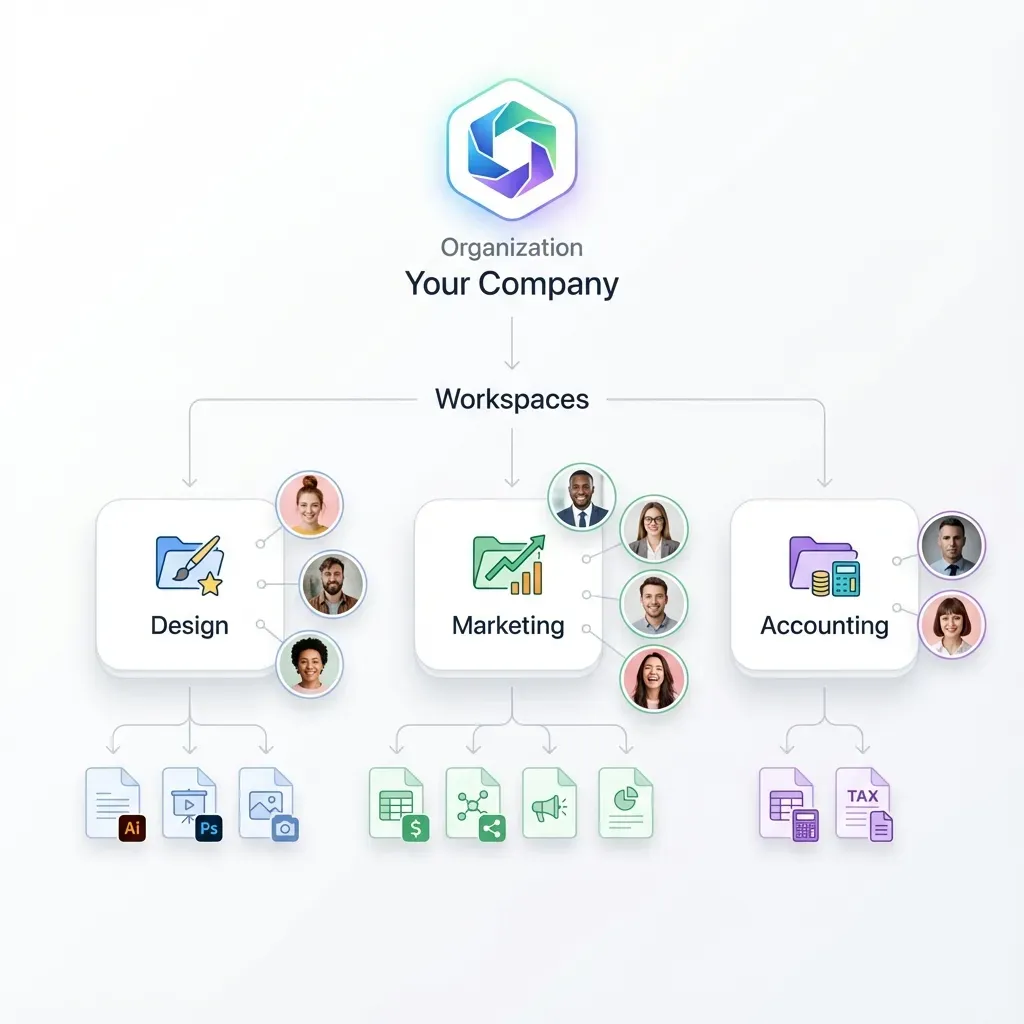
A workspace platform like Fastio lets you create shared workspaces with nested folder structures and set permissions at the folder or file level. Each party gets access to exactly the documents they need. The seller's team populates the room, the buyer's team reviews it, and counsel on both sides can work from the same source.
Set Granular Permissions
Map each due diligence participant to the folders they need:
- Buyer's acquisition team: Full access to all categories
- Buyer's legal counsel: Legal, title, entity documents, and leases
- Buyer's lender: Financial records, insurance, rent rolls, and appraisals
- Environmental consultant: Environmental reports and site assessments only
- Property inspector: Physical condition reports, maintenance records, and permits
- Broker: Summary documents and selected financials
Fastio supports granular permissions at the organization, workspace, folder, and file level, so you can enforce these boundaries without creating a separate shared folder for each party. You can also use branded shares with guest access for external parties who need to upload or download specific document sets without joining your workspace.
Enable Audit Trails
Every document access should be logged. When the due diligence deadline arrives and the buyer claims they never received the environmental report, you need a timestamped record showing when it was uploaded, who was notified, and whether they accessed it. Fastio's audit trails cover file operations, memberships, and access events, giving you a defensible record of document disclosure.
Upload and Organize Documents
For sellers, the data room should be populated before the due diligence period opens. Upload documents in bulk, verify the folder structure, and do a completeness check against your checklist. Missing documents at the start of the due diligence period signal disorganization and erode buyer confidence.
Fastio supports chunked uploads for large files like property surveys, engineering reports, and video walkthroughs, with plan-dependent size limits of up to 100 GB per file on the Enterprise plan. File versioning means that when a corrected rent roll replaces the original, the history is preserved rather than overwritten.


Keep your due diligence documents organized and secure
Fastio gives you shared workspaces with granular permissions, audit trails, and branded shares for external parties during commercial property due diligence.
Running the Due Diligence Timeline
With the data room set up, the due diligence period itself follows a predictable arc. Here's a 30-day framework that you can extend for more complex deals.
Days 1 through 5: Kickoff and Document Intake
Hold a kickoff call with all parties. Assign document owners for each category. The seller's team should have the data room substantially populated by day three. The buyer's team reviews the document index and flags any gaps immediately. Don't wait until day 15 to discover that the Phase I report is missing.
During intake, use advisory file locks alongside granular permissions and version history to coordinate concurrent file uploads safely. If you're working in Fastio, team members can acquire an advisory file lock before updating sensitive closing schedules or leases, while version history preserves every uploaded revision so concurrent updates create auditable versions rather than destroying data.
Days 6 through 15: Site Inspections and Report Review
Schedule the physical inspection and environmental site visit. Order the PCA and any additional engineering reports. While inspectors are on-site, the buyer's team begins reviewing financials, leases, and title documents in the data room.
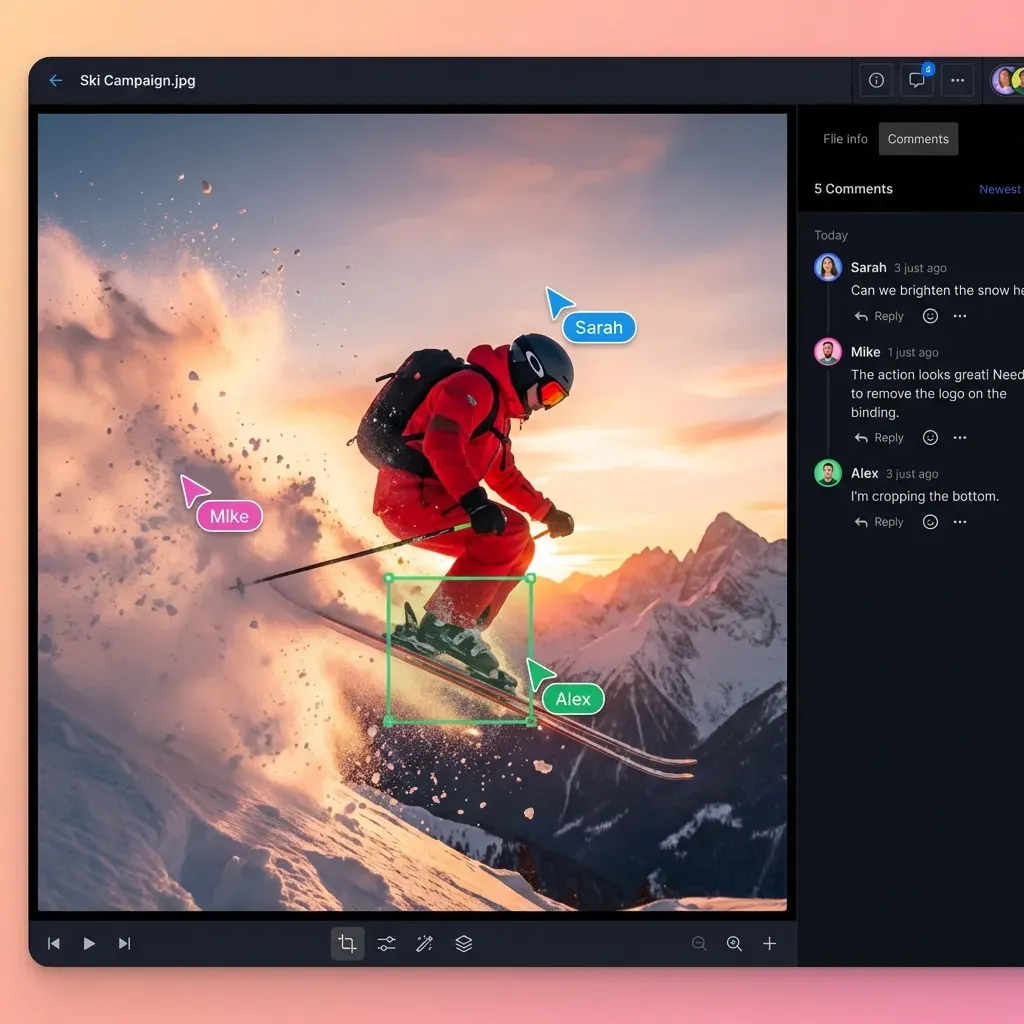
This phase generates the most questions. Rather than scattering Q&A across email threads, centralize it. Fastio's comments feature lets you anchor questions to specific files, so the context stays attached to the document rather than buried in someone's inbox.
Days 16 through 25: Analysis and Issue Identification
Normalize the financial data. Compare actual rent collections against the rent roll. Scrub service contracts for auto-renewal clauses or above-market rates. Draft an issues list categorizing findings by severity: deal-breakers, items requiring price adjustment, and items to monitor post-closing.
If your workspace has Intelligence enabled, Fastio's semantic search and RAG chat let you query across all uploaded documents at once. Ask a question like "what are the tenant improvement allowances across all leases?" and get answers with citations to specific files and pages, instead of opening each lease individually.
Days 26 through 30: Resolution and Closing Prep
Present the issues list to the seller. Negotiate credits, repairs, or contract modifications. Update the purchase agreement exhibits with final versions of all documents. The data room serves as the record of everything disclosed and reviewed.
Common delays at this stage include ALTA survey revisions, municipal zoning response times, and Phase II environmental testing (which alone can add 4 to 8 weeks). Build buffer into your timeline for these, and use the data room's version tracking to ensure everyone is working from the most current documents.
Choosing the Right Data Room Platform
Not every data room is worth the setup cost. Here's what to evaluate.
Permissions Granularity
Can you control access at the file level, or only at the folder level? Folder-level permissions force you to duplicate documents across folders when different parties need overlapping but distinct access. File-level control avoids this.
Audit Trail Depth
Basic platforms log uploads and downloads. Better platforms log views, time spent, and failed access attempts. For due diligence, you need to demonstrate that a document was made available, not just that it was uploaded to a folder someone theoretically had access.
Versioning
When a corrected estoppel replaces an earlier draft, both versions should be preserved with clear timestamps. Overwrite-only systems create disputes about what was disclosed and when.
Guest Access and Branded Shares
External parties like lenders, inspectors, and environmental consultants need access without joining your full platform. Branded share links with receive and exchange capabilities let outside parties upload their reports directly into the right folder.
Integration with Your Workflow
Some teams use dedicated virtual data room vendors like CapLinked, Dealpath, or FirmRoom. These offer CRE-specific features like Q&A modules and deal analytics. For teams that don't need deal-specific tooling, a general-purpose workspace platform with strong permissions and audit trails can serve the same role at lower cost and complexity.
Fastio fits this second category. Fastio provides paid plans starting at $9.99/mo (Starter with 250 GB of storage and 3 seats) alongside a 14-day Business Trial. It includes branded shares, granular permissions, detailed activity logs, and file versioning. For acquisitions, it delivers the core security and access controls of a specialized VDR at a fraction of the cost.
Sources
References used to verify factual claims in this guide.
-
U.S. commercial real estate investment volume reached $560.2 billion in 2025, a 14.4% gain over 2024
-
Data entry error rates in document management workflows average around 2% but can reach 26%
Frequently Asked Questions
What is due diligence in commercial real estate?
Commercial property due diligence is the systematic investigation of a commercial real estate asset before acquisition. It covers financial performance, legal standing, physical condition, environmental risk, and market positioning. The goal is to verify the seller's claims, identify risks, and confirm the property's value before closing.
What documents are needed for commercial property due diligence?
A typical CRE due diligence package includes 50 to 100+ documents across 10 categories: financial records (P&L, rent rolls, budgets), leases and tenant documents, title and survey, legal and entity documents, environmental reports (Phase I ESA), physical condition assessments, zoning and permits, insurance and claims history, service contracts, and market comparable data.
How long does commercial real estate due diligence take?
The standard due diligence period is 30 to 60 days for most commercial acquisitions. Complex deals involving multi-tenant properties, environmental remediation, or loan assumptions can extend to 90 days or longer. Phase II environmental testing alone can add 4 to 8 weeks to the timeline.
How do you organize due diligence documents?
Set up a virtual data room with top-level folders matching your due diligence categories (financial, legal, environmental, physical, leases, etc.). Within each category, create subfolders by document type. Use consistent file naming conventions, set granular permissions so each party only sees relevant documents, and enable audit trails to track who accessed what and when.
What is a virtual data room for real estate?
A virtual data room is a secure, cloud-hosted document repository used during real estate transactions. It replaces email-based document exchange with structured folders, role-based access controls, audit trails, and version tracking. Sellers populate the room with due diligence documents, and buyers, lenders, and consultants review them with controlled access.
Related Resources

Keep your due diligence documents organized and secure
Fastio gives you shared workspaces with granular permissions, audit trails, and branded shares for external parties during commercial property due diligence.